2026 Drinking Water Station Rentals Gilbert for Job Sites & Events, Rapid Dispatch
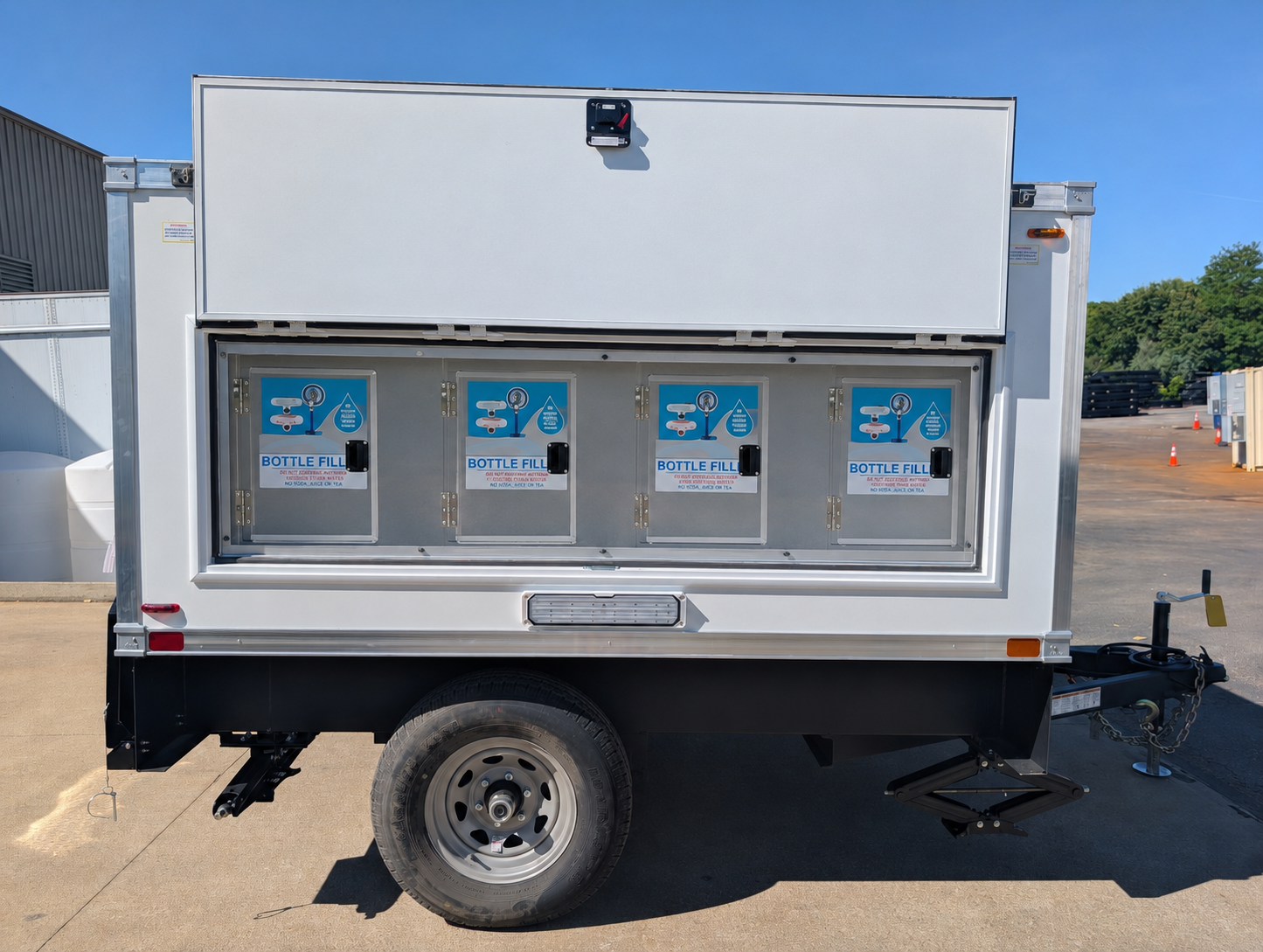
From a wedding reception under the lights in Agritopia to a framing crew racing the afternoon sun out by Cooley Station, warm bottled water is the wrong tool for a Gilbert summer. We tow in a self-contained drinking-water station, filtered, chilled, and refilling itself all day, so the people at your event and the workers on your site both keep drinking and you keep moving.
- ~45-minute East Valley delivery
- Filtered, four-stage, chilled water
- ADA bottle filling
- OSHA heat-illness ready
- Licensed & insured
- Around-the-clock dispatch
Chilled, filtered water for Gilbert crews and gatherings, topped off all day
Out across Gilbert and the broader East Valley, we haul chilled, filtered water to job sites and events and hold the trailer full from open to close. Gilbert grew from a farm town into one of the fastest-growing communities in the country, all of it in open desert sun, which is exactly why hydration here can’t be an afterthought. We stage mobile water stations for the crews that can’t pause when the heat climbs: contractors finishing subdivisions toward Queen Creek, the crews building the next phase of Cooley Station, the event teams running a Saturday on the Civic Center lawn. Clients ask us the same things every week: how soon can you be here, will the water still be cold by mid-afternoon, and what happens when a tank gets low on a busy Saturday. We answer all three.
We run on East Valley time
Most Gilbert deliveries reach you in roughly 45 minutes from dispatch, and we keep trucks moving around the clock through the worst of summer. And when an event coordinator or a superintendent realizes at sunrise there’s nothing cold on site (it happens more mornings than you’d think), that turnaround is the entire difference.
Water that stays cold and clean
Each station treats and chills its own supply, so the pour at 4 p.m. is as cold and clean-tasting as the first one at dawn. Lukewarm water just gets left in the cooler, and water nobody drinks does nothing to prevent heat illness. In a Gilbert July, that’s the whole point.
Delivered, filled, serviced, hauled
Skip the bottled-water supplier, skip the ice runs, skip lining up a separate waste hauler. We place the unit, refill it from our own trucks, maintain it for the duration, and tow it off once you’re finished, one number answering for the entire hydration cycle on your Gilbert site.
I tell most folks the same on a Gilbert intro call: water only helps if the crew actually reaches for it. I have stood beside a full pallet of bottles baking by a gate (untouched since the morning ice melted) while a crew slowly fell behind on fluids, and I’ve watched a cold station ten steps from the work get emptied twice before lunch. “Once it’s cold and it’s close,” one foreman near Power Ranch told me, “I stop having to nag anybody to drink.” Closing that gap is the job. So we don’t drop a trailer and vanish, we size it to your headcount or your guest list, set a refill rhythm to match, and treat a hot-weather call the way you’d want yours treated, quickly, because here the margin is measured in degrees and minutes.
One road-towable trailer engineered for Gilbert work in open sun
For Gilbert we run a single purpose-built rig, the Signature Series water station trailer. A full road chassis underneath means it tows directly to wherever the work or the crowd is, a graded pad off Higley, a festival field by the Heritage District, a solar array on Gilbert’s south edge. No structure to build, no plumbing to install, just treated, chilled water flowing the day the trailer touches down.
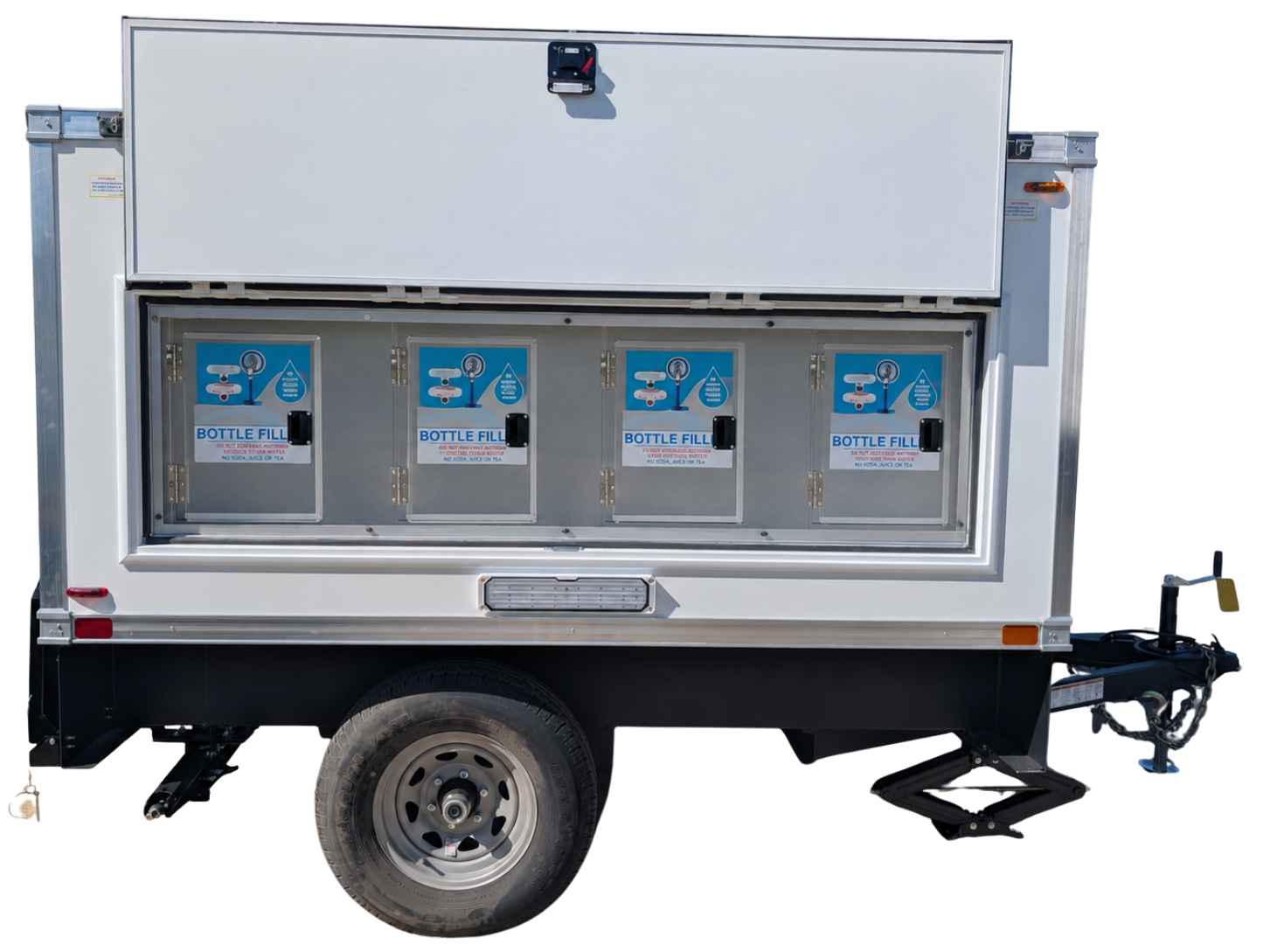
Signature Series specifications
Riding a road-rated chassis on tires behind a hitch, it hauls out to a far-flung worksite, a lawn set for an event, a farm operation, or a staging area during an emergency. Gilbert builders and organizers request this one by name, dimensioned to roll in, level off, and be pouring by the same afternoon it shows up.
| No. of stations | (4) Bottle Filling Stations |
| Length | 12′ 3″ |
| Weight | 3,100 lbs. |
| Height | 8′ |
| Fresh water tank | 300 Gallons |
| Power requirements | 1–4 dedicated 20A/120V circuits OR 1 dedicated 50A/240V circuit |
| No. of AC units | 1 |
Why this trailer suits the East Valley
The Signature is engineered around two enemies, heat and distance. Its four push-back taps run along the outside wall beneath a shade awning, letting a whole crew or a long event queue cycle through on a break instead of bunching up at one spout. Built-in refrigeration and onboard cooling keep the water genuinely cold while the shell sits roasting in full Gilbert sun, and that holding-cold-under-load piece is precisely where the cooler-and-pallet approach falls apart out here.
A 300-gallon reservoir carries a substantial crew or crowd clear through a long day, and since the trailer tows, we can reposition it across a big spread or roll it to a build’s next phase without dismantling anything fixed. It accepts everyday site power across a forgiving range, so one trailer serves an already-wired venue just as readily as a stripped desert parcel we bring power to.
And it does more than the four marquee taps suggest: a rear large-jug station tops off five-gallon coolers and personal packs, and a set of hose-bib outlets covers crew chores, rinse-down, and field work. We delivered one to a multi-acre site near Higley last summer, and the project manager walked the perimeter, then told me, “I figured I’d need three of these, and you covered it with one.” A lone trailer answers the entire hydration question for a Gilbert site or gathering.
One filling station vs. a summer of bottle pallets
Take a 50-person Gilbert crew across one summer and the numbers argue for themselves. At about six bottles per person on a triple-digit day, you are ordering, lugging, icing, and tossing about 300 plastic bottles every single day the job runs.
Stretch that across a 200-day project and it tops 60,000 bottles, and on the larger multi-phase builds spreading across south Gilbert and Queen Creek, north of 100,000. One station takes the place of all of it, cold water on tap and nothing headed for the dumpster.
For most Gilbert sites it’s a logistics call first
The green angle is legitimate. Americans throw away somewhere near 60 million bottles every day, barely a third get recycled, and one bottle can sit in a landfill for centuries, all of which earns a line in your ESG report. Yet for most Gilbert project managers the switch comes down to something more mundane: a central station kills the daily fire drill. There’s no recurring bottled-water PO, no cooler gone lukewarm before lunch, no pallet of empties roasting at the fence line. Your super spends the day on the build, not on the water.
And because the tank stays charged from our own potable trucks, the supply grows with the job rather than capping it. A crew that swells for a slab pour won’t drink the plan dry (we’ve watched a 40-person count double for a pour and still not outrun the tank). We just shorten the interval between fills.
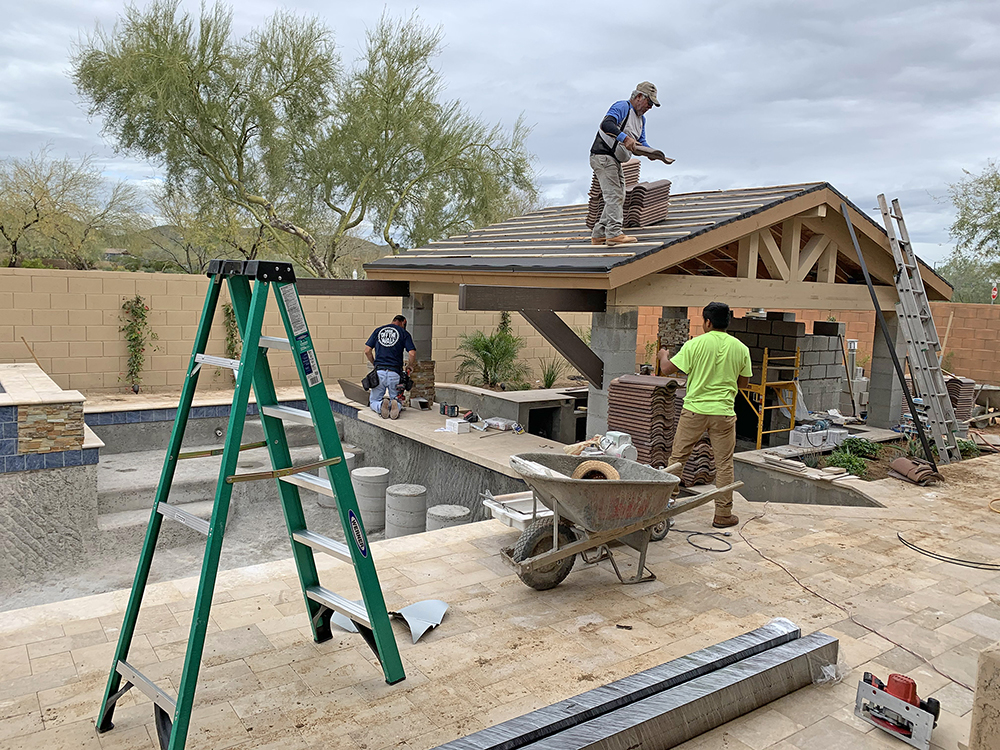
Hydration shaped to the way Gilbert actually works and gathers
Gilbert doesn’t have a single hydration problem, it has a calendar full of them. A subdivision build near Power Ranch asks for something different than a weekend on the Civic Center lawn, which asks for something different than a youth tournament at Gilbert Regional Park. Here’s where these stations go to work.
Residential & commercial construction
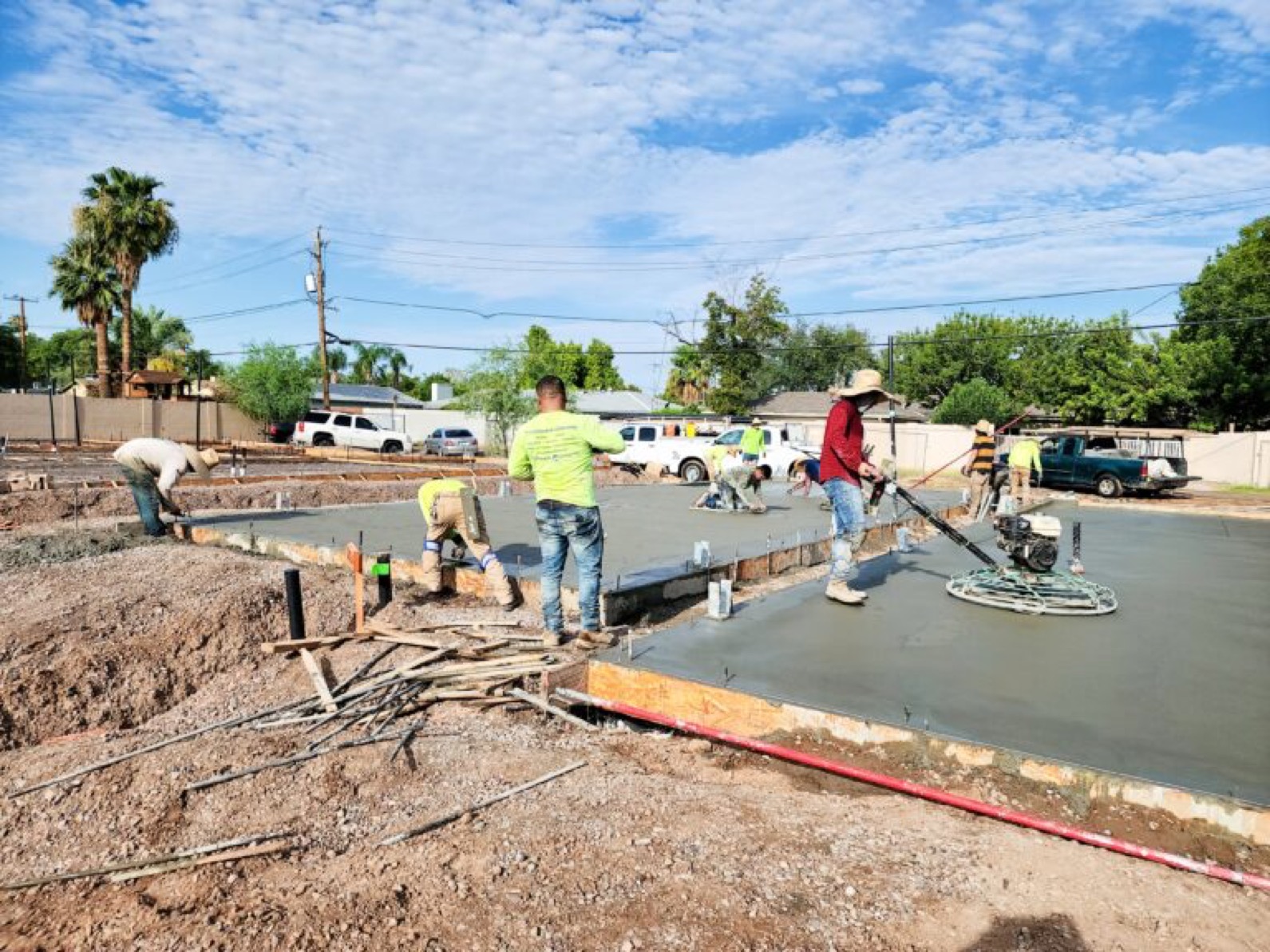
Gilbert is racing toward full build-out near 330,000 residents, and that means crews of dozens in open sun: rooftops and slabs out toward Queen Creek, the next blocks of Cooley Station, commercial pads along the Loop 202 Santan Freeway. We position trailers so prime and trade contractors keep documented, chilled hydration a short walk from every active work face.
Heritage District & community festivals
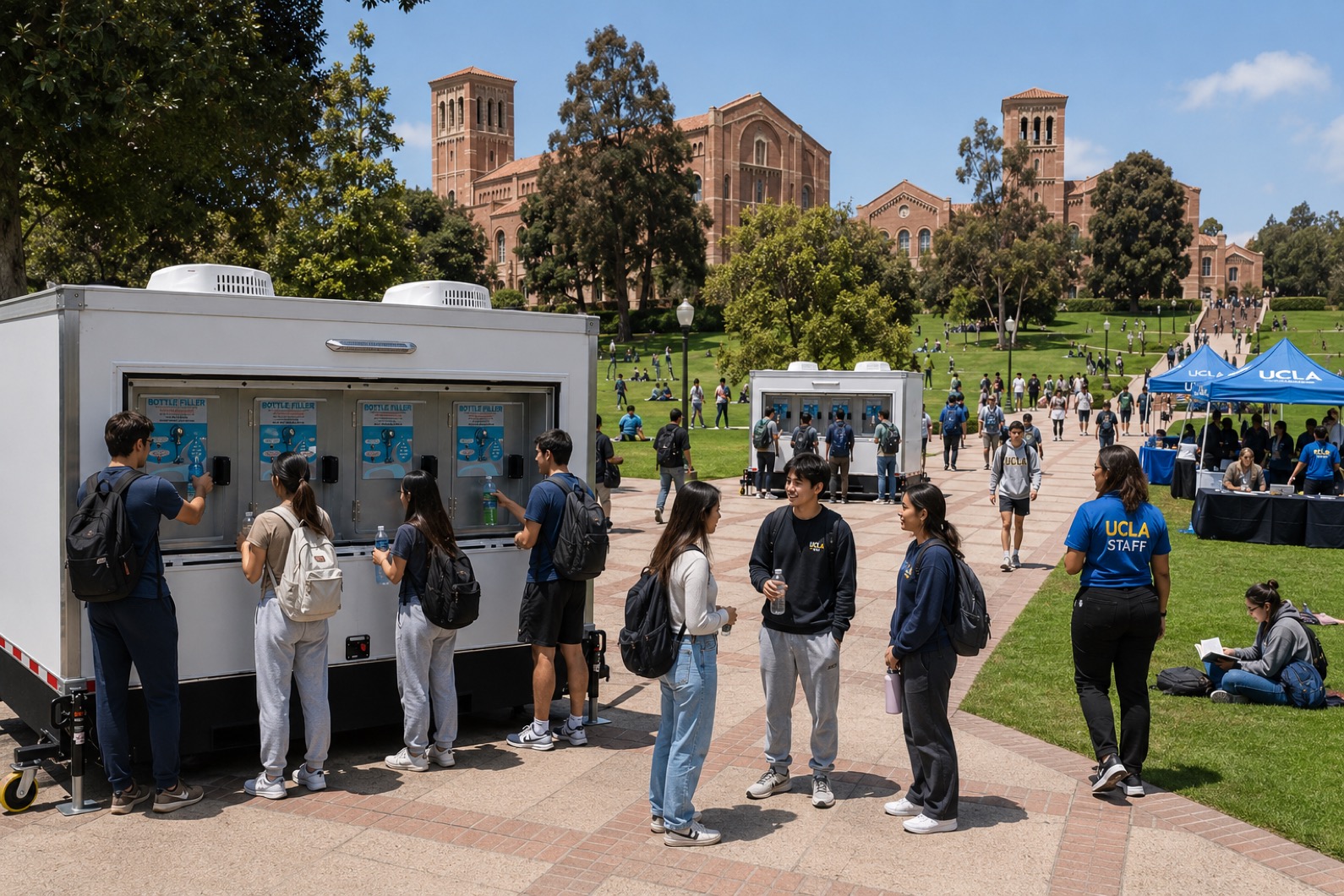
The downtown farmers market, the Gilbert Global Village Festival on the Civic Center lawn, the Fourth of July at Gilbert Regional Park, an outdoor crowd here drinks fast. A trailer hands organizers a steady run of cold water and clean refill points with no carting in and dragging out a heap of throwaway plastic.
Agriculture, solar & outdoor labor
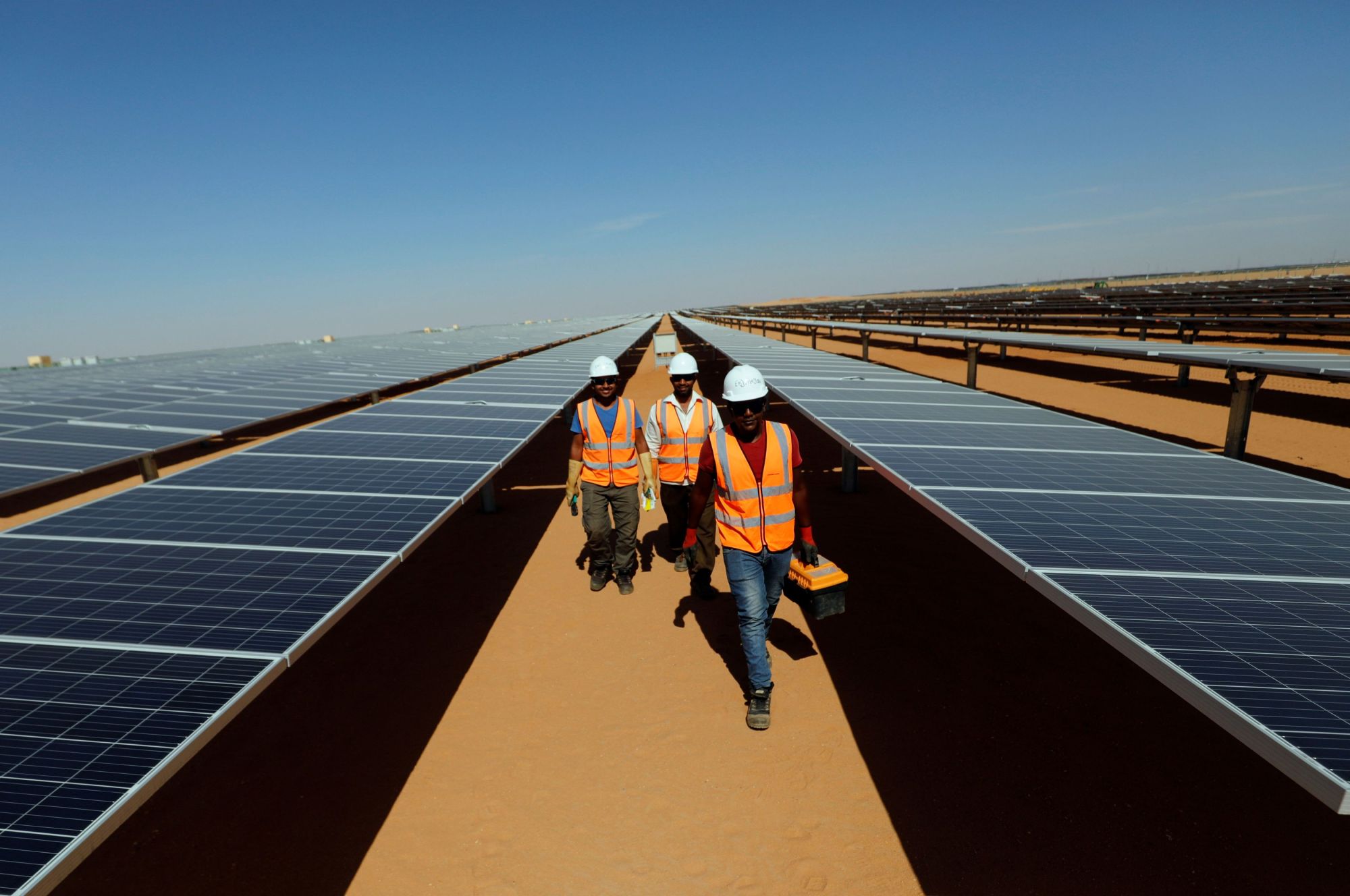
Farmland is where Gilbert started, and ground work like Agritopia’s urban farm, the landscapers keeping the master-planned neighborhoods green, and the solar arrays on the city’s open margins all sit among the most heat-exposed jobs anywhere. With jug-fill and hose-bib taps on the trailer, field crews refill coolers and gear on the spot instead of trekking back to a truck.
Industrial yards & emergency response
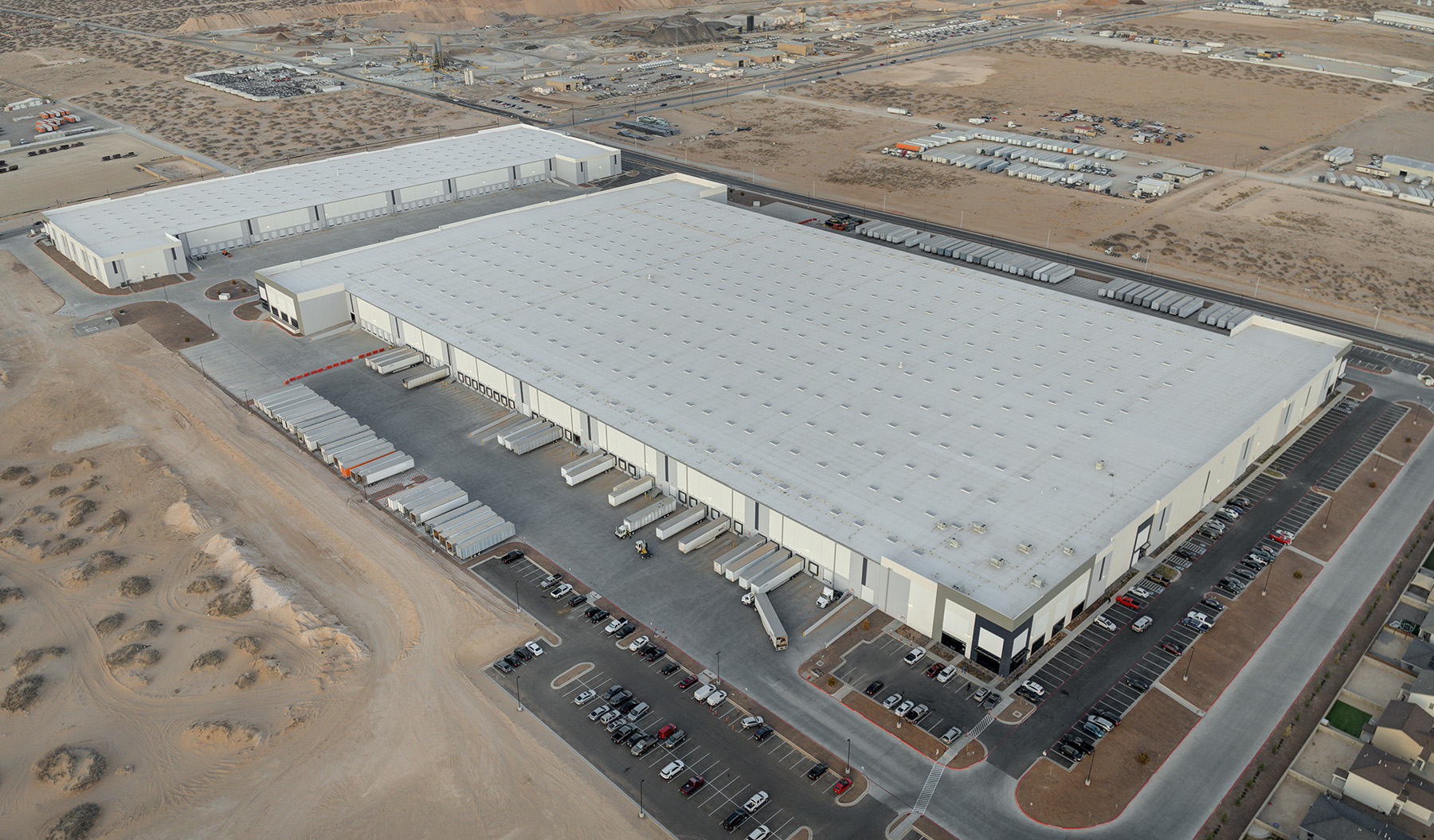
The warehouse and logistics build-out spreading across the southern East Valley puts crews in laydown yards and equipment lots under the same hard sun as any framing job, and a towable station drops right in where they work. When a heat emergency or a water-main break hits a Gilbert neighborhood, we also deploy potable water stations to cooling sites and base camps on short notice.
Treated through four stages, chilled, then poured
A station only justifies the rental when people actually want to drink from it. Ours route municipal water through a complete filtration sequence and an ultraviolet pass, then hand off to an onboard chiller, so the pour arrives tasting right and properly cold even on the cruelest Gilbert afternoon.
Sediment stage
Traps grit, flecks of rust, and the fine particulate East Valley mains carry along, ahead of every other step in the sequence.
Carbon stage
Strips chlorine, smells, and stray flavors so the water lands clean on the tongue, the difference between a tap people choose and one they ignore.
Micro-particulate stage
A micro-particulate cartridge screens out the fine particles the earlier stages leave in, safeguarding crews and members of the public drinking from it.
UV disinfection
A burst of ultraviolet light disables bacteria and pathogens without any added chemistry, the final checkpoint before water hits the spout.
Three ways to fill, ADA included
Each trailer gives you four push-back filling positions with adjustable nozzles, and a bottle nudged against the bar starts pouring on its own. We set one of those positions at an ADA-accessible height, which means an event or jobsite is covered for everyone without bolting on a separate fixture. Toward the back, a large-jug station fills five-gallon coolers and personal packs, while several hose-bib taps cover crew work, event support, and field use. Everywhere the water travels, intake through nozzle, food-grade components and stainless hardware keep the treated, chilled quality intact at every contact point.
One Signature trailer banks 300 gallons, on the order of 2,400 sixteen-ounce servings, and our trucks replenish it whenever it dips, so the unit never becomes the choke point on a hectic Gilbert shift or a wall-to-wall Saturday on the lawn.
We tow it in, charge it, and have it pouring cold, often inside the hour
Nothing here lands on your plate to coordinate. We take care of where it sits, charging it with fresh water, and the hookup, then brief your team on it before we roll off the lot.
Tell us the basics
Your headcount or guest list, the rental length, the spot it should occupy, and the power on hand. With those four, we can scope the whole job.
We deliver across the East Valley
Generally around 45 minutes from the dispatch call anywhere near Gilbert, with rush drops available overnight through a heat event.
We set it up
We level the trailer, charge the 300-gallon tank with fresh water, and wire it to your power, either one to three 20-amp 120-volt circuits or a lone 50-amp 240-volt feed.
We keep it supplied
Our trucks replenish the tank on a rhythm set to your demand, and we maintain the unit for as long as the rental runs.
A bare lot with no power feed? That gets settled in the quote. Given the trailer’s light draw and the backup of our fleet, we’ve run units on parcels with zero permanent power, so just describe what’s on the ground and we’ll design the rest around it.
In a Gilbert summer, hydration access is a safety obligation you can document
In a recent year Gilbert ran up 113 days at 100 degrees or hotter, and across much of July and August the nighttime low never fully surrenders the triple digits. Gilbert employers fall under federal OSHA, which already requires reachable potable drinking water on a worksite, and the agency’s proposed national heat rule would sharpen that toward water that is on the record, reasonably cool, and stationed within easy reach of the work.
Park a station on the lot and that requirement becomes concrete, something an auditor can stand in front of. A safety director we worked with last August summed it up after her inspection: “Pointing the auditor to a fixed, mapped water source closed the item on the spot.” It’s a permanent source pouring cold, potable water on demand, the load-bearing piece of a defensible Heat Illness Prevention Plan and the sort of setup a safety review on a Gilbert site expects to find.
- A steady supply of reasonably cool drinking water right where the crew is working
- Mapped, auditable fill points you can cite directly in your prevention-plan paperwork
- Room to build in acclimatization and timed water breaks for crews working the heat
- Already aligned with where the federal heat rule is headed, no last-minute scramble
What Gilbert summers have taught us about staging water
Years of dropping stations across the East Valley shaped how we run every job here. I keep a short list of the lessons that stuck, and they all came from getting something slightly wrong the first time.
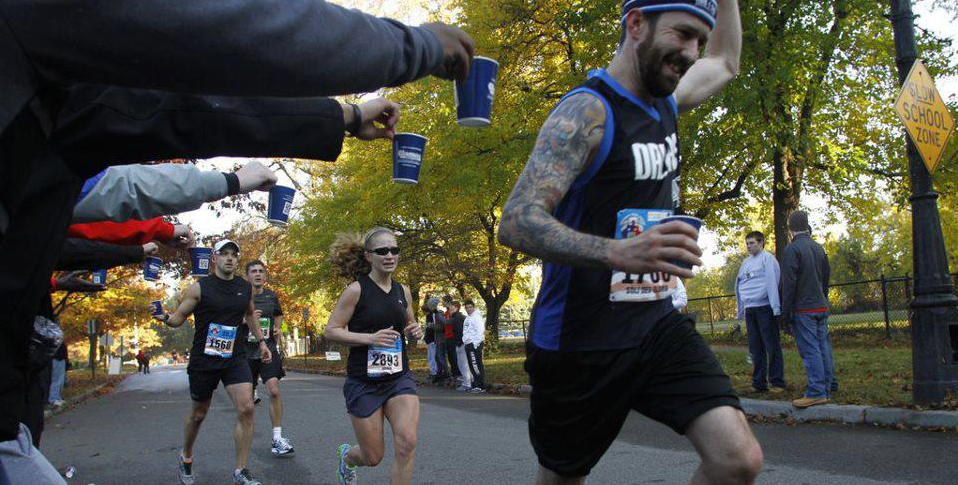
So the first thing we learned is that where you place a station matters as much as the trailer itself. On a Gilbert subdivision build, we set a unit near the entrance on day one and watched it sit half-used (the work had moved to the back lots, and nobody wanted the walk on a hot break). We shifted it closer to the active framing the next morning, and consumption nearly doubled by lunch. The super put it simply: “Make the water easier to reach than the shade, and they’ll drink it.”
The second lesson was to schedule top-offs by the weather report rather than the date book. We parked extra trucks in reserve ahead of one advisory, and when three jobs on the south side rang the same afternoon, all three stayed wet with nobody hitting empty. The safety lead texted me that night: “You filled us before we even noticed.” We now write that kind of slack into every hot-season agreement around here.
Third lesson: the pallet habit hangs on until a crew feels the swap in person. On a solar job at the south edge of town, the foreman openly doubted we could hold 300 gallons cold parked on bare desert, and I remember him telling me as much while we leveled the trailer. We dropped the unit, tuned the fill rhythm, and inside a week he rang back for a second trailer with one line: “Nobody’s asking for ice anymore.” Water that stays cold is the whole argument, and in this climate the argument makes itself the moment it’s parked on the dirt.
Every one of those calls taught us what the heat keeps teaching: in Gilbert, hydration isn’t a line item you set once and forget. It’s an operation, and we run it like one for the full length of every rental, on a jobsite or at an event.
When the crowd is outdoors and the Gilbert sun is relentless
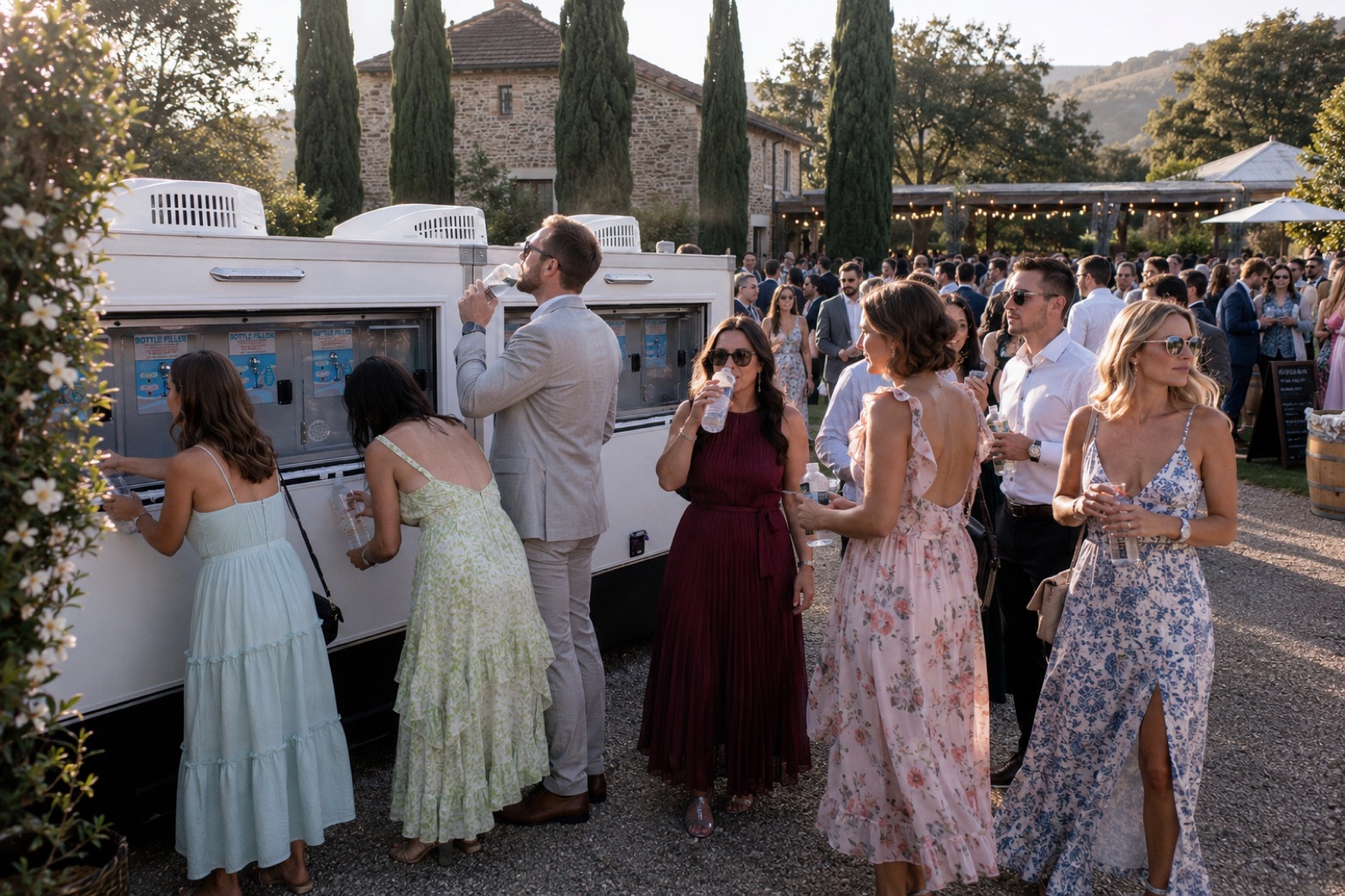
In Gilbert, event teams build their plans around the heat the way elsewhere they’d build around rain. A reception in Agritopia, a pop-up at SanTan Village, a charity run threading the subdivisions, a festival on the Civic Center lawn, drop in a self-contained unit and your guests get cold water that keeps moving plus tidy refill points. Your crew, meanwhile, is off the hook for the haul-in, the ice-down, and the haul-out of pallet upon pallet of plastic.
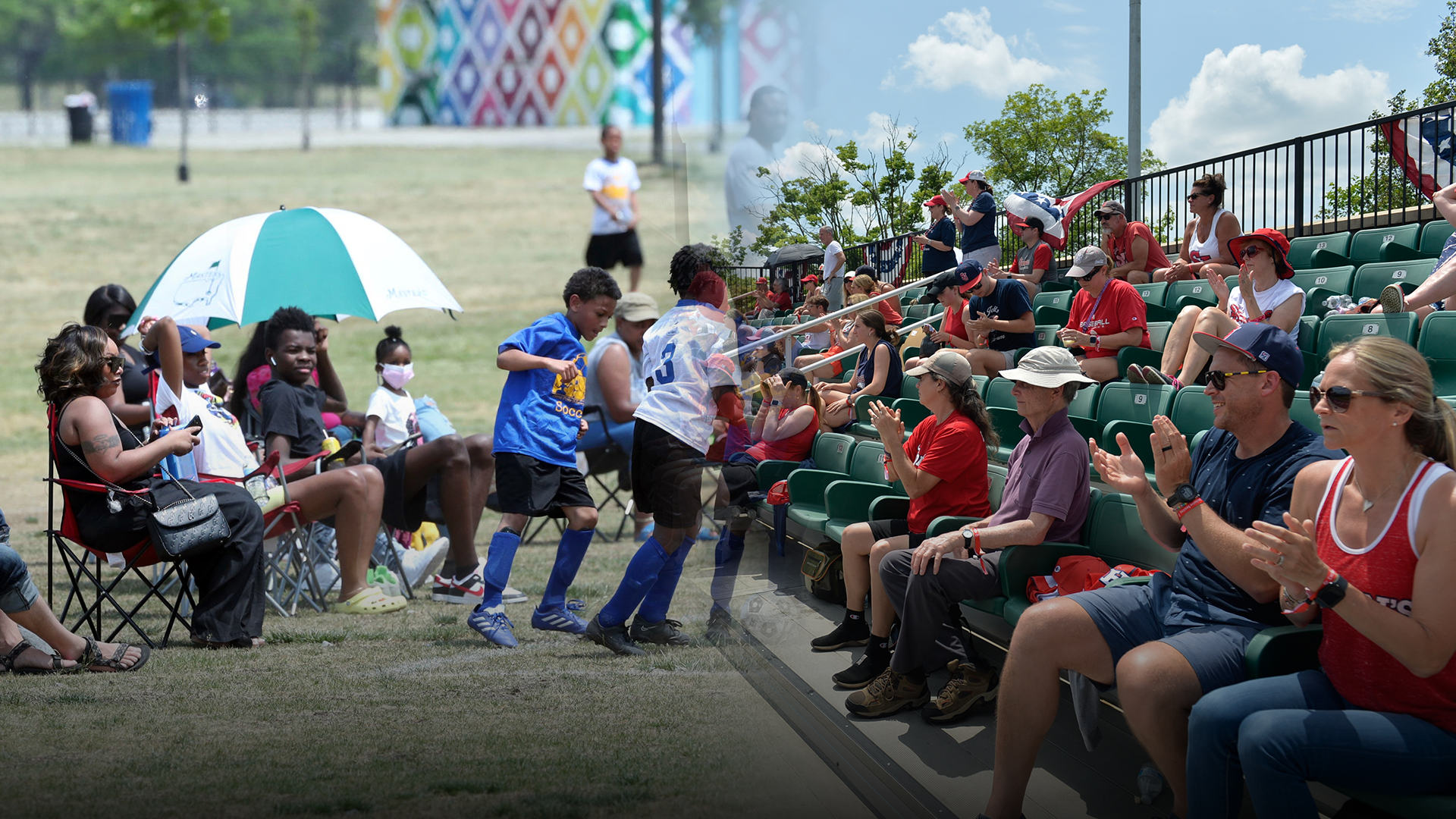
Across a sprawling site we’ll set several units so no corner of the crowd is stranded from water, and our team times the drop and the pickup to your run-of-show. We learned that the hard way at a Gilbert gathering where one station beside the main stage had a line forty deep by mid-afternoon (heat times a few thousand people adds up fast). The following year we scattered several units across the grounds and the queues evaporated. “People stopped leaving early to find water,” the organizer told us afterward. To guests it feels like good hosting. To your ops lead it counts as risk kept under control.
Why a fast-growing desert town is a hard place to plan hydration
Most places sweat through a hot week or two. Gilbert endures a hot season counted in months, and it keeps filling in fast, which puts more people working and gathering outdoors in the teeth of it each year.
A normal Gilbert year clears a hundred-plus days at 100 degrees or more, and through stretches of July and August the nighttime number stays stuck in the 90s. Pavement and curing slab read far hotter than the air does, which is how a crew lands in real heat-illness range by mid-morning with the gauge still claiming “just” 102. Cold water out here isn’t a comfort item. It’s the least expensive safety gear on the whole site, and the piece most easily botched by a warm cooler.
The hard part is the length of the exposure. A contractor in a gentle climate can absorb a heat spike with a handful of extra coolers. A Gilbert outfit staring down half a year of summer cannot ice its way out, the demand is too steep, the water warms too quickly, and the grind of carting, chilling, and tossing bottles stacks up day after day. A central, self-cooling unit is the lone arrangement that survives a whole Gilbert summer without turning into a side project of its own.
And the demand only rises, because Gilbert is wrapping one of the quickest growth stretches in the region. A onetime farm town has swelled to roughly 292,000 residents (the 2020 count was about 269,000), and it’s projected to top out near 330,000 at full build-out around 2030. That growth shows up as construction in every quadrant: new subdivisions toward Queen Creek and the city’s southern edge, the next phases of Cooley Station near San Tan Village, commercial and logistics pads along the Loop 202 Santan Freeway, and even Heritage Park breaking ground downtown. Every one of those projects means crews in the open desert sun, often starting before dawn to outrun the afternoon.
Our East Valley dispatch grew up around that exact reality. We started seeding units along Gilbert’s growth corridors years ago, and early on I set fill schedules to headcount instead of a rigid calendar and layered in rush drops whenever advisories hit. One superintendent put the stakes plainly the first week we worked together: “I can replace almost anything on this site overnight, except a worker who went down from the heat.” On a project moving as fast as a Gilbert build does, a hydration gap doesn’t merely drag the pace, it can halt the work outright and land someone in the back of an ambulance.
Behind the station: the trucks that keep a Gilbert site supplied
What you see on the lot is the station. What stands behind it is a support fleet covering supply, storage, and disposal end to end, so one phone number owns the full cycle rather than juggling a trio of outside vendors.
Potable water trucks
Drinking-grade water moves by the truckload in our fleet, replenishing your 300-gallon tank on a cadence matched to how many people you’re serving. Those same rigs charge cisterns, on-site holding tanks, and bladders whenever one delivery can’t keep pace with the day, think a slab pour or a sold-out Saturday on the lawn.
Bladder bags & buffer supply
A collapsible bladder gives you reserve fresh water for the busiest stretches, or doubles as temporary greywater holding where a lot has nowhere to drain. It’s the understated component that keeps an outlying Gilbert site humming in the gaps between truck runs.
Pump trucks
Any time water has to be relocated, pushed, or pulled down, a pump truck does the work, loading storage or shifting supply over a wide footprint. The payoff shows up on big spreads where the unit and the place you’re filling sit far apart.
Vacuum & waste trucks
When there’s used water to deal with, a vacuum truck pulls the used greywater and wastewater and hauls it to a permitted disposal site, which seals the loop. Where it all ends up is never your puzzle to solve, because that handoff is part of the service from day one.
All of it dovetails. An outlying Gilbert parcel might pair a unit with a reserve bladder and a standing truck-fill schedule. A big festival might call for a pump truck to relay supply plus a waste run at teardown. Describe how your project is laid out and we’ll put together the right combination, one contact, one bill, one crew that already knows the ground.
The questions we’ll ask, and why each answer reshapes the plan
Give us a couple of minutes on the phone and you’ll have an accurate quote. Here’s what we’ll be asking, so you can have it handy, and so you can watch us tailor each Gilbert job to the site rather than reaching for one default setup.
The four answers that shape the recommendation
- How many people? A 15-person framing crew and a 400-person community event sit at opposite ends of the problem. Your headcount sets how many units belong on site and how hard we have to push the refill schedule.
- For how long? A weekend on the lawn, a three-week pour, and a nine-month build each ask for their own service rhythm. Brief events ride mostly on stored buffer, while long jobs depend on scheduled truck visits.
- Where will it sit? The towable Signature settles into a yard, a bare lot, an event lawn, or a corridor staging spot. Once we know the location and how a delivery rig reaches it, we can park it where the foot traffic actually is.
- What power is on site? A station lives on one to three 20-amp circuits or a single 50-amp drop. Plenty of raw Gilbert lots arrive with no permanent power, which we can work around, but we need to hear about it at the start.
The details that help us get it exactly right
- The exact placement you have in mind, and the route a delivery rig would take to it
- Whether your people fan out over the grounds or cluster at one work face or stage
- Any prevention-plan paperwork your safety team needs the unit to back up
- Whether bulk delivery, reserve bladders, or waste removal should ride along on the same order
The costs a pallet of bottled water keeps off the invoice
On a purchase order, bottled water reads like the budget option. Its true cost is buried in handling, in storage, in the warm-up, and in the waste stream, and a Gilbert summer drives every one of those higher than a temperate climate would.
The labor nobody puts in the budget
Somebody places the order, signs for the pallets, splits them open, ices the coolers at sunrise, refills them all day, and crushes the empties for the bin. Run that across a sizeable Gilbert crew and it burns hours of paid time every day, hours taken straight off the work you came to do. A trailer puts the whole errand to rest. I ran the actual numbers once with an East Valley contractor, and the labor he got back more than paid for the rental. “I never clocked that the bottles were eating half a day of payroll a week,” he admitted afterward. Our trailer shows up charged, tops itself off from our trucks, and needs nothing from your super except a parking spot.
The warm-up problem
Bottles iced down at six are creeping toward bathwater by ten on a Gilbert July morning. Folks quit reaching for warm water, and the moment a crew stops drinking, heat illness gets its opening. A trailer that chills onboard never climbs that warm-up curve. At quitting time the pour is as cold as it was at dawn, precisely the stretch when a worn-down, overheated crew has the least margin to spare.
The storage and footprint tax
Stacked pallets hog staging room, jam up laydown areas, and bake in the sun until someone breaks into them. Empties pile up quicker than anyone carts them away, and on a cramped Gilbert infill lot that pile becomes a problem of its own. One trailer takes a single stall and quietly covers a crew that would otherwise rip through hundreds of bottles a day.
The waste that follows the job
Each bottle you purchase is also a bottle you discard, and a busy site stacks up a season’s worth of them in a hurry. There’s the disposal bill, the dent in a project’s sustainability numbers, and in a county where a tossed bottle can persist for centuries, a footprint that outlives the structure itself. Move to a refill station and that whole line drops to nothing, leaving your ESG report a figure actually worth printing.
Staging cold water across Gilbert and the East Valley
We built our local dispatch to reach Gilbert and the surrounding East Valley end to end, from the Heritage District and the master-planned communities to the southern growth corridors and the neighboring towns. We mapped the routes ourselves, run after run, until the whole metro fit inside one delivery radius. If you’re in or around Gilbert, you’re inside our service radius.
Power RanchCooley StationVal Vista
HigleySevilleLindsay & Warner
Gilbert Regional ParkQueen CreekChandler
MesaTempeSan Tan Valley
Spread along a corridor instead of one address? We ride the routes the East Valley moves on, the Loop 202 Santan Freeway, the US-60, and the surface arterials lacing Gilbert’s neighborhoods, so corridor and multi-site jobs see the same quick turnaround as a single stop.
The questions Gilbert crews and organizers really ask us
What’s your typical turnaround to a Gilbert address?
Around the East Valley, count on roughly 45 minutes from the moment we dispatch. When a heat warning is up we add overnight and same-day emergency runs, so a crew or event team that arrives to nothing cold on a 110-degree morning can usually be drinking from a station well before midday. What moves that number is site access and whether power is already on hand, so give us those two details and we’ll route the truck accordingly.
Is it actually chilled, or just run through a filter?
It’s both. A built-in chiller cools each station’s own supply, which keeps the water cold for the first morning pour and the last one before you lock the gate alike. We design it that way on purpose: tepid water gets ignored while people quietly dehydrate, so in Gilbert we count the cooling as part of the safety package, not a perk. Water that people are willing to drink is the water that keeps a heat-illness case from starting.
What’s the capacity, and how do you handle a tank getting low?
One Signature trailer holds 300 gallons, which works out to somewhere around 2,400 sixteen-ounce servings. On a hot day with a big crew or a crowded event, our own potable water trucks keep that tank replenished on a rhythm we set to your demand, so capacity never caps you. Refills are our responsibility, not something you have to watch.
Will a rental back up our OSHA heat-illness program?
Yes, squarely. Potable drinking water on the job is already a federal OSHA requirement, and the proposed national heat-illness rule pushes toward water that’s documented, suitably cool, and stationed close to the work. Drop a unit in and you’ve got a permanent, mapped, chilled source you can write into a Heat Illness Prevention Plan and walk an inspector to. The plan itself is yours to author. What we deliver is the hydration backbone underneath it.
Do the stations meet ADA access?
They do. Of the four push-back filling positions on each unit, one sits at an ADA-accessible height, so a Gilbert jobsite or event is covered for everyone without a bolt-on workaround. The rear of the trailer adds a large-jug station for five-gallon coolers and personal packs, and hose-bib taps handle crew work alongside it.
Do you do festivals and gatherings, not just jobsites?
We do, and events are a big part of our Gilbert calendar. A market, a charity run, a wedding, a lawn festival, we’ll place a single unit or spread several across the grounds, with drop-off and teardown timed to your run-of-show. Attendees get cold water that keeps flowing and tidy refill points, and your team is spared the haul-in, haul-out routine of pallet after pallet of plastic.
What information do you need before delivery?
Just a handful of details: how many people, how long the rental runs, exactly where on the Gilbert site it parks, and the power available. A Signature runs on either one to three 20-amp 120-volt circuits or a single 50-amp 240-volt feed. If a raw Gilbert lot has no power at all, flag it early and we’ll build the workaround into your quote.
Is your coverage just central Gilbert, or wider?
Wider. Local dispatch reaches all of Gilbert, the Heritage District through Power Ranch, Cooley Station, Agritopia and the growth corridors on the south side, and it carries on into Queen Creek, Chandler, Mesa, Tempe and San Tan Valley next door. Multi-site runs along the Loop 202 Santan Freeway and the US-60 are part of our normal week.
How does it stack up against bottled water on taste?
Clean and neutral, with the chlorine bite gone. Carbon treatment lifts the chlorine and the muddy notes East Valley tap can carry, so the pour reads fresh instead of hose-flavored. We don’t treat that lightly, because a station only pulls its weight when people actually prefer it over the cooler, which makes taste a genuine part of how well it protects a crew.
How big a crew can one unit really serve?
Plenty, since what limits a station is how often we refill it, not the four taps. The filling positions clear a crew or an event line fast, and 300 gallons stretches to roughly 2,400 servings between top-offs. When a crowd gets very large, we either tighten the truck cadence or set a second trailer alongside, so the unit grows with your numbers rather than capping them. Share your peak count and we’ll match the supply to it.
Can you respond to a last-minute heat emergency?
Regularly, and it’s a big reason Gilbert clients hang on to our number. When advisories hit we run drop-offs overnight and stage extra water trucks ahead of a dangerous forecast. A crew or event that turns up to dead hydration on a triple-digit morning can usually get a unit pouring cold before the brutal part of the afternoon arrives.
Made for the people who can’t afford a hydration gap
When I ask Gilbert clients later what changed, the answers rhyme. Here’s the gist of what a few of them told us.
“Our framing crew was out by Queen Creek and the bottled-water setup collapsed before 10 a.m. one July day. They rolled a trailer onto the site that same afternoon, and the water was genuinely cold. We never went back to pallets.”
“For our community festival on the Civic Center lawn, the refill stations cut our single-use bottle order to almost nothing and the lines stayed short. As one of my volunteers put it, the water was the one thing nobody complained about all day. Drop-off and pickup landed on the dates we asked for, no chasing anyone. We will book them again.”
“An inspection flagged that we needed provable cold-water access for a crew working the heat. Putting a mapped station on site checked that box for our prevention plan, and the top-offs always landed ahead of us running dry.”
Service information current as of June 2026.
Get filtered, cold water on your Gilbert site before the next heat wave
Give us your headcount or guest list, your dates, and the spot on site you have in mind. We’ll scope the job and run a trailer out across the East Valley, generally within roughly 45 minutes of the dispatch call.