
On-Site Hydration Services rents towable water stations to job sites, event fields, schools, agencies and relief operations in all 50 states. Pick your industry below and you will see how the trailer gets set up for that kind of site, what shows up with it, and what the booking covers.
Licensed and insured | A+ BBB rated | 24/7 dispatch
Every booking on this page uses the same unit, so the differences between a rodeo and a refinery turnaround come down to placement, power and how often we come back to fill it.
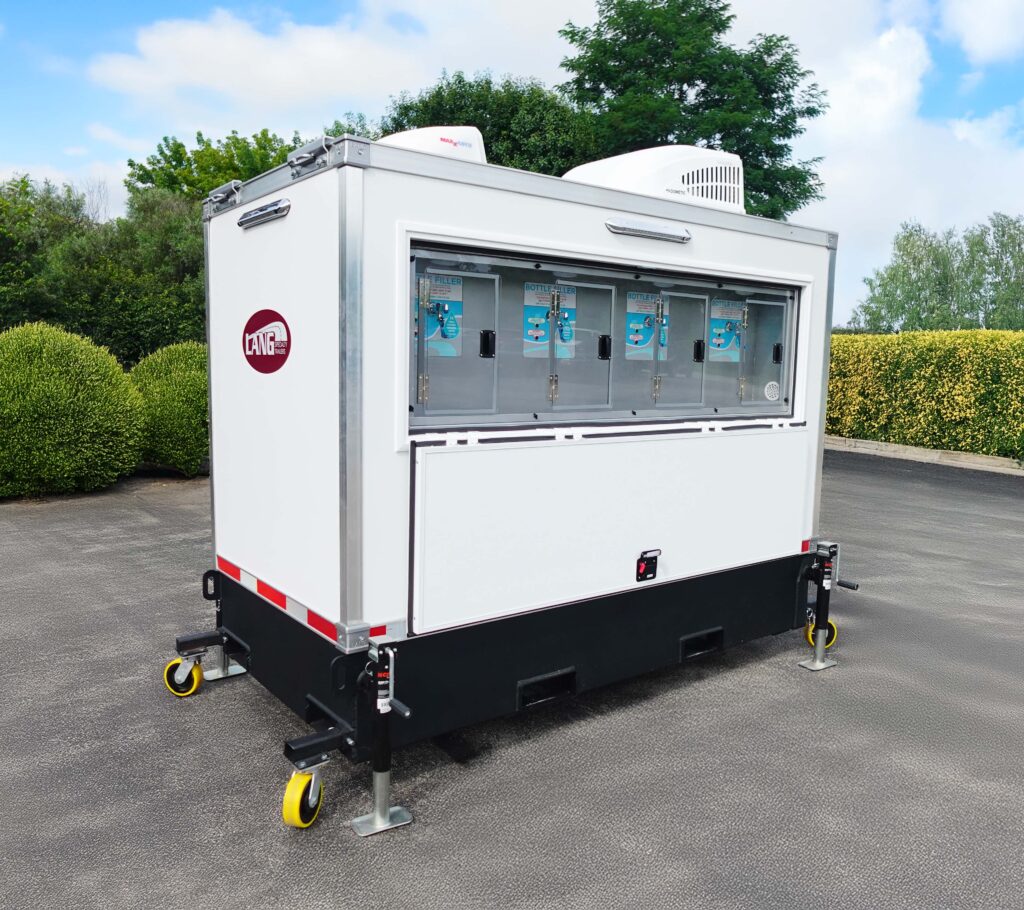
The Signature Series is a road towable water station trailer. We haul it in behind a truck, level it, connect the power and walk your team through it before we leave. It carries 300 gallons of water filled from a certified potable source before it leaves our yard, and it feeds four bottle fill taps that run at the same time. Water passes through three filter stages and a UV chamber on board, then through a chiller, so what reaches the spout is cold and has no mineral taste.
Crews call it a water bottle trailer or a mobile drinking fountain, and the labels on the doors say bottle filler. Same machine either way. If that is the part you care about, the bottle filling station rental page covers the unit itself, and mobile drinking fountain rentals covers the same trailer under the name people search for in parks and public spaces.
Two things decide whether a site works. The first is power. The trailer runs on one to four dedicated 20A/120V circuits or a single 50A/240V circuit, and when a site has nothing to plug into, we bring a generator. The second is access. We need a path a truck can back down and a reasonably level spot to park, which is why we ask where the gate is before we ask anything else.
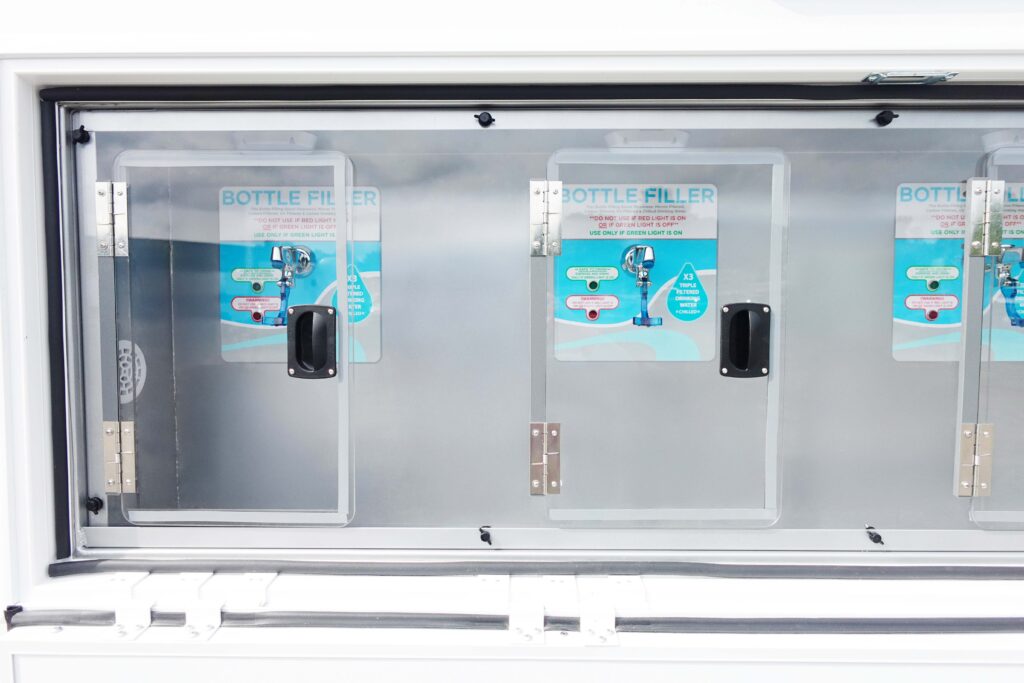
Four bottle fill taps behind the service doors, all live at once.
Roughly 2,400 sixteen ounce refills per fill. Nothing to hook up on your end, the tank arrives full.
Four people fill at the same time, so a break does not turn into a line at one spout.
Three filter stages and UV on board, then an onboard chiller. Cold water gets used, warm water gets walked past.
One to four dedicated 20A/120V circuits, or one 50A/240V circuit. No power at the site, we bring our own.
Crowds drink more than planners budget for, and a pallet of bottled water disappears in the first hour. These are the event bookings we run most often.
Most event work comes down to placement and timing. We put the trailer where people already walk instead of behind the vendor line, and we set the refill run around your schedule rather than ours. On a multi day build we drop early and top off overnight so the gates open on a full tank. Our busiest event bookings are water stations for festival crowds, and the same setup carries a wedding lawn or a Saturday tournament without changing anything but the parking spot.
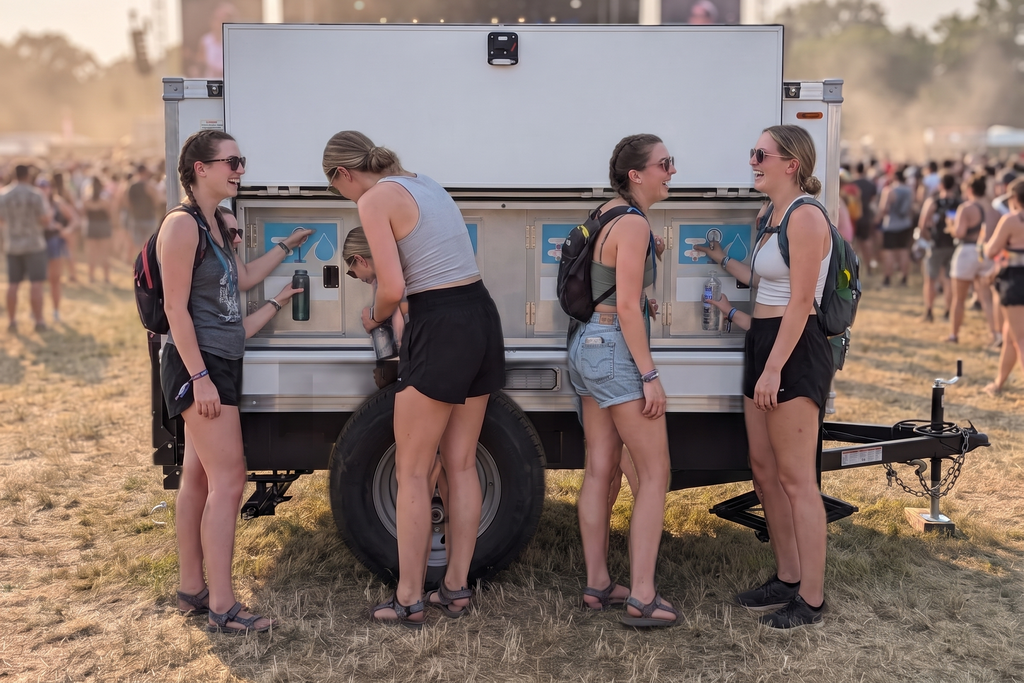
Free water at a festival keeps the medical tent quiet and keeps people on the field through the headliner. We stage the trailer along a main walkway and send a tanker back between sets so the taps never run dry on a hot Saturday.
Basecamp runs long days, and crew refill personal bottles instead of burning through cases. The trailer parks with the rest of the vehicles, runs quiet on shore power, and we schedule refills around the shooting day.
Any event on open ground with no faucet within reach. We place the station where foot traffic already flows, then top it off overnight so the morning gate opens on a full tank.
Tournaments hold players, coaches and families on one field all day. Four taps running at once means a whole team fills during a two minute break instead of queuing at a cooler somebody has to keep icing.
One day pop ups, grand openings, block parties. We deliver in the morning and pick up after teardown, so you pay for the window you actually use and nothing sits on your lot afterward.
Start corrals, finish chutes and aid stations all need water that did not arrive on a pallet. We park at the finish where runners refill after the timing mat, and we can stage a second unit mid course.
→
An outdoor ceremony in July is hard on guests in suits. The station sits back from the aisle, pours cold water all afternoon, and takes the pressure off a bar that was staffed for cocktails.
Company picnics, field days and campus events where bottled water means pallets in and recycling out. Guests refill their own bottles at four taps while the trailer stays out of the photos behind the tent line.
Fairgrounds run a week or more with livestock barns, midways and grandstands spread far apart. We can set a unit at each end of the grounds and refill both between gate times.
Outreach days, food distributions and parking lot services where volunteers work in the sun for hours. The trailer runs off one building circuit and needs nobody pulled off their job to tend it.
Job sites are where the trailer earns its keep. Heat rules expect drinking water on site, and a cooler that ran dry at nine in the morning does not count.
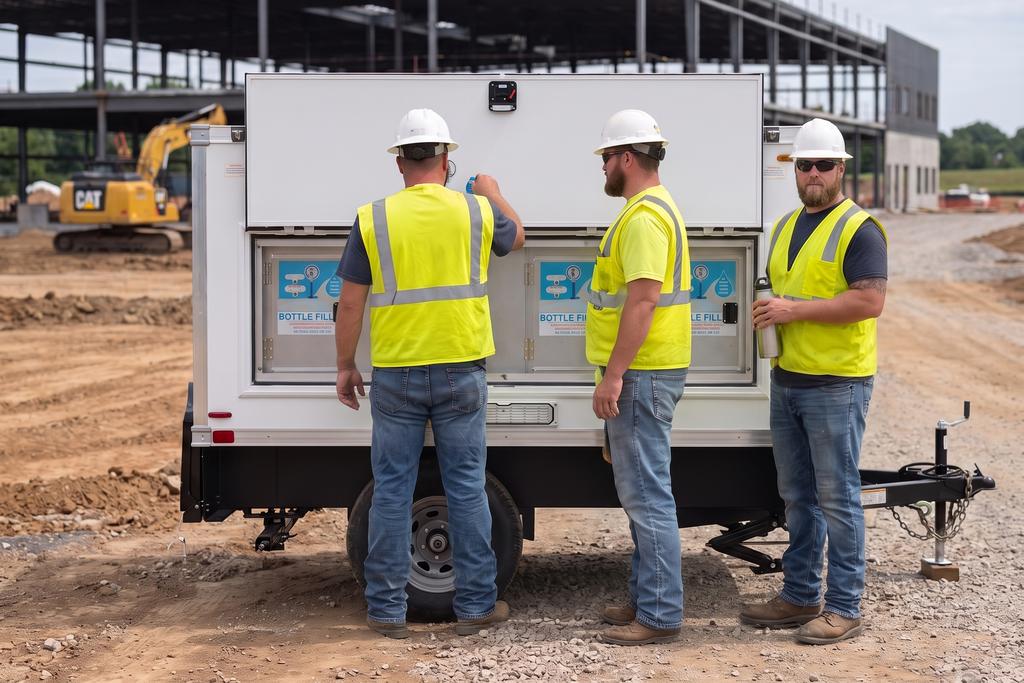
Crews stop drinking when the water is warm or the walk is long, and that is how heat incidents start. We place the trailer inside the fence near the work face, then move the refill run as trades stack up toward closing in. Sites that need bottle filling stations on construction sites usually keep the unit for months, and we run it on a standing schedule so nobody on your side has to reorder anything.
Cold water at the work face instead of a cooler nobody refilled. We place the trailer inside the fence where trades already walk, and the refill run follows your headcount as the job stacks up.
Harvest crews work a long way from any tap and the day starts before sunrise. The trailer tows out to the block behind a pickup, and the tanker runs on whatever schedule the harvest keeps.
Turnarounds and shutdowns bring hundreds of contract workers through the gate at once. We stage the unit at the lay down yard so nobody crosses the plant to get a drink.
Crews move between properties all day and the truck cooler is warm by ten. A station at the yard or the anchor site lets everyone fill before the first stop and again at lunch.
Pits and quarries work in heat and dust with long haul roads between the face and the shop. We set the unit near the shop or the scale house and refill on a fixed weekly run.
Pads, pipeline spreads and turnaround work in country with no water service at all. The trailer runs on a generator, and we route a tanker to the pad instead of asking a hand to drive to town.
Peak season adds headcount faster than two break room fountains can handle. Park the trailer at the dock apron or the driver lot and the crowd at the fountain goes away.
A plain reading of what OSHA expects for drinking water on a job site, and how a station on the ground covers it. Worth reading before an audit or before you write a heat illness plan.
When a system goes down or an incident stands up, the water question gets urgent inside of an hour. We keep units ready for that call.
Emergency bookings come in at odd hours and the site is rarely ready for us. We roll with a generator when there is no power, fill from certified potable sources, and keep a tanker rotating for as long as the incident runs. Agencies that book drinking water for disaster relief work often put a unit on standby for a whole season instead of calling in fresh every time the forecast turns.
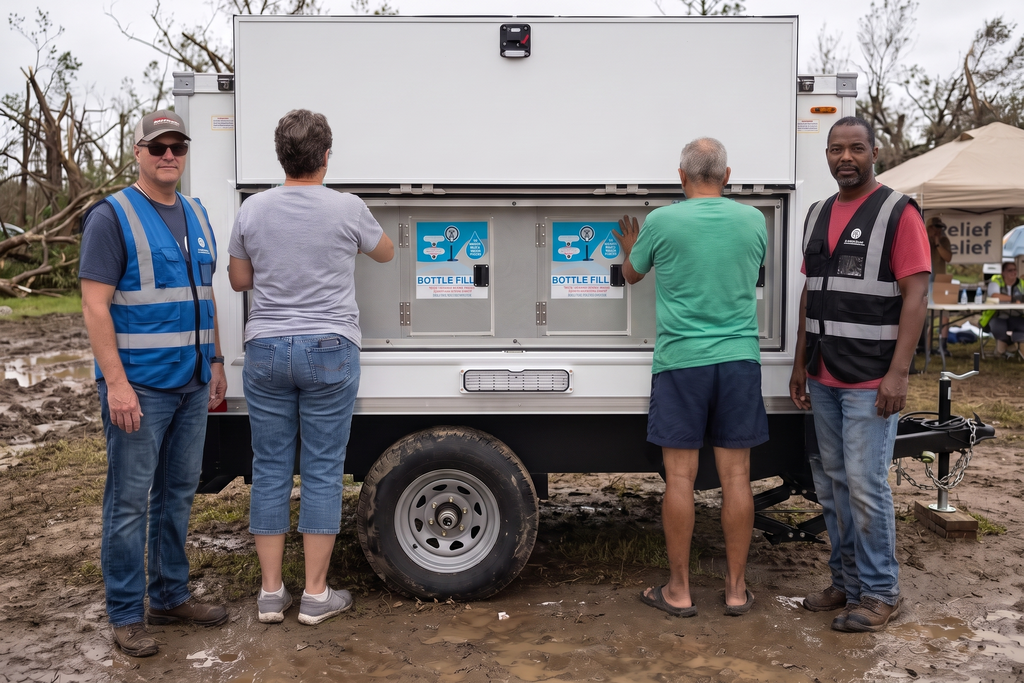
After a storm or a main break, a station gives a neighborhood somewhere to fill jugs without a pallet drop every morning. We fill from certified potable sources and keep the tanker rotating.
Staging areas, evacuation points and command posts stood up in a few hours. Call the dispatch line with a location and we roll a unit, with a generator on the hitch if the site has no power.
Public works projects, city events and boil notices. We invoice on municipal terms and can hold a unit on standby through a season instead of booking one date at a time.
Field exercises and drill weekends where the water buffalo is carrying more than it should. The trailer tows behind a standard vehicle and sets up fine on unimproved ground.
A cooling center needs drinking water at the door, not just air conditioned rooms inside. The station parks at the entrance so people fill on the way in and again on the way out.
Base camps feed and water hundreds of firefighters for weeks at a stretch. Units run on generator power, take a daily tanker refill, and sit where crews stage rather than out by the gate.
How a bulk distribution point actually runs, written for agencies that would rather plan one before they need it. Covers potable sourcing, site layout, traffic flow and refill timing.
Campuses have their own rules about vehicles, fencing and who gets to be near students. We work inside them.
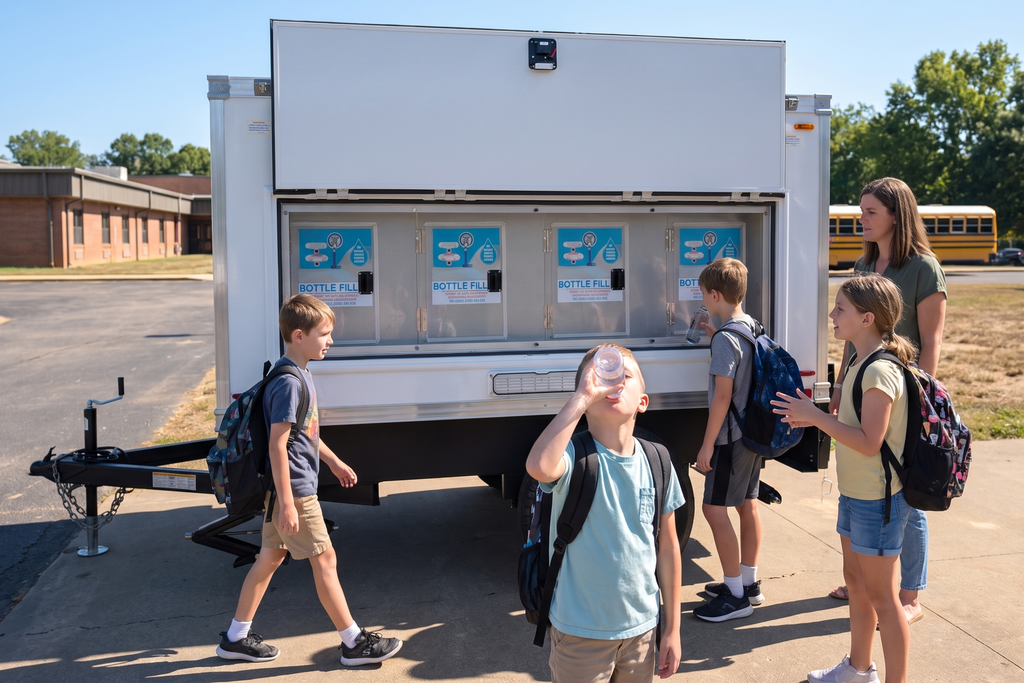
Schools call for two reasons: construction that takes the fountains offline, and outdoor events in heat. Either way the trailer parks on the lot behind a fence line, runs off one building circuit, and needs nobody assigned to it. Districts booking school drinking water station rentals usually start with one site and add the rest once staff see how little attention the unit takes.
→
Fall practice, field days, and remodels that take the fountains offline for a semester. The trailer parks on the lot behind a fence line, runs off one building circuit, and gives every student a filling point staff does not have to watch.
Everything else we get called for: commercial buildings, ground with no water line at all, and the names people search when they do not know what to call this trailer.
Some of these are places and some are just different words for the same machine. A property manager with the plumbing torn out wants a bottle filler on the sidewalk by Monday. A park running on a bad well wants a potable fill point at the office. Both get the same trailer and the same tanker. Seasonal parks book campground and RV park water service ahead of summer, while commercial sites tend to book a week at a time and extend.
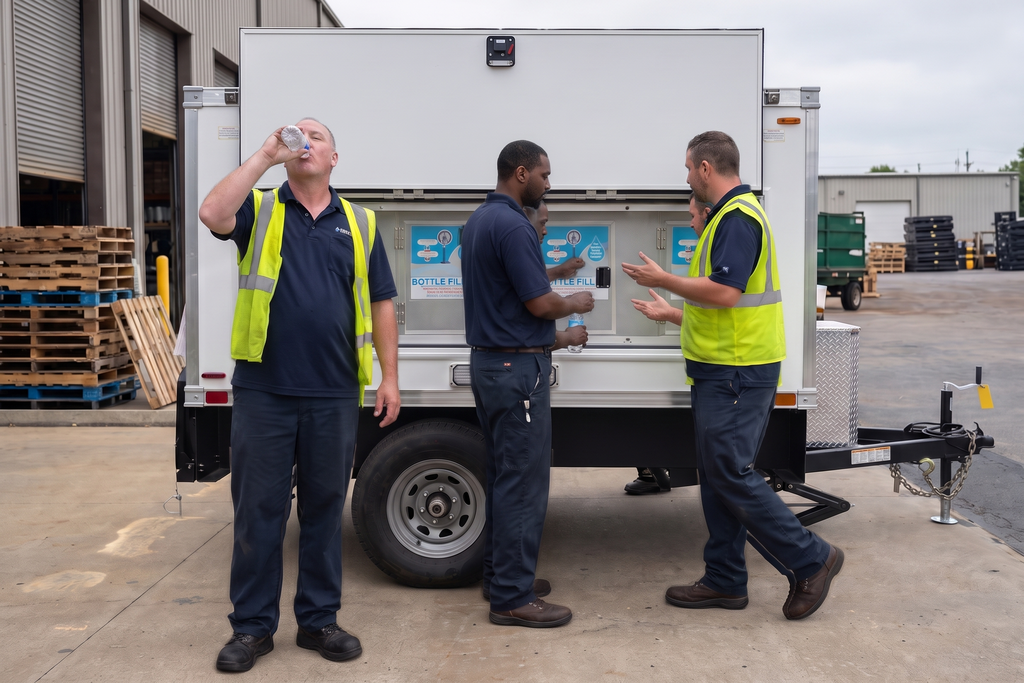
Retail builds, property turns, and any business that needs drinking water on site while the plumbing is torn out. Short rentals and month to month both work the same way.
Ground with no water line and no power drop anywhere near it. We tow in, set up on a generator, and put the site on a tanker route so nobody spends an hour driving to town for water.
The product page for the station itself: four taps, ADA height spouts, chilled filtered water, rear jug fill. Start here if you already know what you need and want the specs.
Plenty of people search for a mobile drinking fountain rather than a water station. Same trailer, same four taps, and it goes wherever a truck can tow it, which is usually a park or a public plaza.
Parks running on well water, or parks that lose a line in the middle of peak season. The station gives guests a potable fill point at the office or the bathhouse until the system is back.
The rate covers the work, not simply the trailer. Nobody on your side hauls water, plugs anything in, or cleans a tank.
We tow the trailer in, level it, connect power and walk your team through the taps before we pull out. On most sites that is under an hour.
300 gallons filled from a certified potable source before the trailer leaves our yard. The tank carries fresh drinking water and nothing else.
Every unit is cleaned and sanitized before it goes back out, and the filter stages get checked on that same cycle.
One number for a refill, a second unit, or a problem at two in the morning. Somebody picks up.
OSHA heat rules expect drinking water available on site. We put the station where crews and inspectors both expect to find it, and we can document the service for your safety program.
Every one listed on this page, plus a good number that are not. The list covers where the calls come from: construction, events, public agencies, schools and heavy industry. If your site is not on it, the questions we actually need answered are the same three. How many people, how long, and can a truck reach the spot. Call the number at the top and we will tell you on that call whether it is a fit.
Same day or next day through most of our core territory, and we take rush calls around the clock. Emergency work moves fastest because we hold units back for it. For a planned job, give us the date early and we will reserve a trailer against it. The real limit is distance. A drop several states out needs a day or two of drive time, so give us the address on the first call rather than the second.
No water hookup. The trailer shows up with 300 gallons already on board. Power is the one thing we ask about. The unit runs on one to four dedicated 20A/120V circuits or a single 50A/240V circuit, and if there is nothing to plug into, we bring a generator. The taps still pour without power, but the chiller stops, and warm water is the fastest way to get a station ignored.
Heat and shift length matter more than headcount. 300 gallons is roughly 2,400 sixteen ounce refills, which covers a crew of 100 through a hot day with room left, or a few thousand people passing a festival gate over an afternoon. Four taps run at once, so the tank is usually the limit rather than the line. We size the refill schedule to the job, and on big sites we stage two units instead of stretching one.
Both, and the cold is the part people notice. Water goes through three filter stages and a UV chamber on board, then through a chiller before it reaches the spout. Cold, clean water gets used. Warm water in August gets walked past, and a station nobody walks up to is money spent for nothing.
A day, a weekend, a season, or the length of a build. Events usually run one to three days. Construction and industrial bookings often run months, and those get a standing refill schedule set at the start. There is no penalty for extending. Call the dispatch line and we add the days.
Yes. Anything longer than a single day gets a refill cadence agreed up front, and our tanker runs it, so nobody on your crew is hauling water in a truck bed. On long jobs the cadence changes as headcount changes, which is normal and expected. Have your foreman call when usage climbs and we will add a run.
We serve all 50 states. Coverage is heaviest out West where our yards sit, and we move units nationwide for long term rentals, disaster work and multi week projects. If the site is a long way from a yard, that drive time shows up in the schedule, so the earlier you call the better the dates look.
The taps sit at ADA height and work with a light push, so somebody in a chair can fill without asking for help. There is also a rear jug fill for topping off coolers and five gallon jugs, which is what most crews use at break.
Over the phone, usually inside of a few minutes. We ask for the dates, the location, the headcount or expected crowd, and where the trailer can park. That is enough to put a number in front of you and hold a unit against the dates. Send the quote form instead and we will call back with the same four questions.
Give us the headcount or the expected crowd, then the days you need it and where the trailer can park. We will match the unit to the job and roll it out to you.