On-Site Hydration Services delivers chilled, filtered drinking water to campgrounds and RV parks, and to the group camps that run all summer. The trailer arrives leveled and filled, pouring before your first guests pull in. The Signature Series carries 300 gallons and four bottle filling taps, so a rally weekend at a private park or a seven day session at a scout camp gets a real fill point instead of one hose bib behind the office. Tell us the headcount and how the truck gets in and we will size it on the phone. Call us or ask for a quote and we can have a unit on the road for your next peak weekend.
Licensed and insured | A+ BBB rated | 24/7 dispatch
See the Signature Series water station specs
“Our well handles a normal week fine. It does not handle the club rally that fills every site in July, so we park the water trailer by the shower building and stop worrying about pressure. Guests fill bottles there instead of running our site taps all evening.”
“We run 280 campers and staff for a full week, and the kitchen plumbing was never meant to carry drinking water too. Four taps outside the dining hall changed how the afternoon goes. Nobody is standing in line at the kitchen door anymore.”
“The heat flag went red two days straight and we still had water at every activity area. We asked for a second unit on short notice and it showed up the next morning.”
References for this kind of booking are available on request.
We have been setting water trailers on gravel and packed dirt for years, and a campground is the one place where people drink from the same tap for a week at a time. That raises the bar. A park owner is not a first time buyer here. You already run a well and you already test it, and you know what a bad pressure evening does to a Saturday. So we talk in the numbers you use: gallons on board, taps per unit, refill interval, power draw and tow weight. Call the office with a site count and your gate schedule and we will size it while you are on the phone, or ask for a written quote you can put in front of an owner group. We run Flagstaff Arizona water station rentals the same way, in all 50 states.
One Signature trailer can pour for a weekend concert and be working a slab pour a couple of days later. Hiring one company for your events and a separate one for your worksites makes no sense. Either way, the planning, the delivery, and the refills are ours.
The onboard cooling unit keeps the tank genuinely cold all the way through a long afternoon outdoors, and that single detail carries the whole thing. Warm water is water people abandon, and midsummer is exactly when a crew or a crowd is drinking the most. Cold water gets finished, and finishing it is what keeps heat illness off the site.
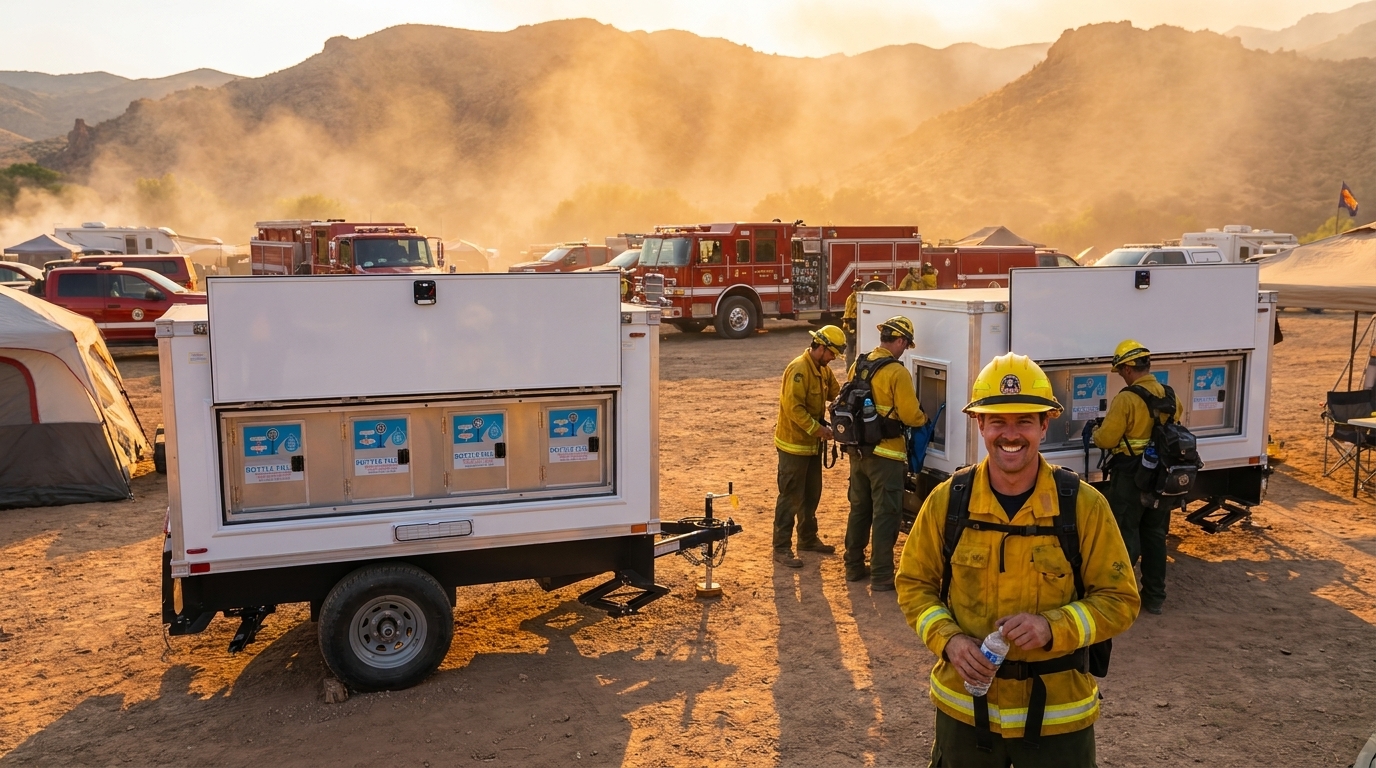
Typical deliveries land in about 45 minutes once a truck is rolling in your metro, longer out on the rural routes, and we keep emergency runs going around the clock whenever a heat advisory or a power shutoff hits. The morning a foreman finds his 40-person crew stuck with one warm cooler, speed is the whole game.
One rule sits under every job we take: water that people walk past might as well not be there. We've stood on a bare site and watched shrink-wrapped pallets cook next to the job-trailer while the crew baked thirty yards off. We've watched the opposite too, a chilled station ten steps off the work face run bone-dry twice inside one shift. Everything that matters lives in the distance between those two pictures. Which is why we don't drop a unit and disappear. We match it to your headcount or your gate count, set the refill rhythm to how hard you're really pulling on it, and treat a heat call the way you'd want your own treated, meaning right now, because out here one hot hour can swing the whole day.
We deliver water stations to job sites, venues and event grounds in all 50 states, with the heaviest route coverage across the West.
The Signature Series water trailer is a self contained drinking water point, and that is the only kind that helps on a night when the park's own pump is the problem.
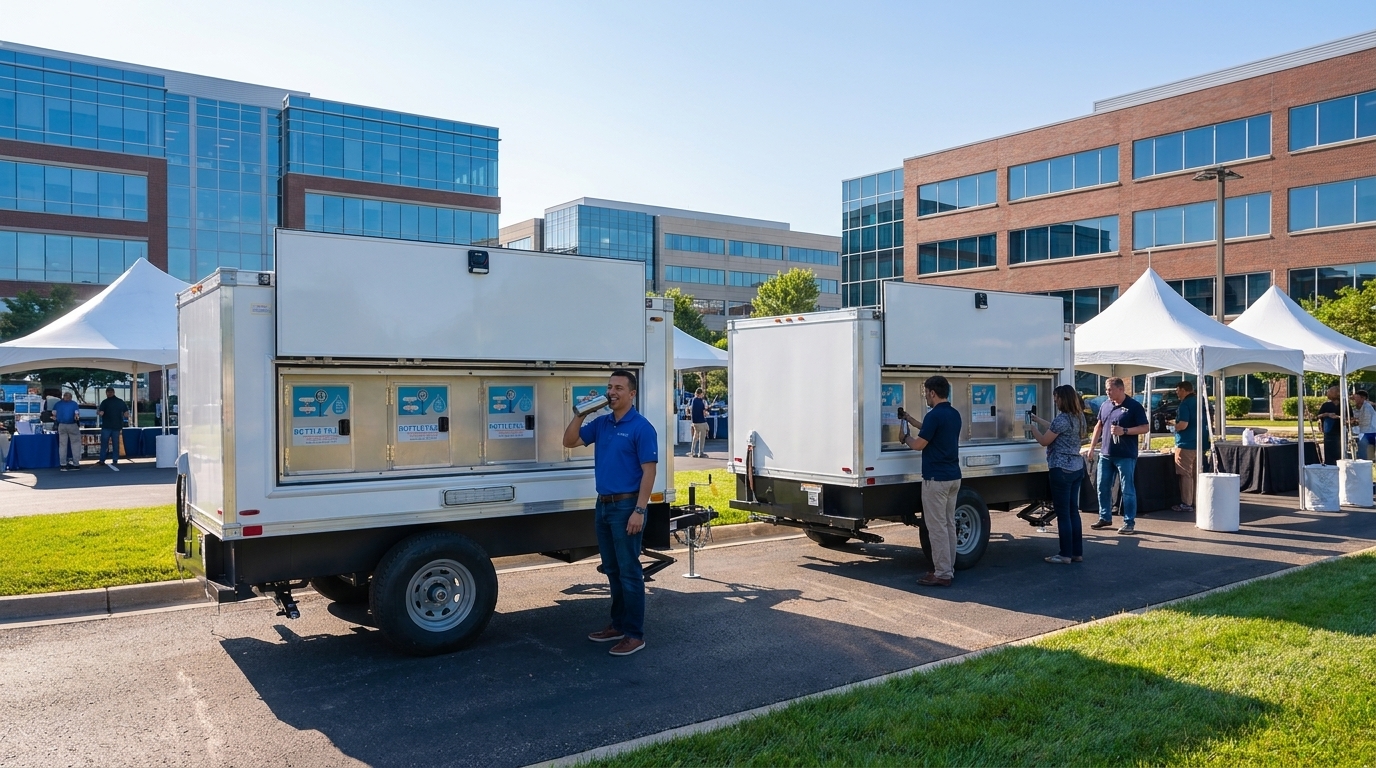
With a frame, a hitch, and tires under it, the unit hauls out to a remote build, an event field, a working orchard, or a disaster staging yard with equal ease. Contractors and event planners request this exact rig by name. The whole design is built around backing in, leveling off, and pouring cold by the same afternoon.
| No. of stations | (4) Bottle Filling Stations |
| Length | 12' 3" |
| Weight | 3,100 lbs. |
| Height | 8' |
| Fresh water tank | 300 Gallons |
| Power requirements | 1 to 4 dedicated 20A/120V circuits OR 1 dedicated 50A/240V circuit |
| No. of AC units | 1 |
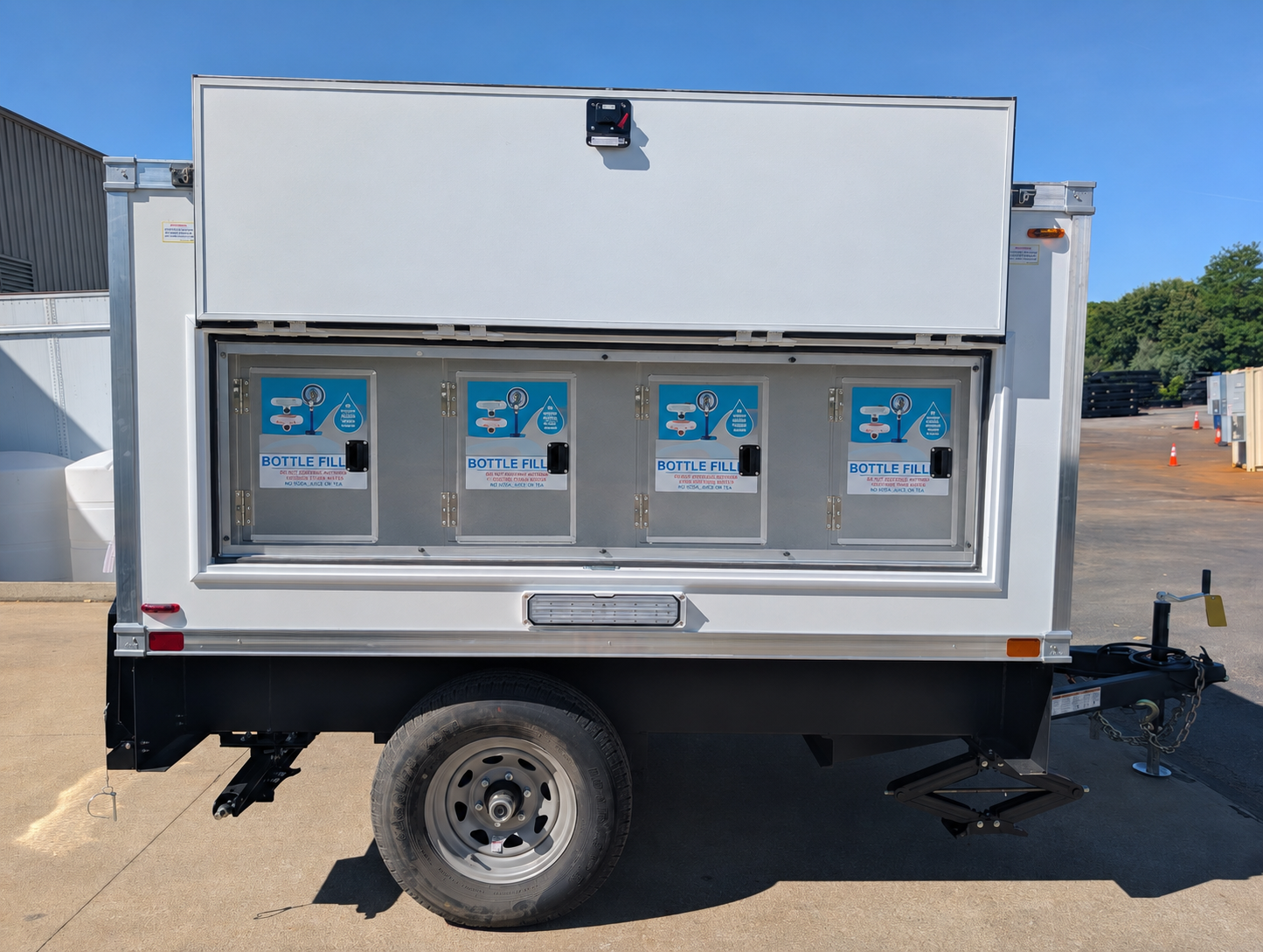
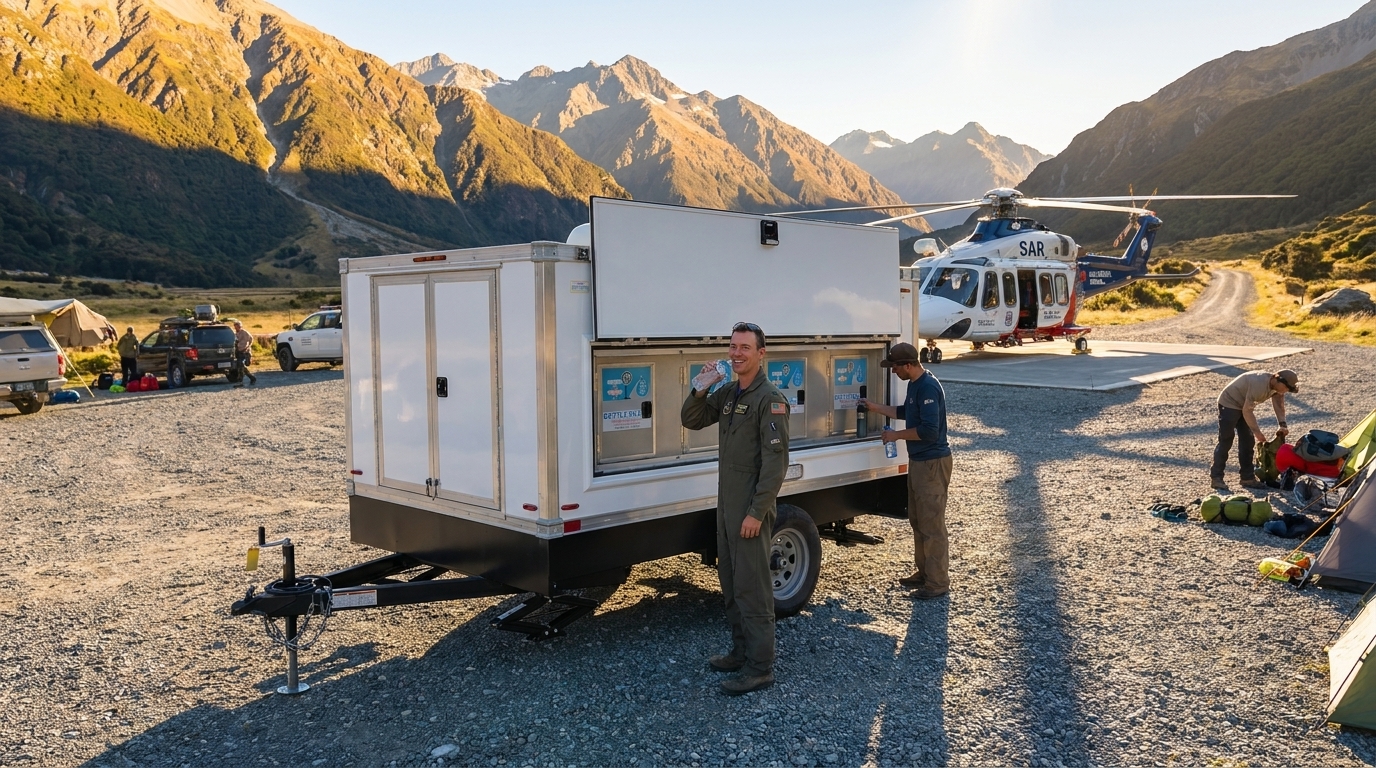
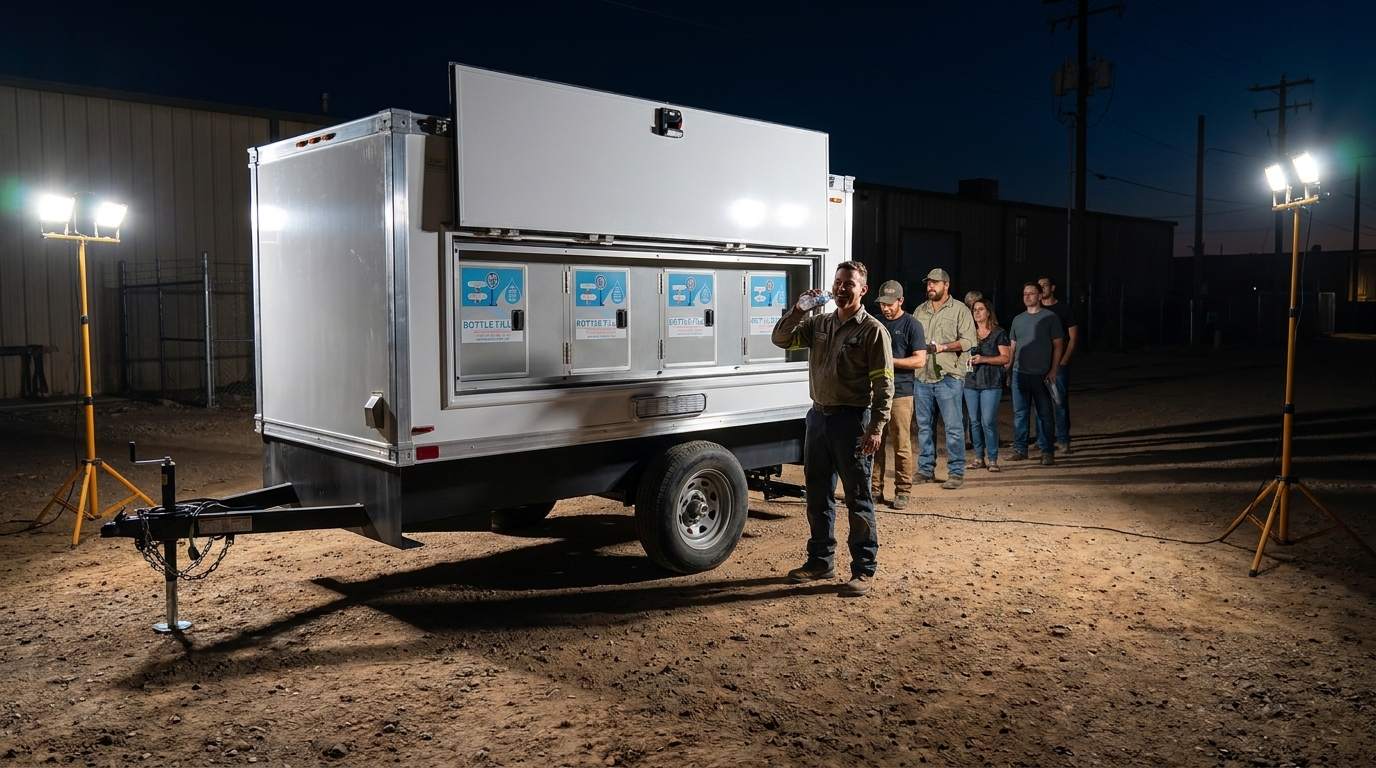
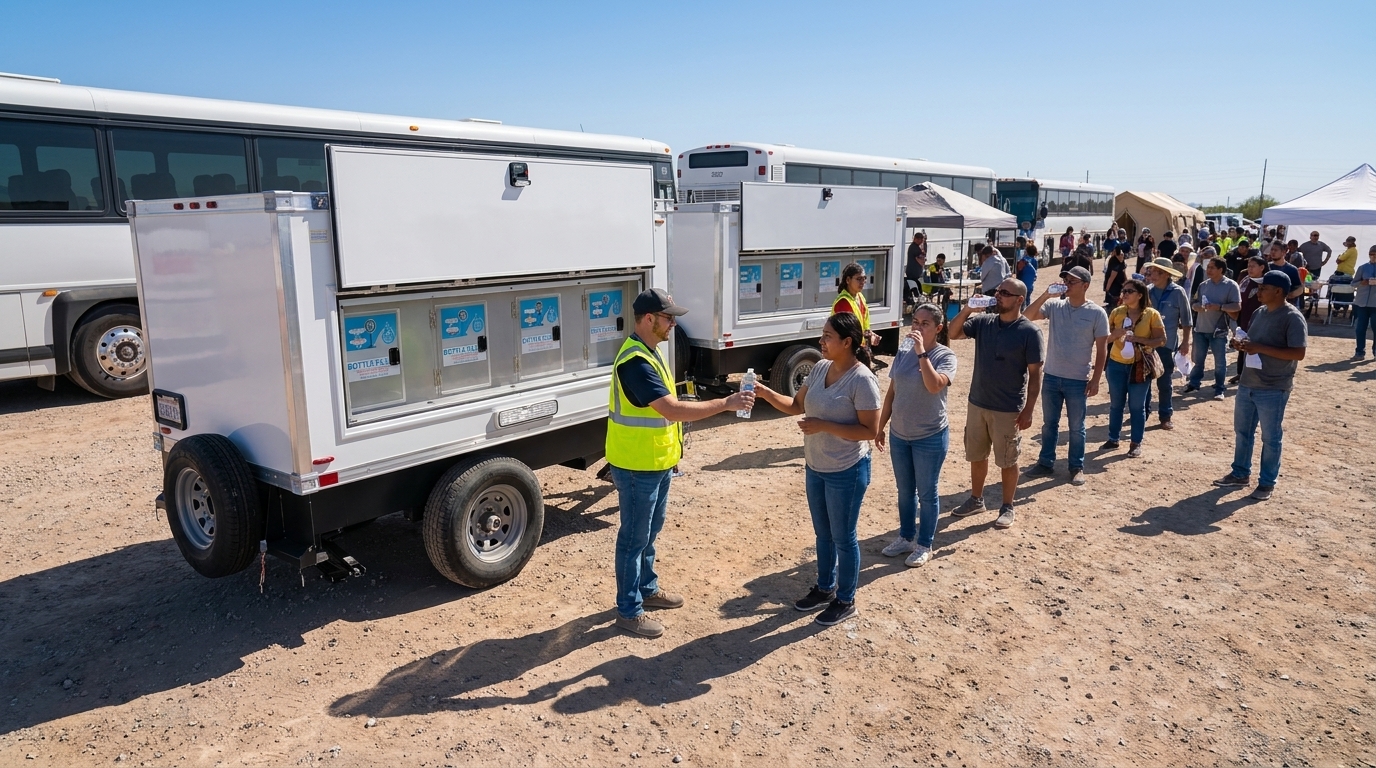
The unit is a 12 foot 3 inch towable trailer with four push back bottle filling stations on it, 300 gallons of fresh water on board and a 200 gallon grey tank underneath. Water comes in through a certified drinking water hose, runs a three stage filter set that takes out sediment and chlorine along with microscopic particles, takes a separate pass under UV light, then goes through a built in cooling unit before it reaches a tap. Three hundred gallons is about 2,400 sixteen ounce bottle fills. One tap sits at accessible height, and a rear jug fill point handles the five gallon coolers a camp kitchen already owns.
On a campground the trailer has to be a good neighbor, because it is parked near people sleeping in tents. It is white, about the size of a small utility trailer at 7 feet 6 inches wide and 8 feet tall, and the only things running are the cooling unit and one air conditioning unit. There is no generator noise when you give it a power drop. It needs one to four dedicated 20 amp 120 volt circuits, or a single 50 amp 240 volt circuit, the same service a park already runs out to its power stands.
Getting there is the part we ask about first. The trailer weighs 3,100 pounds empty and tows behind a three quarter ton pickup, so the question is never the highway. It is the last hundred feet. The turn off the county road and the low branch over the loop decide more deliveries than the tow rating ever does. We want a photo of the approach and the gate width before we schedule, because a loop built for a 35 foot fifth wheel is usually fine and a group camp two track is sometimes not. Yuma Arizona water bottle filling station rentals go out under the same check.
A water source people don't trust gets ignored, and an ignored station is rented money wasted. That's why municipal water doesn't reach the tap raw on our trailers. It passes through three filter stages and a UV chamber, then an onboard cooling unit drops the temperature. The result tastes clean and comes out cold, even on the worst afternoon of the year.
The opening filter traps sand, scale, and the fine grit local mains occasionally push through. On a dusty lot, that's what keeps a pour from tasting like the parcel it's parked on.
Activated carbon comes next, lifting the chlorine bite and the dull seasonal notes local tap can carry until the taste lands clean and neutral. When it's 90 out, that flavor decides whether a crew keeps drinking or walks past the tap dry.
A finer cartridge then catches the microscopic particles that slip past the first two, so what reaches the spout is clear rather than merely cold for the crews and crowds drawing off it.
The last step is an ultraviolet chamber that wipes out bacteria and microbes without adding a single chemical. Even after a long tow out to a remote site, the water off the nozzle is clean.
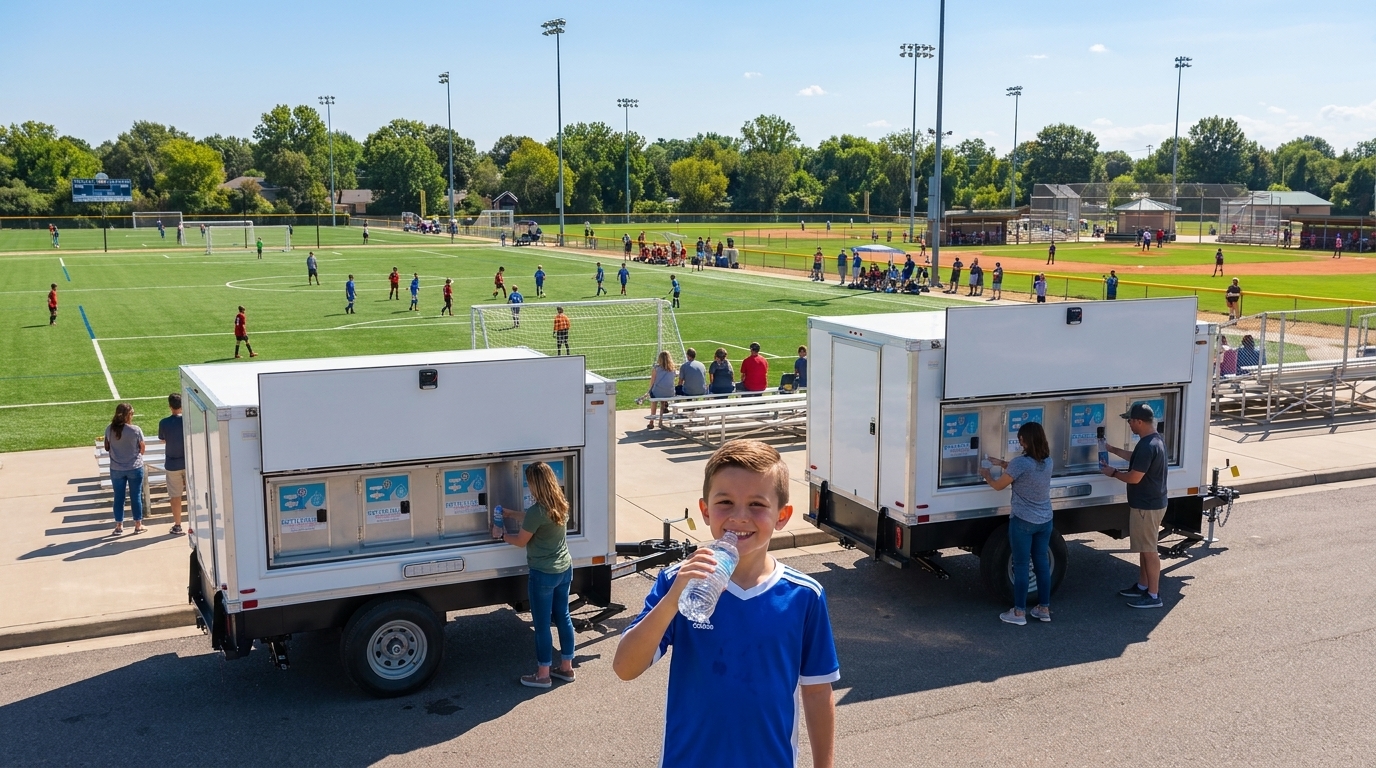
Along the wall sit four adjustable push-back taps, press a bottle to the bar and it pours. One of them is set at ADA-reachable height, so a single trailer includes everybody in a crew or crowd with no add-on gear. Out back, a large-jug spout services five-gallon coolers and hydration packs, while a bank of hose connection taps handles work-site chores, event support, and refills down the orchard rows. Stainless, food-grade plumbing the whole way through keeps the filtered, chilled water at quality right to the spout.
Every Signature trailer carries a 300-gallon load, roughly 2,400 cups at sixteen ounces each, and we recharge it on demand, so the unit doesn't turn into the choke point on a busy shift or a packed show night.
The word campground covers three very different water problems. A private park with a well has capacity trouble a few weeks a year. A group camp has a fixed crowd on site for a week with no spare plumbing. And a remote site has no treated water at all, by design.
This is the biggest slice of the market by count. Roughly 16,992 campground and RV park businesses were running in 2026, and about 90 percent of parks belong to owner teams with fewer than five properties, so the person deciding on a water rental is usually the person who fixes the pump. Occupancy averages 60 to 70 percent across the year and pushes toward full at popular destinations in the core summer weeks. A well sized for a full July sits idle most of the year, so most parks size closer to their average and lean on the system hard when it counts.
What that looks like on the ground is pressure. One RV shower pulls 1 to 3 gallons a minute, and park guidance puts incoming line pressure at 40 to 55 PSI with 60 PSI as the ceiling before RV plumbing takes damage. Put 120 rigs on a loop at six in the evening and the far end of the run is the first thing to go. A rented fill station takes the drinking load off that line, because guests fill bottles and jugs at the trailer instead of at the site tap. Cedar City Utah water station rentals get booked for exactly this weekend.
The second call is a rally or a reunion. A club weekend, or a seasonal opening before the park's own system is back online, puts more people on the property than the plan assumed. We would rather deliver a second unit on Thursday than watch a manager ration a tank on Saturday night. Parks put the trailer near the shower building because that is where guests already walk.
The third call is the one nobody plans for. A pump fails, or a routine sample comes back positive for bacteria and the park cannot tell guests its tap water is safe until it tests clean again. In that week the station is a clean fill point supplied with certified drinking water brought in from an approved source, not a treatment device. We fill it and we refill it daily, so guests get a tap they can trust while the well gets fixed.
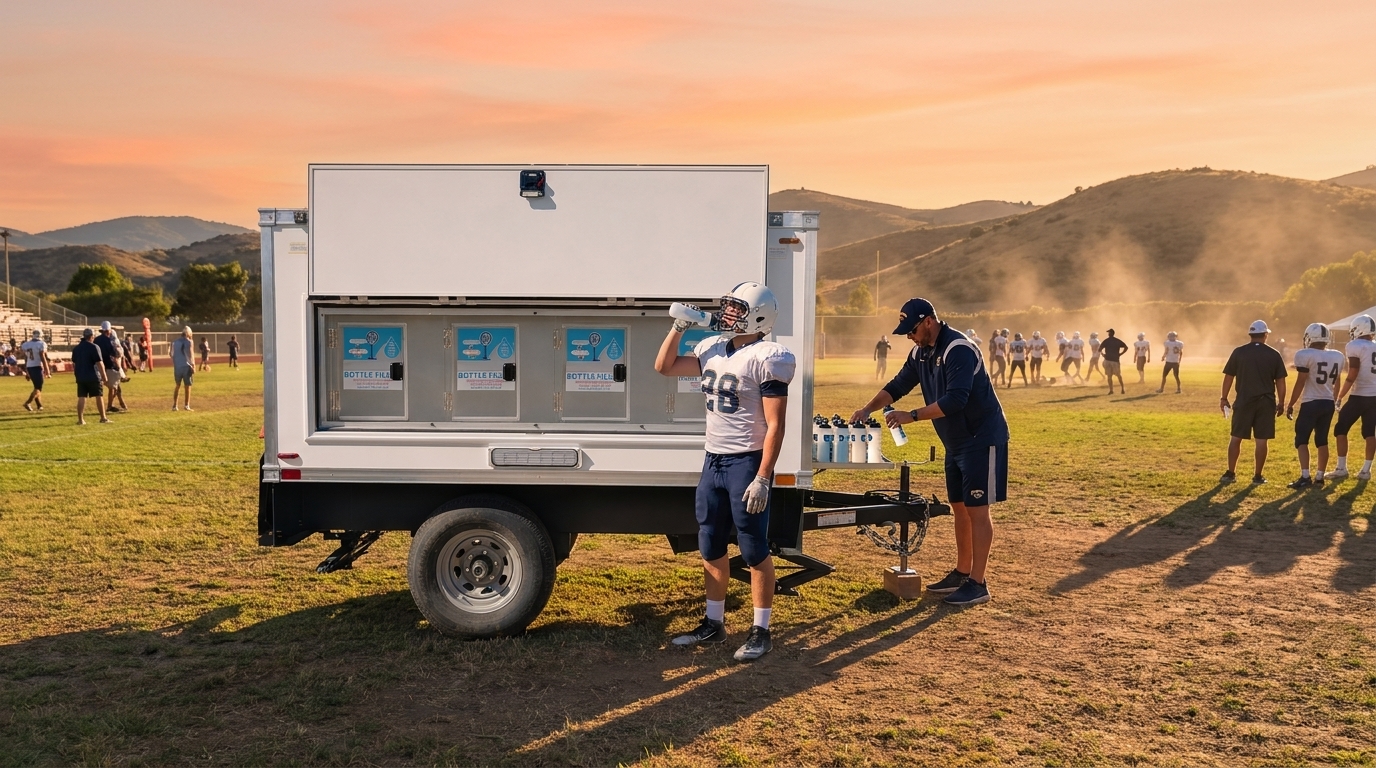
A group camp is a fixed population living on one property for a week or more, and its water demand looks nothing like an RV park's. The Boy Scouts of America plans around roughly one gallon of drinking water per person per day for general camp use. Run that against 300 campers and staff on a seven day session and you need about 2,100 gallons for the week, separate from what the kitchen and the showers pull. Most camps have plumbing sized for the kitchen, and nothing sized for drinking water on its own.
Heat moves that number faster than most planning documents admit. The Summit Bechtel Reserve, the Boy Scouts high adventure base that hosts the National Jamboree, runs a color flag system that sets drinking targets by the hour instead of by the day. Green flag at 82 to 85 degrees calls for a quarter to a half quart an hour. Yellow at 85 to 88 degrees moves to a half up to three quarters of a quart. Red at 88 to 90 asks for three quarters to a full quart, and black flag above 90 calls for a full quart up to a quart and a quarter every hour. Eight waking hours at red flag puts that same 300 person camp between 1,700 and 2,300 gallons in one day, close to what the daily baseline assumed for the whole week.
Long-distance walking programs stretch the same problem across miles. Philmont Scout Ranch in New Mexico runs long walks of 7, 9 or 12 days covering 50 to more than 100 miles in the Sangre de Cristo mountains, with the first three days under a ranger's guidance. Staffed camps along the route may offer refills, but every itinerary also includes trail camps with no refill point at all, which is part of why crew packs are sized at 65 to 85 liters. Base camp is where that math gets solved, and four taps move a crew through in a fraction of the time one spigot does.
After enough camp weeks we ask two questions first. Where does the afternoon activity block happen, and how far is that from the dining hall. Camps put water where the plumbing already is, almost always the kitchen, then wonder why the archery field runs dry by two.
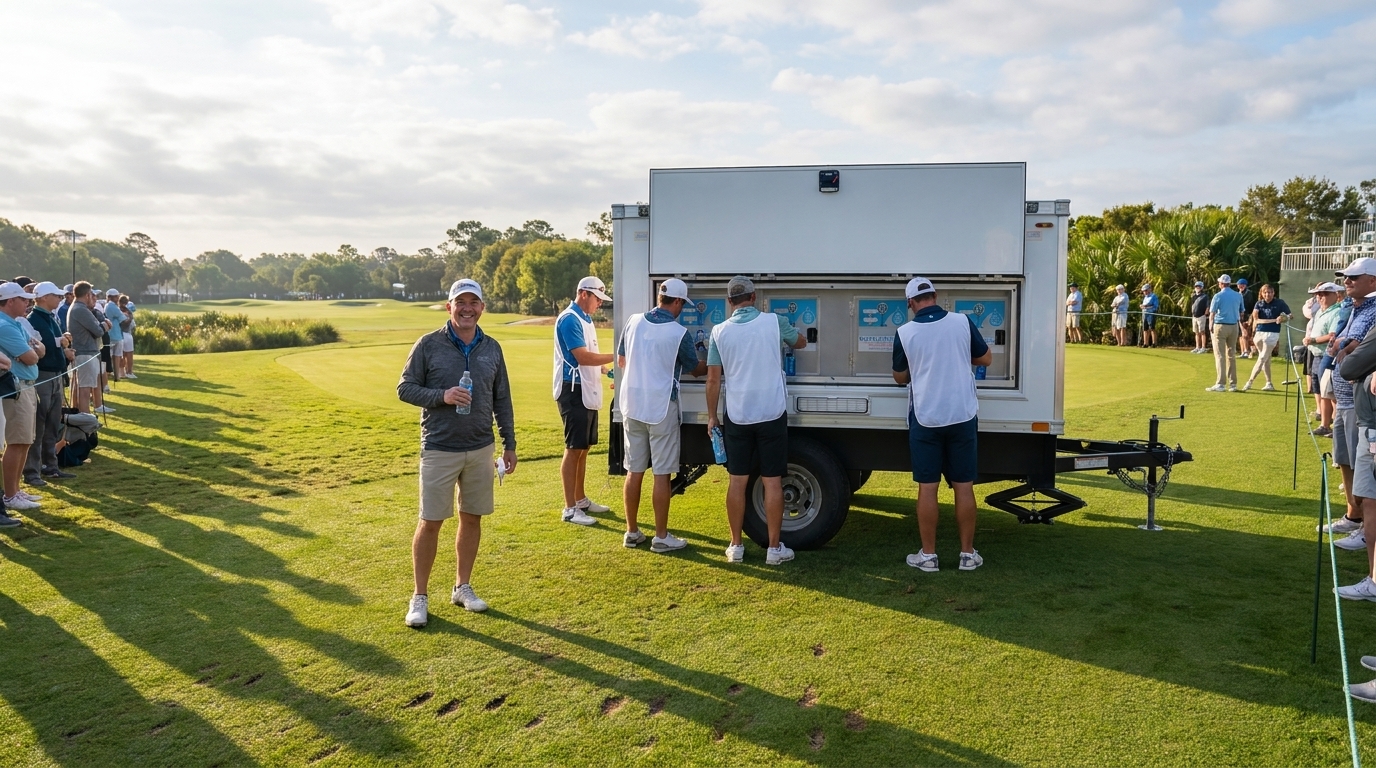
Dispersed camping on national forest land is defined by what it leaves out. The Forest Service describes these sites plainly: no toilets and no picnic tables. No trash service. And no treated water of any kind. Campers are expected to be fully self sufficient, and the agency's guidance says lake or stream water found on site has to be boiled or filtered first, while faucets inside nearby developed recreation areas have already been tested and are safe as they come out.
Where a group can sit is written down. On the Mount Baker-Snoqualmie National Forest in Washington, a dispersed camp sits at least 100 feet back from any lake or stream, and a group over 75 people needs a special use permit from the local ranger district in advance. Arizona's Apache-Sitgreaves National Forests hold the same 100 foot line and the same 75 person threshold, permitted at no fee from the district office, and add that dispersed camping stays within a mile of a developed campground and within 300 feet of an existing road. Intermountain Region forests tighten the setback to 200 feet. Those numbers decide where a trailer can legally sit, so we read the district's page before we quote a remote drop.
Dry camping is where this rental has the cleanest case. A dry camping guest runs on the coach's own fresh tank and refills at a dump station, and a single shower empties it faster than anyone expects. Put a fill station at the entrance to a dry camping loop and you remove the daily errand that population manages alone, without touching the site's hookup plan. Festival camping fields work the same way. Bonnaroo runs dedicated hydration stations with free cool filtered water and tells attendees to bring a reusable bottle, and the RockNRefill program, a partnership between the nonprofit REVERB and Nalgene, has run donation based refill stations at festivals including Bonnaroo and the former Warped Tour.
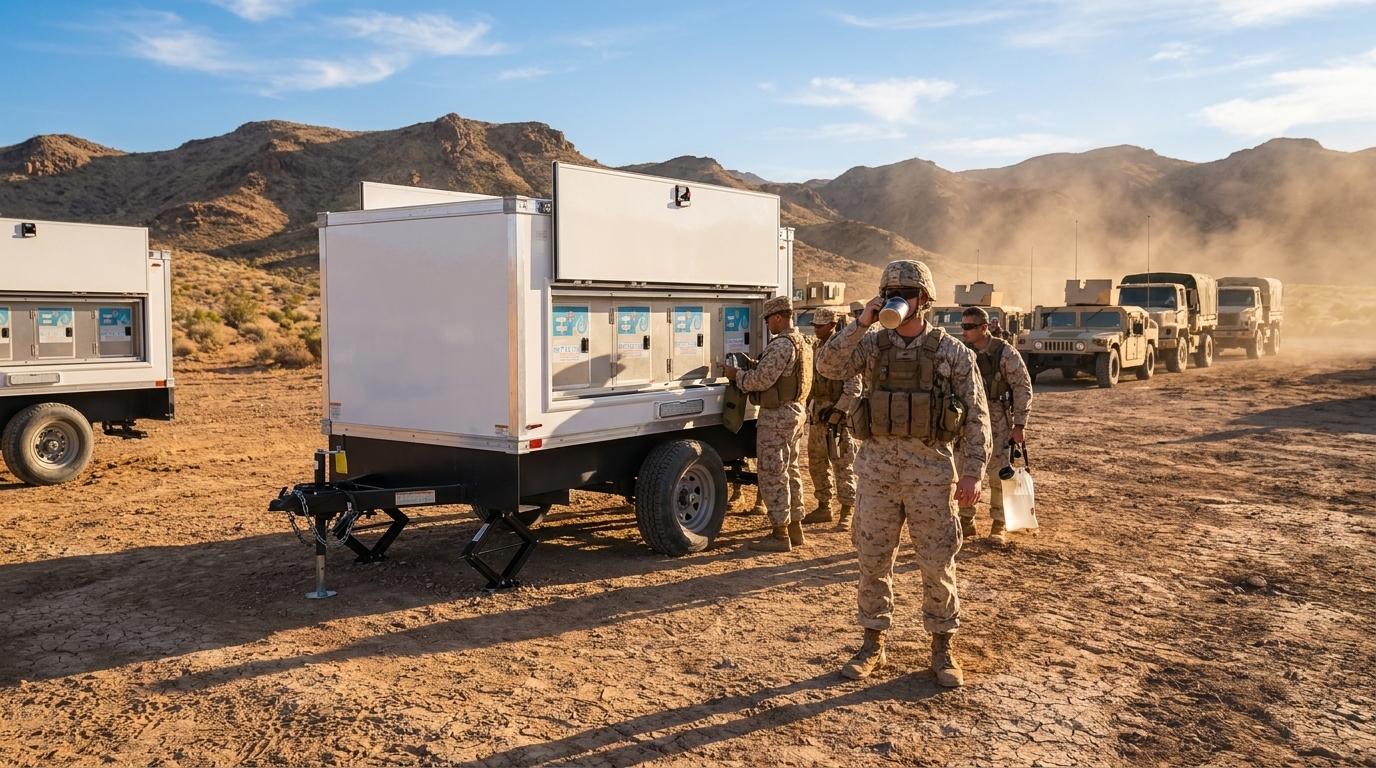
Remote drops are their own category. There is no gate, no paved pad and often no cell signal to confirm a window, so access and timing get settled before a truck leaves the yard, along with where the rig turns around. We ask whether the road is graded and who is on site with a radio. The self sufficiency the Forest Service asks of campers is the standard the unit has to meet on its own.
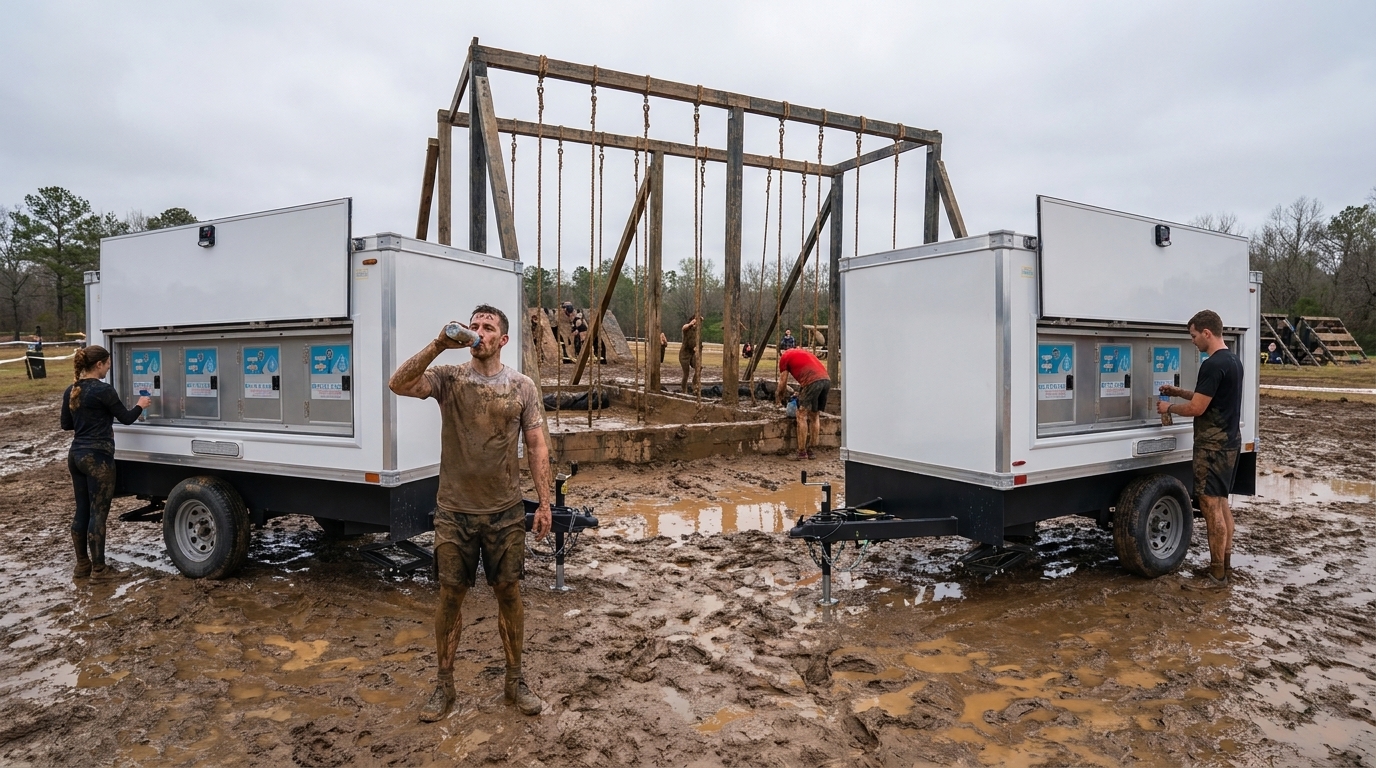
Camp deliveries live and die on gate hours and the last hundred feet. Here is how we plan one.
Managed public campgrounds run on a tight clock, and the California State Parks rulebook is a fair stand in for all of them. Check in is 2 p.m., RVs back into their assigned site, and gates lock overnight somewhere between 7 p.m. and 9 p.m., reopening at 7 a.m. That is the window a delivery truck has to fit inside, so we schedule camp drops in the morning, before the day's arrivals stack up at the entrance.
Public land adds an approval layer. California State Parks lets an approved RV rental concession deliver equipment straight to a camper's assigned site, but only a state approved provider may do it, and a park running under a concession contract holds that contract through a public bid process with the state. So on state or federal ground we ask early who has to bless the delivery, and we send paperwork ahead instead of arguing at a kiosk. Spokane Washington mobile water station rentals go out with the same file.
Placement on a campground is a people problem more than an engineering one. We look for firm level ground within reach of a power drop, far enough out of the way that a 40 foot rig can still back into its site. Then we look at walking distance, because a station guests pass on the way to the shower building gets used and one behind the office does not. Then we look up, since a low limb over a loop road sends more deliveries around than anything else.
What goes wrong is rarely the trailer. It is a hose. Park guidance is explicit that the line feeding drinking water has to be a certified drinking water hose, usually blue or white and running 10 to 50 feet, because a standard garden hose can leach chemicals into the water it carries. We bring our own and we do not borrow one. On pickup we drain the unit, clean it and log the service date, and the grey tank leaves with us.
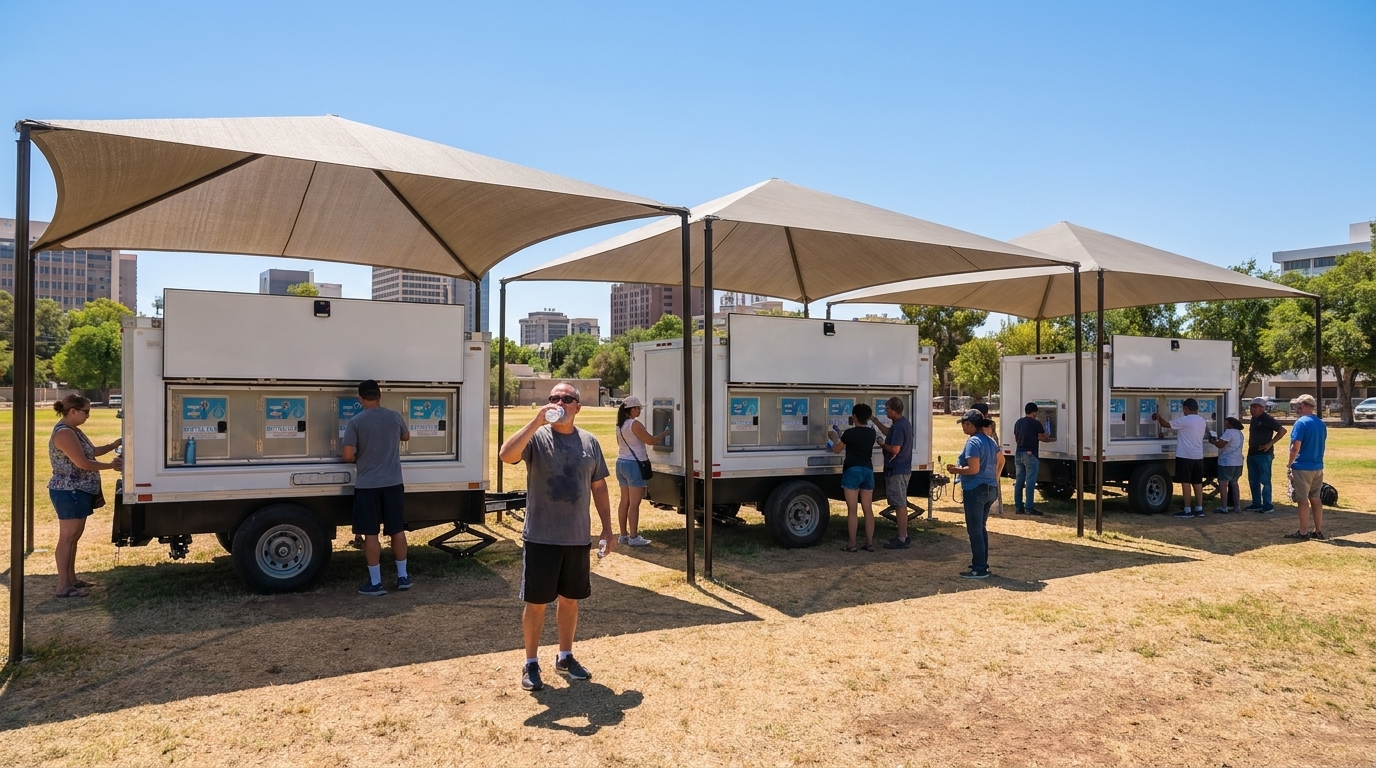
People count, number of days, where exactly it parks on your site, and what power is there. Those four answers let us spec it correctly the first time around.
Reckon roughly 45 minutes from the nearest yard once we are in your metro, longer on the outer routes, with round-the-clock emergency runs whenever a heat advisory or a power shutoff hits.
Once on site we set it level, charge the 300-gallon tank, and tie in power off one to four standard 120V circuits, or a single 50-amp 240V drop, depending on what the site gives us.
After that the tankers cycle back on a cadence matched to how fast your crew or crowd pulls it down, and we maintain the unit through the whole rental term.
No power on the parcel at all? We price that in. The unit draws very little, and with the service fleet backing it we've run stations on lots that had no permanent power whatsoever. Lay out what the site offers and the rest is on us.
Want this math run for your own booking? Two minutes on the phone gets you a real number.
Start with people and days on site. Then move the number for heat and for how far people have to walk.
| Small park supplementing its own well (up to 100 sites at peak) | 1 station |
| Club rally or reunion weekend (150 to 250 guests) | 1 station, 2 on a hot forecast |
| Group camp, week long session (up to 300 campers and staff) | 1 station with a scheduled refill |
| Large scout or church reservation (500 to 800 on site) | 2 to 3 stations, spread across activity areas |
| Festival camping field (1,000 to 2,500 campers) | 3 to 4 stations at the loop entrances |
| Park week with the well offline (full park on brought in water) | 1 to 2 stations, refilled daily |
The arithmetic starts at one gallon per person per day, the baseline the Boy Scouts of America plans around for general camp use. One trailer carries 300 gallons, so for a camp of any size the real question is not how many units. It is how often one gets refilled. Three hundred gallons is roughly 2,400 sixteen ounce bottle fills, which covers a lot of an ordinary day and almost none of a hot one.
Heat moves the number hardest, and the hourly flag figures from the Summit Bechtel Reserve above are the cleanest guide anyone publishes. A hot afternoon can take a week's planning volume in a day. Walking distance moves it next. A station 400 feet from where people are gets a fraction of the traffic of one at 100 feet, which is a placement problem that looks like a capacity problem on paper. Park City Utah hydration station rentals get sized with both numbers in front of us.
Our honest default is one station per 250 people on site, dropped to one per 150 when the forecast is above 90 degrees. For a private park supplementing a well, one unit near the shower building covers most peak weekends, since guests still have their own site taps for everything except drinking. For a camp with no spare plumbing we would rather place two service points than one busy one, because a line at a tap at two in the afternoon is how a camp ends up with people who quietly stop drinking.
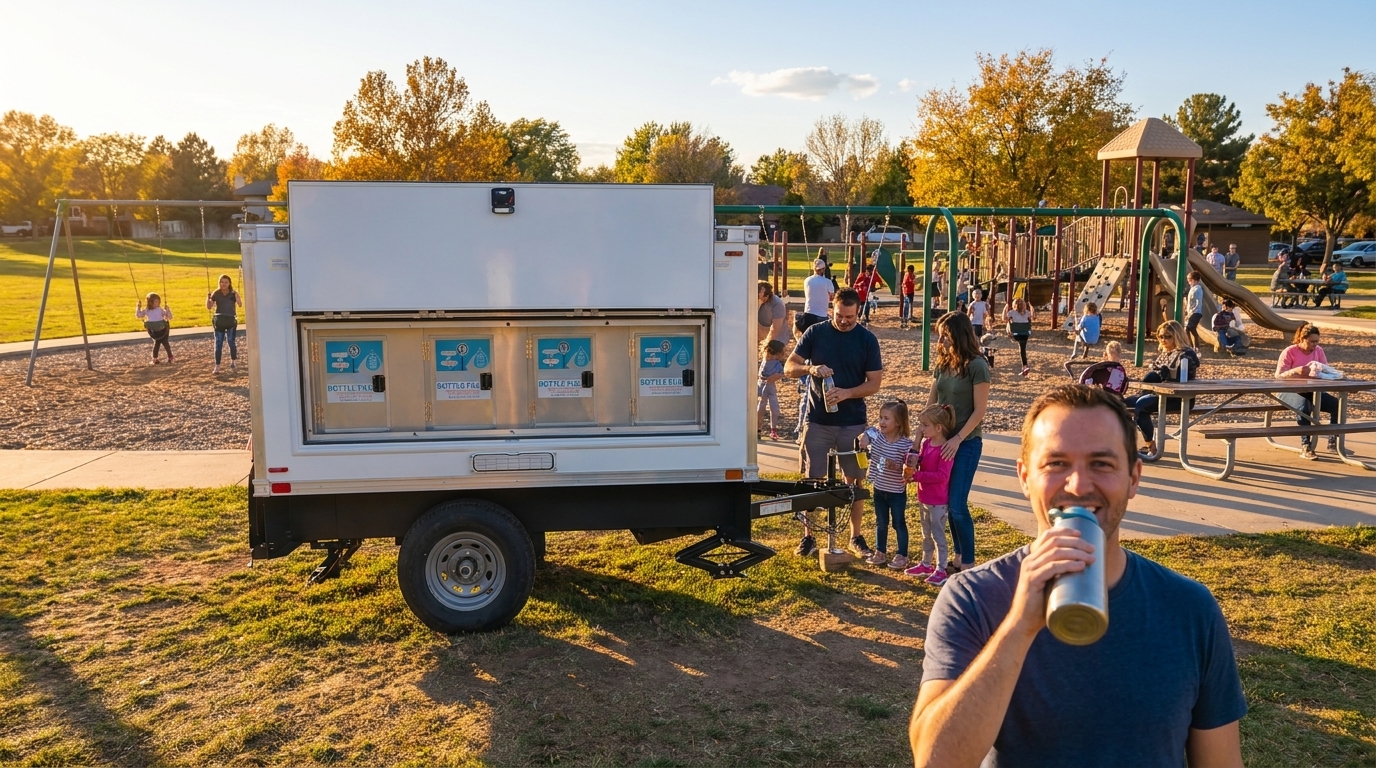
A campground well is usually regulated as a private system even though it serves the public, which puts it under state and county health department rules rather than the federal program covering municipal utilities. That patchwork varies park to park. Texas health guidance names RV campgrounds specifically as carrying testing requirements separate from a business on municipal water. General guidance, the CDC's included, is to test a private well at least once a year through a state certified laboratory, for bacteria and nitrates along with total dissolved solids and pH.
When a sample comes back positive the clock starts. Under the Revised Total Coliform Rule the standard path is four repeat samples, taken either all on one day or one a day across four consecutive days, before the system is cleared. That is most of a week during which the park cannot tell guests its tap water is safe. This is the most common reason a park calls us mid season, and the answer never changes. We haul certified drinking water in from an approved source and fill the station with it. The trailer chills and filters water that is already safe. It is not a treatment plant.
The hardware standards are the part a park can check in advance. Anything that touches drinking water on our unit is built to NSF and ANSI Standard 61 for drinking water system components, with Standard 372 covering lead content in the same hardware. The 2010 ADA Standards set the reach. A tap for a wheelchair user tops out at 36 inches. A second unit for standing users sits between 38 and 43 inches. A bottle filler does not substitute for either required fountain. One of our four fill points sits at accessible height for that reason. Santa Fe New Mexico water station rentals carry the same build.
Public land and local code add their own layers. Forest Service districts set the setback from water and the group size that triggers a special use permit, and those numbers change by forest, so we check the district before we promise a spot. Cities carry their own campground chapters too. Fruita, Colorado keeps a municipal code chapter, 17.33, titled Campgrounds and Recreational Vehicle Parks, separate from its general commercial zoning, and temporary water infrastructure for a peak weekend can land inside that chapter's definitions.
Federal OSHA heat illness prevention guidance and the CDC and NIOSH heat stress program point at the same baseline: cool drinking water, close to the people doing the work, and documented.
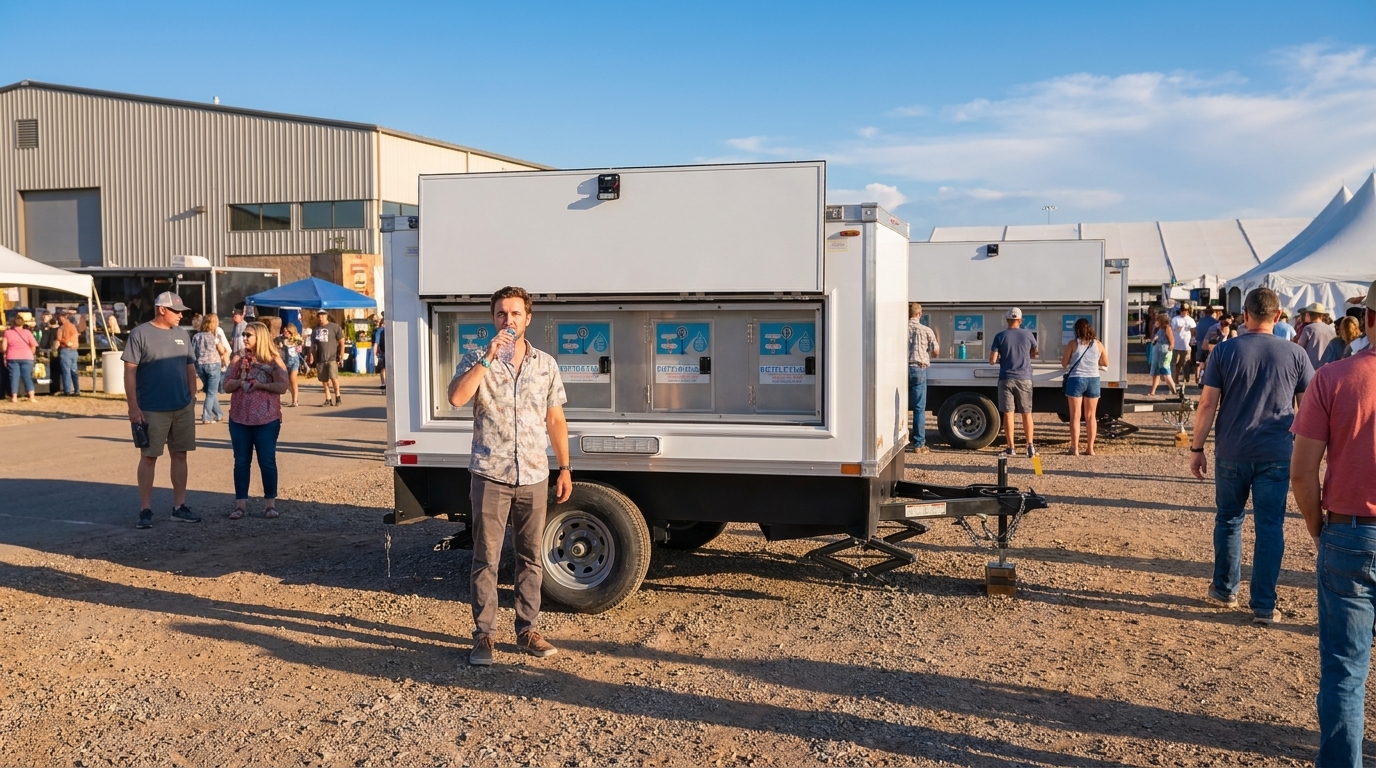
Need a station your written heat plan can point to? We can have one pouring cold within days.
The most common fallback is to run the well harder, and that works right up until the day it does not. Fixed water systems fail, including ones built and maintained by the federal government. Flash flooding in Bright Angel Canyon on August 29, 2026 damaged the Transcanyon Waterline that supplies Grand Canyon National Park's South Rim, the park moved to Stage 4 water restrictions, and drinking water became unavailable at Cottonwood Campground and the Manzanita Rest Area. Olympic National Park ran a boil water advisory covering Kalaloch Lodge and its campground after pressure dropped in the distribution system there. If a federal pipeline can go down for days, a forty year old well on a private park can too.
The second fallback is buying the problem away in cases. A group camp short on capacity buys pallets of bottled water and puts staff on hauling and restocking it, then on breaking down the cardboard. A 300 person camp at one gallon a day for a week works out to roughly 16,800 sixteen ounce bottles somebody has to buy and then carry out to where the people are. The labor is the hidden part, and it lands on the staffer running the program.
The third fallback is hauled tanks, which is closer to right and still short. A tank gets water onto the property, but it does not chill or filter it, and it does not dispense at four taps with one at accessible height, so a camp ends up with a tank and a hose and a line. That is the gap this rental closes. If the park's own system is genuinely down rather than strained, emergency drinking water distribution is the same equipment working a different problem.
Look at everything bottled water actually demands of a person: cutting the order, receiving and breaking down pallets, icing coolers before dawn, topping them up through the day, then flattening empty bottles for the bin. On a large crew that's hours of paid time burned every single day, scraped right off the work that's supposed to be getting done. The trailer erases that loop entirely. A local contractor once let us pencil it out with him, and the recovered labor by itself paid for the unit. His words were that the bottle runs had been quietly costing him close to a day of payroll a week. Our trailer arrives full, the tankers keep it full, and your superintendent owes it nothing but a parking spot.
Ice a cooler at 6 a.m. and by mid-morning in July it's as warm as a bath. Warm water is water people stop touching, and the slowdown that follows is precisely where heat illness gets its opening. A chilled station never rides that warm-up curve at all. Whatever pours at clock-out is as cold as the sunrise fill, which happens to be the moment a spent crew, or a crowd deep into a long concert, leans on it hardest.
Bottled-water pallets devour staging space, jam the lay-down area, and sit cooking in the sun until somebody finally cracks them open. Empties build up faster than anyone keeps up with, and on a tight commercial lot that pile turns into its own problem. Set a trailer in one parking stall instead and it serves a crew or crowd that would otherwise burn through hundreds of plastic bottles every day.
Every bottle bought is a bottle thrown out, and across a season a busy site or event generates a small mountain of them. That's a disposal line on the budget, a dent in the sustainability numbers, and, given that a single bottle can linger in the ground for centuries, a footprint that lasts longer than the project that made it. Move to a refill station and the line drops to zero, which finally gives your reporting a figure worth publishing.
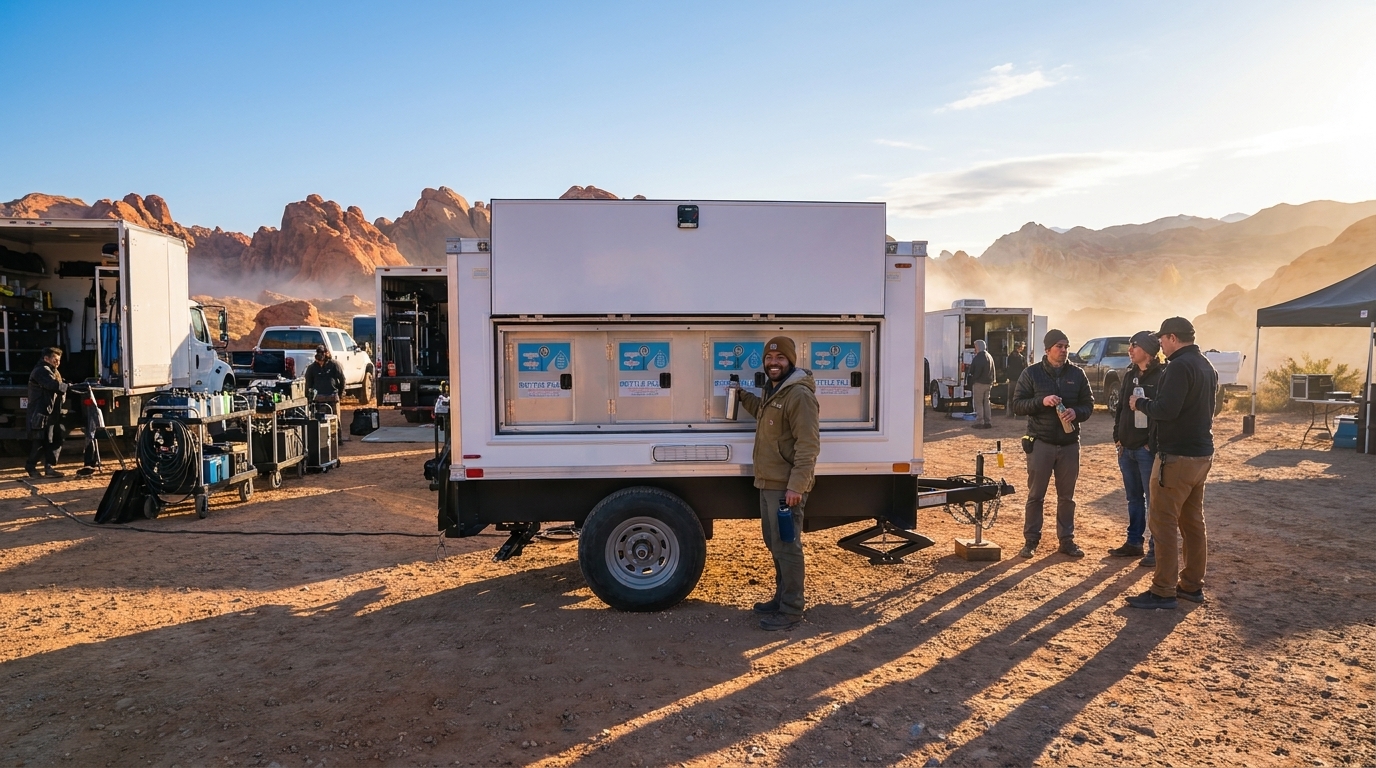
Three bookings of this kind, and what we planned around on each one. Names and details are kept generic on purpose.
Independent RV park, 140 sites, club rally the second weekend of July. The park runs its own well and it had never been a problem in June. The rally filled every site plus overflow on the grass, and by Friday evening the pressure at the back loop was low enough that guests were calling the office about it. We set one trailer beside the shower building Thursday morning on a 20 amp circuit the maintenance lead found in the laundry building. Drinking and bottle filling moved off the site taps, and the pressure complaints stopped without anyone touching the well.
Church group camp, 280 campers and staff, seven day session in late August. The kitchen plumbing carried the dining hall fine and carried nothing else. Campers walked back to the dining hall between every activity block, which put a line at the kitchen door by two in the afternoon. We placed one station on the grass between the dining hall and the field, and staff filled camp coolers at the rear jug tap each morning. Two days that week ran above 90 degrees and the camp went through most of a tank on each of them.
Forest campground at a park gateway, well offline for six days. A routine sample came back positive, and testing the water again meant the park could not tell guests its tap water was safe for most of a week. We brought certified drinking water in from an approved source and filled the station from it, then refilled daily while the well work went on. The park posted signs sending guests to the trailer and kept its reservations. Nothing about the station treated the well problem, and we put that in writing, because the fix for a well is a well contractor.
Service information current as of September 2026.
Still weighing it? Call and ask. Most of these questions get settled in one short conversation.
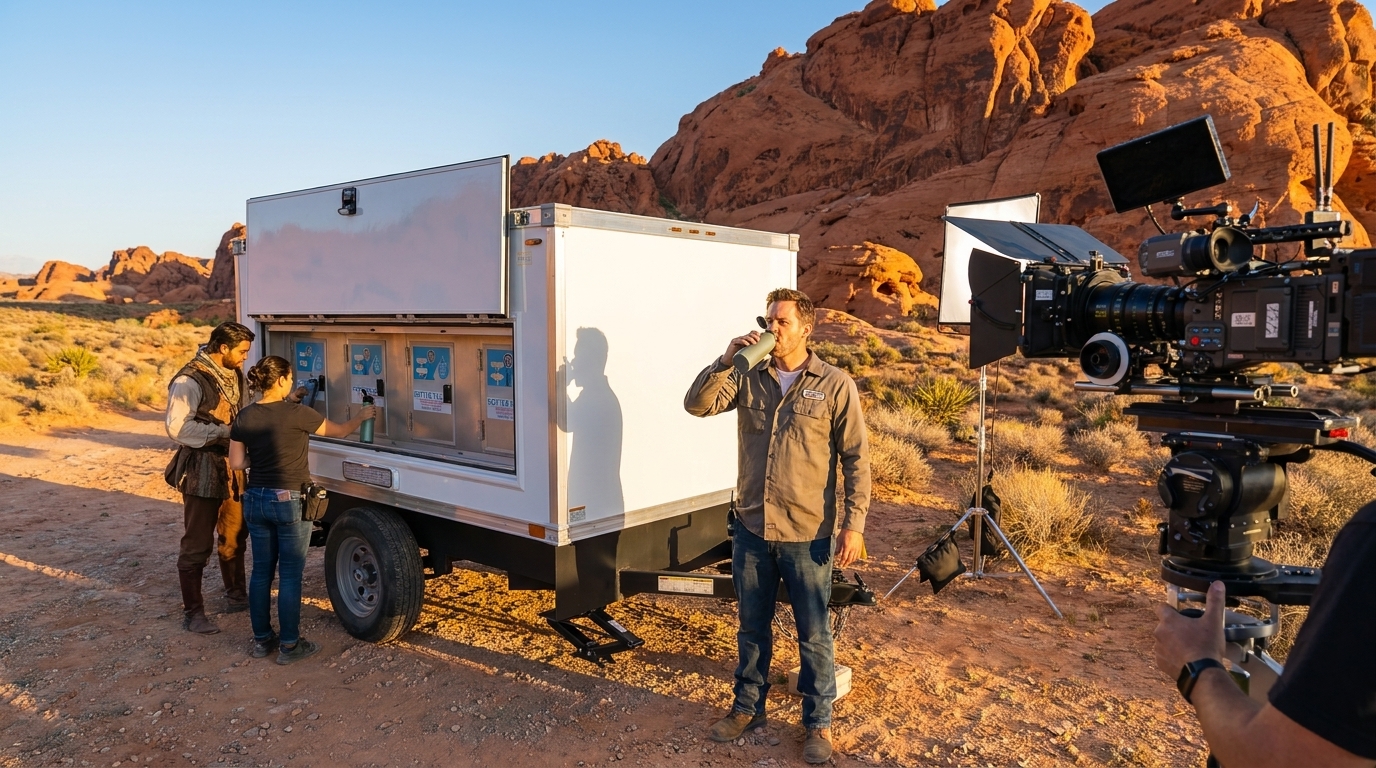
Yes. The trailer carries its own 300 gallon tank and fills through a certified drinking water hose, so it never has to be piped into your distribution line. Most parks fill it once from a hose bib near the shower building and top it off on a schedule. If your own system is down, we bring water in from an approved source instead.
One station with a planned refill covers an ordinary week, using the roughly one gallon per person per day baseline the Boy Scouts of America plans around. That is about 2,100 gallons across seven days against a 300 gallon tank. A hot week changes it, and the hourly flag numbers on this page are how we work that out. Above 90 degrees we add a second unit or a midday refill.
No, and we will not let anyone believe otherwise. The unit chills and filters water that is already safe to drink and adds a UV disinfection pass, which is a polish step rather than a treatment plant. If your well is contaminated, the fix is a well contractor. In the meantime we haul certified drinking water from an approved source and fill the station with it.
Plan on most of a week. Under the Revised Total Coliform Rule the standard path after a positive sample is four repeat samples, either all on one day or one a day across four consecutive days, and lab turnaround adds to that. Parks usually post a sign the same day and point guests at a filled station rather than cancel the week.
Yes. Components that touch drinking water are built to NSF and ANSI Standard 61, with Standard 372 covering lead content in the same hardware. One of the four fill points sits at accessible height under the 2010 ADA Standards, which cap a wheelchair accessible tap at 36 inches. We can send the documentation before delivery if your health department asks.
One to four dedicated 20 amp 120 volt circuits, or a single 50 amp 240 volt circuit. Campground power stands typically carry 20, 30 or 50 amp service, so most parks already have what it needs within reach of the shower building. Tell us which service you have and how far away it sits.
Often, and the district's rules decide where. Forest Service districts require dispersed camps to sit back from water, 100 feet on forests like Mount Baker-Snoqualmie and Apache-Sitgreaves and 200 feet in Intermountain Region forests, and a group over 75 people needs a special use permit in advance. We check the current rules before we quote a remote drop.
We deliver in all 50 states. Our heaviest route coverage is western, which is where the peak season shortens the most, but the equipment and the paperwork are the same anywhere. Give us the property address and your gate hours and we will tell you what the drop looks like.
Start with the weekend, not the year. Pull the reservation sheet for your three busiest weekends and count heads instead of sites, because a site holds anywhere from two people to six. A 120 site park that runs full on a holiday weekend is carrying well north of 350 people, and that is the number your well is actually being asked about. Most parks we work with have never written that number down, and writing it down changes the conversation with an owner group.
Then check your own pressure at the worst hour. Park guidance puts incoming line pressure between 40 and 55 PSI with 60 as the ceiling before RV plumbing takes damage. Walk to the far end of your longest loop at six on a Saturday and read the gauge. If it is sagging there, adding sites or a rally to that loop is a capacity decision.
Separate drinking water from everything else. Kitchen use and showers run on volume. Drinking water runs on access, and it is the one guests complain about by name. Splitting the two is what makes a rental worth doing, because pulling the drinking load off your distribution line is cheap in plumbing terms and fixes the complaint people actually make at the office window.
A full hookup site brings water and electric out to the post along with a sewer connection, which lets a guest run showers and cooking water on demand without thinking about a tank. Some parks layer cable or Wi Fi on top, and neither is guaranteed park to park. The phrase means less than guests assume, which is why two parks both advertising full hookups can deliver very different evenings at the far end of a loop.
A partial hookup usually means water and electric with no sewer. A guest still gets effectively unlimited water and enough power for air conditioning, with the park's dump station handling waste on the way out. Some sites carry power only, which pushes guests toward the shower building and a central fresh water fill point instead of a tap at the site. That central fill point is the one piece of infrastructure a park rarely sizes for a rally weekend.
Dry camping means no hookups at all, so the coach runs on its onboard tanks and empties them at a shared dump station. A guest dry camping for four days is doing water math every morning, because the shower is the biggest single draw on a tank nobody can top off without driving somewhere. This is the population a rented fill station helps most directly, and the fastest growing edge of the business.
A bacteria-positive sample is not a rare event, it is a scheduled risk. A campground well is usually regulated as a private system even though it serves the public, which puts testing under state and county rules. General guidance, the CDC's included, is to test at least once a year through a state certified lab for bacteria and nitrates, along with total dissolved solids and pH. Texas health guidance names RV campgrounds directly.
These are not made-up examples. RV LIFE's reporting on campground water names four separate incidents at camping and recreation sites: E. coli contamination in Julian, California in 2017; trace E. coli at the Little Wood River Reservoir near Cary, Idaho in May 2017; E. coli at Lake Cunningham in Omaha in June 2016, serious enough that the park closed; and a Minnesota state park where contaminated water turned up twice in one season in May 2016. A park that has never had a bad sample is not proof the risk is absent. It is a business that has not yet had the week those four had.
When one comes back positive, count the days before you make promises. The Revised Total Coliform Rule's standard path is four repeat samples, either all on the same day or one a day across four consecutive days. Add lab turnaround and it is most of a week in practice. Your reservations for that week are already booked, which is why the decision you make in the first hour matters more than the one you make on day three.
→
Boil notices and main breaks where a community needs a clean fill point fast.
→
Incident base camps built on bare ground in three days, with a quart an hour to cover.
→
The same fairgrounds that host group camping, in their other life as event grounds.
→
Heat emergency sites that open on short notice with no drinking tap nearby.
→
The congregations and civic groups that run summer camps, back on their own grounds.
We run water station rentals nationwide, and we keep dedicated local pages for the metros our trucks work hardest. Start with the closest one.
Booking this kind of work in a metro we already run? Start with Flagstaff hydration station rentals, Yuma hydration station rentals, mobile water stations serving Cedar City, mobile water stations serving Hurricane, water station delivery around Park City, Spokane drinking water station rentals, Santa Fe hydration station rentals and water station delivery around Santa Maria, and call us for anywhere else in the country.
 Northern Arizona
→
High country forest campgrounds and steady park gateway traffic all summer.
 Lower Colorado
→
Winter RV resorts that fill while the rest of the country is closed for the season.
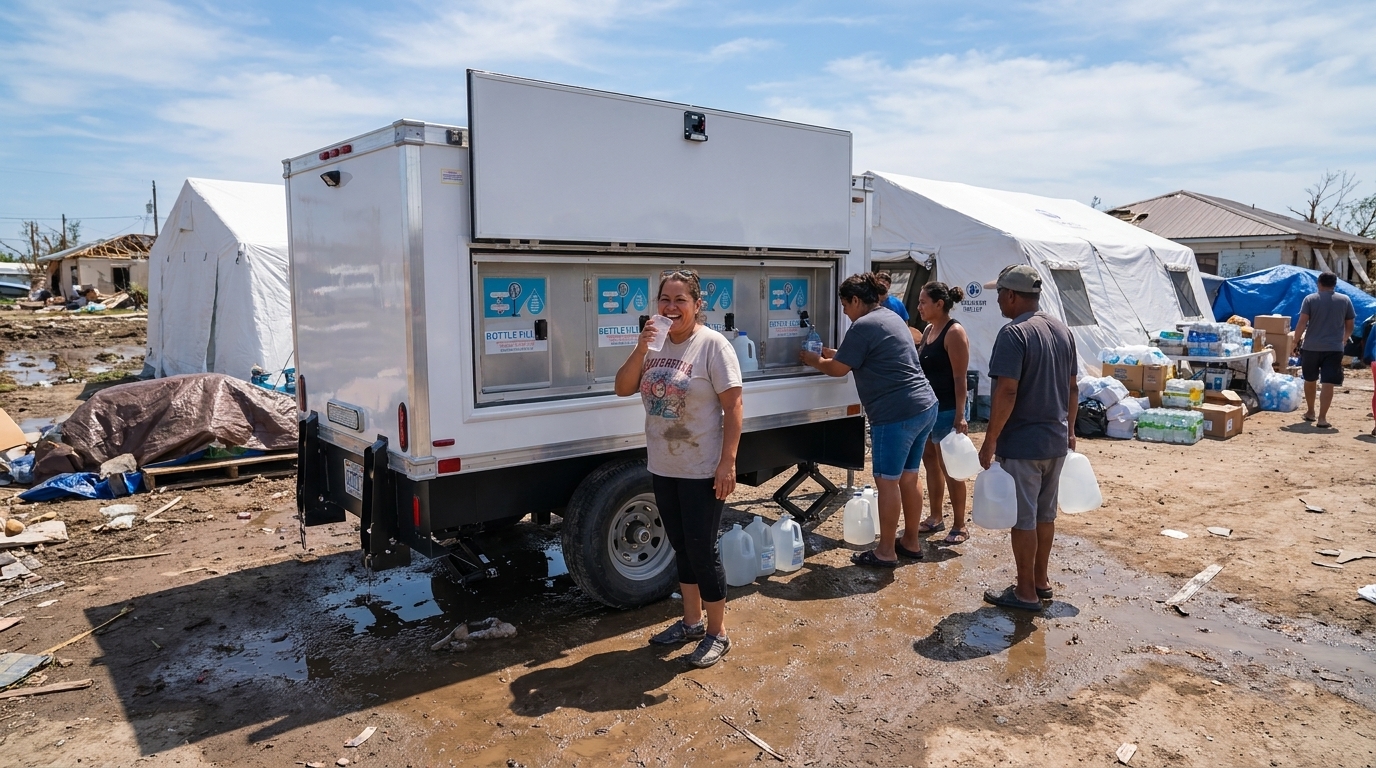 Southern Utah
→
A staging town for canyon country parks where campgrounds run on their own wells.
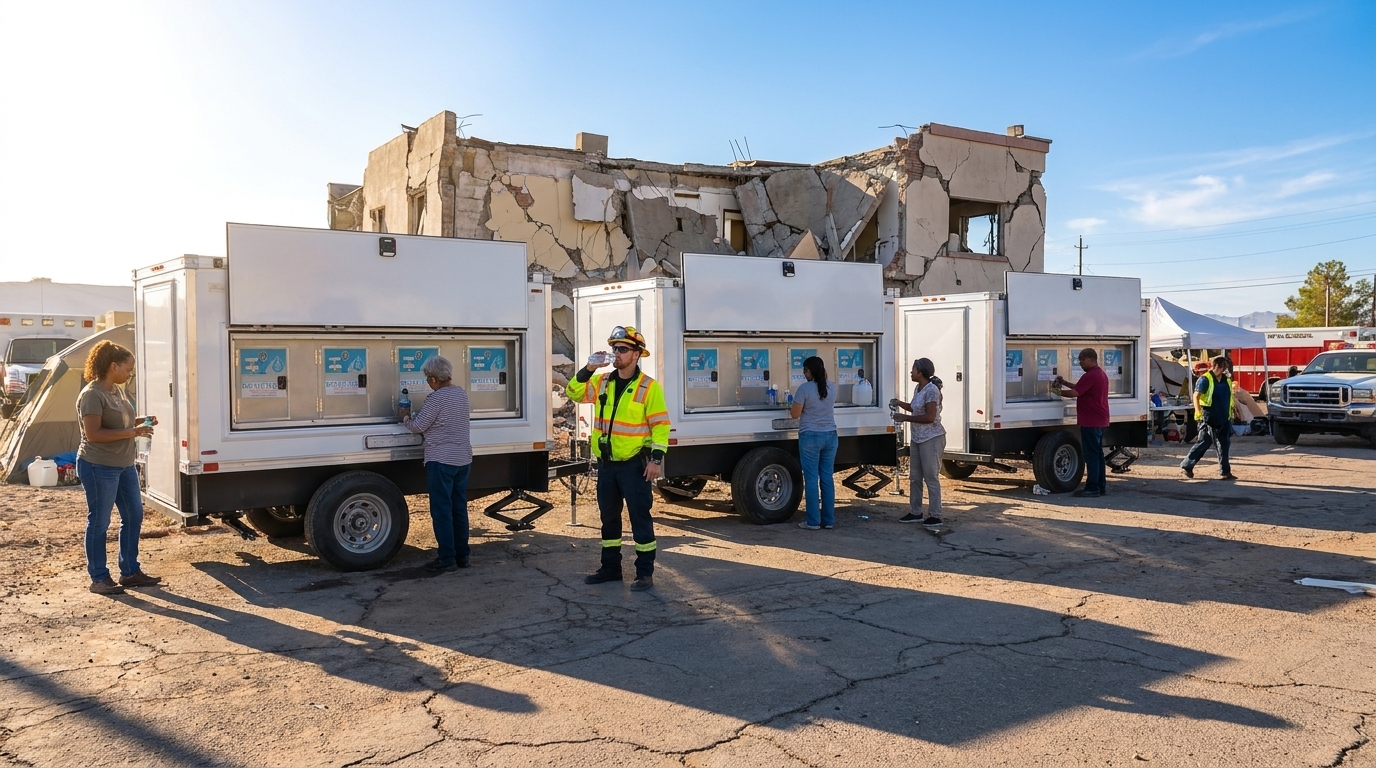 Washington County
→
Desert campgrounds working through a long, hot shoulder season.
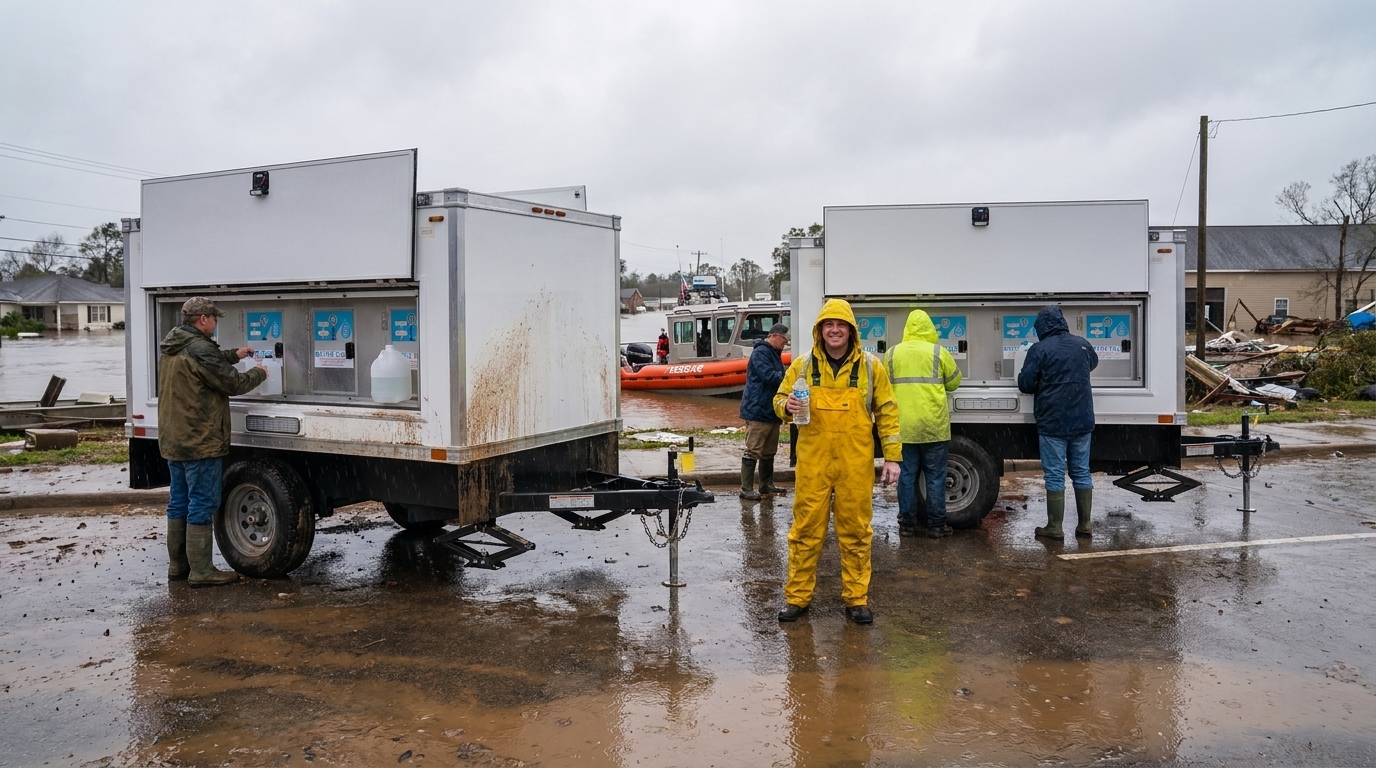 Wasatch Back
→
Group camps and mountain event camping in a short high elevation summer.
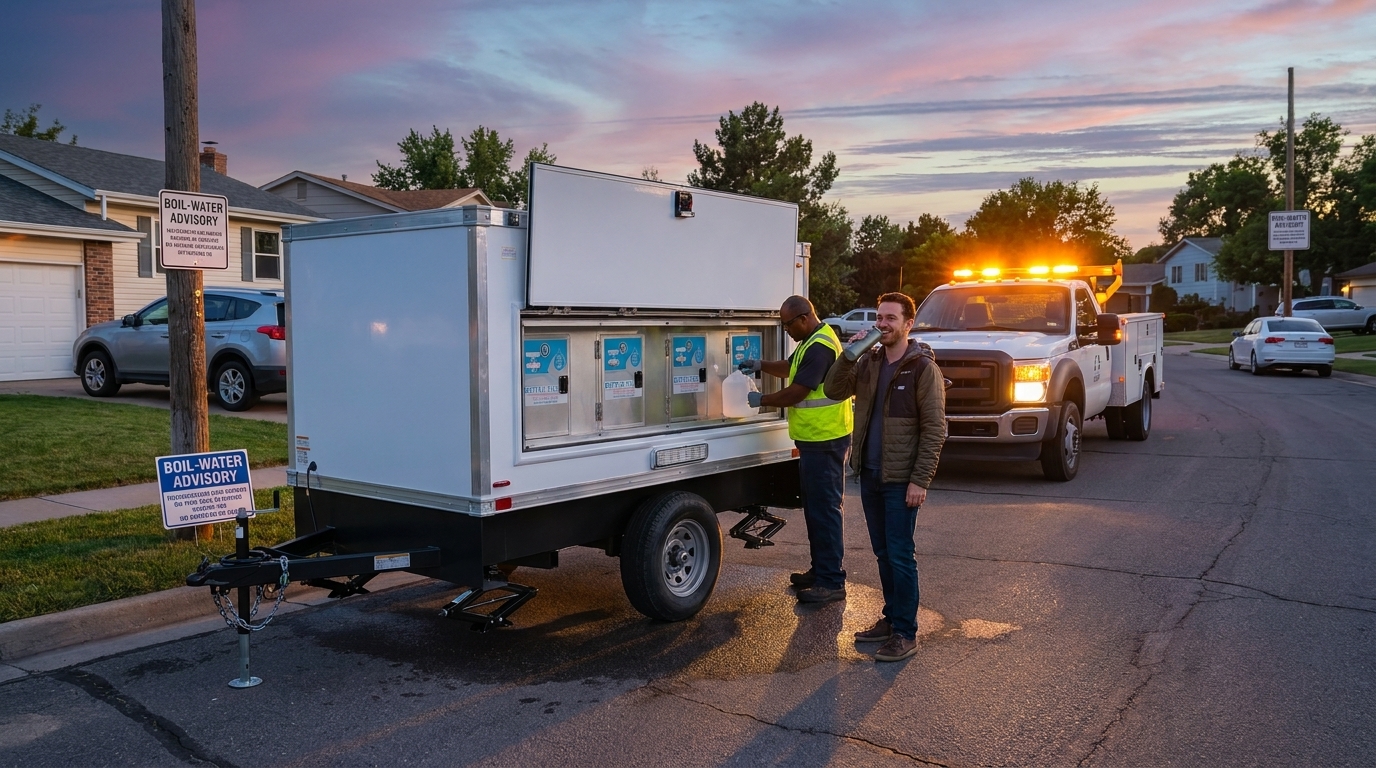 Inland Northwest
→
Lake campgrounds and forest dispersed sites within a short tow of the city.
 Northern New Mexico
→
Scout and church camp country in the mountains north of town.
 Central Coast
→
Coastal and ranch camping where group sites sit well off a paved road.
Give us the head count or the guest count, the date, and the spot it will park. We will spec the right setup, confirm the delivery window, and have cold filtered water pouring before the day starts.