Top-Rated Hydration Water Station Rentals Utah for Events & Job Sites, Call Now
We deliver chilled, filtered drinking water to events and job sites anywhere in Utah, 24/7. On a dry, hot Utah afternoon, warm water gets ignored, and at single-digit humidity and 4,500+ feet of elevation, a crew loses fluid faster than they feel it. Our self-contained water station tows straight to your site, runs four-stage filtration, and tops itself off all day, so people keep drinking and your project keeps moving.
- Statewide Utah coverage
- Chilled, four-stage-filtered water
- ADA bottle filling
- UOSH heat-illness ready
- Licensed & insured
- Emergency & last-minute drops
A statewide hydration partner that knows how Utah’s dry, high-altitude heat works
Utah’s summer heat is dangerous precisely because it doesn’t feel dangerous. Across the Wasatch Front the air sits in the high 80s and 90s, humidity can drop into the single digits, and at 4,000+ feet of elevation the sun is intense. Sweat evaporates before anyone notices it, so a roofing crew in West Valley City or a landscaping team along the Provo benches can be in trouble while they still feel fine, even at 10 a.m. with the thermometer reading a mild 88. We’ve run drinking-water stations on the Salt Lake valley floor and out in the Washington County desert, so we already have answers to the questions a sharp project manager asks: how fast can you reach my site, will the water still be cold by mid-afternoon, and what happens when a 300-gallon tank runs low on a Friday before a weekend pour.
Built around the Wasatch Front
Most of Utah’s people, jobsites, and events cluster along the I-15 corridor from Ogden through Salt Lake and down into Utah Valley, and that’s where our dispatch is anchored. From those hubs we reach Davis and Weber counties, Park City, and out toward St. George, with emergency and last-minute runs held open when a forecast spikes.
Chilled, not just filtered
Each station chills its own supply, so the last fill at quitting time is as cold as the first one at sunup. In dry, high-altitude heat, warm water gets ignored, and water nobody drinks prevents no heat illness. Keeping it cold is the whole point.
Dropped, filled, serviced, hauled
You don’t have to stitch together a bottled-water account, an ice run, and a waste pickup. We set the station, keep it topped off from our own potable trucks, service it through the rental, and haul it away when you’re done. One point of contact for the whole job, whether that’s a Lehi data-center build or a county fair in Davis.
Here’s what we tell every new Utah client: if the crew won’t drink it, it isn’t doing anything for you. Warm bottled water sits nearly full on a jobsite while workers quietly fall behind on fluids. A chilled station ten steps from the work face gets drained twice before lunch. That’s why we don’t just drop a trailer and disappear, and why we treat a hot-afternoon emergency call as a priority, not a nuisance. We size the station to your headcount, set a refill schedule that matches how hard your day runs, and answer the rush call fast, because in a dry Wasatch Front summer, the margin is measured in minutes and a few degrees.
One road-towable trailer, built to work an open Utah lot in full sun
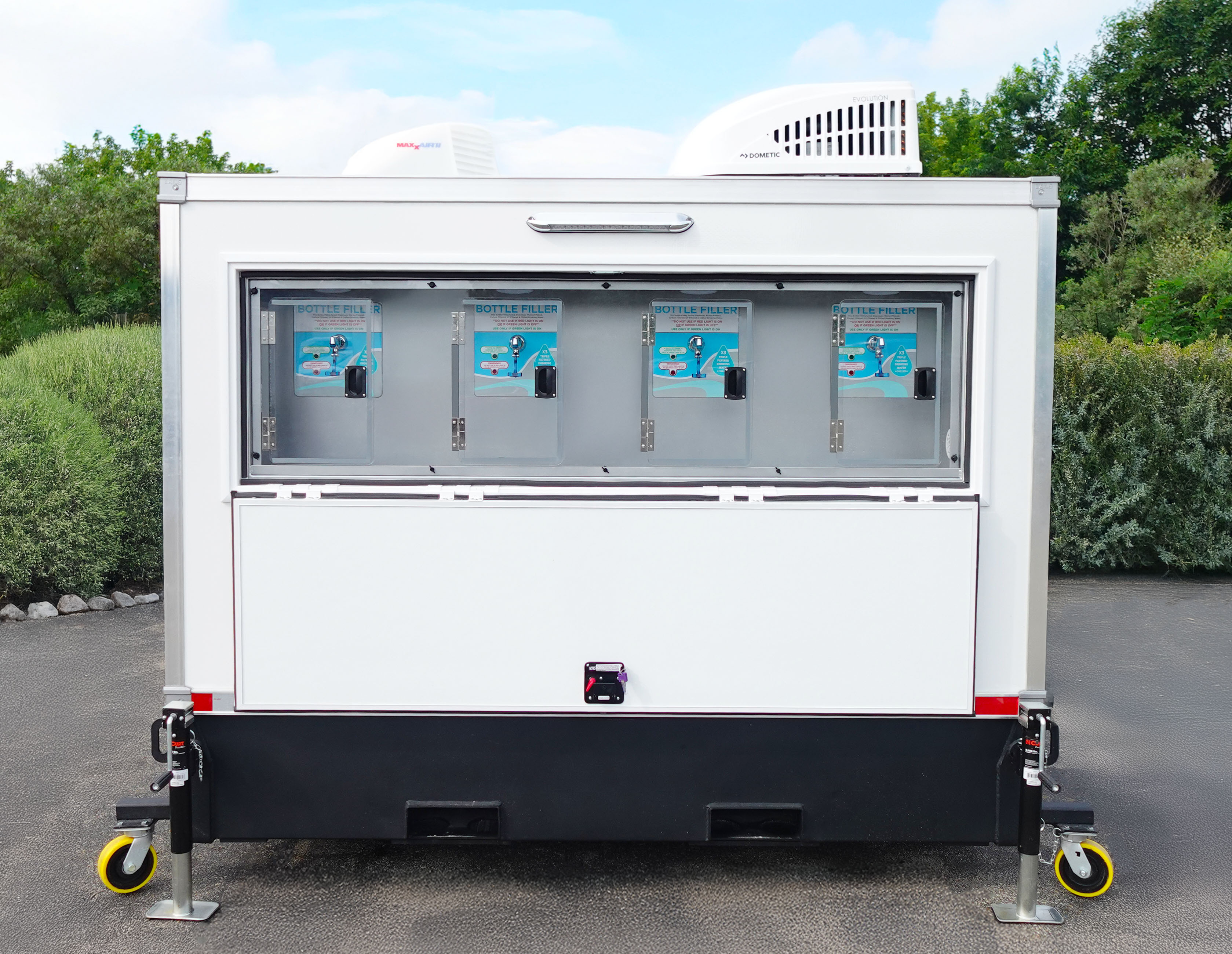
We bring one purpose-built unit anywhere in the state: the Signature Series water station trailer. It rides on a full road chassis, so it hauls straight to the work: a grading pad in the Point of the Mountain tech corridor, a festival lawn in a Utah County park, or a solar array out in the Washington County desert. No building and no permanent plumbing needed. You get chilled, filtered water on tap the afternoon it arrives.
Signature Series specifications
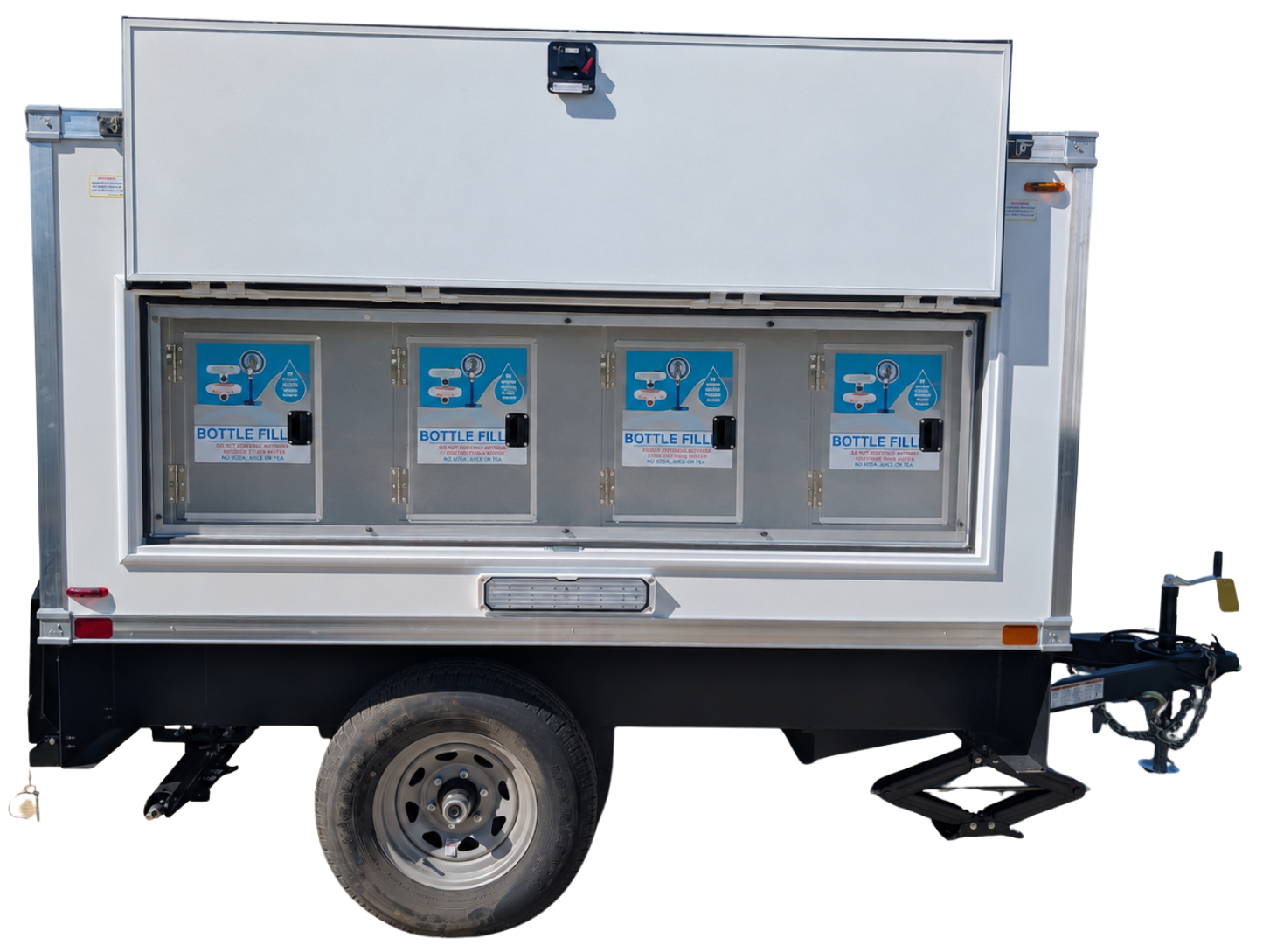
Built on a full trailer chassis with tires and a hitch, it tows to a remote build, an event field, an ag operation, or an emergency staging area. This is the unit Utah contractors and event planners ask for by name. It rolls in, levels out, and starts pouring chilled water the same day it arrives.
| Filling stations onboard | (4) Bottle Filling Stations |
| Trailer length | 12′ 3″ |
| Towing weight | 3,100 lbs. |
| Overall height | 8′ |
| Fresh-water capacity | 300 Gallons |
| Electrical supply | 1–4 dedicated 20A/120V circuits OR 1 dedicated 50A/240V circuit |
| Onboard AC | 1 unit |
Why this trailer suits Utah work
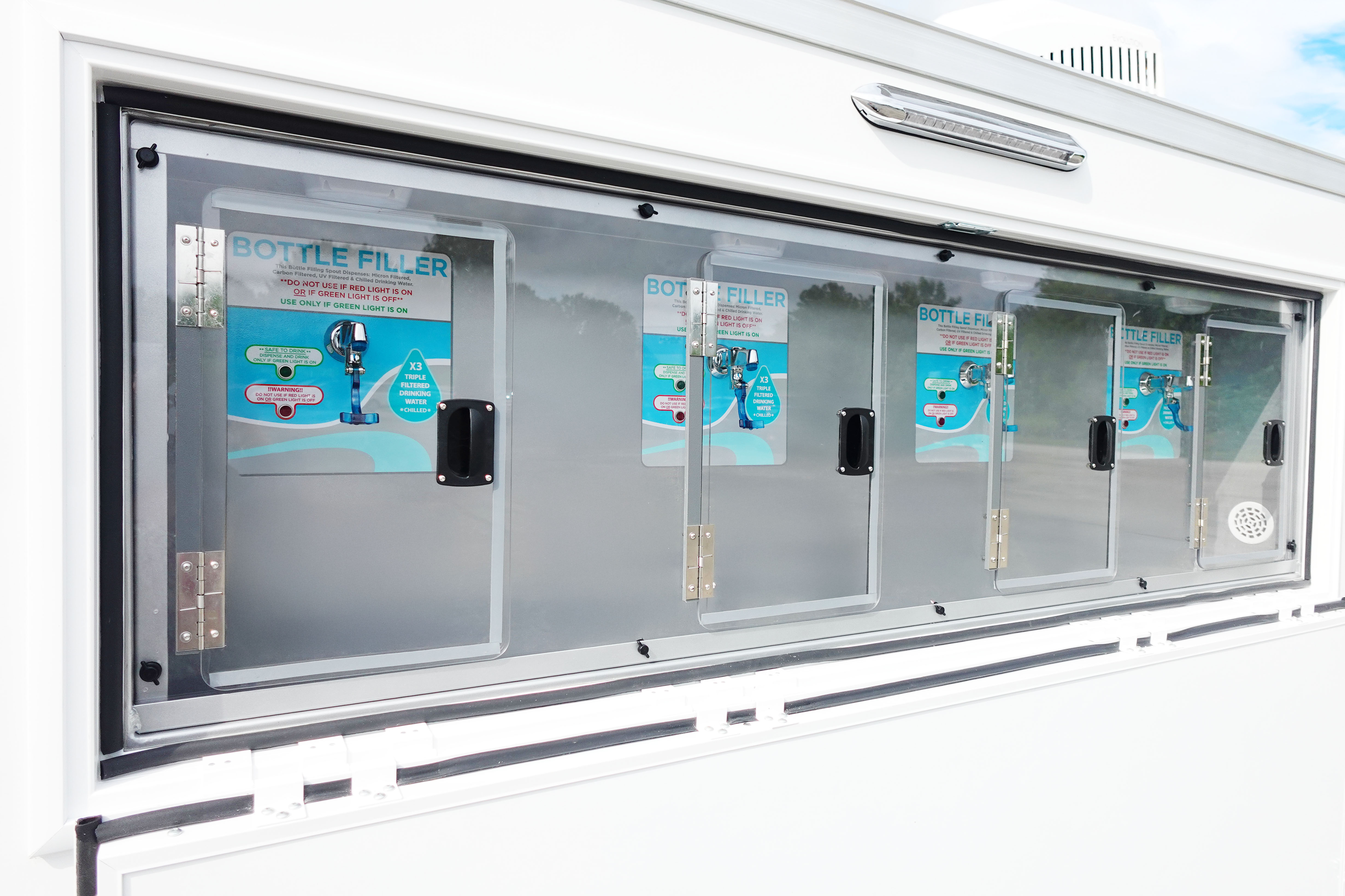
The Signature is designed for dry heat, intense high-altitude sun, and long hauls between job phases. Up front, four filling spouts line an exterior wall under an awning, so a crew can cycle through on a break without waiting at a single tap. The onboard AC unit and dedicated chillers keep the water cold even when the trailer is baking against a west-facing bench in late-day sun. That’s what a cooler or a bottled-water plan can’t do in a Wasatch Front July: the pour at five o’clock is still cold.
The 300-gallon fresh tank carries a full crew through a shift, and because the trailer is road-legal, we can reposition it across a sprawling site or move it to the next phase of a job without tearing out anything permanent. Its power needs are modest, which is why one trailer works equally well on a finished commercial pad in Draper or a raw edge-of-desert lot near St. George where we set up temporary power.
It also does more than those four front spouts. A rear large-jug station tops off five-gallon coolers and personal packs, and a row of hose-bib taps covers crew chores, wash-down, and ag use. One trailer handles the whole hydration picture for a Utah worksite or event, with no second vendor required.
Bottled water quietly drains your Utah budget
Take a crew of fifty on a Salt Lake County build. Each worker grabs roughly half a dozen bottles across a 95-degree shift. That’s near 300 empties to buy, carry, chill, and bin every single day, before anyone counts the ice. Multiply it across the whole job and it stops being a rounding error.
Over a 200-day project, that’s more than 60,000 bottles. On the multi-phase tech jobs reshaping the Point of the Mountain, it clears six figures. One trailer replaces all of it: chilled water straight from the tap, with no empties heading to the dumpster.
What usually closes the deal is logistics, not the landfill
The environmental case is real on its own. Americans throw away roughly 60 million of these bottles a day, barely a third get recycled, and the rest can sit in a landfill longer than the building your crew is raising will stand. Worth a line in the ESG report. But when a Utah project manager makes the call, it’s usually the day-to-day hassle that does it: no standing water order to manage, no cooler gone warm before the morning’s out, no stack of empties baking by the gate. The superintendent gets to build instead of run water, and on a tight Silicon Slopes schedule, that time matters.
It also handles demand spikes. Because our potable trucks keep the trailer charged, a busy day doesn’t break the plan. Double the crew for a big pour and nobody out-drinks the tank, because we just send a truck back around sooner.
One state, several very different hydration problems
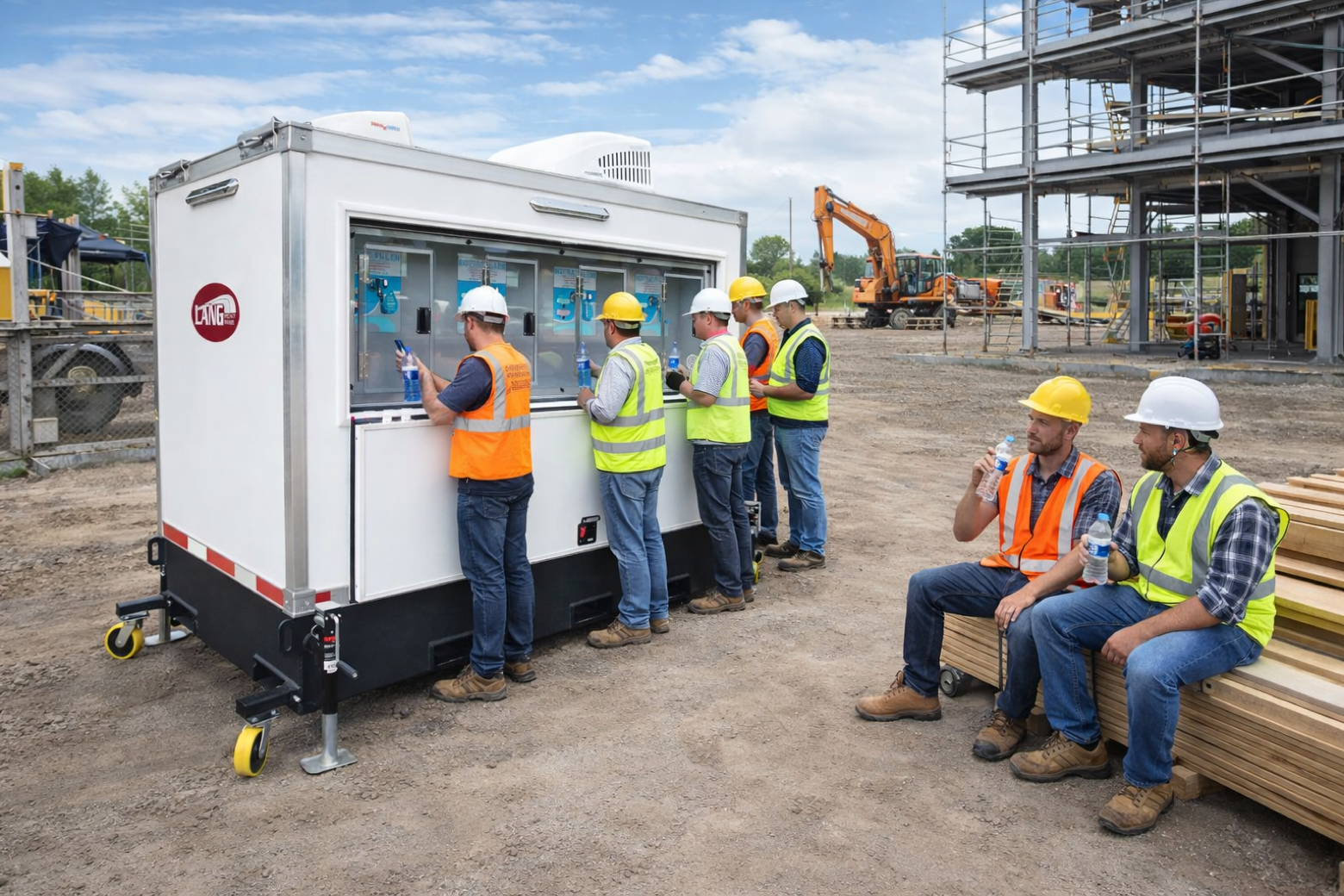
Utah isn’t a single market. It’s a set of distinct regions along the Wasatch Front and out into the desert, each with its own mix of work, weather, and events. Here’s how our stations work across the state.
Salt Lake County. The state’s population and commercial heart, from downtown Salt Lake City out through West Valley City, Sandy, Draper, and the airport’s logistics belt. This is where the biggest crowds, the densest construction, and the most office and warehouse build-out concentrate, and where a heat-dome week can push the valley floor well past 100 degrees with bone-dry air. Stations stage easily along the I-15 and I-215 spine.
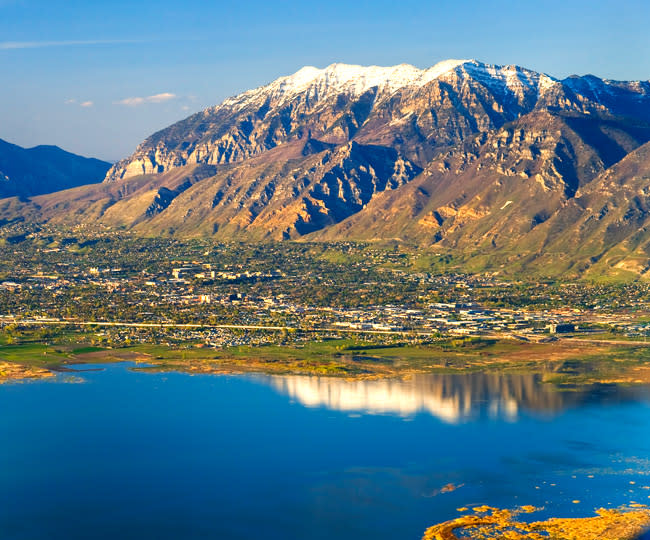
Utah Valley (Provo–Orem). Anchored by Brigham Young University and Utah Valley University, the valley below Mount Timpanogos runs a constant churn of campus, housing, and tech-corridor construction. Festivals, temple-grounds weddings, and lakeside events fill the summer calendar, and the dry valley air drives hydration demand on every one of them.
Davis, Weber & Ogden. North of Salt Lake, the Davis and Weber County corridor carries Hill Air Force Base, the industrial and distribution belt around Ogden, and a heavy fair-and-festival season. Crews here work the same baking sun as the rest of the front, often with long site footprints that reward a road-towable station you can reposition.
Park City & the mountain resorts. The Wasatch Back swaps valley heat for altitude and intense UV. Summer concert series, trail races, festivals, and resort-village construction draw big outdoor crowds at elevation, where thin air speeds up dehydration even when the temperature feels mild. A 78-degree mountain afternoon can dehydrate a crowd faster than a 90-degree valley one. A chilled station near the venue covers hospitality and safety at once, so we size station count to the altitude, not just the forecast.
St. George & Washington County. Utah’s southwestern desert runs genuine triple-digit summer heat over a fast-growing metro of subdivisions, resorts, and roadwork. Crews and event organizers here can’t get by on a cooler and an ice run, because the volume is too high and the water warms up too fast. This is the part of the state where a centralized chilled station makes the most sense, and where we tell new contractors to budget hydration as a real line item, not an afterthought.
The rural and agricultural reach. Beyond the front, Utah’s farms, ranches, solar installs, and remote infrastructure projects put crews in the most heat-exposed work of all, in the driest air. Wherever the I-15 and U.S. highway network runs, we can stage a self-contained station with jug-fill and hose-bib outlets right where the work happens.
Hydration built for the way Utah actually works
A data-center build at the Point of the Mountain needs something different than a Days of ’47 celebration in Salt Lake, which needs something different than an orchard crew working the rows in the south of the state. Here’s where our stations go to work across Utah.
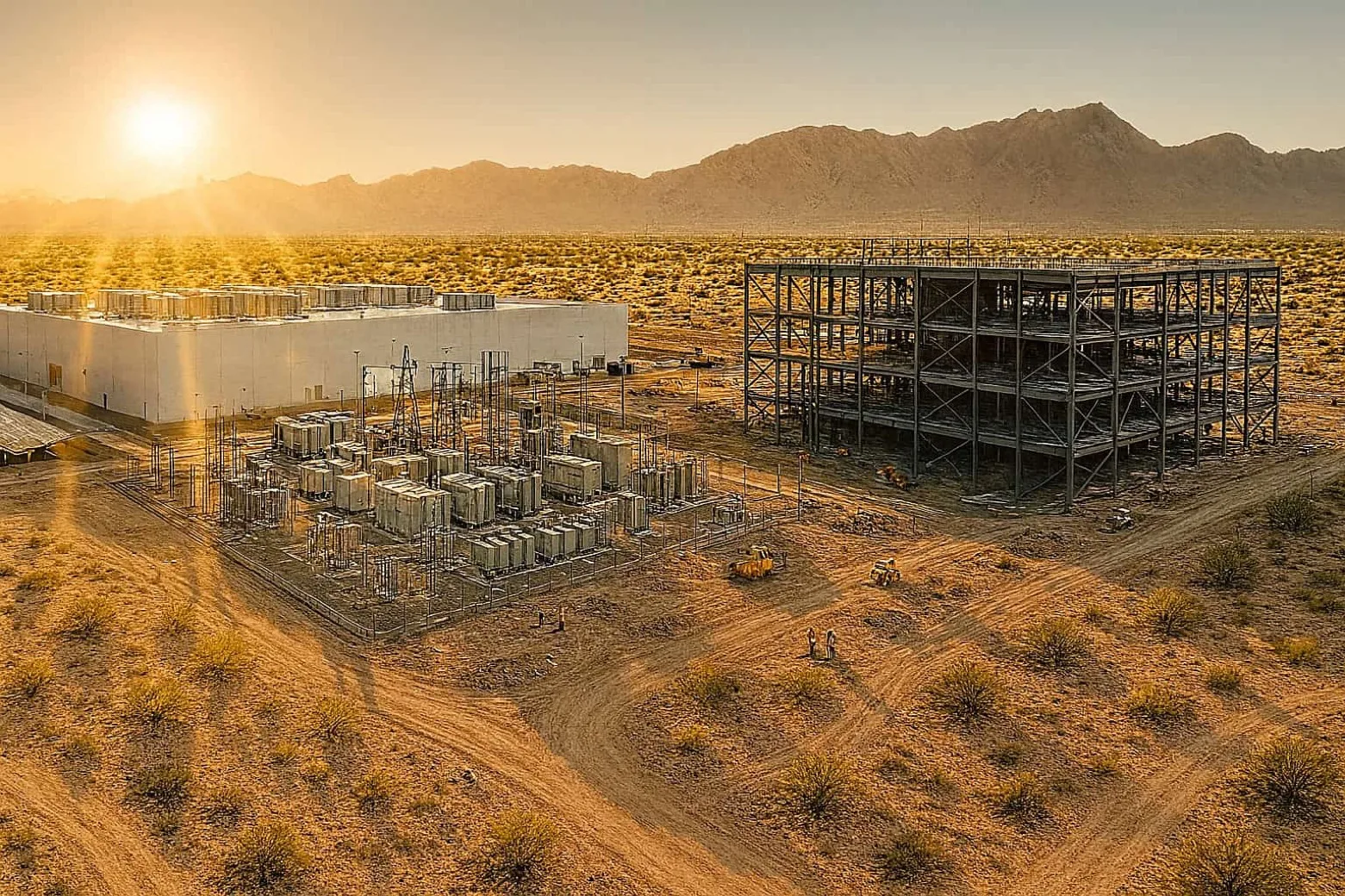
Silicon Slopes tech & data-center build-out
Utah’s tech corridor runs from Provo through Lehi and Draper up to the Point of the Mountain, and the dry, cool-nights climate has made the state a magnet for data centers that prize natural cooling. Those jobs put hundreds of trades in open sun on a tight schedule. We stage stations along the I-15 build zones so general and trade contractors keep documented, chilled hydration within a short walk of every work face.
Festivals, concerts & mountain events
Days of ’47 in Salt Lake, summer concert series at the resorts on the Wasatch Back, county fairs in Davis and Weber, temple-grounds weddings in Utah Valley, trail and road races along the benches. Dry, high-altitude air makes a crowd drink faster than people expect. A station gives organizers free-flowing chilled water and clean refill points without a mountain of single-use bottles to truck in and truck out.
Commercial & residential construction
The housing, office, and warehouse build-out reshaping the Wasatch Front never really slows down. From West Valley City logistics parks to St. George subdivisions, crews work long days in dry sun on a deadline. A towable station drops right into the lot, keeps documented cold water at the work face, and rolls to the next phase without tearing out anything permanent.
Agriculture, solar & emergency response
Orchards and fields in the south, landscaping crews keeping Wasatch Front parks green, and solar installs spreading across the desert do some of the most heat-exposed work in the driest air. Jug-fill and hose-bib outlets let field crews top off coolers right where they stand. When a heat advisory or a water-main break hits a Utah community, we also deploy potable stations to cooling centers and base camps on short notice.
Three stages of filtration, a UV pass, then chilled and poured
A rental station only works if the crew actually wants to drink from it. Before the chiller gets involved, your local Utah water runs through three filtration stages and an ultraviolet pass. That’s why the water leaving the nozzle tastes clean and stays genuinely cold deep into the worst Wasatch Front afternoon.
Grit & sediment
First in line, this stage traps the scale, rust flecks, and fine particulates that ride along in municipal supply lines, so nothing downstream has to fight that load.
Activated carbon
Next, carbon strips the chlorine bite and the flat, garden-hose aftertaste tap water can carry. This is the step that decides whether a crew refills here or wanders off.
Micro-particulate stage
A fine-mesh polishing cartridge catches the microscopic particles that slip past sediment and carbon, keeping the same tap safe for the workers and any members of the public who share it.
Ultraviolet finish
Last, a UV chamber inactivates bacteria and pathogens using light alone, no dosing, no chemical taste, a clean final guard immediately ahead of the spout.
Three ways to draw water, with ADA height built in
The trailer has four push-back filling spouts up front: press a bottle against the paddle and it pours, with nothing to twist or push. One of the four sits at ADA-accessible height, so a guest in a wheelchair or a worker with limited mobility is served without adding a separate fixture. Out back, a large-jug spout fills five-gallon coolers and personal packs, and a set of hose-bib taps handle wash-down, ag work, and event support. Everything the water touches on the way out is food-grade and stainless, so it stays clean and cold to the last inch of plumbing.
One Signature trailer carries 300 gallons, enough for thousands of bottle fills between refills, and because we top it off on demand, the station never becomes the bottleneck on a busy Utah shift or a packed event afternoon.
Delivered, filled, and connected, with chilled water flowing inside the hour
We handle all of it: placement, the fresh fill, and the electrical hookup, the parts that usually eat a coordinator’s morning. Then we show your team how to run the unit before our truck leaves the lot.
Tell us the basics
How many people, how many days, where you want it parked, and what power is nearby. With those four answers we can size the job on the first call.
We roll out to you
From our Wasatch Front hubs we reach most Salt Lake, Utah Valley, and Davis-Weber addresses fast, with longer runs to Park City, Ogden, and the St. George metro planned around your start. We also run rush and after-hours drops when a heat advisory hits.
We stage and connect it
Our crew levels the trailer, fills its fresh tank, and ties it into whatever power you’ve got, whether that’s a few standard circuits or a single heavier drop.
We keep it flowing
Our trucks come back to refill the tank on a schedule we set to your demand, and we maintain the unit start to finish through the rental.
Bare lot with nothing to plug into? Tell us and we’ll price the fix into the quote. The trailer’s power needs are light, and with our support fleet we’ve run stations on raw desert dirt outside St. George with no permanent service at all. Just walk us through what’s on site and we’ll handle the rest.
In a Utah summer, accessible drinking water is a documented safety requirement
Utah runs its own OSHA-approved program instead of relying only on the federal agency. Utah employers answer to Utah Occupational Safety and Health (UOSH), whose construction sanitation rules already require accessible potable drinking water on the job. Across the Wasatch Front, weeks of high-80s and 90s heat combine with bone-dry air and intense high-altitude sun to drive water loss faster than crews realize. UOSH emphasizes water-rest-shade and acclimatization for outdoor crews, and the federal heat standard now in rulemaking would push further toward documented, suitably cool water positioned close to where people work.
A rented station turns that requirement into something an inspector can walk right up to. You get a fixed, mapped source pouring chilled drinking water any time a worker wants it. It’s the backbone of a defensible Heat Illness Prevention Plan (HIPP) and exactly what a UOSH consultation or internal safety review wants to see on a Utah jobsite.
- Cool, drinkable water on tap right where the crew is working, all day
- A named, mapped hydration source you can log directly in your HIPP file
- Backs up acclimatization schedules and the water-rest-shade routine in real heat
- Aligned with both UOSH rules and the federal heat rule taking shape, so there’s no late scramble
Local water-station service in cities across the state
We run dedicated city service pages along the Wasatch Front. Start with your community below, or call us about any address in Utah. If your site sits in the state, it sits in our delivery range.
Orem
→
Water stations for UVU and University Place events and the Silicon Slopes build-out below Mount Timpanogos.
Salt Lake CountySandy
→
Water stations for America First Field crowds, the Cairns District build, and the Cottonwood-canyon gateway.
We also deliver throughout Salt Lake City, Provo, West Valley City, Lehi, Draper, Ogden, St. George, and Park City, plus the Davis-Weber corridor and the rural areas in between. Don’t see your city? Call (866) 748-5932. Statewide Utah service is exactly what we do.
Why dry, high-altitude heat plus a building boom makes hydration a planning problem
Most of Utah doesn’t get a desert city’s nonstop triple-digit summer, though the southwest corner does, but the whole state gets long dry stretches that fool people, in a region growing faster than almost anywhere in the Mountain West.
A typical Wasatch Front summer sits in the high 80s and low 90s for weeks at a time, brushing 100 during a heat dome, with afternoon humidity that can drop into the single digits. Add 4,000+ feet of elevation and the UV exposure climbs too. That’s the catch: sweat evaporates before it ever beads, so a crew loses fluid faster than they feel it, and someone can be heading toward heat exhaustion while the thermometer reads a deceptively mild 91. Add the radiant heat off fresh asphalt, bare grading pads, and west-facing tilt-up walls, and the real exposure on a Utah jobsite runs well above the official high. In that setting, chilled water within easy reach isn’t a perk. It’s the cheapest piece of safety gear on the lot.
What makes planning hard is how long the season runs and how much it varies across the state. The Wasatch Front bakes for months. St. George and Washington County run genuine desert heat that starts earlier and ends later, closer to half the year. A crew can’t get through that on coolers and ice: the volume is too high, the water warms up too fast, and the daily work of hauling, icing, and trashing bottled water adds up every shift. A centralized, self-chilling station is the only setup that holds up across a full Utah summer without becoming its own logistics headache.
Demand keeps climbing because Utah is in the middle of a generational build-out. Silicon Slopes, the tech corridor running from Provo through Lehi and Draper up to the Point of the Mountain, keeps adding office campuses, and the state’s dry air and cool nights have made it a magnet for data centers that rely on natural cooling. Add the housing, warehouse, and infrastructure construction across Salt Lake, Davis, and Weber counties, plus the resort-village build-out on the Wasatch Back and the subdivision growth around St. George. Every one of those projects puts crews in open sun, often starting early to beat the afternoon heat.
That’s the growth pattern our Utah dispatch is built for. We stage units along the I-15 corridor and out to the regional hubs, tie the refill schedule to how many people are on the deck rather than a date on the calendar, and hold emergency drops open whenever a heat advisory lands. On a Utah megaproject, a hydration gap isn’t just lost minutes. It can stop a crew and send someone off in an ambulance. That’s a risk we plan out before it starts.
Beyond the station: the trucks that keep a Utah site supplied
The trailer is the part you see. Behind it is a fleet that moves fresh water onto the site, stores it there, and hauls the used water back off. That’s how one Utah phone call replaces the three different vendors most projects would otherwise have to manage.
Potable water trucks
Our potable trucks refill the station before it runs low, sized to your crew’s demand. The same trucks fill cisterns, on-site tanks, and bladder bags whenever a phase outpaces a single delivery, like a Saturday pour on a Lehi build or a packed evening at a Salt Lake festival.
Bladder bags & buffer supply
Bladder bags are an underrated part of the kit. A flexible portable bladder stores extra fresh water for busy stretches, or holds greywater when a site has nowhere to drain. On a remote desert lot or a high mountain venue between truck visits, that buffer keeps a shift running smoothly.
Pump trucks
Water rarely starts where you need it. A pump truck moves it, drawing supply down, pushing it into storage, or shuttling it across a footprint too big for a single hookup. On sprawling Utah jobs where the fill point and the station sit acres apart, it ties them together.
Vacuum & waste trucks
Used water has to go somewhere, and we make sure it goes to the right place. A vacuum truck removes greywater and wastewater and hauls it to a permitted disposal site, so the loop closes cleanly. We never leave a Utah client holding a tank of water with no plan for it.
These work together. A remote desert site might pair a station with a bladder for buffer and a standing truck fill. A big Salt Lake event might use a pump truck to shuttle supply and a vacuum pickup once the crowd clears. Tell us how your Utah job is set up and we’ll put together the right mix: one point of contact, one bill, and one crew that already knows the lot.
Chilled water across the Wasatch Front and the length of Utah
Our dispatch runs the I-15 corridor and out to the regional hubs: the Silicon Slopes tech belt, the Salt Lake and Utah valleys, the Davis-Weber industrial corridor, the Wasatch Back resorts, and the Washington County desert. If your site is in Utah, it’s in our delivery range.
DraperProvoOremLehi
American ForkPleasant GroveVineyard
OgdenLaytonBountifulPark City
St. GeorgeWashingtonLindonSpanish Fork
Saratoga SpringsEagle MountainTooeleLogan
Working a corridor instead of a single address? We follow Utah’s main routes, including I-15, I-215, U.S. 89, and State Street, so corridor and multi-site projects get the same turnaround as a single Wasatch Front lot.
The questions Utah crews and organizers actually ask us
Do you really cover all of Utah, or just Salt Lake?
The whole state. Our dispatch is anchored on the Wasatch Front because that’s where most of Utah’s people, jobsites, and events are, but from those hubs we reach Salt Lake County, Utah Valley, the Davis-Weber-Ogden corridor, Park City and the Wasatch Back, and out to St. George and Washington County, plus the rural and agricultural reaches in between. If your site sits in Utah, walk us through the address and we’ll plan the run.
Is it actually chilled, or only filtered?
Both. A built-in chiller cools the trailer’s own supply, so the water is as cold at the first draw of the morning as it is at the last one at clock-out. We do that on purpose: in dry, high-altitude Utah heat, warm water gets ignored while a worker keeps losing fluid they don’t feel evaporating. The water people actually drink is the water doing the safety work, so we treat the chilling as protective gear, not a nicety.
What is the onboard capacity, and how do you keep it from running dry?
Each Signature trailer holds 300 gallons of fresh water, about 2,400 sixteen-ounce fills before it needs a top-off. On a big Utah crew or a heavy event afternoon, our own potable trucks come back around on a schedule we set to your demand, so tank capacity is never the limit. Tracking the refills is our job, not yours.
Will a rental support our UOSH heat-illness compliance?
Yes, directly. Utah runs its own OSHA-approved program through Utah Occupational Safety and Health (UOSH), which already requires accessible potable drinking water on the job, and the federal Heat Injury and Illness Prevention rule now being written leans toward documented, suitably cool water positioned near the work. A trailer gives you a fixed, mapped, chilled source you can cite by name in a Heat Illness Prevention Plan and point a UOSH consultant or auditor straight to. You write the program, and we provide the physical hydration it rests on.
Is there an ADA-height filling option on the trailer?
Yes. Of the four push-back filling positions on every unit, one is at ADA-accessible height, so a wheelchair user at a Salt Lake event or a worker with mobility needs on a Utah Valley site is served right alongside everyone else, with no second setup. Around back you’ll also find a large-jug fill point for five-gallon coolers and several hose-bib taps for crew tasks.
Do you cover festivals and weddings, or only jobsites?
Yes. Events are a big part of what we do in Utah. One station covers a small wedding in the mountains, and three or four spread across a footprint cover a Days of ’47 crowd, a resort concert night on the Wasatch Back, or a county fair in Davis or Weber. We schedule the drop and pickup around your run-of-show, your guests get cold water on tap, and you’re not paying to truck in and haul out pallets of single-use plastic.
How do the mountains and altitude affect hydration at events?
More than most planners expect. At Park City and the Wasatch Back resorts, thinner air and stronger UV speed up dehydration even when the temperature feels comfortable, so a crowd at a mountain concert or trail race drinks faster than you’d guess. We size station count to the altitude and the headcount, not just the forecast high. That’s why a single unit that’s plenty on a cool valley evening might need to be two or three up on the mountain.
What do you need from me to set one up?
Not much. Your headcount, your dates, the spot on the site where the trailer should park, and the power that’s available. The Signature is easy to power: a few standard 20-amp household-style circuits, or one 50-amp 240-volt drop, will run it. If it’s a bare desert lot with no power at all, tell us up front and we’ll build a workaround into the quote.
How does the taste compare to store-bought bottles?
Clean, with no chlorine bite. The carbon stage pulls out the chlorine and the flat off-tastes municipal tap water can carry, so what comes out of the nozzle tastes fresh and neutral rather than like a garden hose. That matters, because a station only works if people actually prefer drinking from it, so we treat taste as part of the safety equation, not an afterthought.
Can you turn around a same-day drop when a heat advisory hits?
Yes, and it’s a big reason Utah clients keep our number. When the forecast turns bad, we hold rush slots and pre-position extra potable trucks ahead of the heat. A crew that shows up to find no working water on a scorching, dry morning is usually one quick phone call away from a trailer flowing cold before the afternoon peaks.
Trusted by the Utah teams who can’t afford a hydration gap
“We had a couple dozen trades on a Lehi build last July and the bottled water had gone warm by mid-morning. By that afternoon they’d dropped a trailer and the water was genuinely cold. Pallets never came back to my site after that.”
“For our summer concert series up on the mountain, the refill stations cut our single-use bottle order to almost nothing and the lines stayed short even with the altitude pushing people to drink. Delivery and pickup ran on our schedule, not theirs.”
“Our UOSH-minded safety review wanted documented cold-water access for a heat-exposed desert crew near St. George. A mapped station gave us exactly that for the HIPP, and the refills showed up before we ever ran low.”
Service information current as of June 2026.
Lock in cold, clean water for your Utah site ahead of the next dry stretch
Give us a headcount, your dates, and the spot where the trailer should park. We’ll size the setup and run a Signature unit out to you anywhere in Utah, whether that’s the Salt Lake valley floor, Park City, Ogden, or the St. George desert.
Utah Delivery Along the Wasatch Front
The Salt Lake valley is home turf. We place Salt Lake City water station rentals downtown and at every venue in between, and the same routes carry portable water trailers in West Valley City, West Jordan drinking water station rentals, bottle-fill station rentals in Sandy, and cold water trailers in Draper at the south end of the valley.
Utah County builds fast and celebrates often. Tech campuses along the Silicon Slopes corridor book Lehi jobsite water station rentals, while event water stations in Orem and Provo portable water station rental handle everything from stadium crowds to summer festivals.
Heading north, filtered water stations in Ogden and Layton water trailer rentals keep Weber and Davis County jobs supplied without a second phone call.
And when the work moves to red rock country, St. George water station delivery brings cold drinking water to the hottest corner of the state.