Scottsdale Hydration Water Station Rentals for Events & Job Sites, Call 24/7
We deliver cold, filtered drinking water to events and job sites across Scottsdale and the North Valley. Instead of warm bottled water, you get a self-contained water station that pours cold, four-stage-filtered water and refills itself all day. It keeps guests comfortable at a Troon North wedding and keeps crews safe on a Loop 101 build through the worst of a June afternoon.
- Same-day & ~45-minute local delivery
- Cold, four-stage-filtered water
- ADA bottle filling
- OSHA heat-illness ready
- Licensed & insured
- Resort, event & jobsite ready
We know Scottsdale’s event calendar and its summer heat firsthand
We stage mobile water stations for two kinds of Scottsdale work: luxury events that pack the resort corridors with weddings, galas and golf galleries, and outdoor jobs where triple-digit afternoons make crew hydration a real safety issue. The planner finishing a reception layout at the Fairmont Scottsdale Princess (host of the WM Phoenix Open) and the superintendent running a North Scottsdale pour ask us the same three questions: Can you be here today? Will the water still be cold when the sun is at its worst? And can I count on a refill before a 300-gallon tank runs dry?
After years of staging water in this climate, we know those aren’t idle questions. We once took a 6 a.m. call from a site safety lead near the Loop 101 whose cooler plan for a 40-person crew was already warm before the shift started. He told us he needed cold water on site by lunch or he’d have to pull people off the line. We had a station leveled and pouring by early afternoon. That’s why we keep our response fast and our answer the same every time.
We show up on a Scottsdale timeline
Most North Valley drop-offs land same-day, often within about 45 minutes of dispatch, and we run emergency placements around the clock through the worst of the heat. When a coordinator discovers a guest-count jump two days out, or a safety lead realizes a crew has nothing but a warm cooler at sunrise, that turnaround is the entire job.
Cold that survives a desert afternoon
Each station chills its own supply on board, so the pour at 3 p.m. is as cold as the first one of the morning. Warm water gets ignored, and ignored water doesn’t keep a guest comfortable or a worker out of heat trouble. In a climate that sits above 100 degrees for five straight months, that’s not a detail, it’s the point.
One number for the whole water loop
You don’t coordinate a bottled-water vendor, an ice supplier and a hauler. We place the station, refill it from our own potable water trucks, keep it serviced through your run, and pull it when you’re finished, a single point of contact for hydration on a Scottsdale resort lawn or an open jobsite alike.
One road-towable station that works on a resort lawn or a desert build site
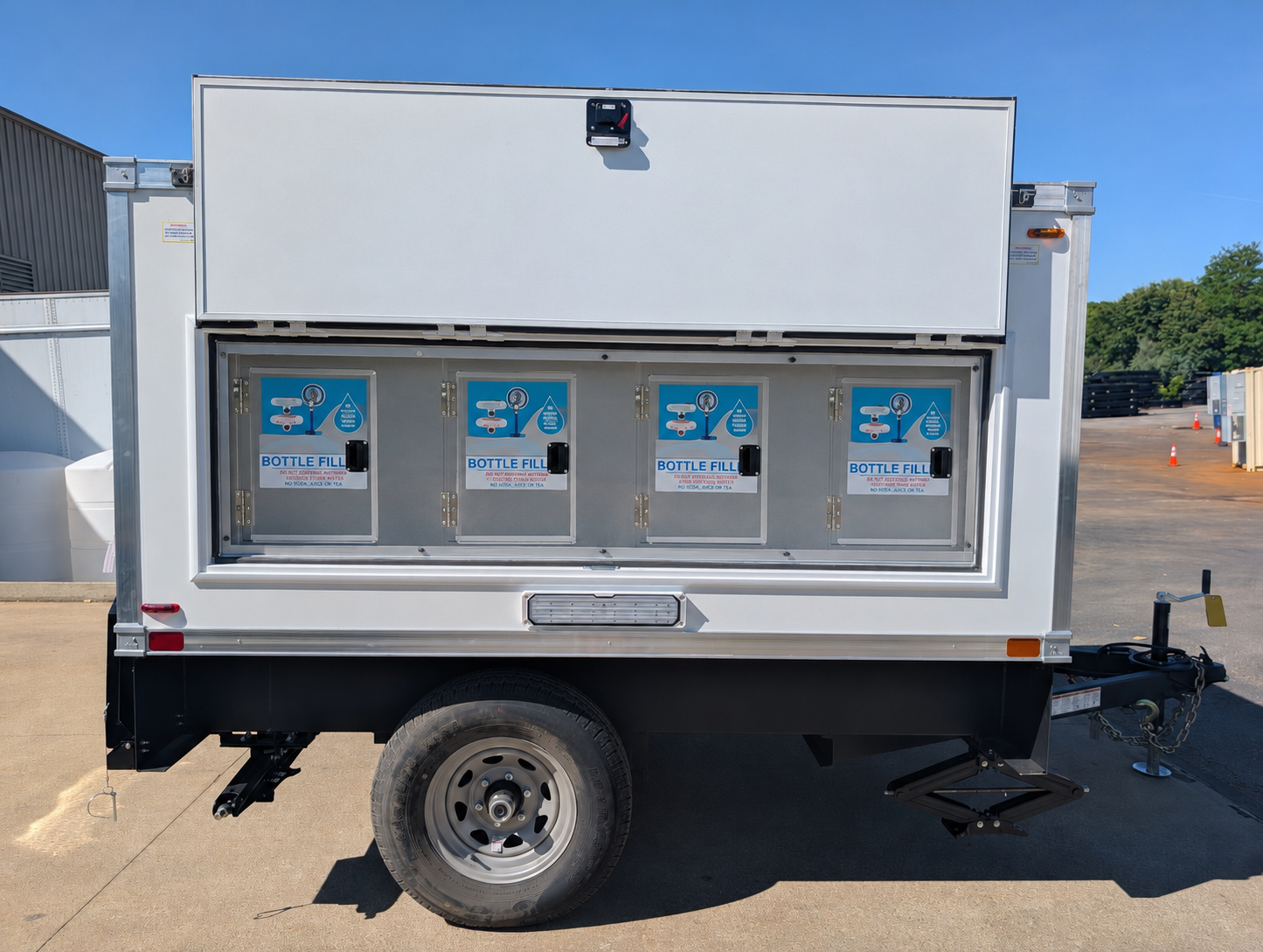
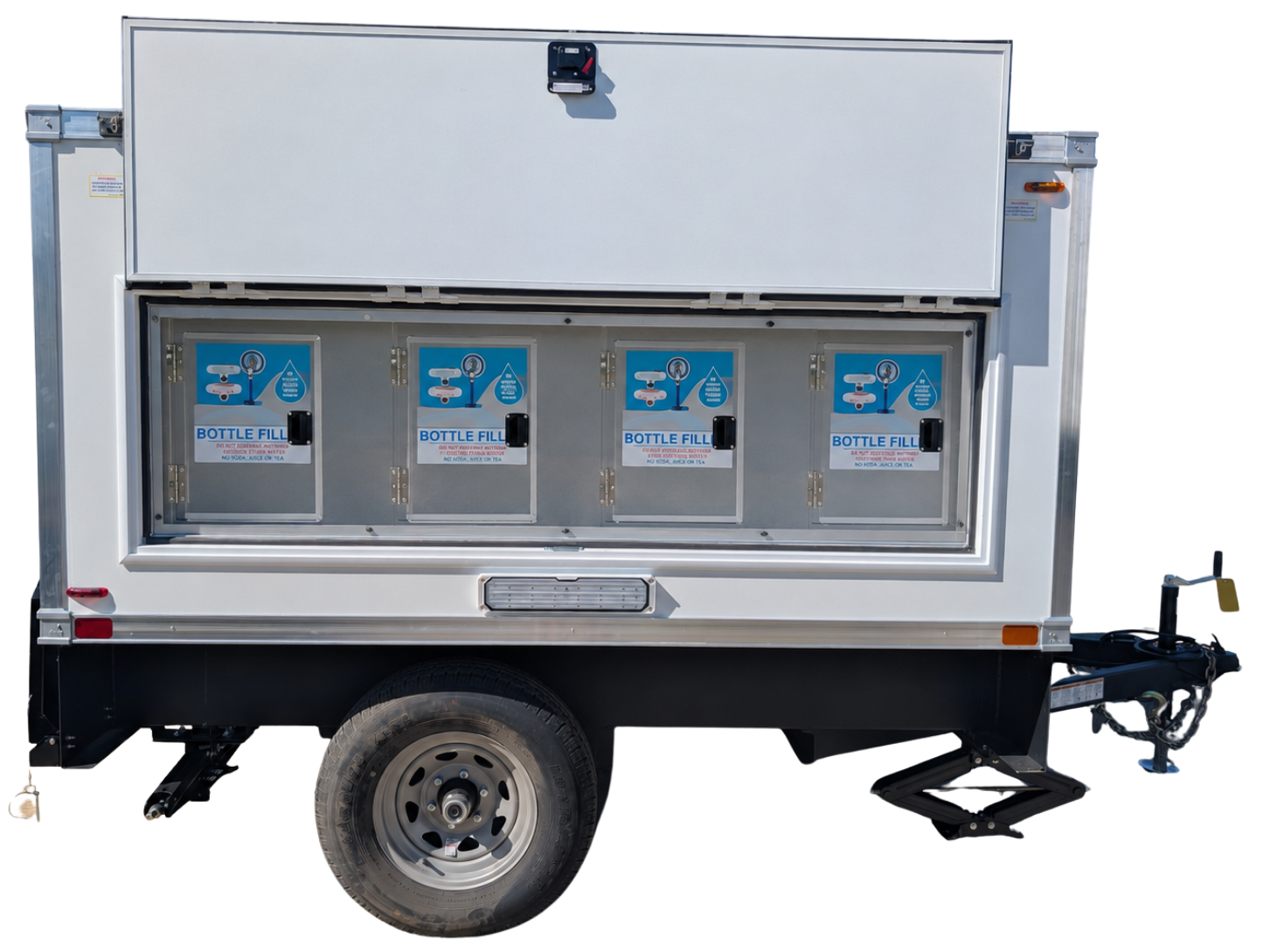
We run one purpose-built unit across the Valley: the Signature Series water station trailer. It rides on a full road chassis with tires and a hitch, so it tows straight to the job, whether that’s a ceremony field below Pinnacle Peak, an Old Town festival footprint along the Waterfront, or a grading site off the Pima Freeway. No building, no permanent plumbing, no power-hungry installation, just cold filtered water on tap the day it arrives.
That mobility is why Scottsdale event producers and contractors ask for it by name. The same trailer that anchors a hydration point at a destination wedding one weekend serves a concrete crew the next, leveled out and pouring within the hour. It’s the only station we run, and we keep the whole fleet to that one rugged, outdoor-ready spec on purpose.
Signature Series specifications
| No. of stations | (4) Bottle Filling Stations |
| Length | 12′ 3″ |
| Weight | 3,100 lbs. |
| Height | 8′ |
| Fresh water tank | 300 Gallons |
| Power requirements | 1–4 dedicated 20A/120V circuits OR 1 dedicated 50A/240V circuit |
| No. of AC units | 1 |
What makes it the right call for a Scottsdale booking
Three hundred gallons aboard means a single station covers a large gallery or a sizable crew without constant intervention, and when demand outruns the tank we top it off from our own trucks rather than asking you to chase a delivery. It draws ordinary site power, one to three standard 120-volt circuits or a single 50-amp drop, so it slots into a resort’s existing service or a generator on an open lot with equal ease. And because the whole unit is climate-managed with its own AC, the equipment that keeps the water cold keeps doing it through the part of the Scottsdale day when nothing else wants to.
A station costs less than bottled water once you run the numbers
A 40-person crew on a North Scottsdale site goes through about 240 bottles a day at six per person on a triple-digit day. That’s more than 48,000 across a single project phase, and the count only climbs on a multi-stage build. At a festival or golf weekend, tens of thousands of attendees reach for water all day long. The bottle tally becomes its own logistics problem.
A station replaces all of it with one delivered, refilled, hauled-away unit. You stop buying, storing, chilling, restocking and disposing, and you stop watching half-empty bottles bake on a folding table in the sun. For a Scottsdale event that markets its setting (most of them do), the cleaner footprint is a guest-experience win on top of the cost savings.
It’s a logistics decision first, a sustainability win second
The sustainability story is real: fewer single-use bottles, less hauled waste, a lighter delivery footprint, and it reads well in an ESG report or event recap. But most Scottsdale clients book a station for plainer reasons. A planner doesn’t want pallets staged behind a head table. A superintendent doesn’t want a crew member walking a hundred feet to a warm cooler. And nobody wants to explain why the water ran out at the busiest hour. A station removes all of those problems at once.
We serve both Scottsdale’s resort events and its worksites
Scottsdale demand splits two ways, and we plan each one differently. For events, it’s about presentation, throughput and never running short in front of guests. For worksites, it’s about access, safety documentation and cold water within steps of the crew. These are the jobs we stage most.
Resort weddings & destination events
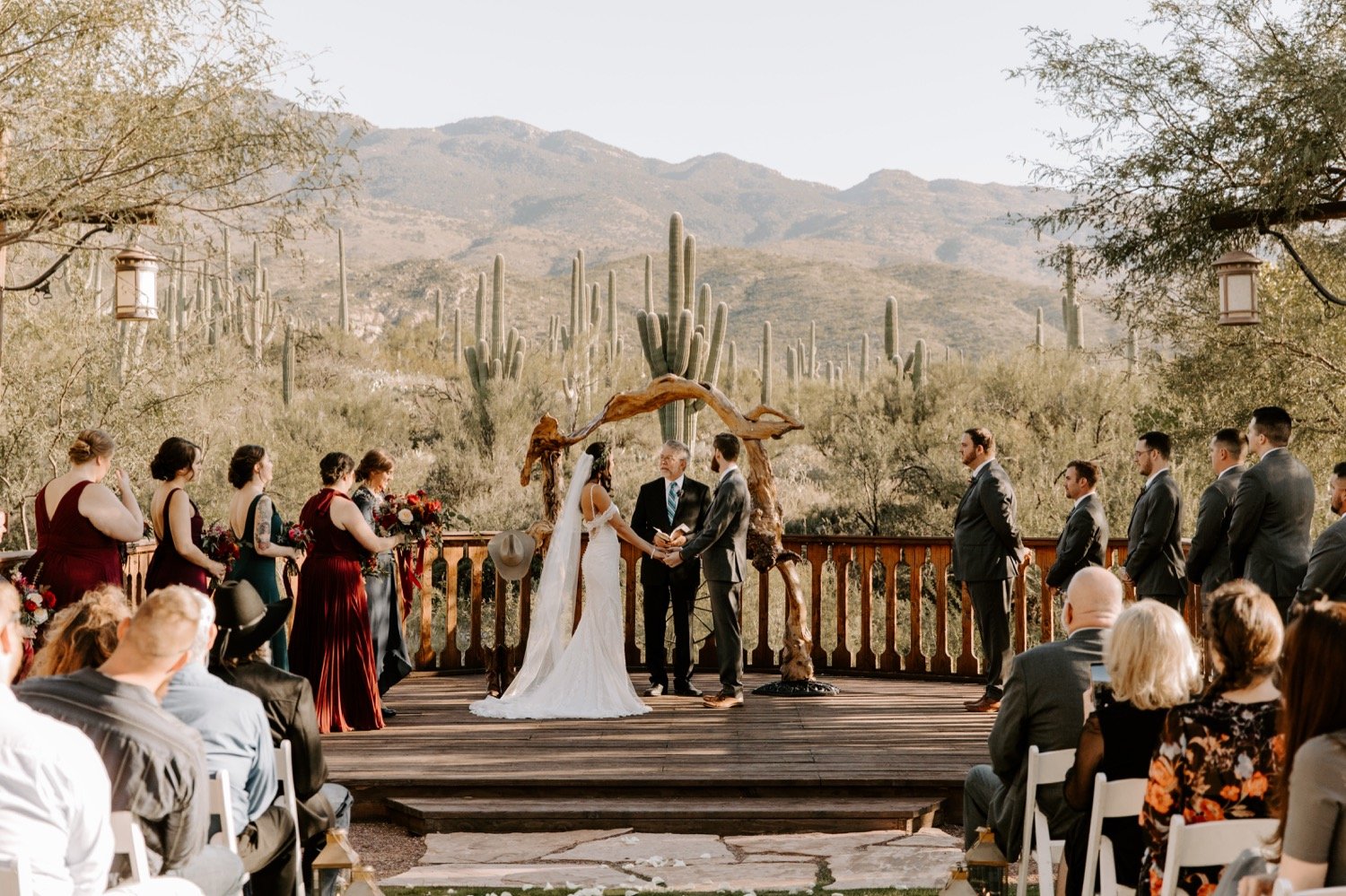
Scottsdale is one of the country’s premier destination-wedding markets, and a ceremony at Troon North or a reception at a Camelback resort still has to keep guests comfortable in the open desert air. One planner told me, “My guests will forgive a lot, but not being thirsty in their nice clothes.” A discreet, cold refill station near the bar or guest path handles a crowd without a wall of bottles, and we time delivery and pickup to the event window rather than ours.
Golf galleries & tournament weekends
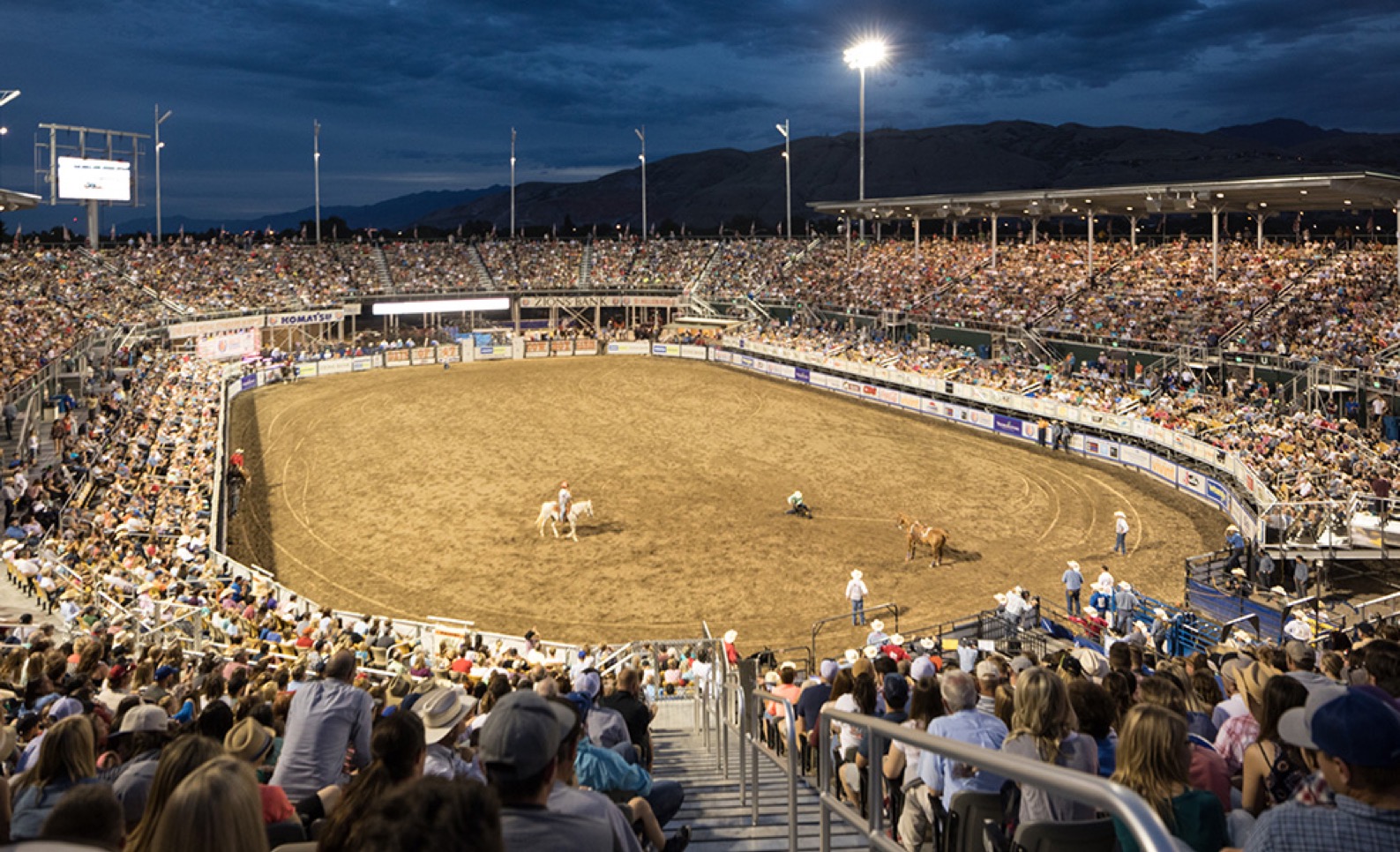
Scottsdale’s golf calendar draws enormous outdoor crowds, the week around the WM Phoenix Open at TPC Scottsdale alone moves hundreds of thousands of fans across the course. Long days, full sun and tens of thousands of thirsty spectators are exactly what centralized cold-water stations are built for, whether it’s a marquee event or a charity scramble at Grayhawk or Kierland.
Spring training & Cactus League crowds
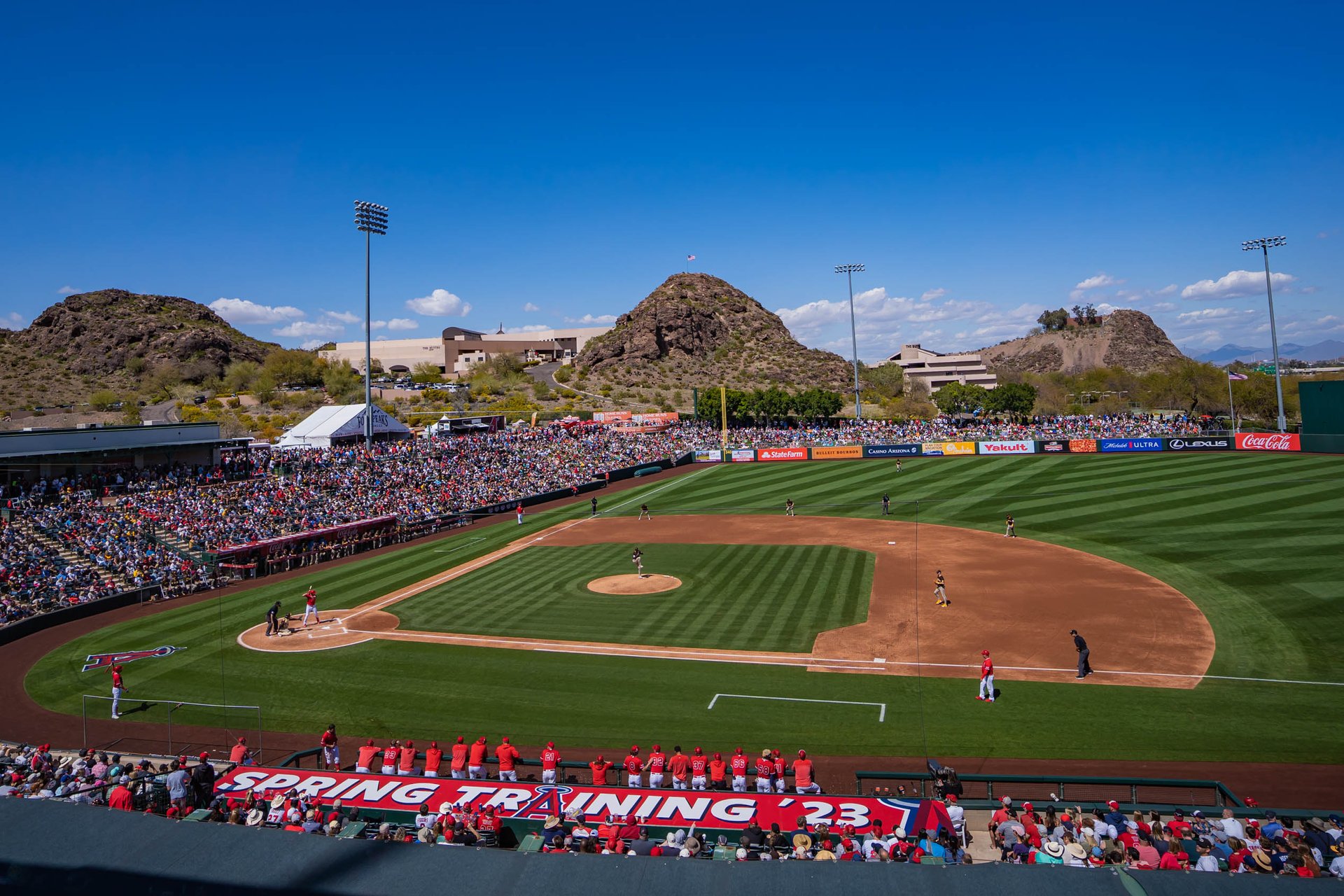
From mid-February through late March, Salt River Fields at Talking Stick and Scottsdale Stadium fill with Cactus League fans under a sun that’s already climbing. Ancillary lots, fan festivals and vendor rows around those venues lean on staged hydration the same way the main gates do, and a trailer drops in wherever the foot traffic concentrates.
Corporate retreats, expos & WestWorld events
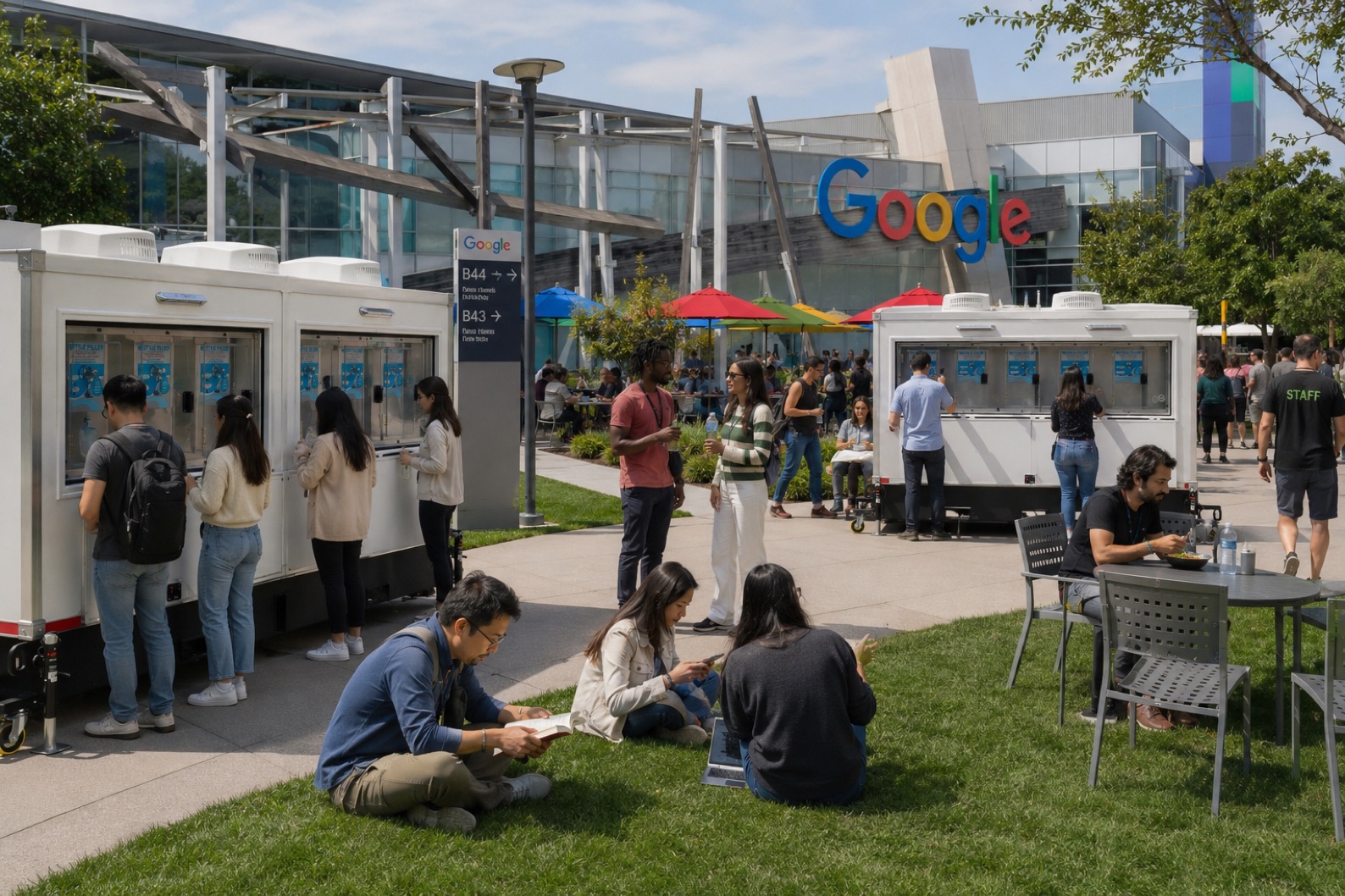
WestWorld of Scottsdale runs marquee gatherings on its own, the Barrett-Jackson collector-car auction in January, the Scottsdale Arabian Horse Show in February, RV and trade expos in between, while the resort corridor hosts corporate retreats and activations year-round. Sprawling outdoor footprints with shifting crowds are easy to cover with one or several stations placed where lines form.
Construction along the Loop 101 corridor
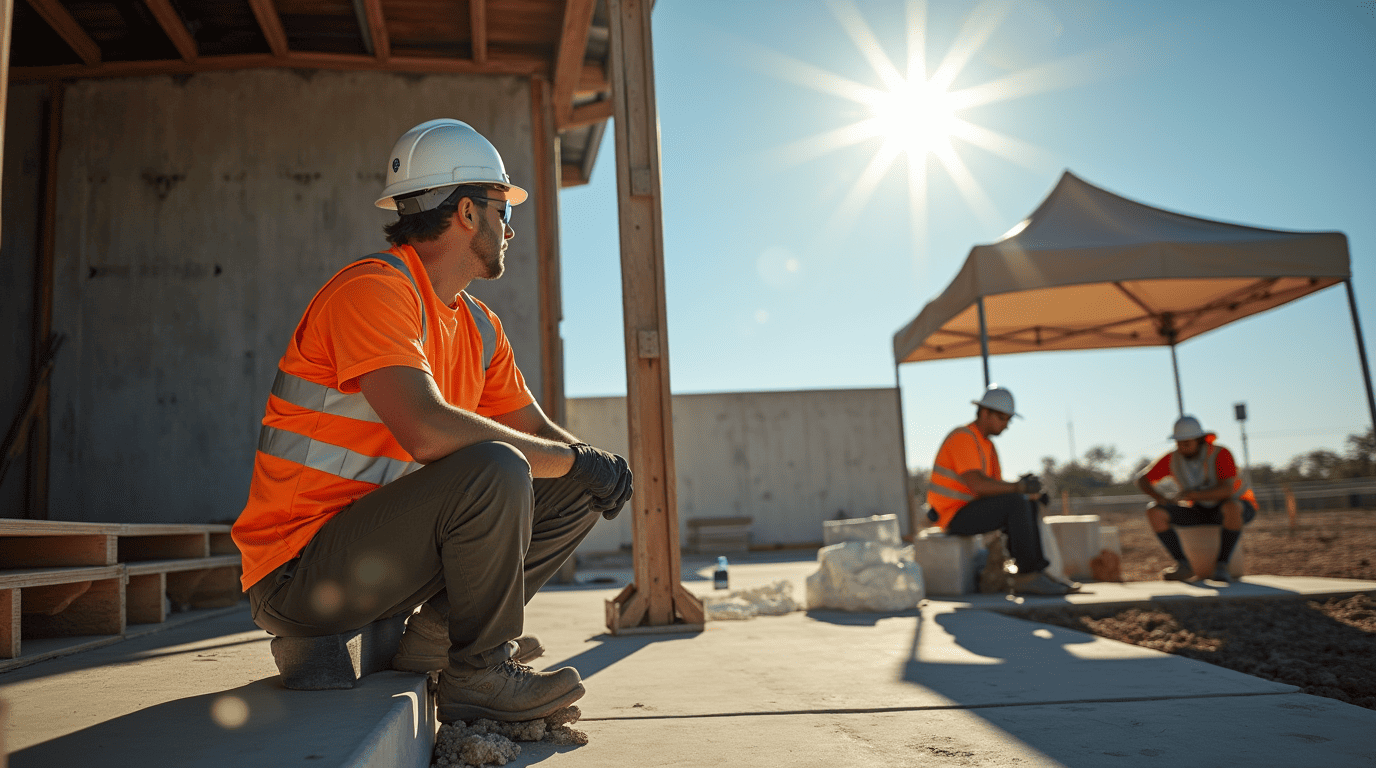
North Scottsdale is in a building cycle, the Axon campus near Loop 101 and Hayden, Cavasson, One Scottsdale, Optima McDowell Mountain Village and the ongoing Loop 101 widening keep large crews in the open sun. For a general contractor, a mapped cold-water station is both a productivity tool and a documented piece of heat-safety infrastructure.
Landscaping, grounds & outdoor labor
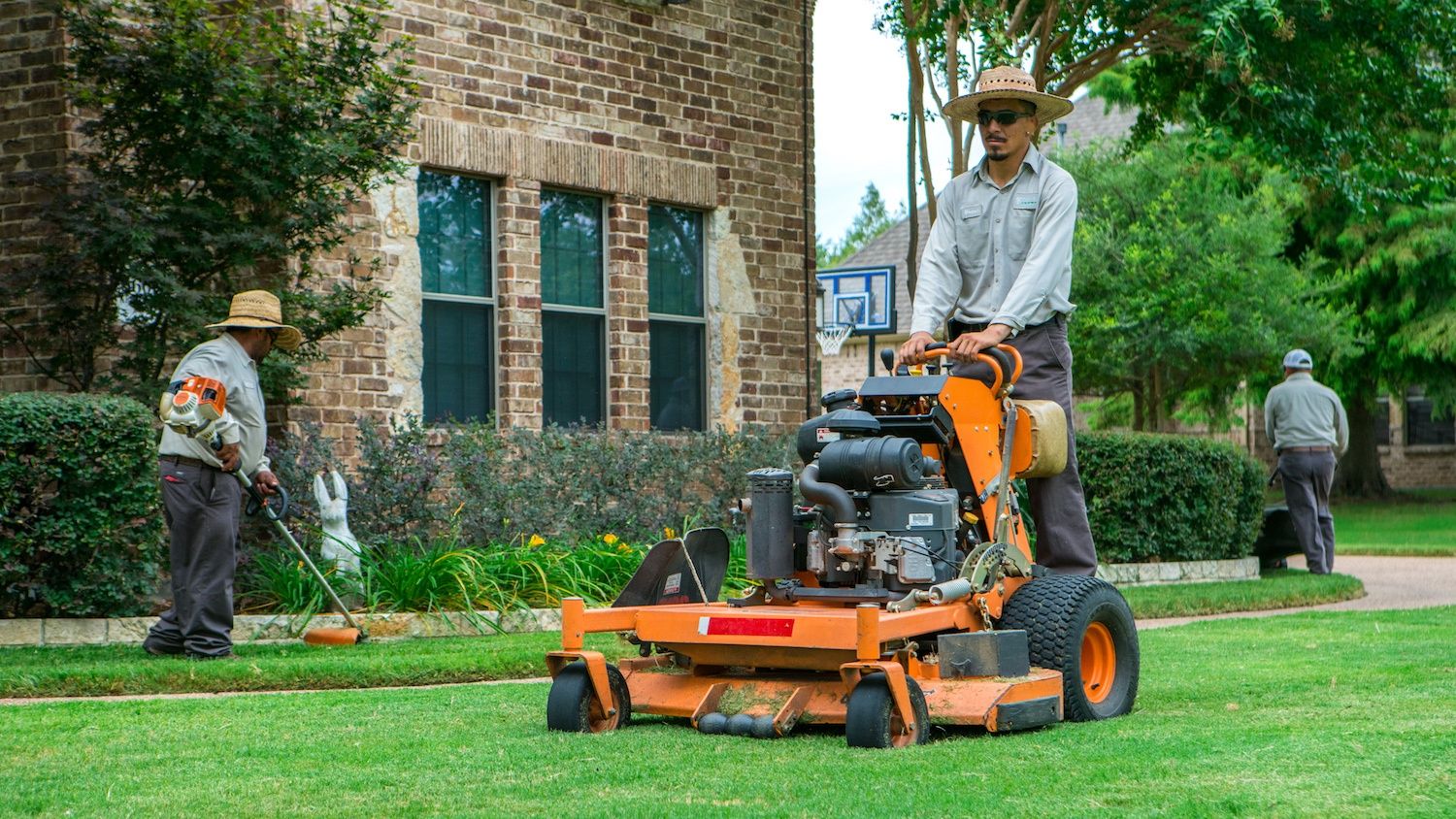
Scottsdale’s resorts, golf courses and master-planned communities like DC Ranch, McCormick Ranch and Gainey Ranch run grounds and landscape crews who start before dawn to beat the heat and are still out when it peaks. A station staged at the maintenance yard or job zone keeps cold water close instead of a truck ride away.
Treated in four stages, disinfected, then chilled before it’s poured
A station only earns its keep if people actually drink from it, and people drink water that tastes clean and runs cold. Every Signature trailer treats its supply through a four-stage process, finishes it with ultraviolet disinfection, and chills it on board, so what reaches a guest’s bottle or a worker’s jug is clear, cold and food-grade at every step, source through spout.
Sediment stage
The first filter strips grit, rust and fine particulates out of the incoming supply, the gateway step that protects everything downstream and clears up the water before it’s ever tasted.
Carbon stage
Activated carbon pulls chlorine, odors and the off-tastes that make people skip a refill. This is the stage that turns merely safe water into water a Scottsdale crowd will actually keep coming back to.
Micro-particulate stage
A sub-micron polishing stage captures the microscopic particles the earlier filters leave behind, an extra margin that matters when you’re pouring for hundreds of guests or an entire jobsite.
UV disinfection
After filtration, ultraviolet light neutralizes bacteria and pathogens without adding a single chemical, a chlorine-free finish that keeps the water clean-tasting right up to the spout.
Three ways to fill, including an ADA-height position
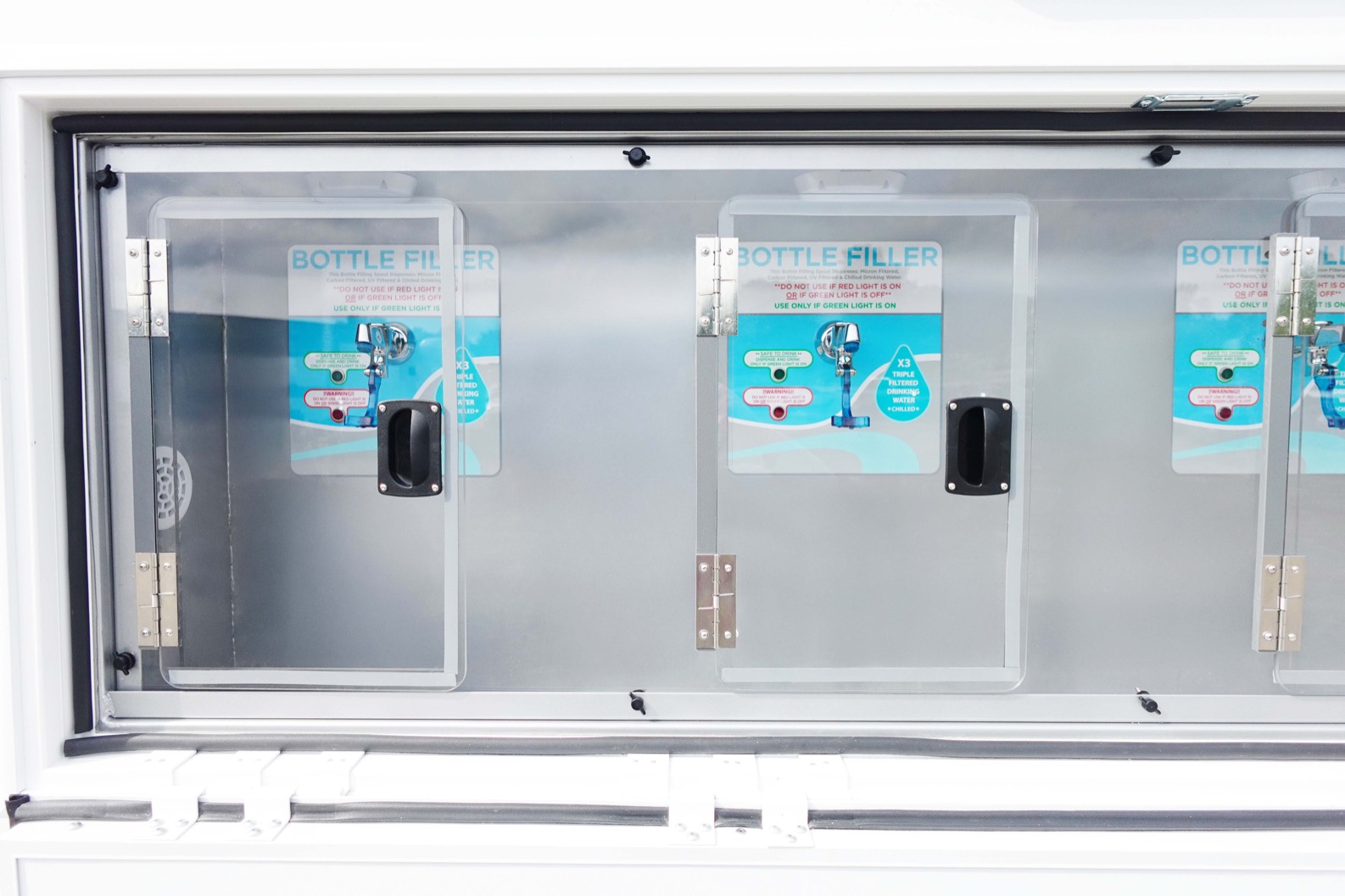
The Signature trailer carries four push-back bottle-filling stations with adjustable nozzles, one set at an ADA-accessible height so every guest and crew member can use it. A rear large-jug fill point handles coolers and brute containers for a catering team or a field crew, and hose-bib outlets cover the rest, wash-downs, equipment, gear that needs water that isn’t a drinking pour. One trailer, several ways to draw from it, all running off the same treated, chilled supply.
We deliver it, fill it, hook it up, and most days you’re pouring cold within the hour
You give us the shape of the day
Guest or crew count, your dates, where the station should sit on the site, and the power that’s available. That’s enough for us to right-size the recommendation and quote it.
We route it across the Valley
We dispatch from a local yard and most Scottsdale drop-offs are same-day, often inside about 45 minutes, with around-the-clock placements during the worst stretches of heat.
We level it and bring it live
The trailer levels out, ties into one to three 120-volt circuits or a single 50-amp drop, takes a fresh-water fill, and starts treating and chilling, usually pouring cold water within the hour it lands.
We keep it supplied
Through your run we refill from our own potable water trucks on a cadence matched to demand, service the unit, and haul it off when you’re done, no tank-watching on your end.
In a Scottsdale summer, cold-water access is a safety obligation you can document
Arizona has no state heat standard of its own, which means Scottsdale employers answer to federal OSHA, and federal OSHA already requires accessible potable drinking water on the job. The proposed federal Heat Injury and Illness Prevention rule pushes that further toward documented, suitably cool water near the work, with heat-index triggers as low as 80 degrees, well below a routine Scottsdale afternoon from May through September.
- A fixed, mapped cold-water station you can cite directly in a Heat Illness Prevention Plan (HIPP)
- Continuous potable access that doesn’t depend on a cooler getting refilled or restocked
- Cold water crews will actually drink, the whole point of a hydration control that works
- Documentable infrastructure a safety audit can point to, not a pallet that empties by mid-morning
For a North Scottsdale contractor, that turns hydration from a box of warm bottles into a defensible, repeatable part of the safety program, exactly what a project executive or risk manager wants on record before the next heat wave.
In Scottsdale, planning around the heat beats reacting to it
The thing we tell every Scottsdale client on the first call is simple: the date and the heat don’t move. A wedding set for the third week of June, a tournament locked to a February-into-spring window, a pour that has to happen before a concrete crew loses the cool of the morning, none of it changes because the forecast says 107. So the plan has to flex instead: a station sized to the peak of the crowd (not the average), a refill cadence built around the hottest hours, and the trailer placed where the line will actually form, not where it’s convenient to park.
I learned that the hard way years ago, at a spring gala out near Gainey Ranch. We’d staged one station at the entrance, technically plenty of capacity, except the entrance was nowhere near where the crowd settled after sunset. By nine o’clock there was a line forty deep at the far bar and a perfectly good station sitting idle a hundred yards away. The event lead found me and said, half-laughing, half-serious, “Nobody walks across a party for water, they just go thirsty.” She was right. We moved the next one, and I’ve planned placement around foot traffic ever since.
I’ve watched the difference play out both ways since. A Canal Convergence-week event that staged one cold station near the main draw and a second back by the food row never had a gap, while a crew on a North Scottsdale site that tried to ride out a 109-degree afternoon on a warm cooler had people quietly slowing down well before noon. The fix is never complicated. It’s cold water, close, that keeps coming. That’s the whole job here, and it’s why we don’t drop a trailer and disappear, we size it, supply it, and treat a hot-weather call the way you’d want yours treated, fast.
That experience is also why we lean on the same rugged, road-towable station for everything, whether it’s a Pinnacle Peak ceremony or a Loop 101 jobsite. And it holds up because a unit that can level out on a resort lawn one Saturday and then tow to an open desert lot the following Tuesday (no plumbing, no install, no fuss) is a unit that has seen what a Scottsdale summer does, and is built to keep pouring cold anyway.
The trucks that keep a Scottsdale booking supplied, first pour through last
A station is the visible part of the job, but a long event or a multi-week site needs more water than one tank holds, and sometimes more than water. Because we run the full support fleet ourselves, you stay with a single provider for the entire loop, fresh water in, stored on site, waste out, instead of stitching together three vendors who each blame the other when something’s late.
Potable water trucks
Our own potable water trucks keep the station’s 300-gallon tank topped off on a schedule matched to your demand, and can deliver bulk drinking water to fill cisterns, tanks and additional onsite storage when a Scottsdale crowd or crew outpaces a single fill.
Bladder bags & onsite storage
For a large multi-day footprint, portable water bladders add a fresh-water buffer on site so demand never gets ahead of delivery, or hold temporary waste where a site needs containment until a haul-off.
Pump & vacuum trucks
When a job involves transferring water or pulling down storage, our pump trucks handle it, and our vacuum and waste trucks pump out and haul greywater to proper, permitted disposal, closing the loop without a second contractor on your call sheet.
The handful of answers that shape a Scottsdale recommendation
When you call, we’re not running you through a script, we’re sizing the job. A few specifics let us put the right station, the right refill plan and the right delivery window against your day instead of guessing, and they’re the same questions whether you’re a wedding planner or a project manager.
The four that drive the plan
- How many people, at the peak? A guest count or crew headcount tells us station count and refill cadence.
- How long is the run? A single event day and a multi-week site get very different supply schedules.
- Where does it sit? Resort lawn, festival footprint, or open jobsite, placement and access change the setup.
- What power is available? One to three 120-volt circuits or a 50-amp drop. If there’s none, we solve it in the quote.
The details that help us get it exactly right
Beyond the basics, little things sharpen the plan: whether the footprint is spread out enough to want a second station, whether a catering or grounds team needs the large-jug fill, whether the access road can take a trailer, and how tight your delivery and pickup windows are around a venue’s own schedule. None of it is required to get a quote, but the more you tell us, the closer the first recommendation lands to the real thing, and the less anyone has to scramble on the day.
Tell us as much or as little as you have. We’d rather hear a rough sketch today and refine it than have you wait until everything’s locked, because in a Scottsdale summer the bookings that go smoothly are the ones that got the water plan in early.
The quiet costs a pallet of water hides until they’re your problem
The line item for a pallet of bottled water looks cheap until you add up everything wrapped around it. On a Scottsdale event or site, those hidden costs land squarely on the people running the day, and they’re exactly what a delivered, serviced station erases.
The labor nobody budgets
Someone has to receive pallets, ice them down, restock, and walk fresh water out to where people are. On a hot Scottsdale day that’s a recurring task pulled off other work, and at an event it’s staff you’d rather have on guests than on a cooler.
The warm-up problem
Bottles left in the sun on a 108-degree afternoon stop getting consumed, and water that isn’t consumed doesn’t keep a guest comfortable or a crew safe. You end up over-buying to compensate, then disposing of what baked.
The waste that follows you
Thousands of empties mean bins, hauling, cleanup and a cluttered footprint, the opposite of what a Scottsdale resort event is selling. A station leaves nothing to chase across the grounds at the end of the night.
None of these show up on the bottled-water quote. All of them show up on the day. A single station folds receiving, chilling, restocking, refilling and disposal into one delivered service, which is why the clients who switch rarely go back to pallets. As one event coordinator put it to me after her first season with a station, “I didn’t realize how much of my staff’s time the bottles were eating until they were gone.” The real cost finally lines up with the invoice.
When you book matters as much as what you book here
Scottsdale doesn’t have one busy season, it has overlapping ones, and the smartest water plans account for which pressure you’re up against. We stage stations year-round, but the right station count, refill cadence and delivery window shift with the time of year, so it’s worth thinking a season ahead.
The winter-into-spring event surge
From January through April, Scottsdale is at full throttle. Barrett-Jackson fills WestWorld in January, the Scottsdale Arabian Horse Show follows in February, the WM Phoenix Open and the Cactus League stack onto the same weeks, and the resort corridor runs back-to-back weddings and corporate retreats while the weather is at its most agreeable. The heat isn’t the worry yet, the calendar density is. This is the stretch where event producers should lock a station early, because the same trucks and trailers that serve a golf gallery are in demand across half a dozen marquee events at once. Booking ahead is the difference between a guaranteed window and a scramble.
The deep-summer work and safety season
From May through September, the math flips. The marquee events thin out, but the thermometer takes over, with Scottsdale sitting above 100 degrees as a daily baseline and stacking 110-degree afternoons. This is when crew hydration stops being a convenience and becomes a documented safety obligation along the Loop 101 corridor and on every North Scottsdale build. It’s also when summer weddings and resort gatherings need a genuinely cold station, not a warm cooler, to keep guests comfortable in the open desert air. Refill cadence tightens, placement matters more, and our around-the-clock emergency response earns its keep, because a tank running low at 2 p.m. in July is a problem that can’t wait.
The shoulder weeks, when planning pays off
The transitional stretches in late spring and early fall, when Canal Convergence lights up the Waterfront and the air finally eases, are the easiest to serve and the easiest to take for granted. They’re also when a well-run organization gets its next season’s water plan in place. The clients who never have a hydration gap are almost always the ones who called us in the quiet weeks, sketched the year, and locked their windows before the rush. In a market this seasonal, early is the whole strategy.
Cold water staged across Scottsdale and the North Valley
We dispatch locally and cover Scottsdale end to end, from the Old Town arts district and the Waterfront up through the resort and golf corridors of North Scottsdale, plus the neighboring communities and freeway projects that share the Pima Freeway. If your event or jobsite sits in or around Scottsdale, we can get a station to it, usually same-day.
Scottsdale QuarterMcCormick RanchDC Ranch
GrayhawkGainey RanchTroon & Troon North
Pinnacle PeakMcDowell MountainsScottsdale Waterfront
WestWorld of ScottsdaleLoop 101 / Pima FreewaySalt River Fields
Maricopa County
What people actually want to know before they book a station
How fast can you get a water station to my Scottsdale event or site?
Most placements across Scottsdale and the North Valley are same-day, often within about 45 minutes of dispatch, and we run emergency drop-offs around the clock through the hottest stretches. On-site access and available power are the main variables that affect timing.
Is the water genuinely cold, or just filtered?
Both. Every Signature station chills its own supply on board, so the water stays cold all day, the last pour of a 108-degree afternoon as cold as the first one at dawn, in addition to being treated through four filtration stages and finished with UV disinfection.
Can one station handle a wedding or festival, not just a jobsite?
Absolutely, events are a large share of what we stage in Scottsdale. We place a single discreet station near a bar or guest path for a resort wedding, or several across a festival or golf footprint, with delivery and pickup timed to your event window and no wall of single-use bottles to manage.
How much water does a station hold, and what happens when it runs low?
The Signature trailer carries 300 gallons of fresh water, roughly 2,400 sixteen-ounce pours. We keep it refilled from our own potable water trucks on a schedule matched to your demand, so the tank size is never the ceiling on a long day or a big crowd.
Does a station help with OSHA heat-illness compliance in Arizona?
It directly supports it. Arizona follows federal OSHA, which already requires accessible potable drinking water, and the proposed federal Heat Injury and Illness Prevention rule pushes toward documented, suitably cool water near the work. A mapped station is a fixed cold-water point you can cite in a Heat Illness Prevention Plan.
Are the stations ADA accessible?
Yes. Each trailer has four push-back bottle-filling positions, one set at an ADA-accessible height, plus a rear large-jug fill point for coolers and a set of hose-bib outlets for crew and event tasks.
What do you need from me to set one up?
Your peak head count, the rental dates, where on the site the station should sit, and the power available. The Signature runs on one to three 20-amp 120-volt circuits or a single 50-amp 240-volt drop, and if a location has no power on site we solve that in the quote.
Do you serve all of Scottsdale, or just the core?
All of it: Old Town and the Waterfront, the resort and golf corridors of North Scottsdale, Kierland, Scottsdale Quarter, McCormick Ranch, DC Ranch, Grayhawk, Gainey Ranch, Troon and Pinnacle Peak, plus WestWorld, Salt River Fields and the Loop 101 projects, and the surrounding Maricopa County communities.
Built for the Scottsdale days that can’t afford a water gap
“We had a 200-guest reception on a resort lawn in late May and the planner was worried about a wall of bottles ruining the look. One cold station near the bar handled the whole crowd, delivery and pickup were on our timeline, and the lawn stayed clean. Rebooking for the fall.”
“Our crew was framing through a stretch of 110-degree afternoons off the 101 and our cooler plan wasn’t cutting it. They had a station leveled and pouring cold by that afternoon, and the refills showed up before we ever ran low. It went straight into our heat plan.”
“For a multi-day expo at WestWorld we needed hydration spread across a big outdoor footprint without babysitting it. They placed a couple of stations where the lines formed and kept them filled the whole run. One vendor for the entire thing made my job easier.”
Service information current as of June 2026.
Get cold, filtered water on your Scottsdale event or site before the next heat wave
Tell us your peak head count, your dates, and where the station should sit. We’ll right-size the job and get a Signature trailer delivered across the North Valley, most days same-day, often inside about 45 minutes of dispatch.