A+ BBB Cold Water Station Rentals Albuquerque for Job Sites & Events, 24/7 Dispatch
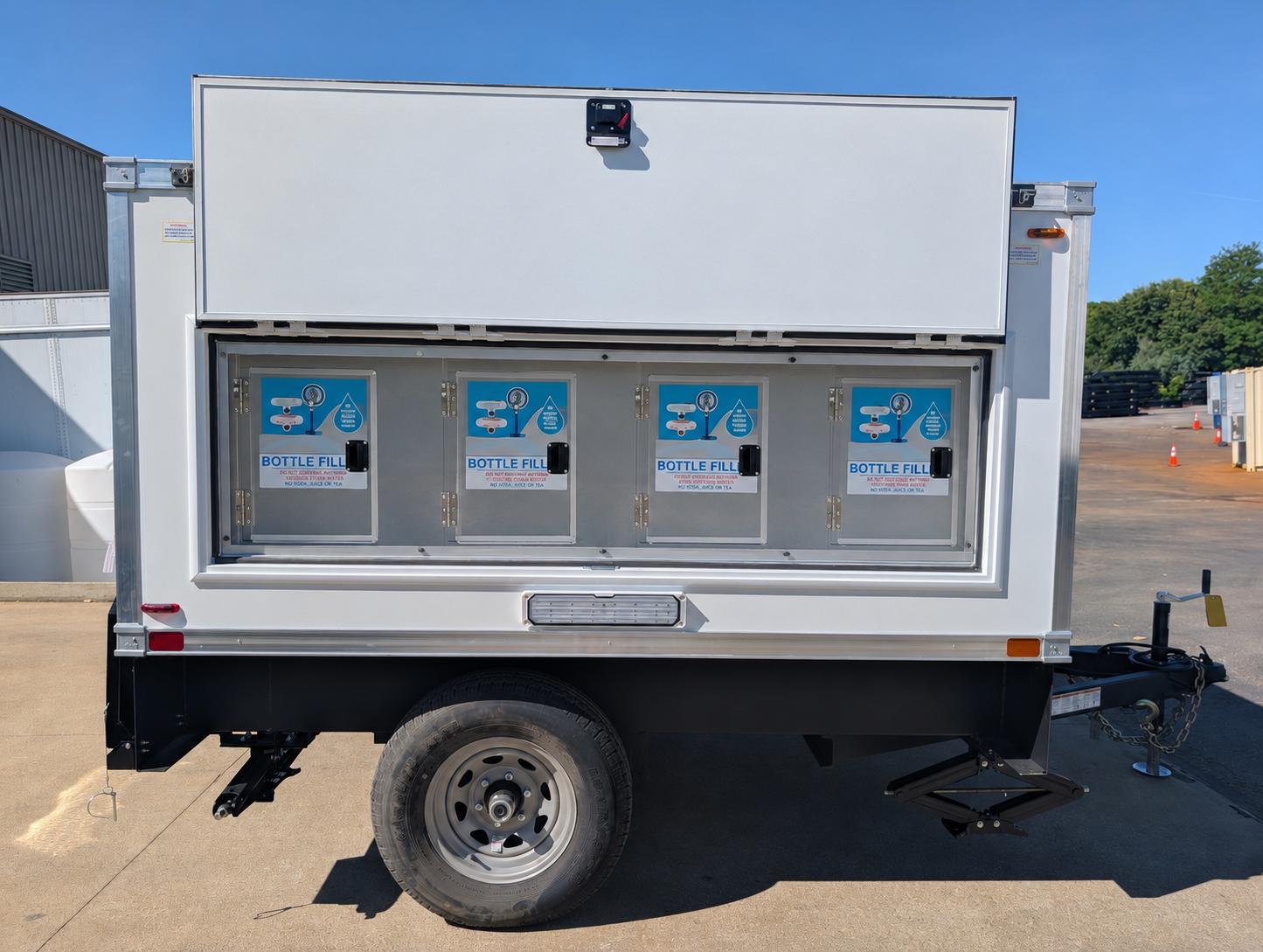
We deliver cold, filtered drinking water to events and job sites across Albuquerque and Bernalillo County. A mile above sea level, warm bottled water gives out fast, whether you’re serving a Balloon Fiesta crowd at first light or keeping a Mesa del Sol build crew going through a dry June afternoon. We tow in a standalone water trailer that pours cold, filters as it goes, and refills itself all day, so the people you’re responsible for stay covered and water never brings the event or project to a halt.
- Metro-wide drops in about 45 minutes
- Cold water, four filtration stages plus UV
- ADA-height bottle filling
- Heat-illness documentation ready
- Fully licensed and insured
- Round-the-clock emergency line
A hydration partner that already understands what mile-high dry air does to a crew
Hydration works differently in Albuquerque, and the people who plan around it know why. At better than 5,300 feet, the air here is thin and very dry, so the body sheds water faster than anyone expects and you feel thirsty well after you’ve already lost it. A 92-degree afternoon in the high desert can dehydrate a worker quicker than a muggier 100 elsewhere, because the sweat evaporates before you ever feel wet. For the outfits that can’t roll the dice on that math, we keep mobile stations positioned all over Bernalillo County: framing contractors at Mesa del Sol, film crews on a New Mexico shoot, county road gangs working the I-25 and I-40 interchange, and event teams holding a field full of people under a cloudless sky.
We run on Albuquerque time
Figure roughly three-quarters of an hour to reach most points in the metro once we dispatch, with an emergency line we keep open through the hot stretch no matter the hour. The morning a foreman finds his 50-person crew holding nothing but a tepid cooler, that turnaround time is the entire conversation.
Genuinely chilled, not just poured
Onboard chilling means the pour at wrap-up is every bit as cold as the one at sunrise. The catch up here isn’t the temperature alone, it’s the dry air drawing water out of people who haven’t felt thirsty yet. And only the water a crew actually drinks does any preventing, which is precisely why we obsess over keeping it cold.
Delivered, filled, serviced, hauled
No juggling a bottle supplier, a morning ice run, and a waste hauler across three separate bills. We place the station, keep it charged from our own trucks, service it through the rental, and tow it once you’re done, a single number for the whole hydration loop on your Albuquerque site.
I tell every new client the same thing on the first call: “At altitude, the danger isn’t the crew that feels hot, it’s the crew that doesn’t.” I’ve watched people work straight through a dry afternoon feeling fine while their tank quietly ran dry, and I’ve watched a cold station ten steps away change the whole rhythm of a shift. That’s why we don’t just drop a trailer and vanish. We size it to your headcount, set a refill cadence to your real demand, and treat a hot-weather call the way you’d want it treated, fast, because in the high desert the loss happens before the warning does.
One road-towable trailer, built to follow Albuquerque work wherever it lands
One unit does the work across the metro, and it’s the Signature Series water station trailer. Because it sits on a real road chassis, it follows the job to wherever the job happens to be, a grading pad on the West Mesa, a festival ground down by the river, a soundstage lot at a Mesa del Sol shoot. There’s nothing to build and no plumbing to run in. Cold, filtered water is simply on tap the same afternoon the trailer rolls up.
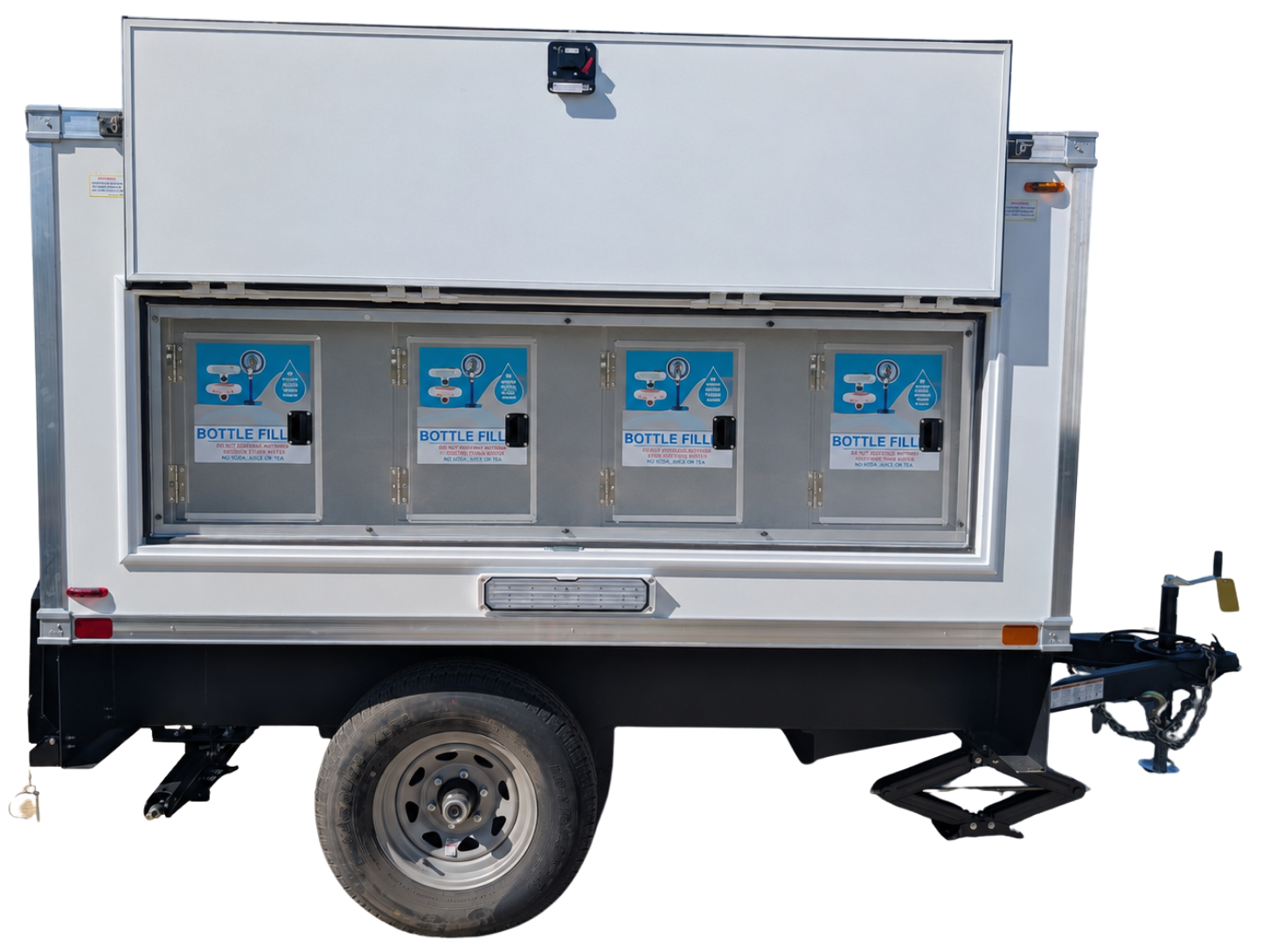
Signature Series specifications
Tires and a hitch under a true trailer frame mean it tows to a far-off jobsite, an event ground, a chile field, or an emergency staging area, no forklift and no structure required to receive it. It’s the unit Albuquerque construction, film, and outdoor-event clients request by name, built to back in, level off, and start pouring the very day it arrives.
| No. of stations | (4) Bottle Filling Stations |
| Length | 12′ 3″ |
| Weight | 3,100 lbs. |
| Height | 8′ |
| Fresh water tank | 300 Gallons |
| Power requirements | 1–4 dedicated 20A/120V circuits OR 1 dedicated 50A/240V circuit |
| No. of AC units | 1 |
Where this trailer fits the high-desert job
Think of the Signature as three problems solved at once: the dry-air thirst lag, the open-sun warm-up, and the sheer distance between sites out here. The filling wall sits under an awning so a break-time line clears in a hurry instead of stacking up at one nozzle, and that throughput is what nudges people to drink as often as altitude actually demands. Tucked inside, the AC and chillers fight the sun the trailer is parked in, which is exactly the round that coolers and bottled-water pallets keep losing in New Mexico.
Capacity-wise, 300 gallons walks a solid crew through a full shift, and the road chassis means we reposition it across a sprawling lot, or chase the build to its next phase, without ever uninstalling anything. Its power tolerance is wide on purpose, so the very same unit drinks from a fully serviced panel one week and a generator we bring to a bare mesa the next.
And it isn’t a one-trick machine. Behind the four headline stations sit a large-jug fill for coolers and packs and a bank of hose-bibs for wash-downs, field chores, and ag work, so a single hitch covers everything an Albuquerque crew or event actually asks of water in a day.
A station costs less than bottled water once you run the numbers
Fifty people on an Albuquerque site go through about 300 bottles a day at six per person on a hot, dry day, and every one has to be purchased, hauled, iced down, then thrown out, a chore that repeats all day long.
Carry that across a 200-day run and you’ve crossed 60,000 bottles. On the multi-phase builds rising around the metro, the count clears 100,000. A single trailer absorbs the entire pile, pours it back as cold water on tap, and leaves nothing for anyone to bag up at the dumpster.
It’s a logistics call long before it’s a green one
The environmental side is genuine, no argument: the country tosses something like 60 million water bottles every day, barely a third get recycled, and any one of them can outlast a building in a landfill. Print that in the sustainability report, by all means. But the project managers we deal with around Albuquerque usually switch for a far plainer payoff, which is that a centralized station ends the daily scramble outright. The standing bottled-water PO goes away. So does the cooler that’s gone tepid by ten. So does the heap of empties roasting at the gate. The super gets to manage a build again rather than babysit a water supply.
Supply also stays in step with the work, because our own potable trucks keep the station charged. Double the crew for a slab pour and the plan still holds, we’ve topped the tank off well before anyone notices it dipping.
Hydration sized for the way the metro actually works
There’s no single Albuquerque hydration problem. There’s a whole spread of them. What a data-center build on the West Mesa asks for is nothing like what the Duke City Marathon downtown asks for, and neither resembles a green-chile harvest out in the valley. Below is where these stations actually go to work.
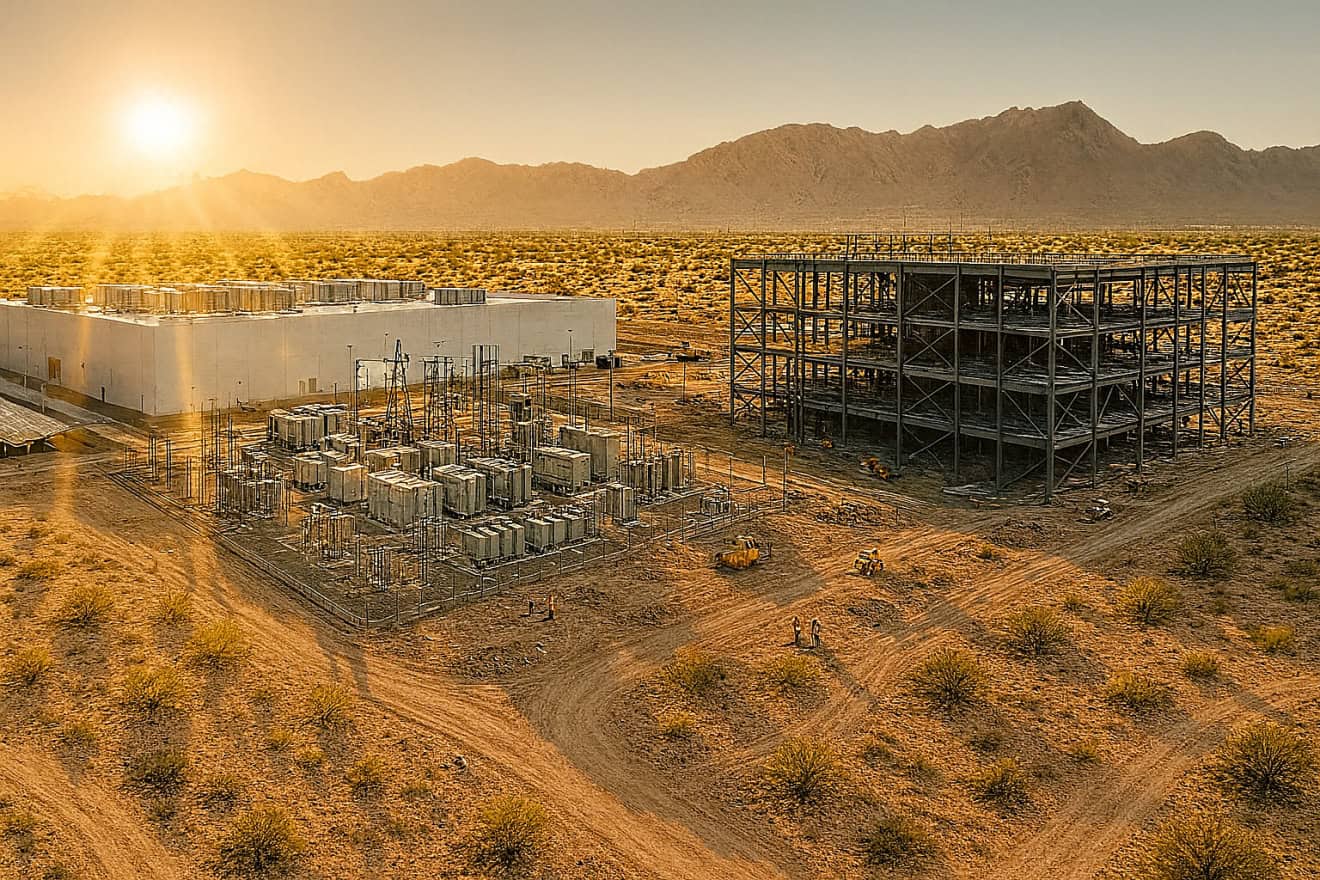
Construction & the West Mesa build-out
The metro grows on the backs of crews working in open sun: the data-center and manufacturing builds rising on the West Mesa and toward Rio Rancho, the warehouse and logistics work the I-25 and I-40 crossroads keeps drawing in, the road and bridge jobs around the Big I. We position trailers right along those corridors, so general and trade contractors always have logged, cold water a few steps away from wherever the day’s work face sits.
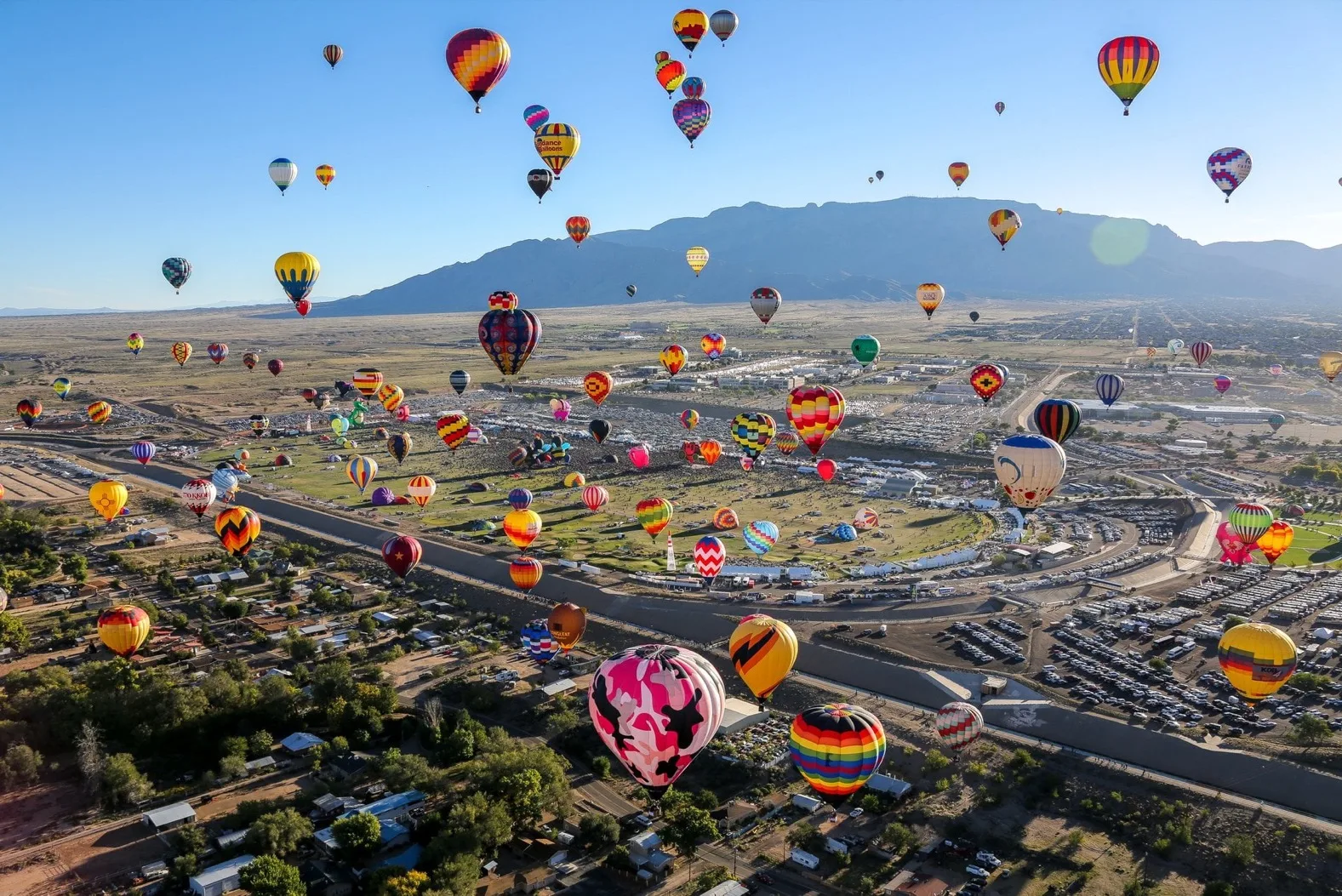
Balloon Fiesta, fairs & outdoor events
The International Balloon Fiesta alone pulls hundreds of thousands of visitors across its run, with a field of more than 500 balloons and crowds that arrive before sunrise and bake by midday. Add the State Fair, river-park festivals, and the marathon circuit, and you have a city that gathers outdoors at altitude all season. A station gives organizers free-flowing cold water and clean refill points without a mountain of single-use bottles to truck in and cart out.
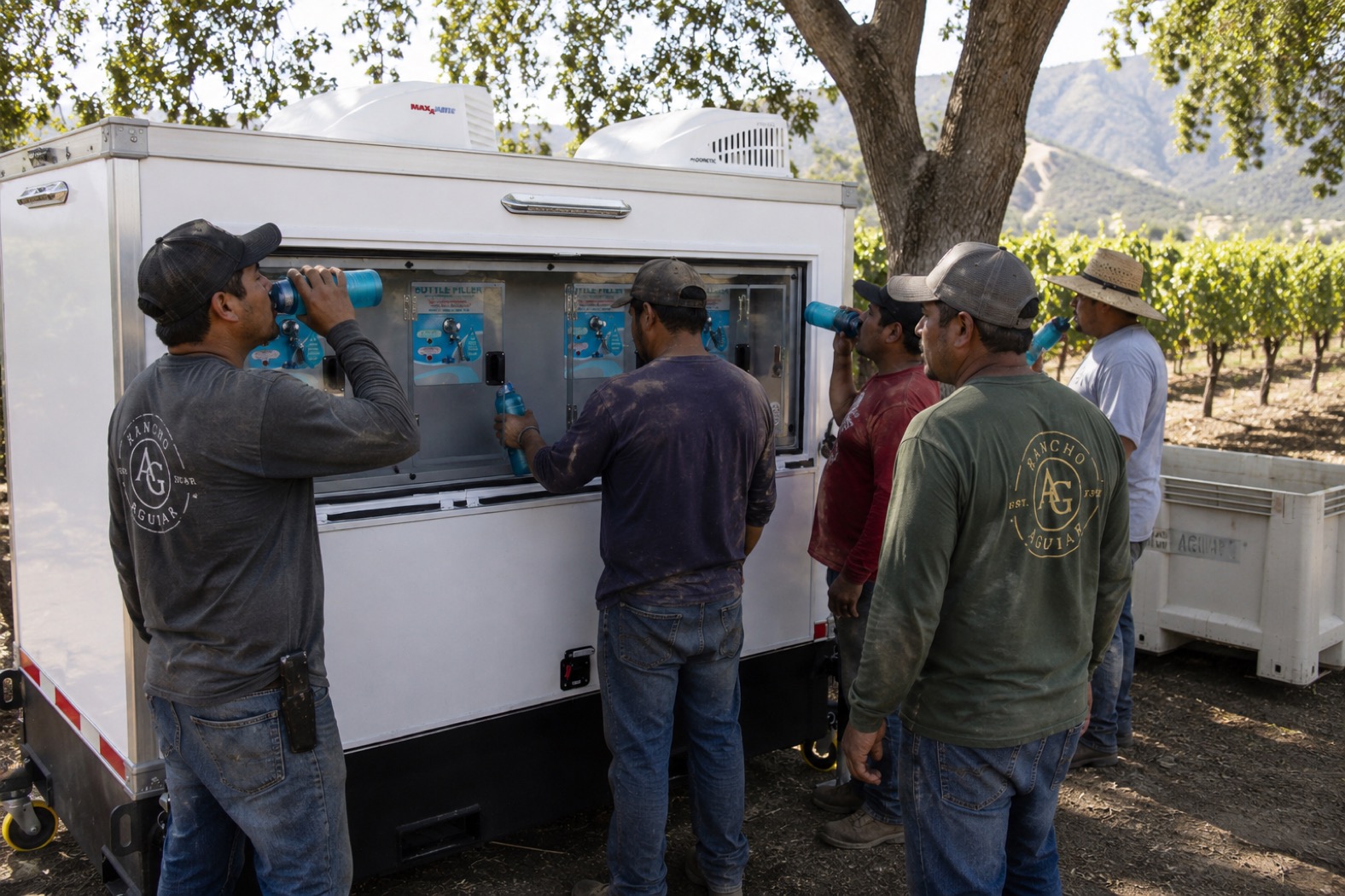
Green-chile harvest, ag & outdoor labor
When the chile comes in and the roasters fire up across the valley, field and packing crews put in long hours in dry heat, alongside the landscaping, solar, and utility work that keeps the metro spreading. Jug-fill and hose-bib outlets let those crews top off coolers and personal gear right where they’re working, instead of losing time on a run back to the truck.
Film production, labs, base & disaster response
A New Mexico film shoot can park a few hundred cast and crew on a lot for a 14-hour day, and the catering and base-camp setup lives or dies on cold water. Sandia National Labs and Kirtland Air Force Base run outdoor crews and field exercises of their own. And when a monsoon flash flood, a wildfire, or a water-main break hits a Bernalillo County neighborhood, we deploy potable water stations to cooling centers and base camps on short notice.
Treated through four stages, disinfected, then chilled before it pours
The whole rental hinges on one thing: will people choose to drink from it. So ours take municipal water, walk it through a four-step treatment train and a UV chamber, and hand it off to an onboard chiller, which leaves the pour tasting the way water should and holding its cold straight through the driest afternoon the calendar can throw at it.
Sediment, first
Grit, rust flecks, and the fine particulates a supply line sheds all get screened out here, before any other stage so much as sees the water.
Carbon, second
Chlorine, odors, and stray off-tastes come out at this step, and that’s the whole difference between a tap a crew chooses and one they ignore.
Micro-particulate, third
A dedicated polishing cartridge traps the microscopic particles still riding the water, keeping the water safe for workers and the public who use it.
UV, last
An ultraviolet chamber finishes the job, using light instead of chemicals to neutralize bacteria and pathogens just before the pour.
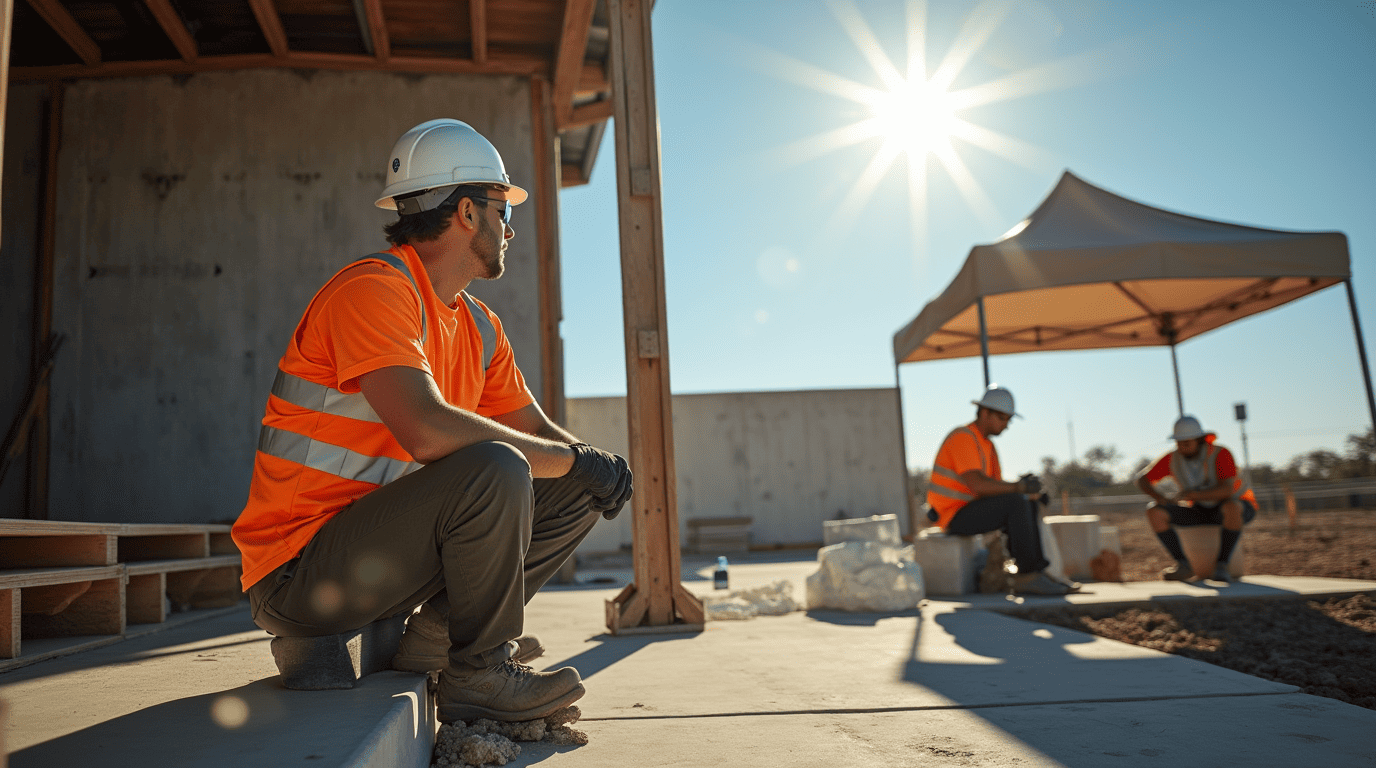
Three ways to fill, ADA height included
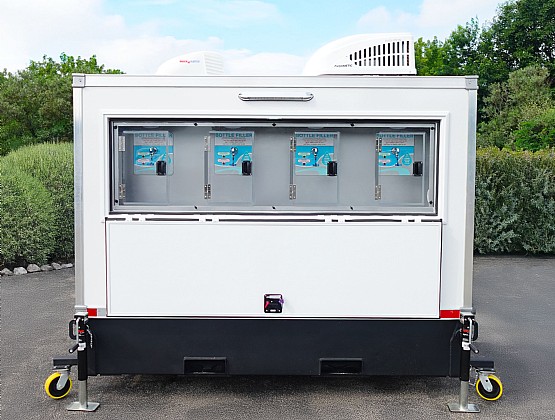
Four push-back filling positions line the unit, each with an adjustable nozzle, so a worker just presses a bottle to the bar and walks away full. One of those four rides at an ADA-accessible height, which means nobody on the crew needs a separate setup to get a drink. Out back, a large-jug point tops off five-gallon coolers and personal packs, and a row of hose-bib outlets feeds wash-up, field tasks, and chile-crew gear. Everything the water touches on the way out, the lines, the fittings, the dispensers, is food-grade and stainless, so the cold, filtered quality survives the whole trip to the spout.
A single Signature trailer holds 300 gallons, roughly 2,400 sixteen-ounce pours, and we refill it on demand, so the station never turns into the bottleneck on a busy Albuquerque shift.
We deliver, fill, and connect it, usually pouring cold water inside the hour
Nothing about this lands on your plate. Placement, the fresh-water charge, the power hookup, we do all of it, then run your team through how it works before our truck pulls off the lot.
You give us the basics
Headcount, rental length, the spot on the site you want it, and whatever power is already there. From those four answers we can size the whole job.
We deliver across the metro
Figure roughly 45 minutes to reach most points in the Albuquerque metro after dispatch, and we keep an emergency line open 24/7 through the hot months.
We set it up
We level it, charge the 300-gallon tank, and tie it into power for you, either one to three 20-amp 120-volt circuits or a single 50-amp 240-volt drop.
We keep it running
From there our trucks refill the tank on a rhythm set to your real draw, and we keep the unit serviced for as long as you have it.
Bare mesa lot with no power at all? Mention it on the call. The trailer’s draw is light, and with our service fleet behind it we’ve kept stations running on sites that had nothing wired in. Describe the conditions and we’ll solve for them.
At a mile above sea level, hydration access is a documented safety duty
Albuquerque routinely strings together stretches in the 90s and into triple digits through the summer, and the high-desert dryness drives fluid loss higher than the temperature reading alone would warn you. Employers here answer to federal OSHA, and the standing rule is plain: accessible potable drinking water has to be on the job. The agency’s proposed national heat-illness rule would tighten that further, steering toward documented, suitably cool water kept within easy reach of the crew.
A station is how you make that real on paper as well as on the lot. It’s one fixed, mapped source pouring cold potable water on demand, the kind of concrete anchor a Heat Illness Prevention Plan is built around and the first thing a safety auditor looks to confirm is actually present.
- Cool, potable water that’s always on tap right at the work face
- A single hydration point you can log and cite in your HIPP file
- Backs scheduled water breaks and acclimatization for sun-exposed crews
- Positioned for the stricter federal rules ahead, not caught flat-footed by them
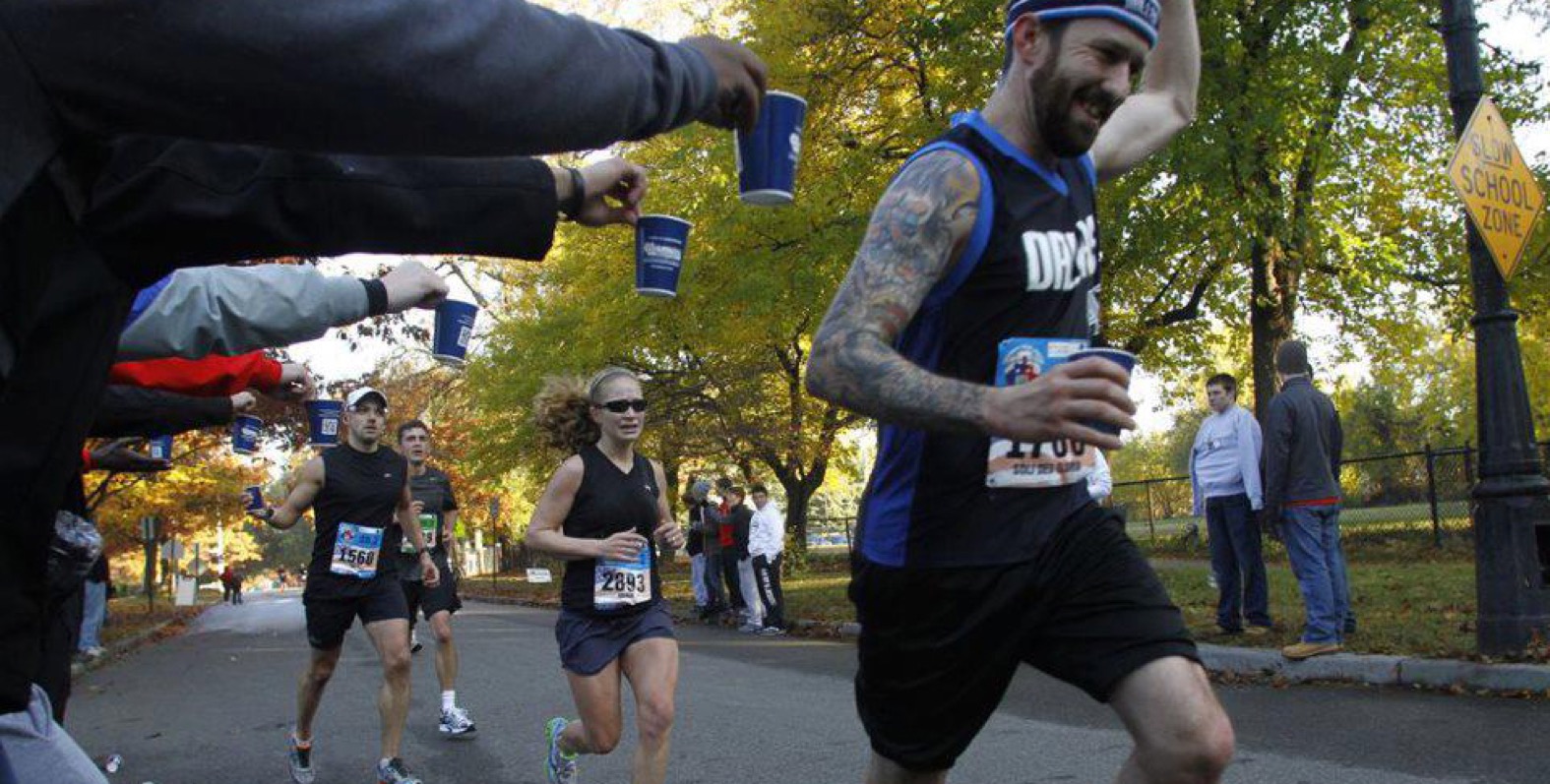
What dropping stations across the high desert has taught us
Enough seasons in this metro leave you with a handful of field notes you stop arguing with. Three of ours:
Note one, on a Downtown mid-rise: a station parked by the gate on opening day barely moved, since the work face sat several floors up and nobody burns a fifteen-minute break on the round trip down and back. We relocated it to the hoist landing overnight and watched pours roughly double by midday. The super’s verdict, which we’ve followed ever since: “Put the water closer than the shade and they’ll drink it.”
Note two, on a Rio Rancho job last July: with extra trucks already staged ahead of the forecast, an afternoon monsoon cell could shut the site for two hours and then dump everyone back into steaming heat, and the cold supply was simply there, no scramble. The safety lead texted that night, “You were ahead of the weather, not behind it,” and that line is now baked into how we write every hot-season contract.
Note three, on a West Mesa solar install: the foreman flat-out bet against us keeping 300 gallons genuinely cold in open desert. We delivered, dialed in the refill rhythm, and inside a week he rang back to add a second unit. When I asked what changed his mind, all he said was, “The crew quit asking for ice.” That’s the whole sell, in five words, in air this dry.
Stack those notes together and they say what the elevation has been telling us for years: out here, hydration is not a box you check once and forget. It is something you actively run, and we run it, start to finish, for every single rental on the books.
Cold water for outdoor crowds at altitude
Albuquerque gathers outside for everything, and the thin, dry air at altitude dehydrates a crowd faster than most organizers expect. Whether it’s a balloon-field morning, a downtown street festival, a charity 5K along the bosque, or a corporate field day, a self-contained station gives attendees free-flowing cold water and clean refill points. It also spares your team the chore of trucking in, icing down, and hauling out a mountain of single-use plastic.
For a big footprint we’ll set several units so the walk to water is always short, and we time the drop-off and the teardown pickup around your run-of-show. We figured that out the painful way at a river-park festival, where one station by the main stage had a line two dozen people long by the early afternoon, because dry heat and a few thousand attendees add up quickly. The following year we scattered four units across the grounds and the bottleneck simply vanished. The organizer caught me at load-out and said, “That’s the first year nobody complained about water.” Your guests read that as good hospitality, your ops lead reads it as a liability that’s already handled.
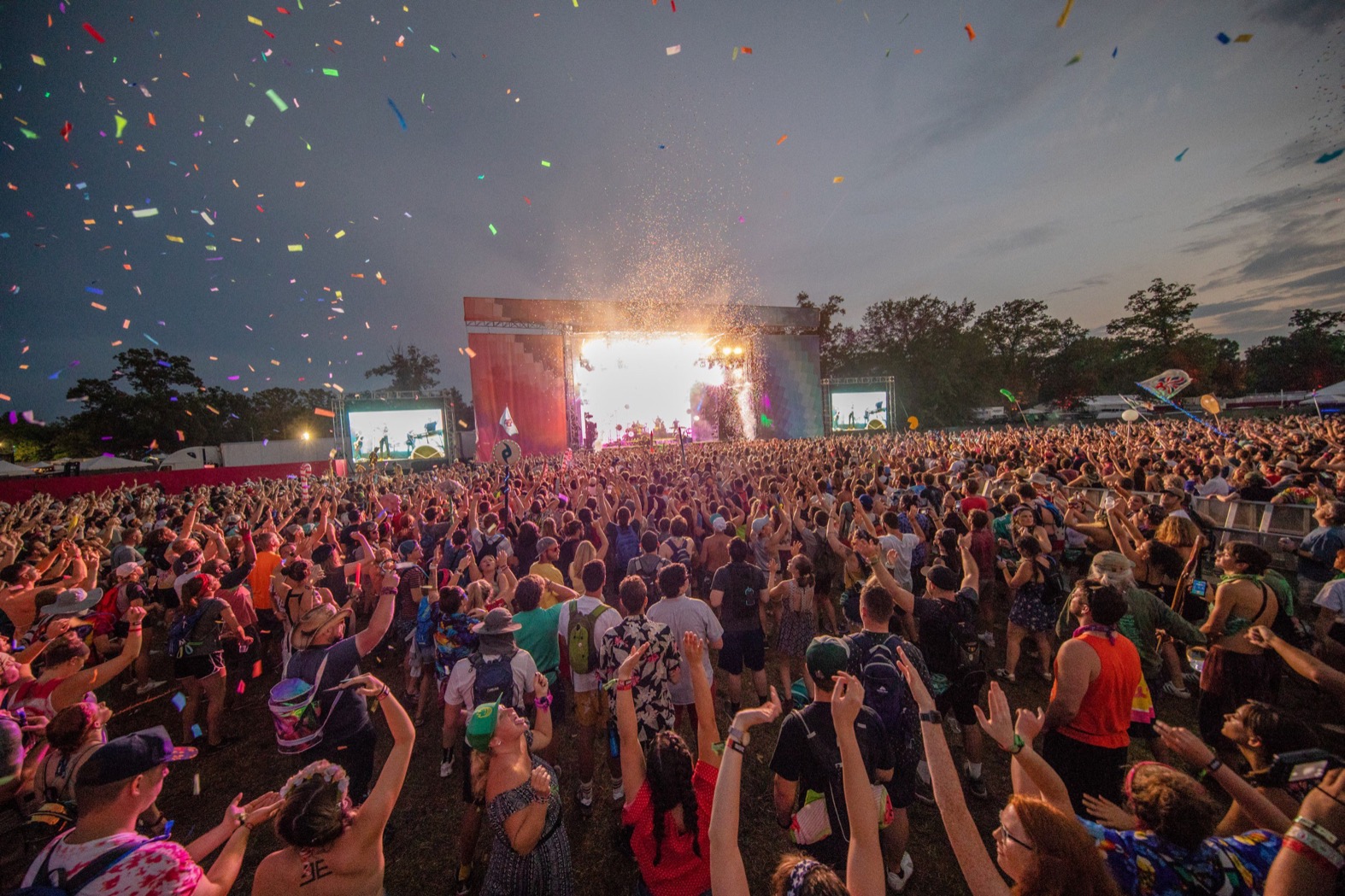
Why a mile of elevation makes Albuquerque its own hydration problem
Plenty of cities get hotter on paper. Few combine Albuquerque’s mix of altitude, single-digit humidity, and an outdoor workforce that grows every year, and that combination is exactly what catches crews off guard.
At 5,312 feet the air carries less moisture and the body spends more energy just holding its temperature. Sweat lifts off almost the moment it appears, so a worker can shed real fluid without ever feeling damp, and damp is the cue most people wait for before they drink. Layer on a summer that keeps climbing into the 90s and over 100, with fresh asphalt and bare dirt running hotter at the surface than any air reading admits, and crews slide toward heat trouble while the thermometer still looks forgiving. In that setting cold water isn’t a perk. It’s the least-expensive safety gear on the whole site.
The planning gets tricky because the dryness doesn’t break the way humid heat occasionally does. Try to ice-and-cooler a long summer schedule and the math falls apart, the volume’s too big, the warm-up too quick under open sun, and the daily grind of hauling, icing, and bagging bottles only stacks up shift after shift. A centralized trailer that chills itself is the one arrangement that survives a full Albuquerque season without turning into a side project of its own.
And demand keeps climbing, because the metro is in a genuine growth stretch. The West Mesa and the Rio Rancho corridor have drawn data-center and advanced-manufacturing investment, the warehouse and logistics footprint keeps spreading off the I-25 and I-40 crossroads, and New Mexico’s film industry, anchored by major studio space at Mesa del Sol, parks large outdoor crews on lots across the region for weeks at a time. Every one of those sites means dozens to hundreds of people working in dry, sun-exposed conditions, often on early schedules built to beat the worst of the afternoon.
We built our Albuquerque dispatch around that exact rhythm. As we started staging units along the metro’s freight and construction corridors, we pegged refills to crew size instead of a calendar, and we added emergency drops for heat advisories and for the scramble when a storm clears and a site reopens. I remember one safety director who watched us pre-stage a truck the night before a forecast and told me, “That’s the first vendor who showed up before I had to ask.” Because on a high-desert job, a hydration gap doesn’t just slow the work, it can stop it and put someone in an ambulance before the crew even realizes how far behind they’ve fallen.
Past the station: the trucks that keep an Albuquerque site supplied
The station is the part you see. Behind it runs a support fleet that handles fresh water in, on-site storage, and waste out, so a single phone call covers the entire loop instead of three separate vendors and three separate headaches.
Potable water trucks
Our potable trucks run drinking-grade water in bulk and keep your station’s 300-gallon tank full on a cadence we set to your crew, not to a fixed clock. The same trucks charge cisterns, onsite tanks, and bladder bags whenever a project’s draw runs past what one delivery covers, think a foundation pour or the busiest hour of an event day.
Bladder bags & buffer supply
A flexible water bladder gives a site extra fresh-water headroom through a peak stretch, or holds greywater for a while when there’s nowhere on the lot to drain. It’s the unglamorous part of the kit that carries a remote mesa job between truck visits without anyone running short.
Pump trucks
When water has to be moved, transferred, or drawn down, a pump truck handles it, filling storage or relocating supply across a large footprint. It earns its keep on sprawling sites where the station and the fill point sit nowhere near each other.
Vacuum & waste trucks
When the used water has to go somewhere, a vacuum truck pumps it out and carries the greywater and wastewater off to permitted disposal, which closes the loop cleanly. Where the runoff ends up is our problem to solve, not yours, and it’s part of the service every time, not an add-on you have to remember to ask for.
None of these run in isolation. We once covered a far-flung mesa job with a station, a bladder bag for buffer, and a standing water-truck fill, all on one ticket. For a big festival we’ve staged a pump truck mid-event and a waste pickup the moment the grounds cleared. Describe how your project is actually laid out and we’ll bolt the right pieces together, billed as one job, run by one crew that already knows your site.
What we’ll ask, and why each answer reshapes the plan
Give us two minutes on the phone and you’ll have a real quote. Here’s the short list we’ll walk through, so you can have the answers handy, and so you can watch us build the plan around your job rather than hand you whatever the last customer got.
The four answers that shape what we recommend
- How many people? Fifteen framers and a four-hundred-person festival are nothing alike. Your headcount decides the number of stations and how hard we push the refill schedule.
- For how long? A two-day balloon-field weekend, a three-week slab pour, and a nine-month build each ride a different cadence. The brief jobs ride on buffer storage, the long ones on a standing truck schedule.
- Where does it park? The towable Signature tucks into a yard, a lot, a field, or a corridor staging area. Once we know the spot, and how our truck gets to it, we can set it where crews actually pass by.
- What’s the power picture? A station runs off one to three 20-amp circuits or a single 50-amp drop. Bare mesa lots with no permanent power are routine around here and fully workable, we just need the heads-up early.
The extras that help us get it exactly right
- The exact spot it should sit, plus how our truck threads in to drop it
- Whether your people are scattered across the lot or bunched at one face
- What your safety program needs the station to prove for heat-illness records
- Whether bulk water delivery, a bladder bag, or a waste pickup rides along on the same ticket
The costs a pallet of bottled water never prints on the invoice
On the purchase order, bottled water reads like the budget option. The actual bill is buried somewhere else, in the labor, the staging space, the mid-morning warm-up, and the disposal, and a dry city a mile in the air runs every one of those lines a notch steeper than a coastal town would.
The payroll line item hiding inside a pallet
Bottled water comes with a person attached: the one placing the order, accepting the pallets, splitting them down, icing coolers each sunrise, topping them up all day, then crushing empties for the bin. Add those minutes up on a sizeable Albuquerque crew and you’re paying for hours daily, every one of them carved off the actual build. The station deletes that whole chore. A Rio Rancho contractor we sat down with found the labor he got back covered the rental on its own, and his takeaway was blunt: “I had no idea the bottles were costing me half a day of payroll a week.” Ours shows up full, tops itself off from our trucks, and asks your superintendent for nothing but a parking spot.
The warm-up curve, exaggerated by altitude
Ice a cooler at six and the New Mexico sun has it at bathwater by mid-morning. Once water turns warm, people quit reaching for it, and up here the gap between drinking and not drinking is the gap where dehydration slips in, usually before anybody registers it. Onboard chilling sidesteps the whole curve. The last pour before the crew packs up is as cold as the first one at dawn, which happens to be the exact moment a tired, sun-baked crew needs it most.
The space and clutter you stop paying for
Stacked pallets eat into staging, crowd the laydown yard, and cook in the sun while they wait their turn. Empties accumulate faster than anyone clears them, and on a cramped Downtown lot that pile-up turns into its own logistics problem. One trailer claims a single parking spot and quietly out-supplies a crew that would otherwise plow through hundreds of bottles in a day.
The trail of trash a project drags behind it
Buy a bottle and you’ve bought something to throw away, and a busy site mints a mountain of them across a season. Call it disposal expense, call it a stain on the sustainability report, and remember that in this state a discarded bottle can outlast the structure it was drunk beside. A refill station erases that line entirely and replaces it with an ESG figure you’d actually want on the page.
Staging cold water across the whole Albuquerque metro
From a local yard we run the full Bernalillo County metro, the Downtown core, the historic neighborhoods and the West Side, out over the mesas, and clear to the Rio Rancho and East Mountain fringes. Put simply, if your address sits inside the metro, it sits inside our radius.
UptownNortheast HeightsNorth Valley
South ValleyWest MesaMesa del Sol
Rio RanchoCorralesBernalillo
Los RanchosSandia HeightsSunport area
Kirtland AFB areaTijeras / East Mountains
Working a corridor more than a single address? We follow the freeways the metro is built on, the I-25 and I-40 crossroads at the Big I, plus Coors and Paseo del Norte, so corridor and multi-site projects get the same fast turnaround as one location. On one Paseo del Norte job we serviced three separate work faces off a single route, and the GC’s words afterward stuck with me: “I expected three vendors and got one truck.”
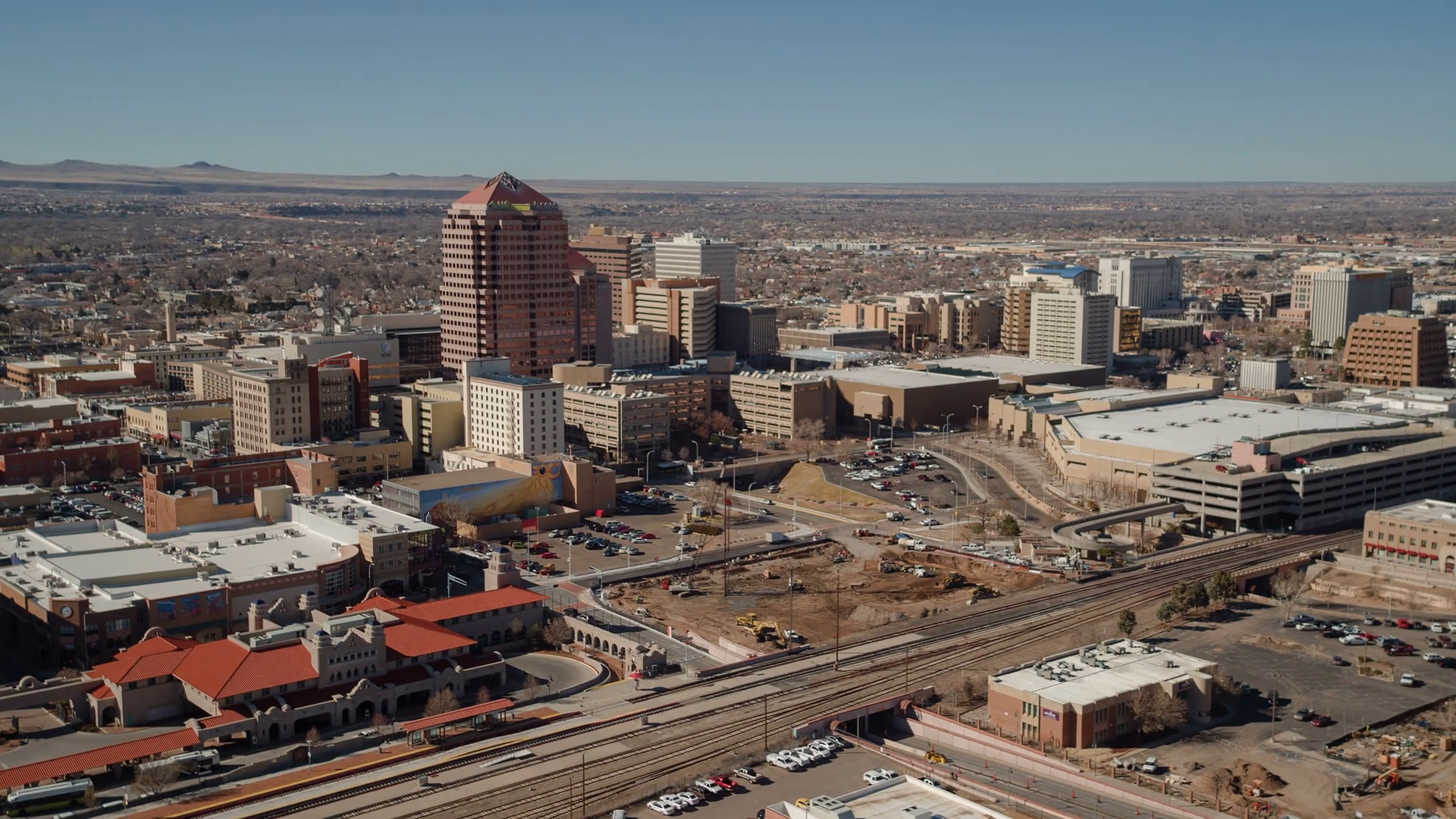
The questions 505 crews and event teams actually ask us
How quickly can a station reach my jobsite in the Albuquerque metro?
Reckon on about 45 minutes to reach most addresses in Bernalillo County once we dispatch. When the heat is on we keep an after-hours line running too, so a crew that rolls up to a dry site on a 98-degree morning can usually have water flowing before the lunch break. The two things that move that number are how a truck reaches the spot and what power waits there, so fill us in and we’ll plan the run around it.
Does the high desert really change how much water a crew needs?
It does, more than people expect. At better than 5,300 feet the air is dry enough that sweat evaporates before you feel it, so fluid loss outruns the thirst signal and crews dehydrate without the usual warning. That’s the whole reason we lean on cold, always-available water here: people drink more, more often, when it’s genuinely cold and a few steps away, which is exactly what prevents trouble at altitude.
Is the water actually cold, or only filtered?
It’s both at once. An onboard chiller keeps the supply genuinely cold all day, the sunrise pour and the last pour alike, and that water has already moved through four treatment stages and a UV chamber before it reaches anyone. We’re deliberate about the cold part because lukewarm water in dry high-desert heat just sits there while a crew slips behind without noticing. The water people actually drink is the only water doing any good, and cold is what gets it drunk.
How much does one station hold, and what happens when it gets low?
The Signature tank runs 300 gallons, somewhere around 2,400 sixteen-ounce pours. On a hot day with a large crew, we keep our potable trucks cycling through on a schedule matched to how fast you’re drawing it down, so you never bump into the tank as a ceiling. Refills aren’t your job to track, they’re ours.
Will a rented station help us stand up our OSHA heat-illness paperwork?
Directly, yes. Today’s federal rule already obligates you to keep accessible potable drinking water on the job, and the heat-illness standard now under proposal leans toward cool water that’s documented and stationed close to where people work. A station hands you a single fixed, mapped, cold source you can name in a Heat Illness Prevention Plan and walk an inspector right up to. We don’t write the safety program itself, but the hydration backbone it rests on is precisely what shows up on your trailer.
Are the stations ADA accessible?
They are. Every unit puts four push-back filling positions on the wall, with one of them set at an ADA-accessible height, so a jobsite or an event is covered for everyone without any separate rig. Around back there’s a large-jug fill point for coolers and packs, and a set of hose-bib outlets for the odd crew task.
Can you cover Balloon Fiesta, festivals, and races as well as construction?
For sure, events make up a big slice of our work around the 505. A balloon-field sunrise, a downtown street festival, a marathon, a corporate field day, any of them can run on a single station or a spread of them, with the drop and the pickup keyed to your schedule. People at the event get cold water flowing freely and clean places to refill, and you dodge both the spend and the trash of hauling in pallets of single-use bottles.
What do you need from me to set one up?
Four quick details and we’re set: how many people, how long, the parking spot, and what’s powered. The unit will run on as little as a single 50-amp 240-volt drop, or on one through three 20-amp 120-volt circuits if that’s what the site has. And if the lot is raw mesa with no wiring at all, just flag it when you call and the workaround goes straight into your quote.
Is your coverage just the city core, or the entire metro and outlying towns?
The whole metro. Our local dispatch covers Albuquerque proper plus Rio Rancho, Corrales, Bernalillo, Los Ranchos, the West Mesa and Mesa del Sol, and the East Mountain edge. Corridor projects along the I-25 and I-40 crossroads and out Coors and Paseo del Norte are routine for us.
How does the taste stack up against a store-bought bottle?
Clean and flat, with none of that chlorine edge. The carbon pass strips the chlorine and the stray off-flavors municipal water sometimes carries, so the pour tastes fresh and neutral instead of hose-y. That’s not a small thing, either: a station only earns its keep if people would rather drink from it than crack a bottle, which is why we count taste as part of the safety picture rather than a bonus.
What size crew can one station realistically keep watered?
More than you’d guess, because the cap isn’t the tap, it’s how often we refill. Four positions let a crew cycle through quickly on a break, and 300 gallons is good for somewhere near 2,400 sixteen-ounce pours between top-offs. When the headcount gets big we either tighten the truck schedule or park a second trailer, so the supply grows with the crew rather than holding it back. Give us your peak number and we’ll size around it.
Can you deliver during a heat or monsoon emergency on short notice?
Yes, and it’s one of the main reasons clients keep our number. We run emergency drop-offs around the clock during heat advisories and after monsoon storms reopen a site, and we pre-stage extra water trucks when the forecast turns rough. If a crew shows up with no working hydration on a triple-digit afternoon, a fast call to us usually means a station pouring cold water before the worst of it lands.
Made for the crews and organizers who can’t let the water run out
Over the seasons we’ve built relationships with superintendents, safety leads, and event teams who came back the moment the heat returned. We’ve kept the patterns of their feedback below, with real avatars and representative profiles rather than named individuals.
“Forty guys on a West Mesa pour in June, and the bottles we’d iced were warm by ten. By that afternoon a trailer was on the lot pouring water that was genuinely cold. Pallets never came back after that.”
“At our fall festival downtown the refill stations dropped our single-use order to almost zero, and the lines never backed up. They worked our timeline for drop-off and teardown, not the other way around. We booked them again on the spot.”
“Compliance wanted proof of cold drinking water for a sun-exposed Rio Rancho crew, on paper. A fixed, mapped station checked the box for our heat plan, and honestly the trucks kept it topped without us ever having to chase them.”
Service information current as of June 2026.
Lock in cold, filtered water for your Albuquerque site ahead of the next dry stretch
Send over a headcount, the dates, and the parking spot, and we’ll right-size it and roll a trailer out across the metro, usually inside roughly 45 minutes of dispatch.