Sandy Bottled Water Station Rentals for Events & Job Sites, Open 24/7
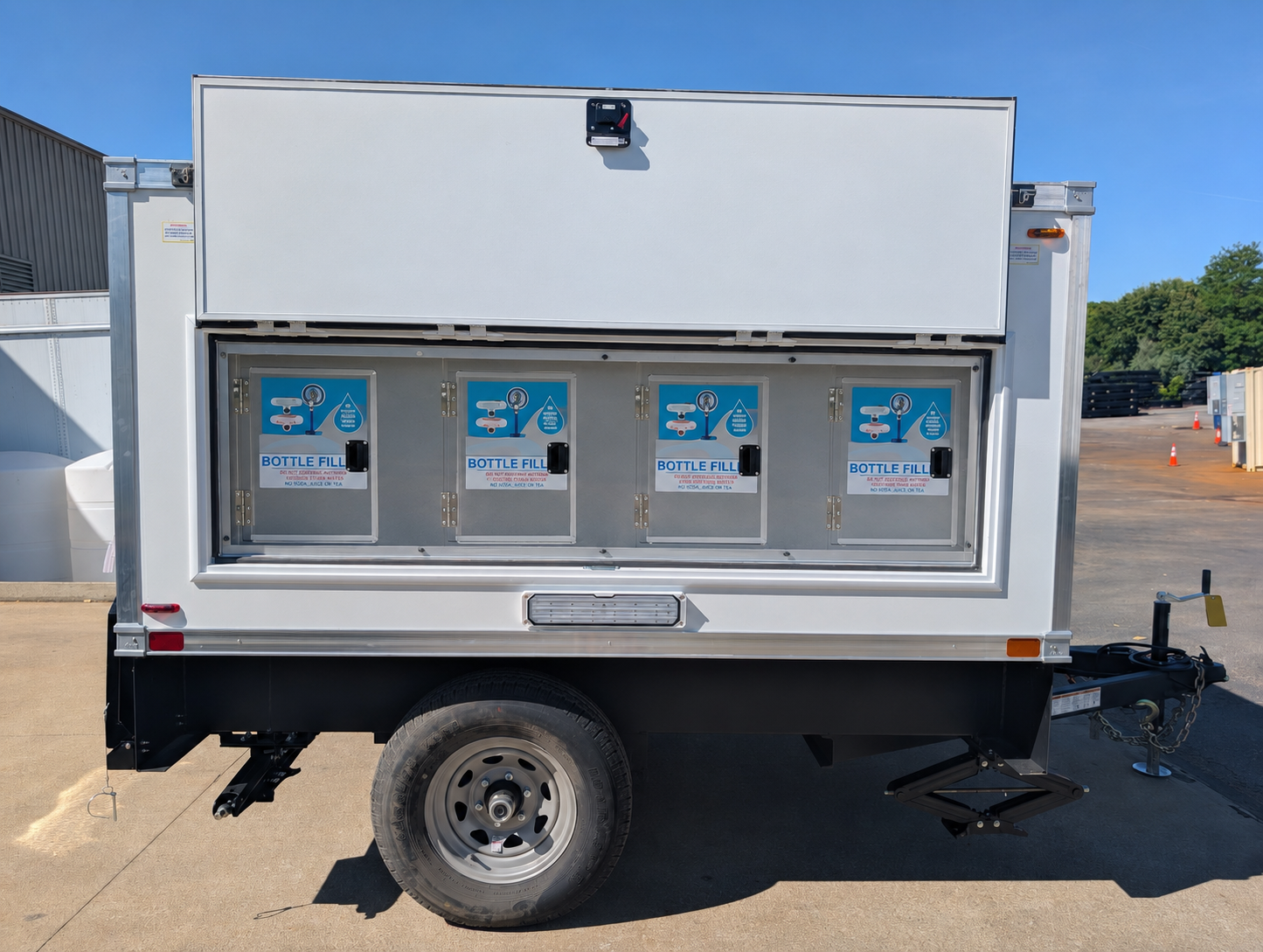
We deliver cold, filtered drinking water across Sandy and Salt Lake County 24/7 — for events at America First Field and the Sandy Amphitheater, and for job sites like the Cairns District build and the framing crews off Bangerter Highway. When it’s dry and pushing 95°+, warm bottled water gets ignored. Our self-contained trailer rolls onto your site and keeps cold water on tap all day, refilling itself, with no pallet of plastic to truck in or haul out.
- ~45-minute valley-wide delivery
- Cold, four-stage-filtered water
- ADA bottle filling
- UOSH heat-aware setup
- A+ BBB · licensed & insured
- Around-the-clock dispatch
We know the Sandy event calendar and the construction season, and we plan for the heat
Sandy gets busy on two fronts at once, and both peak in the same hot months. There’s the event side: America First Field, the Hale Centre Theatre plaza, the Sandy Amphitheater, and the Mountain America Exposition Center floor, booked week after week. And there’s the build side: the Cairns District going up downtown, UDOT lane work on the corridors, and sewer and utility crews along 11000 South. Both run hardest in July and August, and both lose people fast when the only water on hand is lukewarm. We stage cold-water stations across Salt Lake County so neither one slows down on a hot, dry afternoon.
Fast delivery across the south valley
Most of our runs reach you within about 45 minutes of dispatch, and during a hot spell we keep emergency drops going around the clock. When a packed amphitheater opens its gates with only warm coolers on hand, or a super finds the crew dry before sunrise, that fast turnaround is what matters most.
Cold at noon, still cold at teardown
Each unit chills its own supply on board, so the last pour of a doubleheader is as cold as the first. Dry Utah heat sneaks up on you. You sweat it off without noticing, dehydration sets in, and a warm jug just sits there. Cold water gets drunk; warm water doesn’t.
We drop it, fill it, service it, pull it
No juggling a water order, an ice run, and a hauler across three vendors. We place the trailer, refill it from our own water trucks, service it for the length of the booking, and tow it out at the end. One number on your phone covers the whole hydration job on your Sandy site.
We tell every new Sandy client the same thing on the first call: the water only counts if people actually drink it. We’ve watched a stack of warm bottles sit untouched while a crowd wilted in the bleachers, and we’ve watched a cold station thirty feet away get emptied and refilled twice before intermission. That’s why we don’t just drop a trailer and leave. We size it to your headcount or gate count, set the refill schedule to how your day actually runs, and answer hot-afternoon emergencies fast, because in a high-desert summer the difference comes down to minutes.
One road-towable trailer that follows the work, whether it’s a stadium lot or a canyon-gateway build site
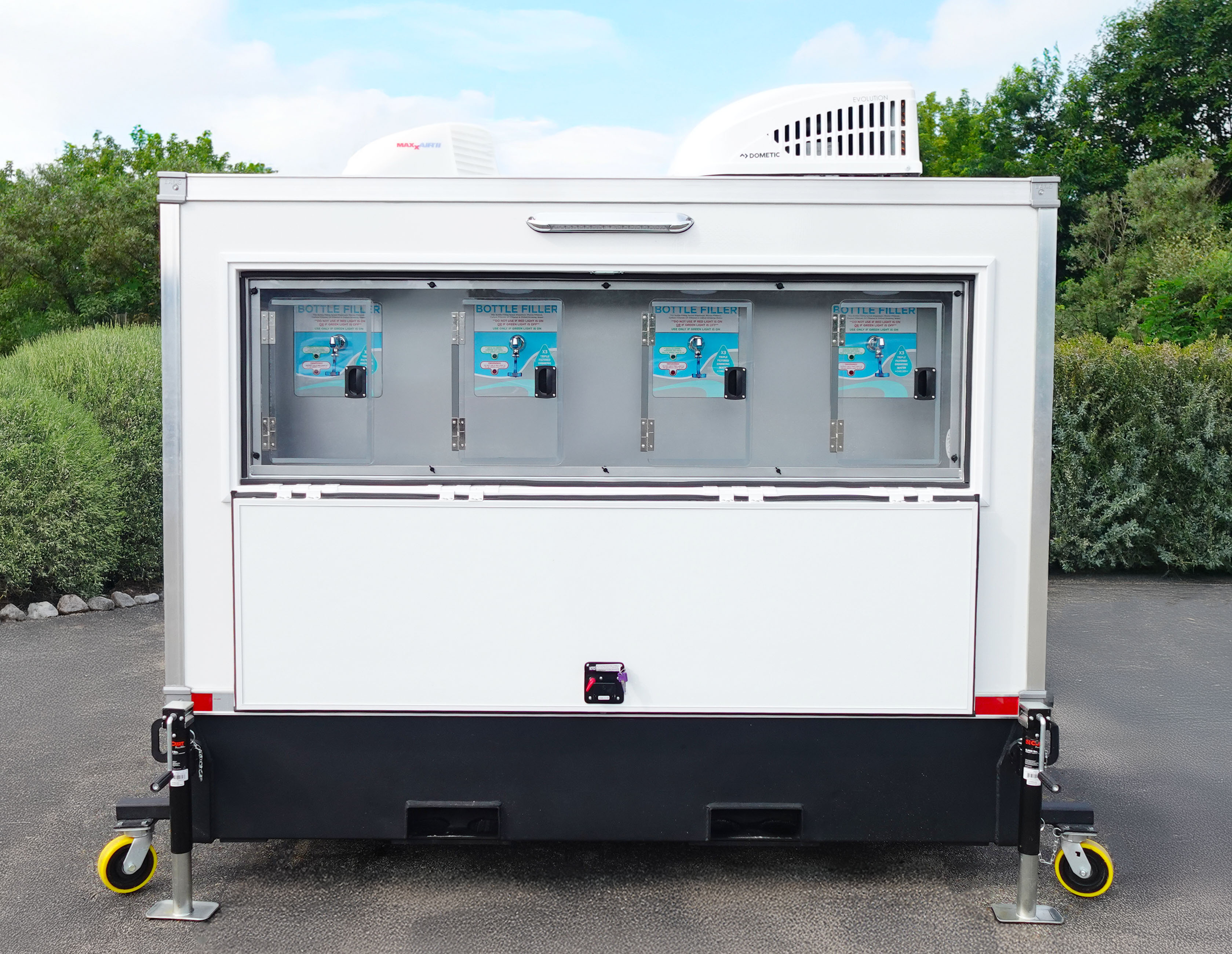
We bring one purpose-built unit to the south valley: the Signature Series water station trailer. It sits on a full road chassis, so we tow it straight to wherever Sandy is busy that day: the apron beside America First Field, a staging lot at the Mountain America Exposition Center, a grading parcel in the Cairns District, or a trailhead at the mouth of Little Cottonwood. Nothing to build, no plumbing to lay. You get cold filtered water on tap the same afternoon it rolls in.
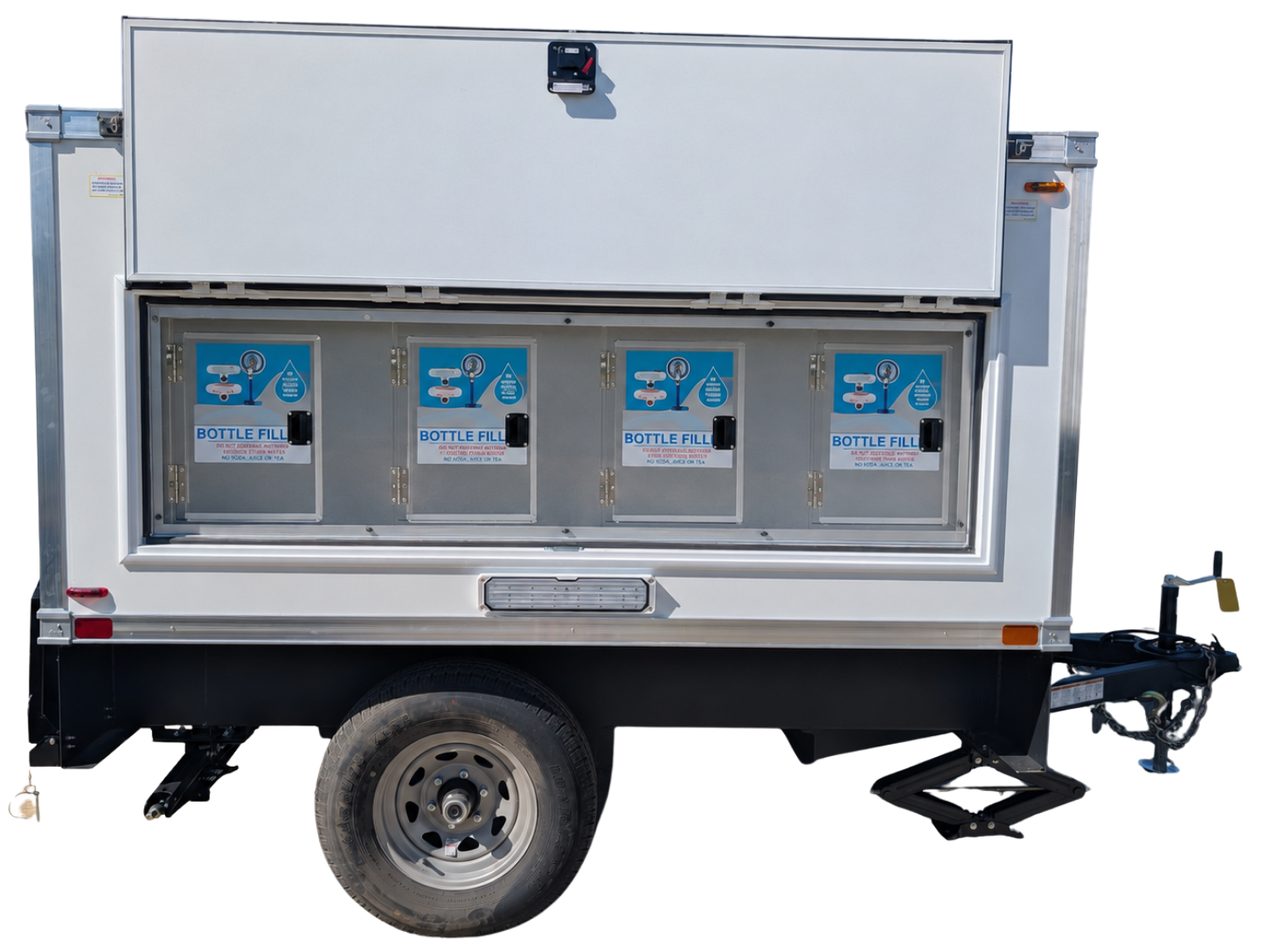
Signature Series specifications
It’s a true road trailer with tires and a hitch, so it follows the work to an event apron, a downtown build parcel, an industrial yard, or a county park. Sandy event producers and contractors ask for it by name. It rolls in, levels out, and is pouring cold water the same day it shows up.
| No. of stations | (4) Bottle Filling Stations |
| Length | 12′ 3″ |
| Weight | 3,100 lbs. |
| Height | 8′ |
| Fresh water tank | 300 Gallons |
| Power requirements | 1–4 dedicated 20A/120V circuits OR 1 dedicated 50A/240V circuit |
| No. of AC units | 1 |
Why this trailer suits the south valley
The design handles two Sandy realities at once: bright dry heat, and a job that moves between very different sites. Its four filling positions line an exterior wall under an awning, so a crew or a stream of event-goers cycles through fast instead of stacking up at one tap. Onboard AC and built-in chillers hold the water cold even with the trailer baking against the bench in late-afternoon sun. That’s exactly where coolers and bottled-water plans fall short at this elevation.
The 300-gallon fresh tank carries a sizable crew, or a busy event window, through the day. Because the trailer is road-towable, we can move it across a sprawling venue or shift it to the next phase of a build without tearing down a fixed install. It runs on ordinary site power and tolerates a wide range, so the same unit works on a fully serviced parcel downtown or a bare lot near the canyon mouth we plan power around.
It does more than the four headline stations suggest. There’s a rear jug-fill point for five-gallon coolers and hydration packs, plus several hose-bib taps for crew chores, wash-up, and grounds work. So a single trailer covers the entire hydration job on a Sandy event or jobsite, not just part of it.
Hydration for both sides of a Sandy summer: events and job sites
Sandy has two kinds of hydration demand, often in the same week: packed events and outdoor crews. A Real Salt Lake night needs something different than a Cairns District tower crane, which needs something different than a tournament weekend at a county sports complex. These are the settings where our stations earn their keep.
Stadium nights, theatre plazas & the Cairns crowd
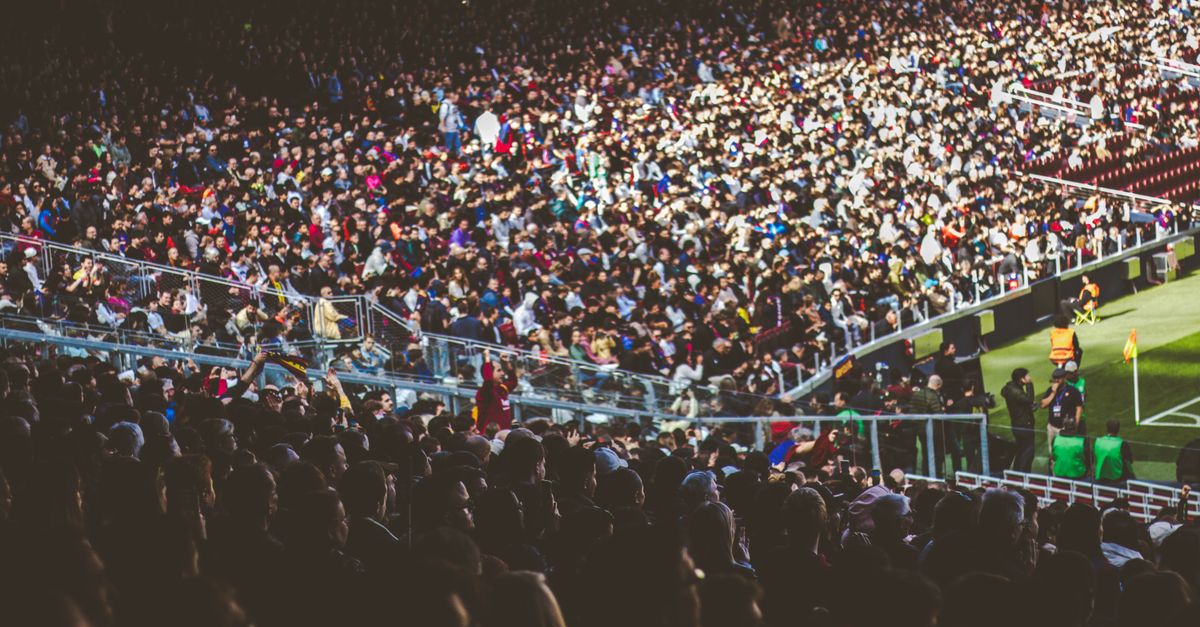
America First Field fills for Real Salt Lake and the Utah Royals, the Hale Centre Theatre and Sandy Amphitheater draw their own crowds, and the Cairns District around them keeps adding reasons to gather downtown. A station gives event teams free-flowing cold water and clean refill points across a footprint, no mountain of single-use bottles to truck in and cart out after the lights go down.
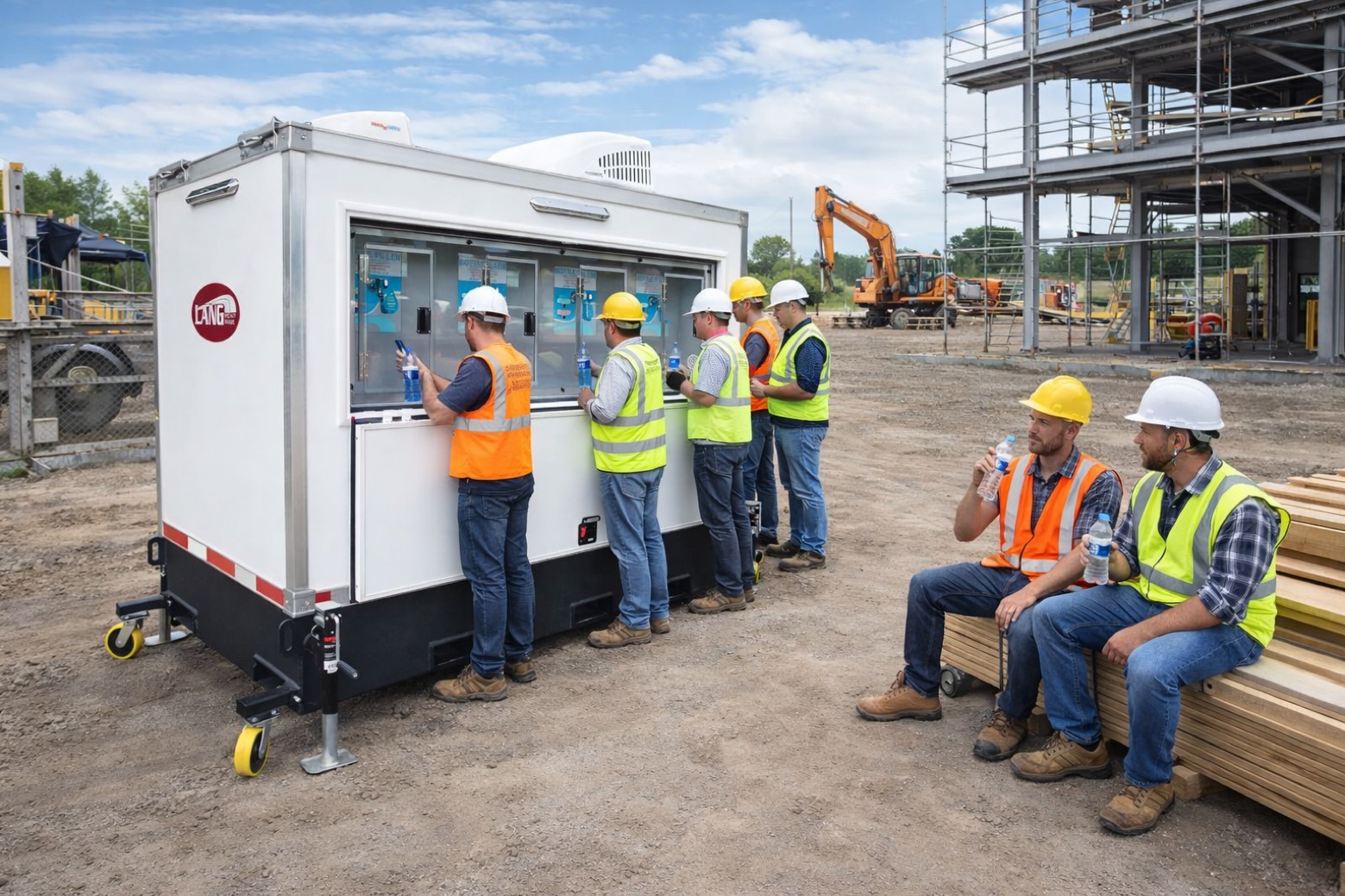
The Cairns build-out & corridor construction
Downtown Sandy is in the middle of a generational change, anchored by a roughly half-billion-dollar Cairns District project that will raise the tallest building in the valley outside Salt Lake City. Add the UDOT corridor work and the utility crews threading 11000 South, and you’ve got hundreds of workers in open sun. So we stage stations where general and trade contractors can keep documented cold hydration within a short walk of every work face. One super told us, “I stopped counting on the cooler the day yours showed up.”
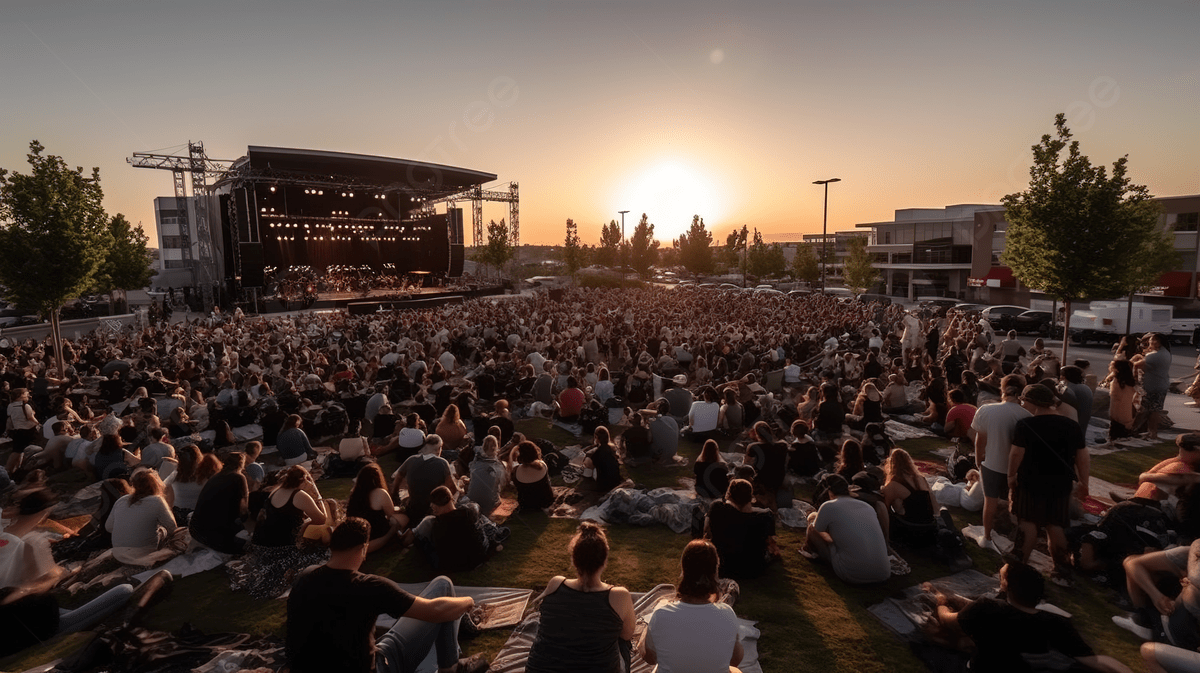
Festivals, fairs & expo-center events
The Mountain America Exposition Center runs a year-round calendar (home and garden shows, the auto expo, gem and hobby fairs), and the warm-weather festival circuit spills outdoors across the south valley. Outdoor crowds at altitude drink fast. So a station, or several spread across the grounds, keeps the lines short and the bottle count near zero.
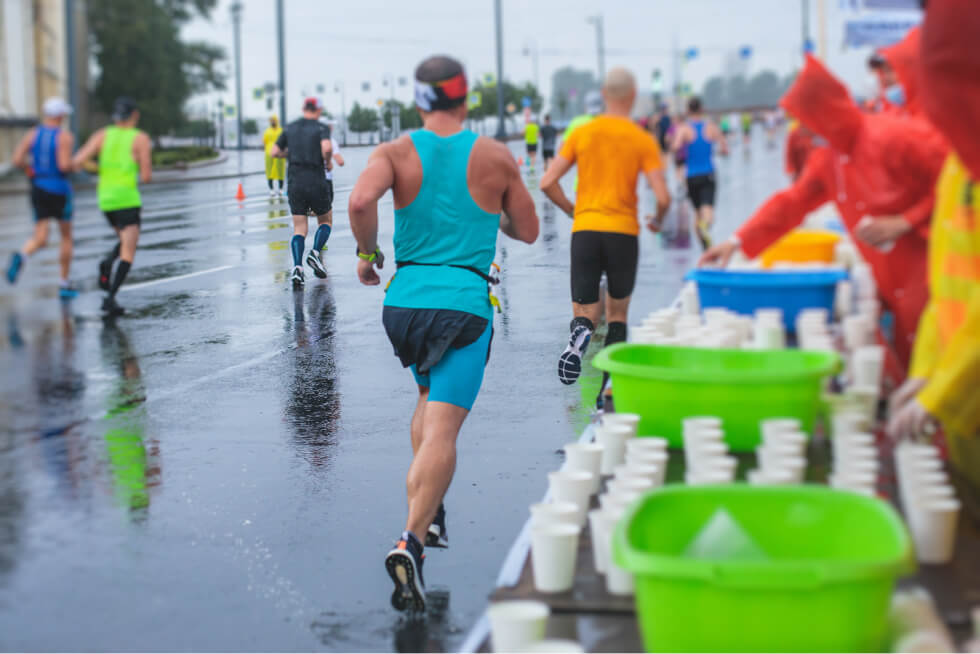
Races, tournaments & canyon-gateway recreation
Sandy is the launch point for road races, cycling events, and youth tournaments, and the gateway to Little and Big Cottonwood Canyon, where trailheads and base areas funnel through town. A towable station drops into a finish-line corral, a sports-complex lot, or a staging area at the canyon mouth and pours cold water where the crowd actually gathers.
Add up a season of pallets and one station pays for itself
Run a 50-person Sandy crew through one bright summer and the math is clear. Figure six bottles a head on a 95-degree afternoon and you’re buying, hauling, icing, and tossing close to 300 plastic bottles a day, every day they’re on site.
Stretch that across a 200-day downtown build and it clears 60,000 bottles, and on the larger multi-phase Cairns-scale work, north of 100,000. One station stands in for all of it, cold water on tap and nothing left to drag to the dumpster at quitting time.
It’s an operations call long before it’s an ESG one
The plastic-waste angle is real and worth printing. Across the country something like 60 million of these bottles get tossed daily, only about a third ever reach recycling, and one of them can linger in a Salt Lake County landfill for centuries. Sandy’s own sustainability goals make that a number worth tracking. Still, that’s rarely the deciding factor. Most project leads and event producers here make the swap for a plainer reason: one central station kills the daily scramble. No recurring water order to place. Nothing lukewarm sitting in a cooler by ten, no stack of empties cooking by the gate. Your super gets to run the build and your event lead gets to run the show, with no one assigned to mind the water.
And because we keep the station filled from our own potable water trucks, supply scales with the day. A crew that doubles for a concrete pour, or a gate count that beats the forecast, doesn’t out-drink the plan. Our trucks just bring the tank back up.
City water, run through three stages and a UV chamber, then chilled before the tap
A station only earns its keep if people genuinely want to drink from it. Ours pull municipal water through a full treatment train and an ultraviolet chamber, then a built-in chiller takes over, so what leaves the nozzle tastes clean and pours cold even on the hottest, driest afternoon of a Wasatch Front summer.
Stage one · sediment
Catches grit, rust flecks, and the fine particulate that valley supply lines pick up, clearing the water before any other stage touches it.
Stage two · carbon
Lifts out chlorine and the flat, off tastes that turn people away from a tap. This is the stage that decides whether a station gets used or ignored.
Stage three · micro-particulate
A fine-mesh polishing cartridge catches the microscopic particles that slip past sediment and carbon, protecting crews and the public who fill up alike.
Stage four · UV
An ultraviolet chamber knocks out bacteria and pathogens with light rather than added chemicals, a final guard right before the pour.
Three ways to fill, one of them ADA-height
Each unit gives you four push-back filling positions with adjustable nozzles, press a bottle against the bar and it runs without a touch. One of the four sits low, at ADA height, so nobody at the event or on the crew needs a workaround to use it. Around the back, a large-jug station takes five-gallon coolers and hydration packs, and a set of hose-bib taps covers crew chores, grounds work, and event support. The whole path the water travels is food-grade and stainless, which is how the filtered, chilled quality survives all the way to the spout.
A single Signature trailer holds 300 gallons (roughly 2,400 sixteen-ounce pours), and we top it off on demand, so the station never turns into the choke point on a busy Sandy shift or a packed event night. I’ve had foremen tell me they expected the tank to be the bottleneck and watched it never once run dry.
In a high-desert summer, accessible cold water is part of the safety plan, not an extra
At roughly 4,500 feet, Sandy gets fierce sun, parched air, and a normal run of upper-90s afternoons through July and August along the Wasatch Front. Utah doesn’t defer to the feds on enforcement, it operates its own state plan, the Utah Occupational Safety and Health division (UOSH) inside the Utah Labor Commission, and that program holds employers to the rule that workers have potable drinking water within reach on the job. With the proposed national heat-illness standard leaning toward documented, suitably cool water close to the crew, that bar keeps climbing.
A water station makes that duty something concrete to show an inspector. You get a fixed, mapped point putting out cold, potable water on demand, the very thing a Heat Illness Prevention Plan is organized around, and the kind of setup a UOSH-minded safety lead would rather have standing before the hot week arrives than scramble for during it.
- Cool, potable water within reach right where the crew is working
- A mapped, on-the-record hydration point your safety file can cite
- Backing for acclimatization and timed water breaks on dry, thin-air days
- Set up for stricter heat rules rather than caught flat-footed when they arrive
Dry heat, a building boom, and an event town all crowd into the same months
People underestimate Sandy heat because the air feels light. That’s exactly the trap. Low humidity at altitude pulls moisture out of a body fast, and the work and the crowds peak in the very weeks the sun is harshest.
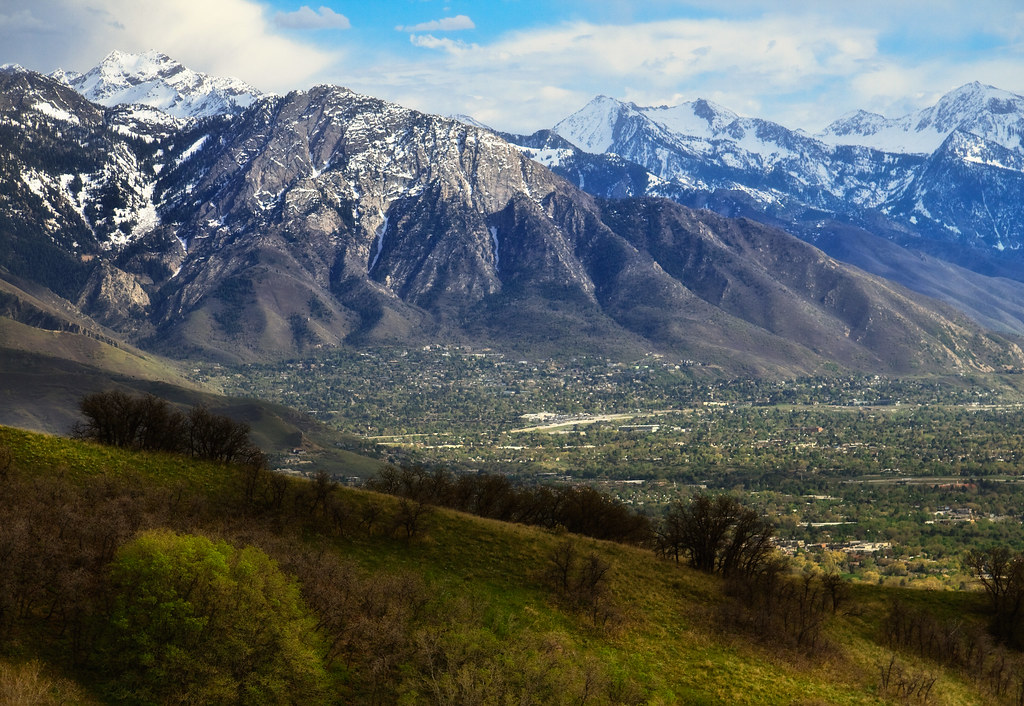
A Wasatch Front summer runs warm and bright for months, with stretches of upper-90s afternoons and the occasional triple-digit spike, and recent years have leaned hotter and started earlier. The thin, dry air at 4,500 feet is the quiet hazard: sweat evaporates before it’s noticed, so a crew or a crowd can slide toward dehydration while the thermometer still reads a deceptively mild number. Cold water isn’t a comfort line item in that climate. It’s the cheapest, most effective piece of safety gear on a site or in a venue.
What makes the planning hard is how the calendar stacks. The same July weeks that bring the hottest afternoons also bring the fullest stadium nights, the busiest festival and fair dates, and the longest construction days. No crew or event team coolers-and-ices its way through an entire season, the volume is too big and the warm-up too quick. The only arrangement that survives a full south-valley summer without turning into a logistics project of its own is a centralized station that chills its own supply.
And the demand keeps climbing, because Sandy is rebuilding its own center of gravity. The Cairns District downtown is the headline, a roughly half-billion-dollar mixed-use project that will add hundreds of thousands of square feet of office, hotel rooms, retail, and housing, topped by the tallest building in the valley outside Salt Lake City. Around it, UDOT corridor work and district infrastructure upgrades keep crews in the open through the warm months, and The Shops at South Town and Quarry Bend anchor a steady stream of retail and commercial activity nearby.
We built our south-valley dispatch around exactly that overlap. When we first started staging units around the Cairns work and the event venues, we tied refills to crew size and gate count instead of a fixed calendar, and we added emergency drops for hot stretches. One project manager told me, after a brutal August week, “You were the only vendor I never had to chase.” Because on a downtown build or a sold-out night, a hydration gap doesn’t merely slow things down (it can stop the work outright and put someone in an ambulance).
We tow it in, fill it, and connect it, and most days you’re pouring cold within the hour
There’s nothing for your team to project-manage. We handle placement, the fresh-water fill, and the power hookup, then walk your crew or event staff through it before we leave the site.
Sketch the day for us
Your count, your dates, the parking spot for the trailer, and the power you’ve got. That handful of facts is all we need to size the job correctly.
We get there quickly
Figure roughly three quarters of an hour from dispatch across the south Salt Lake Valley, with around-the-clock emergency drops when the heat turns dangerous.
We position and fill
We level the unit, charge the 300-gallon tank with fresh water, and wire it in, either one to three 20-amp 120-volt circuits or a single 50-amp 240-volt drop.
We keep the water coming
Our trucks bring the tank back up on a cadence built around your demand, and we tend the unit clear through to teardown.
No standing power at a canyon-gateway lot or a stripped-down downtown parcel? Raise it on the call. Given the trailer’s light draw and what our service fleet carries, we’ve run stations on sites with no power at all, so describe what’s present and we’ll design around the gap.
Past the trailer: the trucks that keep a Sandy site or event supplied
The trailer is the visible half. Behind it sits a support fleet covering three jobs, getting fresh water onto the site, holding it there, and carrying the used water off, so a single call handles the entire loop in place of three vendors and three bills.
Potable water trucks
The drinking-grade water itself arrives by truck, in volume, and those same trucks bring your station’s tank back to full on a rhythm set by your headcount or your gate count. They’ll also load cisterns, holding tanks, and bladder bags whenever a single day asks for more than one delivery can carry, say a stadium doubleheader or a heavy pour.
Bladder bags & buffer supply
A portable bladder gives you a cushion of extra fresh water for the peak hours, or a temporary hold for greywater where there’s no drain. It’s the unglamorous part of the kit that keeps a packed event field or a far-flung canyon-mouth lot supplied in the gaps between truck visits.
Pump trucks
Need water moved across the site, loaded into storage, or drawn back down? That’s the pump truck’s job (quietly one of the most-requested pieces on a big footprint). It really earns its place on a spread-out venue where the fill point and the station sit a long walk apart, and I’ve watched one save a crew an entire afternoon of bucket-hauling.
Vacuum & waste trucks
At the far end of the loop, a vacuum truck draws off the used water and runs it to a licensed disposal site. Where the wastewater ends up was never a question we left for the client to answer, it’s been baked into the service since the first job.
None of these stand alone. A canyon-mouth staging lot might pair a station with a bladder for buffer and a recurring truck fill. A week-long expo run might lean on a pump truck for transfer and a vacuum pickup at strike. Describe how your project is laid out and we’ll build the right mix around it, one number to call, one bill, one crew that’s learned your site.
The handful of questions that turn a two-minute call into an accurate quote
Two minutes on the phone gets you a real number. Below is what we’ll be asking, partly so you can have it handy and partly so you can watch how we tailor each booking rather than reaching for a single default every time.
The four answers that shape the recommendation
- How many people? A fifteen-hand framing crew and a sold-out amphitheater are different problems entirely. Your headcount or gate count sets how many units we bring and how hard the refill schedule has to run.
- For how long? A single concert, a three-week pour, or a months-long Cairns build each get a different service rhythm. A short booking usually rides on buffer storage; a long one runs on a standing truck-fill schedule.
- Where will it sit? The towable Signature settles into an event apron, a parking lot, a build parcel, or a trailhead staging area. Once we know the spot and the route a truck takes to it, we can drop it where the foot traffic already is.
- What power is on site? A station runs off either a few 20-amp circuits or one 50-amp drop. Bare parcels and canyon-mouth lots with no power show up all the time here and are easy to solve, as long as you flag it for us early.
The extra details that help us nail it
- The exact spot the trailer should park, and the route a delivery truck takes to reach it
- Whether your people are scattered across the grounds or bunched at one work face or one gate
- Whatever your safety paperwork needs the hydration point to back up under a heat plan
- Whether the booking should also fold in bulk water delivery, bladder buffer, or a waste pickup
The line items a pallet of bottled water hides until they land on your day
On a purchase order, bottled water reads cheap. The actual cost is buried in the labor, the storage footprint, the warm-up, and the disposal, and a bright dry Sandy summer turns up the heat on every one of those.
The labor that never makes the budget
Someone has to place the order, receive the pallets, tear them apart, ice the coolers at dawn, refill them through the day, and clear out the empties. It piles up. On a sizable south-valley crew or a multi-day event that’s hours of paid time every day, taken straight off the build or the show itself. A station wipes the whole task off the list. When we worked the figures with one downtown contractor near the Cairns project, the time saved alone paid for the rental, and he put it plainly: “I didn’t realize the bottles were eating a half-day of payroll a week.” Ours arrives full, tops itself up from our trucks, and asks nothing of your super past a spot to park it.
The warm-up nobody plans for
Coolers don’t hold. What was icy at dawn reads tepid by late morning in a Utah July, and tepid water is water a crew or a crowd quietly leaves alone, right at the hour dry-air dehydration starts to bite. A chilled station has no such slide. Whether it’s quitting time or the final whistle, that pour lands as cold as the day’s first.
The staging-space tax
Pallets are bulky. They swallow staging room, wall off laydown areas, and sit cooking in the sun until somebody works through them, and on a cramped downtown parcel or a packed event apron the clutter becomes its own problem, with empties stacking up faster than anyone clears them. One trailer slots into a single parking space and serves a crowd or a crew that would otherwise tear through hundreds of bottles every day.
The waste that lingers
Buy a bottle and you’ve bought a piece of trash, and a busy site or a sold-out night turns out a heap of them over a season. That’s a disposal bill, a black mark on any project or event sustainability summary, and, in a county pushing to shrink its landfill load, a footprint that sticks around long after the crowd has gone home. A refill station erases that line entirely and gives your reporting a figure you’d actually want to publish.
Cold water for outdoor crowds through a hot Sandy afternoon
Down here, event teams build heat into the plan the way other places build in rain. A match night at America First Field, a show at the Sandy Amphitheater, a festival on the Cairns plaza, a charity 5K, a corporate day out, any of them gets free-flowing cold water and clean refill points from one self-contained station. And your crew is off the hook for hauling in, icing down, and dragging out a mountain of plastic once the gates close.
For a big site we’ll spread several units so nobody has to hunt for water, and the drop-off and teardown run on your clock, not ours. We picked that up the hard way at a south-valley summer concert, where a lone station by the main entrance had a line forty deep by the second set. Heat plus a few thousand people is a fast equation. The next season we ran several units spread across the grounds, and the lines simply vanished. “Where did the water line go?” the production manager asked, half-joking. To your guests it reads as hospitality. To your operations lead it reads as risk handled.
A few things staging water across Sandy has drilled into how we run a job
Years of dropping stations across the south valley have shaped the way we handle every booking. A handful of the lessons that stuck:
We figured out fast that where you park it decides everything. On a downtown high-rise near the Cairns work, our first-day spot was right by the gate, and the thing went half-used because the work face was a dozen floors up and nobody burned a hot break making the trip. The next morning we relocated it to the hoist landing, and by lunch the crew was drinking twice as much. The foreman put it flatly: “Make the water closer than the shade and they’ll drink it.” That line shapes every site plan we draw up now.
We also learned to plan refills around the forecast, not the calendar. During one early-July hot spell (the kind that arrives a week ahead of when anyone expects it), we’d pre-staged extra water trucks, and when an event apron and two build sites all rang the same afternoon, we covered all three without anyone running dry. That evening a safety lead sent us two lines: the crew never noticed a gap, and we had already topped them off before the radio call would have gone out. That cushion is now written into every warm-season contract we sign on the Wasatch Front.
And we found out the bottled-water reflex hangs on right up until people taste the alternative cold. At a youth-tournament weekend on a south-valley sports complex, the organizer doubted we could keep a full tank genuinely cold parked in open sun all day. I remember her exact words on the phone: “Prove it.” We delivered, dialed in the refill rhythm, and by the second afternoon she called to add a unit, saying simply, “Kids and parents stopped asking where the cold water was.” Cold water that stays cold is the entire pitch. Up at this elevation it closes the sale on its own the moment it arrives.
Each of those calls drove home what the dry air keeps teaching us: in Sandy, hydration is not a thing you arrange once and forget. It’s an ongoing operation, and we run it that way for the whole stretch of every rental, event or jobsite alike.
Cold water staged across Sandy and the south Salt Lake Valley
Our local dispatch covers Sandy and the surrounding south end of Salt Lake County end to end: the downtown Cairns core, the canyon-gateway neighborhoods up against the bench, and the retail and commercial corridors in between. If you’re in the south valley, you’re inside our service radius.
Quarry BendSandy Amphitheater benchMountain America Expo Center
Alta CanyonWhite CityGraniteBell Canyon
DraperSouth JordanWest JordanMidvale
Cottonwood HeightsLittle & Big Cottonwood gateway
Working a corridor more than a single address? We follow the routes the south valley runs on (I-15, Bangerter Highway, 700 East, State Street), so corridor and multi-site projects get the same fast turnaround as one location. We once ran a single contract that touched four addresses along Bangerter in a week, and we treated it as one job, not four.
What south-valley crews and event teams ask us most
How soon can a water station reach my Sandy site or event?
Across the south Salt Lake Valley, most of our runs arrive inside about three quarters of an hour of dispatch. Through hot spells we also keep emergency drops rolling at any hour, so when a crew hits a dry site on a 98-degree morning, or an event team catches the coolers gone warm at gate-open, we can usually be pouring soon after. The honest variables are site access and on-site power, so let us know what you’ve got on both and we’ll route the delivery around them.
Does the water come out cold, or just clean?
It’s both at once. A chiller built into each unit keeps the supply truly cold from the first pour of the morning through teardown, by design. Up here in dry, thin air, anything lukewarm gets left untouched while people slip toward dehydration without noticing. Since water only helps the person who actually drinks it, and cold is what gets it drunk, we file the chiller under safety equipment, not under comfort.
How big is the tank, and who handles it when it runs down?
Each Signature trailer holds 300 gallons, which works out to about 2,400 sixteen-ounce pours. For a big crew or a busy event night, our own potable water trucks keep it replenished on a cadence built around your demand, so the tank capacity never turns into the ceiling. Refills aren’t yours to track, they’re ours.
Does a station help with Utah OSHA (UOSH) heat-illness expectations?
It supports them head-on. Enforcement here runs through UOSH, Utah’s own state plan under the Labor Commission, which holds you to providing reachable potable drinking water on the job, and the proposed federal heat rule pushes further, toward cool water kept close to the crew and documented. Drop in a station and you’ve got a fixed, mapped, cold source you can write into a Heat Illness Prevention Plan and walk an inspector to. The plan itself is yours to author; the hydration it rests on is ours to deliver.
Are the stations ADA accessible?
They are. Of the four push-back filling positions on every unit, one sits at an ADA height, so everyone on the site or in the crowd is served without anyone rigging a side solution. Out back there’s a jug-fill point for coolers and hydration packs as well, and a row of hose-bib taps for crew and grounds work.
Can you handle stadium and festival events, not just construction?
Absolutely, events are easily half our work here. A match night, a concert, a fair, a race, a corporate gathering, we’ll set a single unit or spread several over a wide site, scheduling the drop-off and pickup to your run-of-show. The crowd gets free-flowing cold water and clean refill points, while the expense and trash of hauling in single-use bottles just falls off your plan.
What do you actually need from me to get one set up?
Four quick things: your headcount or gate count, the length of the booking, the spot on the site or grounds where it should sit, and the power on hand. A Signature station draws either one to three 20-amp 120-volt circuits or a single 50-amp 240-volt drop. No power at a raw parcel or a canyon-gateway lot? Flag it on the call and we’ll engineer a fix into the quote.
Do you only serve central Sandy, or the wider south valley?
The whole south end of the county. Our local dispatch covers Sandy proper, the Cairns District and the stadium area, out to Draper, South Jordan, West Jordan, Midvale, and Cottonwood Heights, and up to the Little and Big Cottonwood canyon gateways. Corridor work along I-15, Bangerter Highway, and State Street is routine for us.
How does the water taste compared with bottled?
Clean and neutral, no chlorine edge. The carbon stage pulls out the chlorine and the flat off-notes tap water sometimes carries, so what hits the cup reads fresh. That’s not a small thing: a station is only doing its job if people would rather drink from it than from a bottle, which is why we count taste in the safety column and not as a nice-to-have.
How many people can a single station support?
Plenty, because the ceiling is the refill schedule, not the spout. With four positions a crew or a crowd moves through quickly, and a full 300-gallon tank is good for around 2,400 sixteen-ounce pours between top-offs. For the really big crews or sold-out nights we either run the water trucks more often or set a second trailer, so the count you bring decides the supply rather than the trailer capping it. Give us your peak and we’ll build to it.
Can you deliver on short notice during a hot stretch?
Yes, and it’s a big part of why clients hold onto our number. Through hot weather we keep emergency drops going at all hours and pre-position extra water trucks the minute a forecast turns. So when a crew or an event team is abruptly left without working hydration on a triple-digit-leaning afternoon, one quick call usually has cold water flowing before the day peaks.
Trusted by the Sandy teams that can’t let a crowd or a crew run dry
“We had a downtown pour near the Cairns work in mid-July and our bottled-water plan was warm by mid-morning. By that same afternoon a station was on site, and the water came out genuinely cold. Pallets were done for us after that.”
“Across our amphitheater summer run, the refill stations took our throwaway-bottle order down to almost zero and kept the lines flowing. Drop-off and teardown ran on our timing, not theirs. Booking them again next season wasn’t even a discussion.”
“Our safety review wanted documented cold-water access for a heat-exposed crew. A mapped station gave us exactly that for the plan, and the refills showed up before we ever ran low. That’s the part that earns the rebook.”
Service information current as of June 2026.
Get cold, filtered water on your Sandy event or site before the next hot stretch
Tell us your crew or gate count, your dates, and where the station should sit. We’ll right-size the booking and get a trailer to you across the south valley, usually inside about 45 minutes from dispatch.