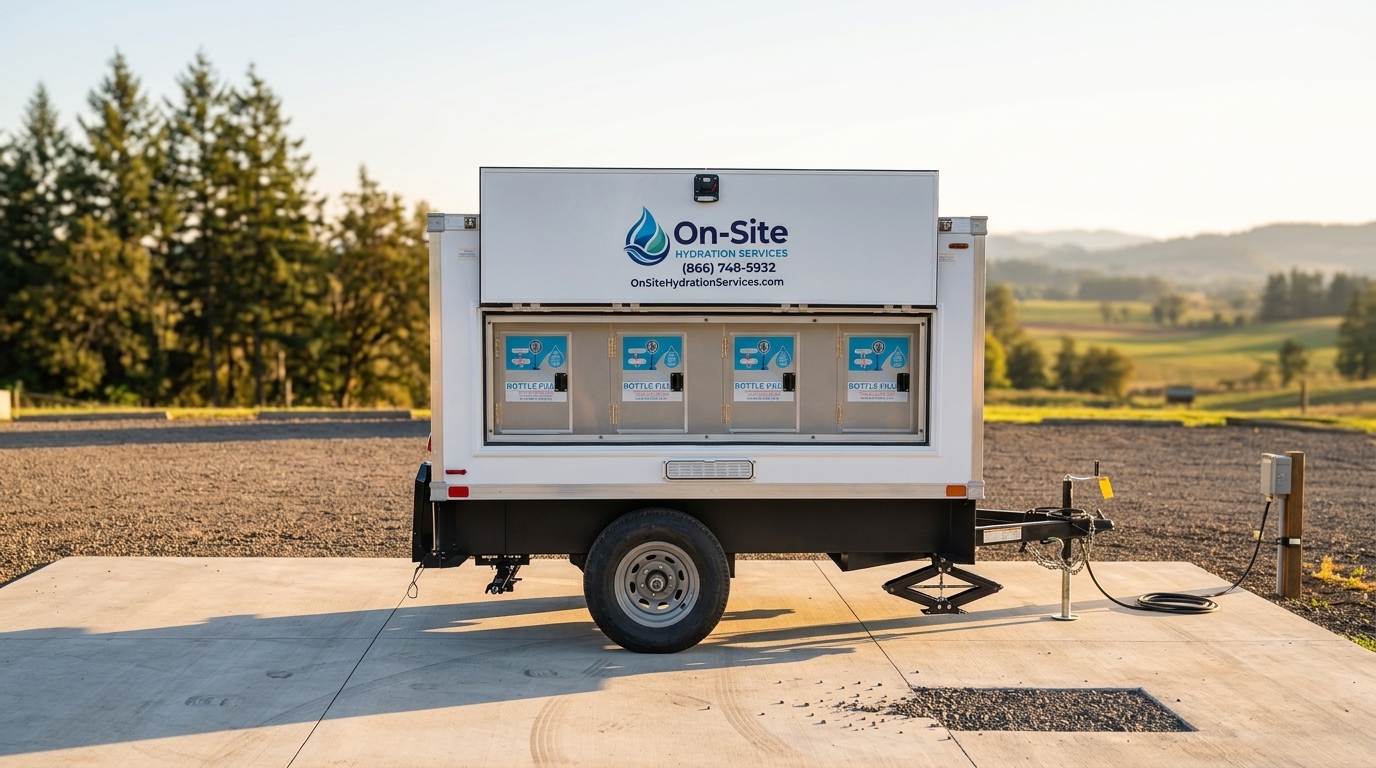
On-Site Hydration Services rents chilled, filtered drinking water stations anywhere in Oregon, from a valley harvest crew outside Salem to a data center build in the high desert. We tow the Signature Series trailer in, level it, fill it, connect the power, and leave it pouring cold water the same day, with 300 gallons on board and four bottle filling stations down the side. Crews in Portland, Eugene, Bend, Medford and Pendleton use it to keep cold water at the work face all shift, with no morning ice run and no pallet of bottles to babysit. Call us now and we will hold a unit for your dates, or request a free quote and we will size the job with you today.
See the Signature Series water station specs
“We are on a pad an hour from anything, and the water question was solved the day the trailer showed up. The crew drinks more because it is cold, and I stopped losing people to a store run in the afternoon.”
“Harvest gives us about ten days and no room for a bad one. They set the station at the end of the row, kept it on a schedule, and I never had to think about it again during the busiest week of our year.”
“Rodeo week brings in three times as many people as live here. We put two units where the walk was shortest from the stands and the midway, and the refills landed between performances instead of during them.”
Service information current as of September 2026.
Look at the jobs that keep our number in the truck here. A data center build in Morrow County where the nearest town is small and the nearest rental yard is farther away than the drive from Portland. A hazelnut harvest that has to come off in days, not weeks, in the hottest stretch of the fall. A fire camp that went from bare ground to roughly 1,200 people in about a day. None of those crews can send somebody to a store at two in the afternoon, and none of them can absorb a lost shift. We are SAM.gov registered, licensed and insured, part of an A plus BBB rated network with a 99.9 percent incident free record, and we run the same playbook from the Coast Range to the Snake River. Call us now, or request a free quote and we will confirm your dates today.
One Signature trailer can pour for a weekend concert and be working a slab pour a couple of days later. Hiring one company for your events and a separate one for your worksites makes no sense. Either way, the planning, the delivery, and the refills are ours.
The onboard cooling unit keeps the tank genuinely cold all the way through an Oregon afternoon, and that single detail carries the whole thing. Warm water is water people abandon, and midsummer is exactly when a crew or a crowd is drinking the most. Cold water gets finished, and finishing it is what keeps heat illness off the site.
Typical metro deliveries across Oregon land in about 45 minutes, longer out on the rural routes, and we keep emergency runs going around the clock whenever a heat advisory or a power shutoff hits Oregon. The morning a foreman finds his 40-person crew stuck with one warm cooler, speed is the whole game.
One rule sits under every job we take: water that people walk past might as well not be there. We've stood on a bare Oregon site and watched shrink-wrapped pallets cook next to the job-trailer while the crew baked thirty yards off. We've watched the opposite too, a chilled station ten steps off the work face run bone-dry twice inside one shift. Everything that matters lives in the distance between those two pictures. Which is why we don't drop a unit and disappear. We match it to your headcount or your gate count, set the refill rhythm to how hard you're really pulling on it, and treat a heat call the way you'd want your own treated, meaning right now, because out here one hot hour can swing the whole day.
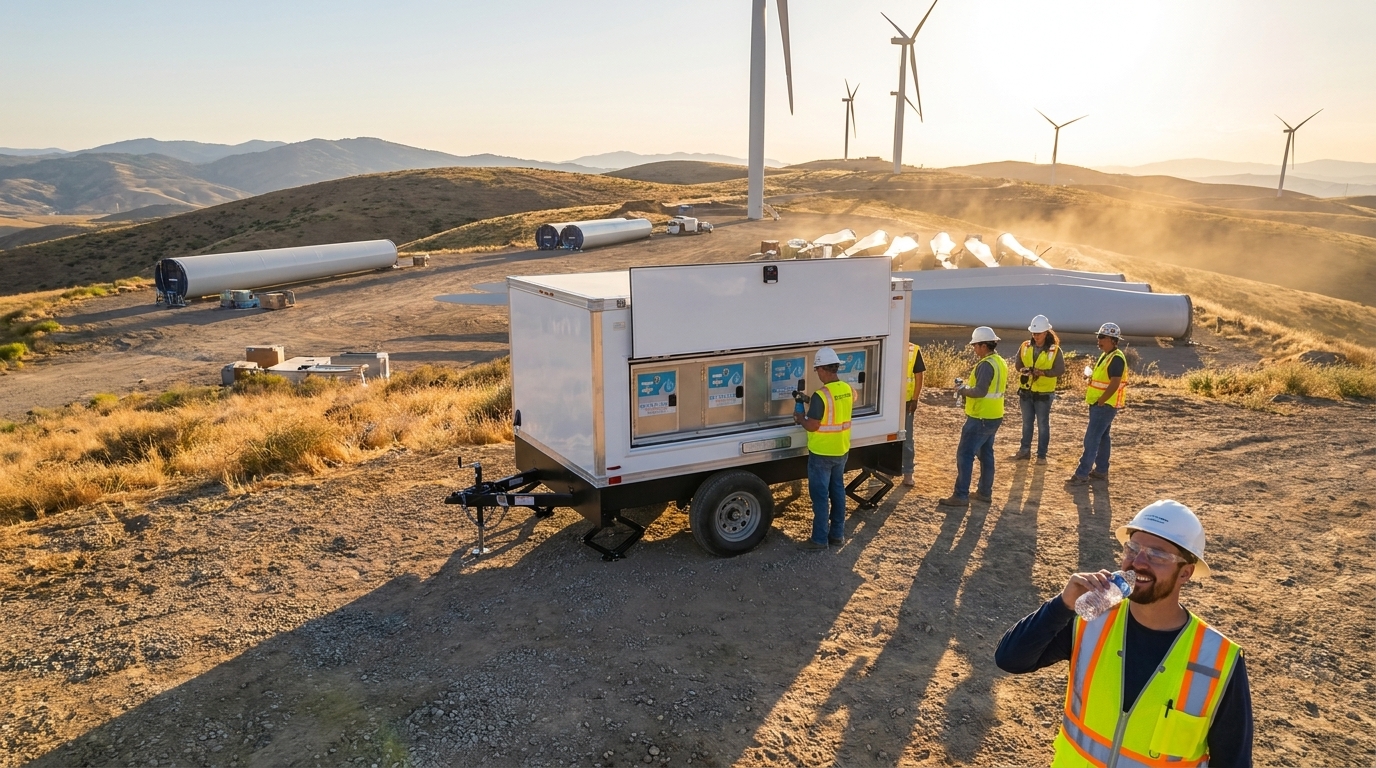
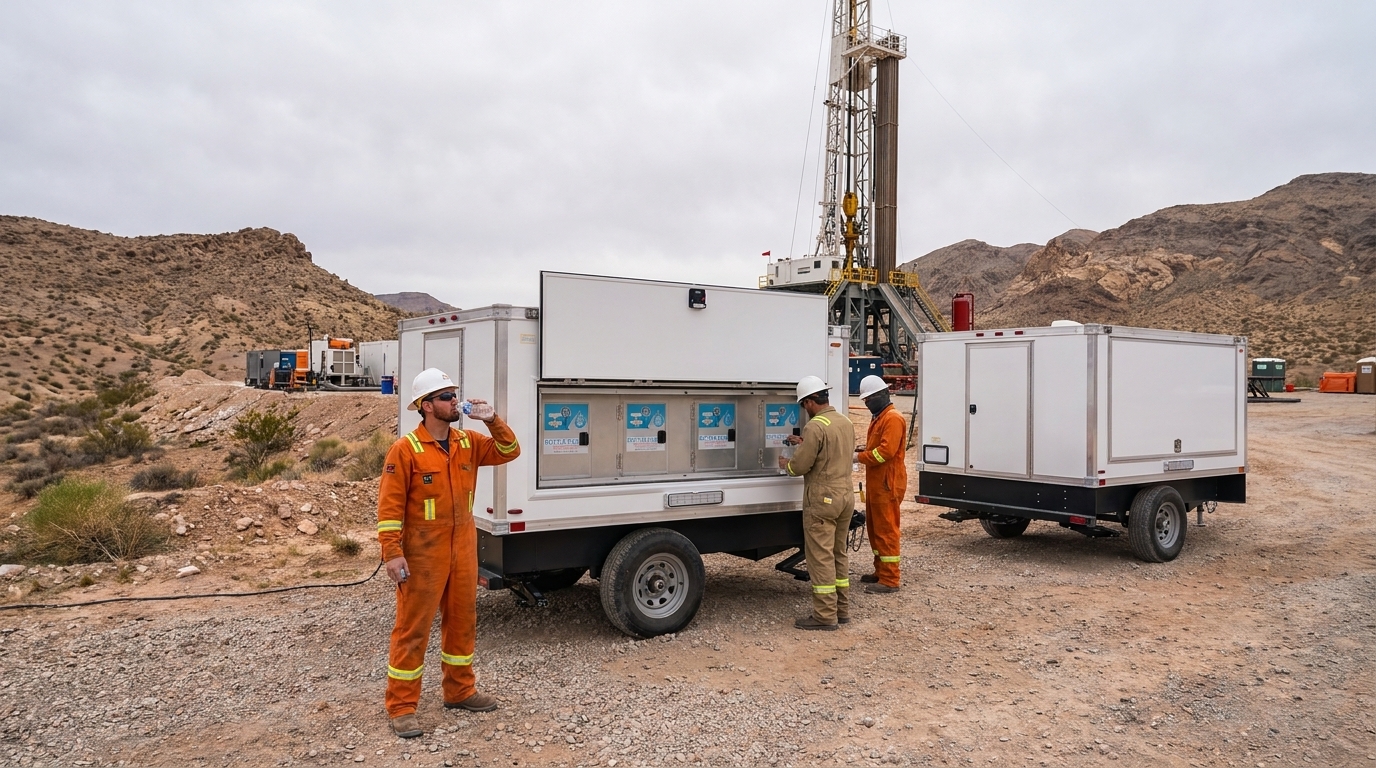
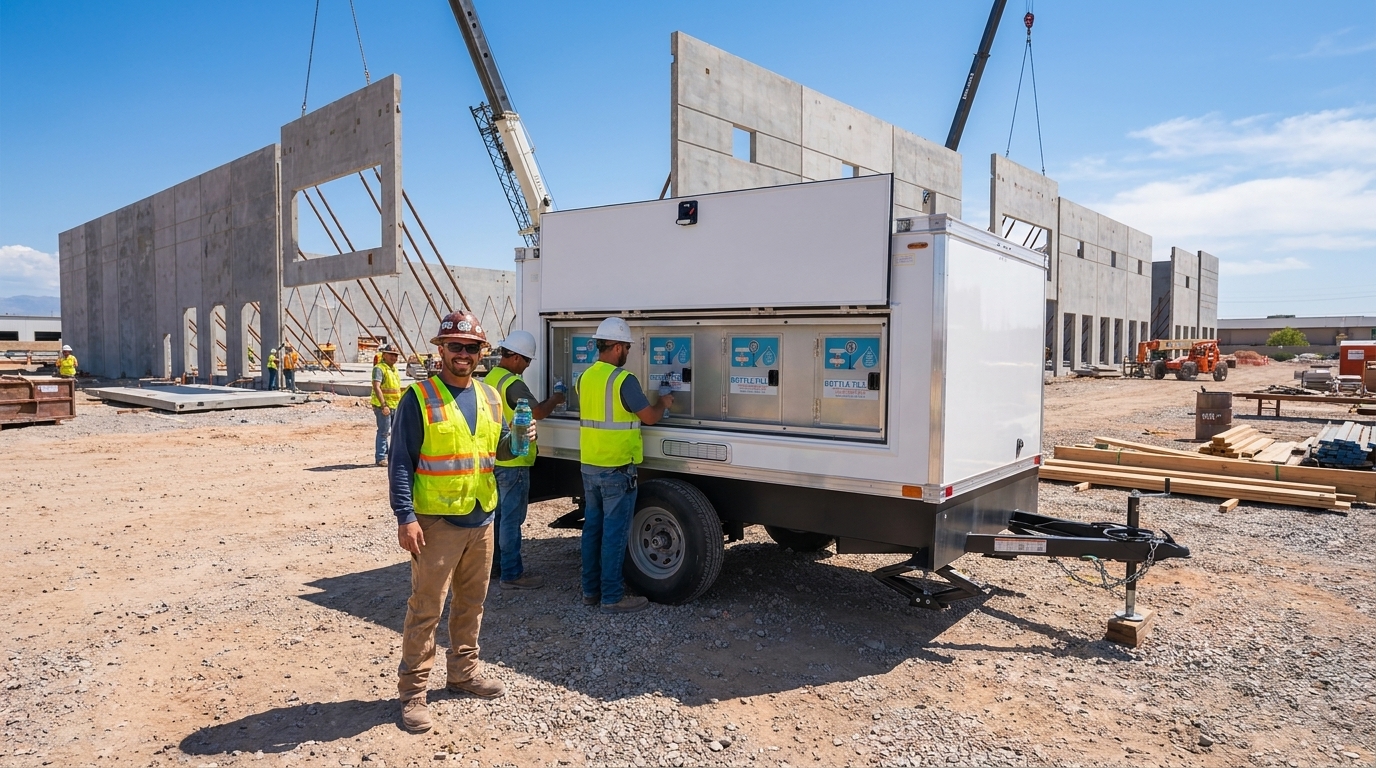
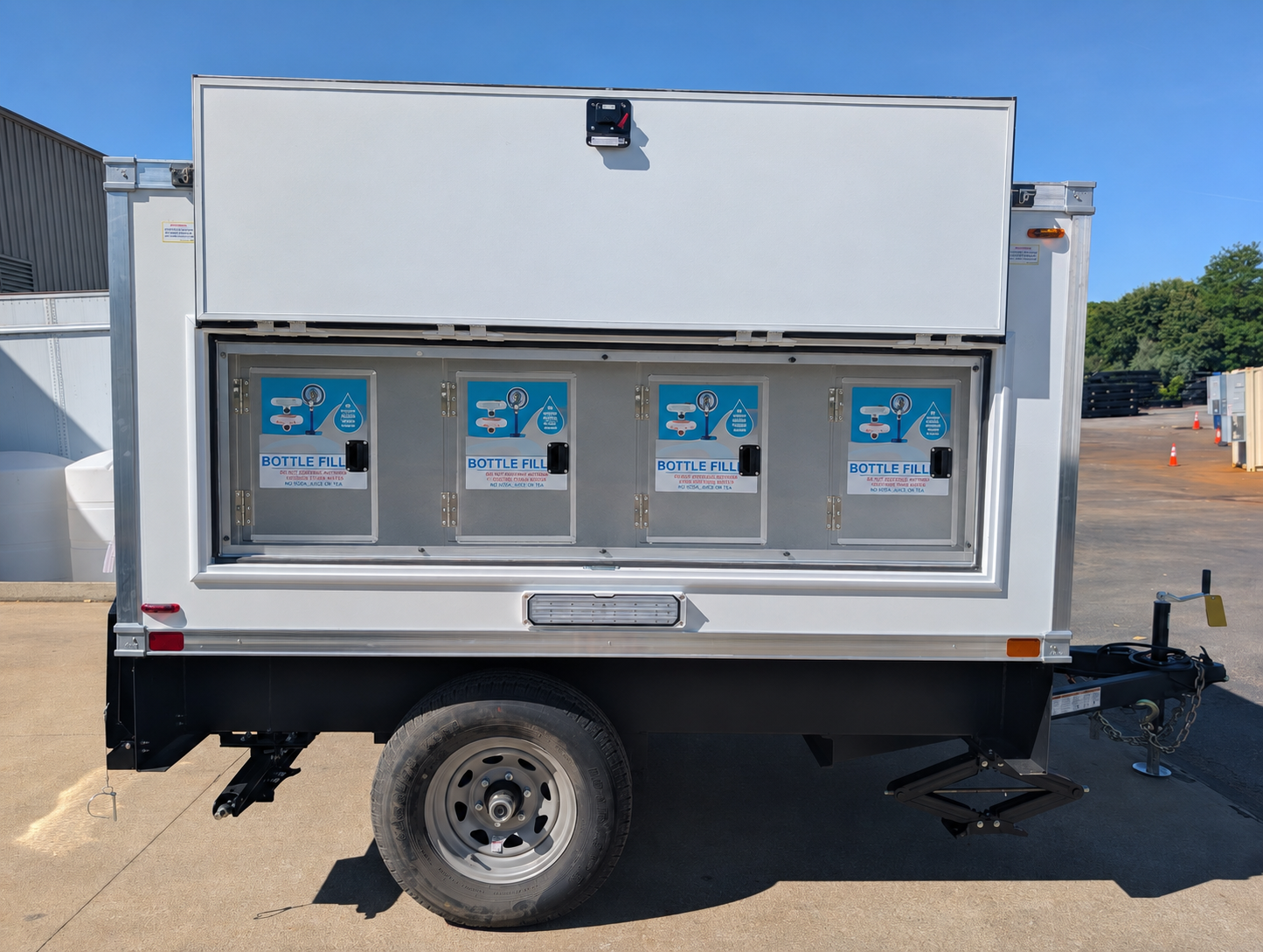
One Signature Series trailer covers a Salem fairground lawn, a downtown Bend race course and a wheat harvest outside Pendleton without changing anything but the refill schedule. It carries 300 gallons, pours from four bottle filling stations, and runs on 1 to 4 dedicated 20A/120V circuits or one dedicated 50A/240V circuit, with generator power on the sites that have neither.
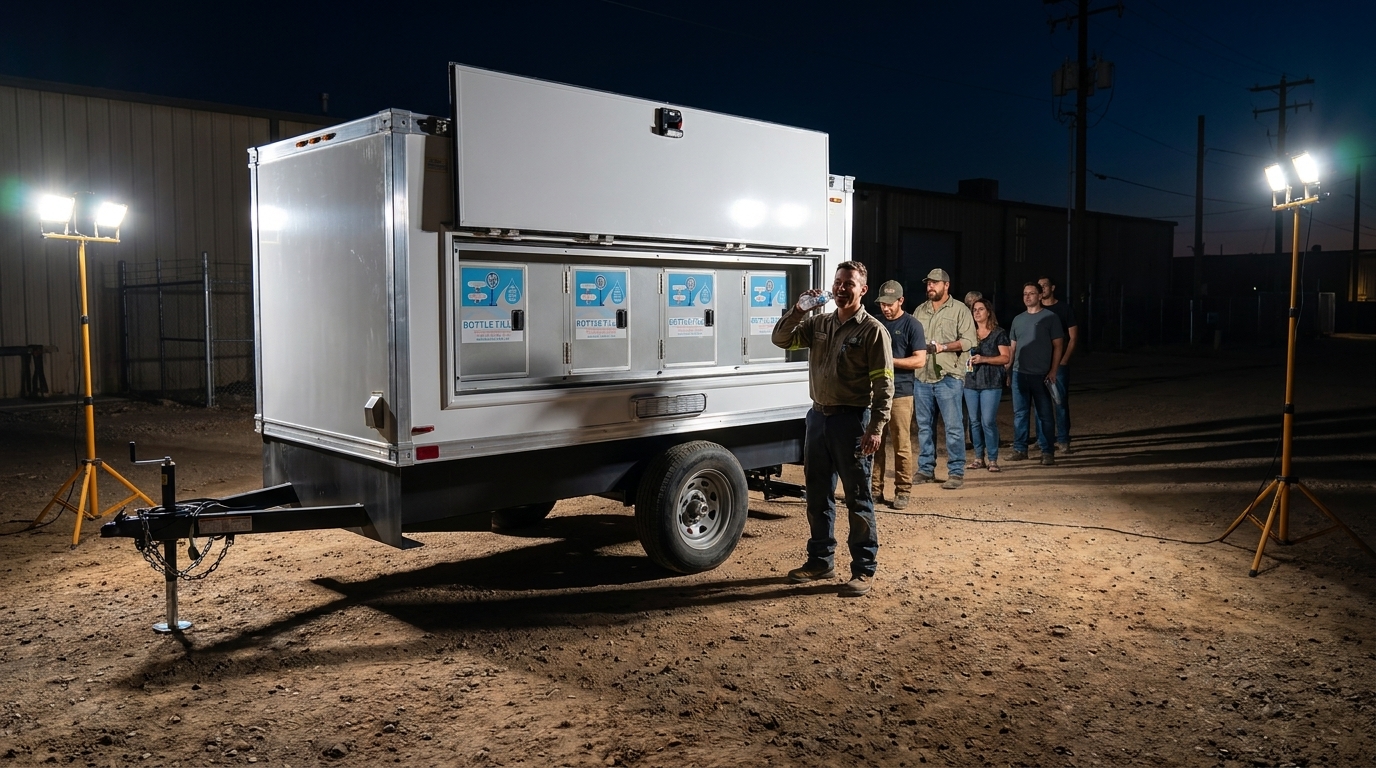
With a frame, a hitch, and tires under it, the unit hauls out to a remote build in Oregon, an event field, a working orchard, or a disaster staging yard with equal ease. Oregon contractors and event planners request this exact rig by name. The whole design is built around backing in, leveling off, and pouring cold by the same afternoon.
| No. of stations | (4) Bottle Filling Stations |
| Length | 12' 3" |
| Weight | 3,100 lbs. |
| Height | 8' |
| Fresh water tank | 300 Gallons |
| Power requirements | 1 to 4 dedicated 20A/120V circuits OR 1 dedicated 50A/240V circuit |
| No. of AC units | 1 |
Oregon has a reputation for mild and rainy that its own weather record stopped supporting years ago. Summer afternoons east of the Cascades run hot and dry, valley harvest weeks land in the worst of the heat, and smoke season now arrives as reliably as the heat that comes before it.
Oregon's heat rule starts at an 80 degree heat index, statewide, indoors or out
The work that keeps our stations moving across Oregon right now: data center construction in the high desert; wine, hazelnut and row crop agriculture; wildfire response and emergency staging. Crews also called us during the June 2021 heat dome and the record scale 2026 wildfire season.
Morrow and Umatilla counties are carrying one of the largest construction programs in state history. Amazon holds roughly 1,300 acres near Boardman for a campus that could eventually run sixteen to twenty buildings of about 250,000 square feet each, with the first four already under construction as of March 2026 and the next phase set to start in the third quarter of the year. Meta's Prineville campus is the company's largest data center site in the country at nearly 4.6 million square feet, and past expansion phases put around 1,000 construction workers on the ground at peak.
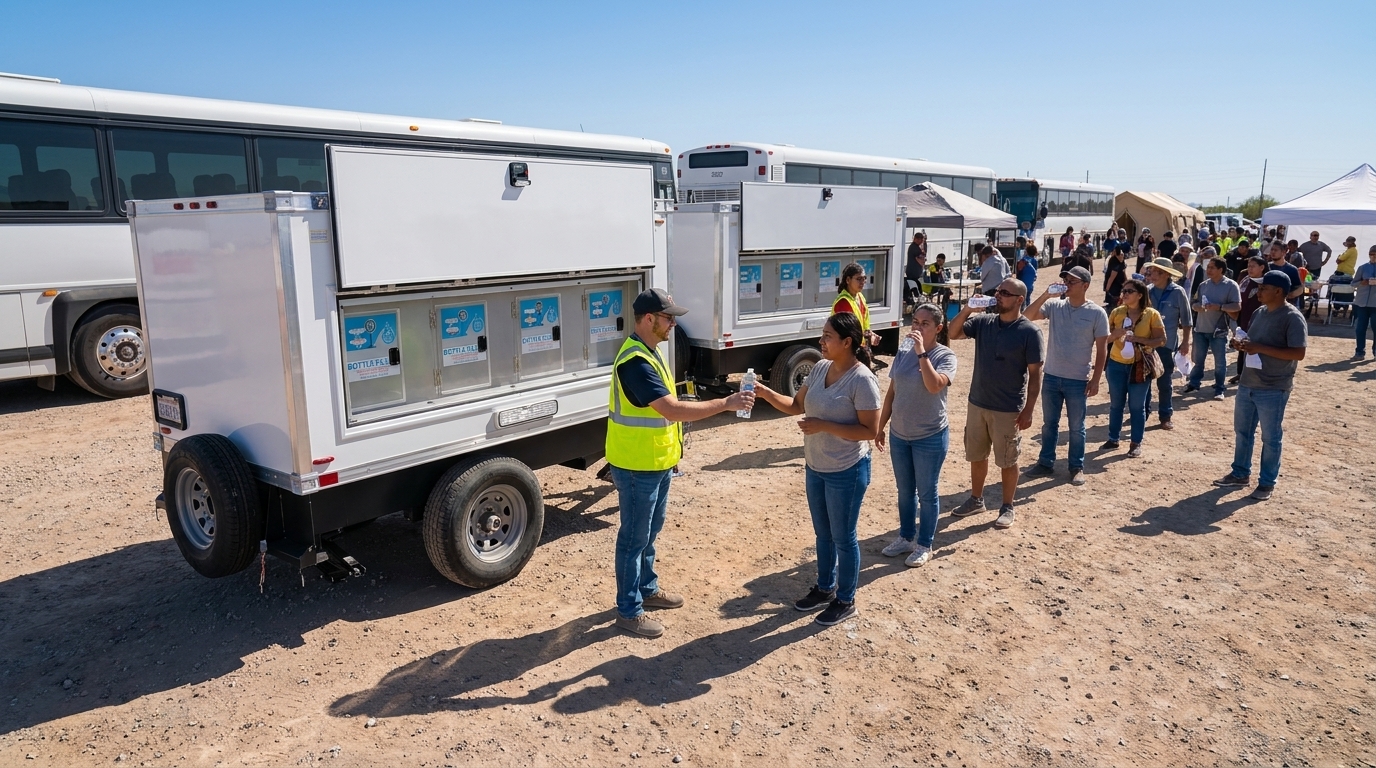
Those campuses sit in small counties whose local services were never built for a workforce that size. A crew arriving before sunrise on a graded pad has no fixed plumbing, no break room, and often no store within a sensible drive. We park the trailer at the work face, fill it, and put it on a service route, so nobody on your job is counting pallets or hauling coolers across a mile of fill. When the pad has no power yet, the unit runs on a generator we size and bring.
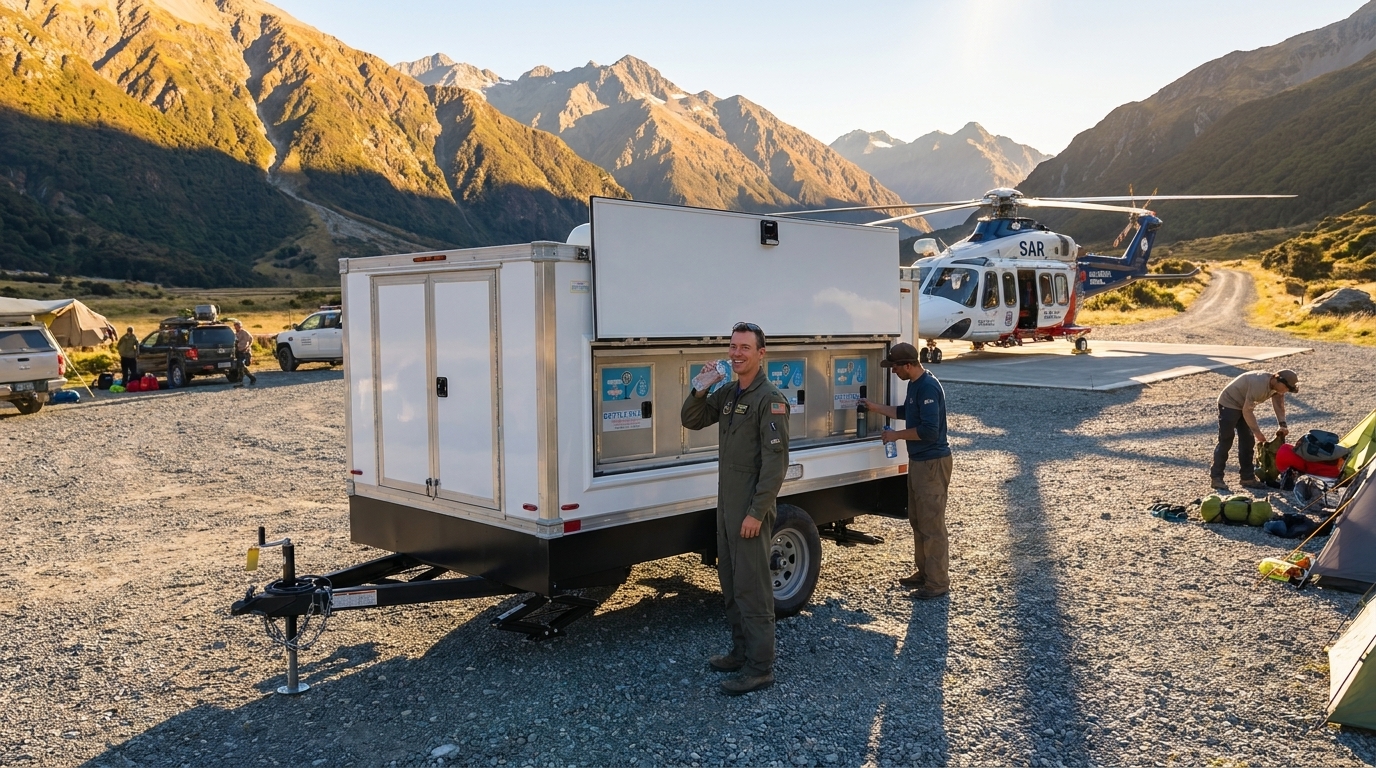
The valley south of Portland grows about 99 percent of the hazelnuts produced in the United States, across roughly 45,000 acres in production, more than 800 multi generational family farms, and over 3,000 new acres planted every year. A specialty crop harvest is measured in days, not weeks, which pushes labor, equipment and heat exposure into a few tight stretches every fall. The Willamette Valley wine region is also the center of an Oregon wine industry supporting close to 39,437 jobs statewide, with tasting room events running right through the same warm months.
This is also where Oregon's heat rule came from. A farm crew member collapsed and died while laying irrigation pipe alone in triple digit heat at a valley plant nursery, the state adopted emergency heat protections within days, and permanent rules followed in 2022. The enforcement pressure on that rule runs through farm ground as much as through any city. A chilled station parked at the end of a row, on a service schedule that matches headcount, is the practical way to keep 32 ounces an hour of properly cold water in reach of a crew working a harvest window.
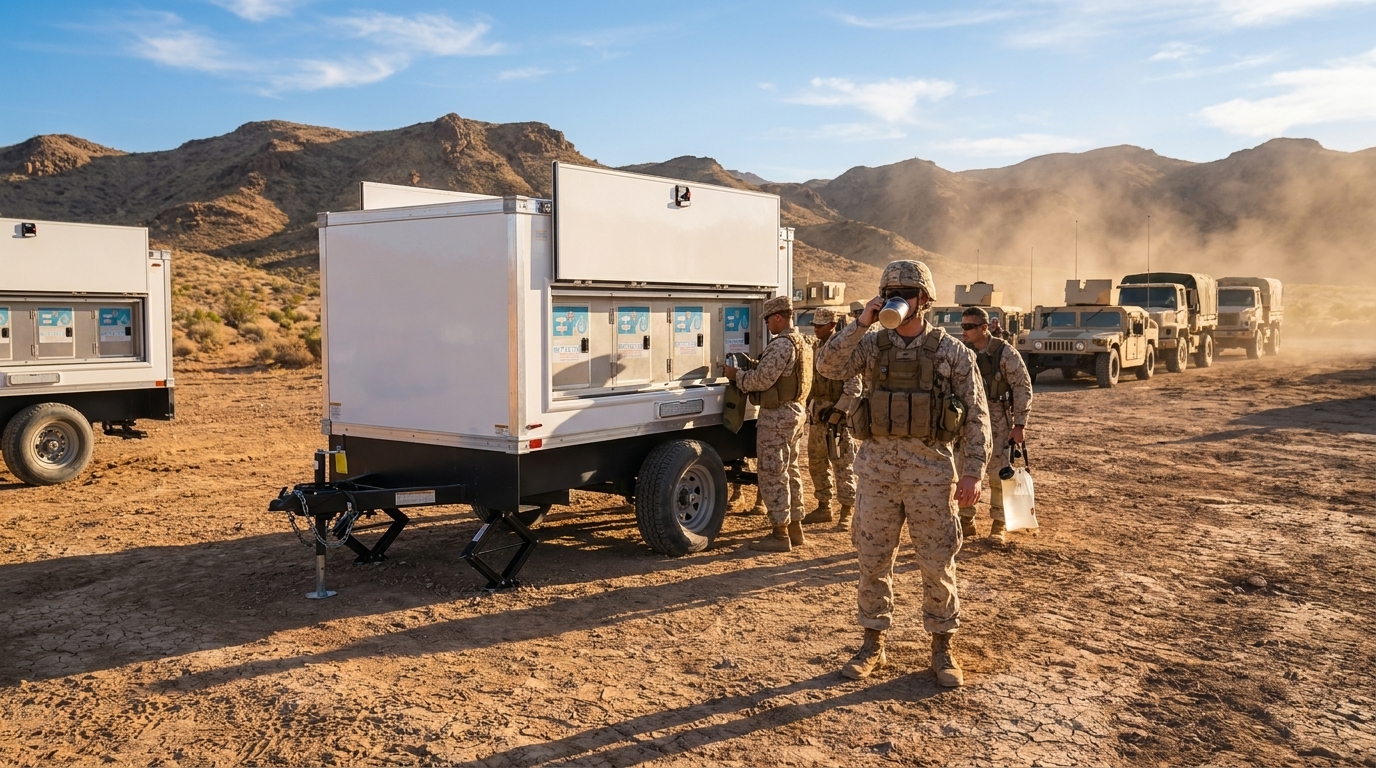
The Oregon State Fair runs August 28 to September 7, 2026 at the Oregon State Fairgrounds and Expo Center in Salem, eleven straight days on an outdoor site, after a 2025 edition whose attendance jumped more than 37 percent over the prior year. The Pendleton Round-Up lands September 16 to 19, 2026 and pulls roughly 50,000 people into a city of about 17,000 residents for a week of high desert September afternoons. Down south, the Oregon Shakespeare Festival runs March 13 through October 25 in downtown Ashland, which means the town works like a festival site for three full seasons rather than one weekend.
Central Oregon's calendar is built on outdoor endurance sport with almost no fixed water anywhere on the course. Pole Pedal Paddle runs May 16, 2026 from Mt. Bachelor down into Bend across five legs, and the Cascade Cycling Classic bike race takes over downtown Bend pavement on June 21. Eugene hosts the NCAA Division I Outdoor Track and Field Championships June 10 to 13, 2026 at Hayward Field, with warm up areas, media compounds and vendor rows that outgrow stadium concessions. On the coast, the Newport Seafood and Wine Festival in February and the Astoria Regatta in August pack harbor blocks that were never piped for festival crowds.
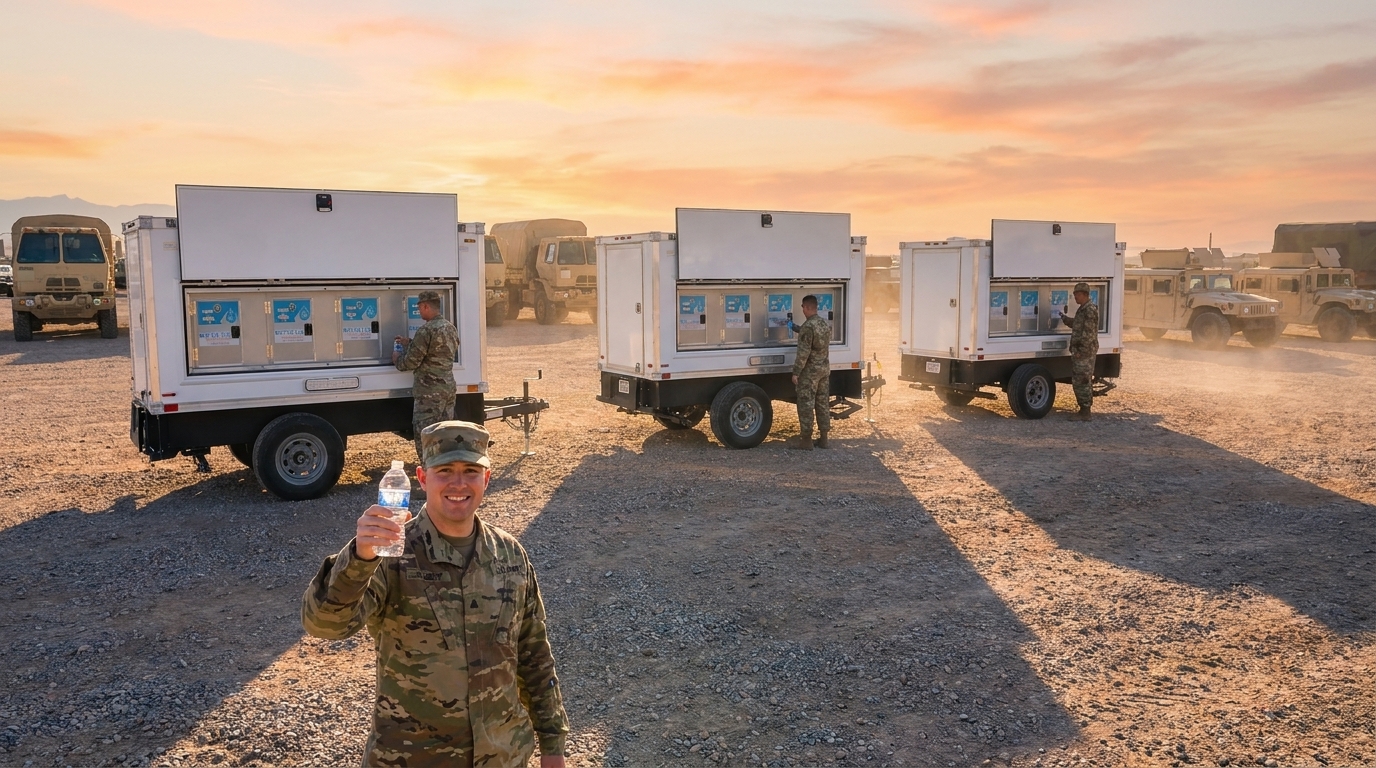
The 2026 fire season put 2,014,481 acres and 60 large fires on the board by August 3, closing on the all time state record of 2,081,661 acres set in 2024 with months of season left. A week earlier the state was already past all of 2025's total, with more than 12,000 people working fires, at least 30 large fires not yet contained, and at least 24,000 residents under evacuation orders. Named complexes ran from Harney and Malheur counties in the southeast to Umatilla and Union counties in the northeast, so base camp demand was never concentrated near any one city.
A camp is a town built from nothing in about a day. The Akawa Butte Fire camp at the Sisters Rodeo Grounds held about 1,200 workers this season, fed by a 25 person kitchen crew, with crews rotating in from Oregon, California, Florida and Australia on roughly two week assignments. Cold weather emergencies pull the same way. During the January 2024 ice storm, one utility alone had about 1,623 people working restoration by the second Tuesday, staged at yards and fairgrounds with no buildings, while a boil water notice near Eugene and Springfield reached 45,000 households. We stage filled, cleaned units through fire season so a call turns into a truck leaving rather than a fill cycle starting.
Six bottles per person on a 100-degree day in Oregon, a 38-person crew, and you're already at roughly 228 plastic bottles to buy, cart in, ice down, and throw away. That's one day. The season is where it gets ugly.
Multiply across a 175-day build and the tally clears 39,000 bottles, with the larger commercial jobs running far past that. A single trailer makes the entire pile disappear, leaving cold water at the tap and nothing for the dumpster.
Sustainability is the easy part of the pitch. Roughly 60 million plastic bottles get thrown out daily in this country, only about a third are ever recycled, and one bottle can sit in a landfill for centuries. Worth reporting, sure. But the Oregon project managers who actually switch usually do it to kill the daily hassle, not to pad a sustainability slide. A shared trailer means no recurring bottle order, no cooler going warm before first break, no wall of empty jugs baking by the job-trailer. The super runs the build, not the water program.
Because our own potable tankers cover the refills, the supply scales with the job rather than fighting it. Double the crew for a big pour and they still can't drink faster than the plan. And the tankers just swing back and bring the level up.
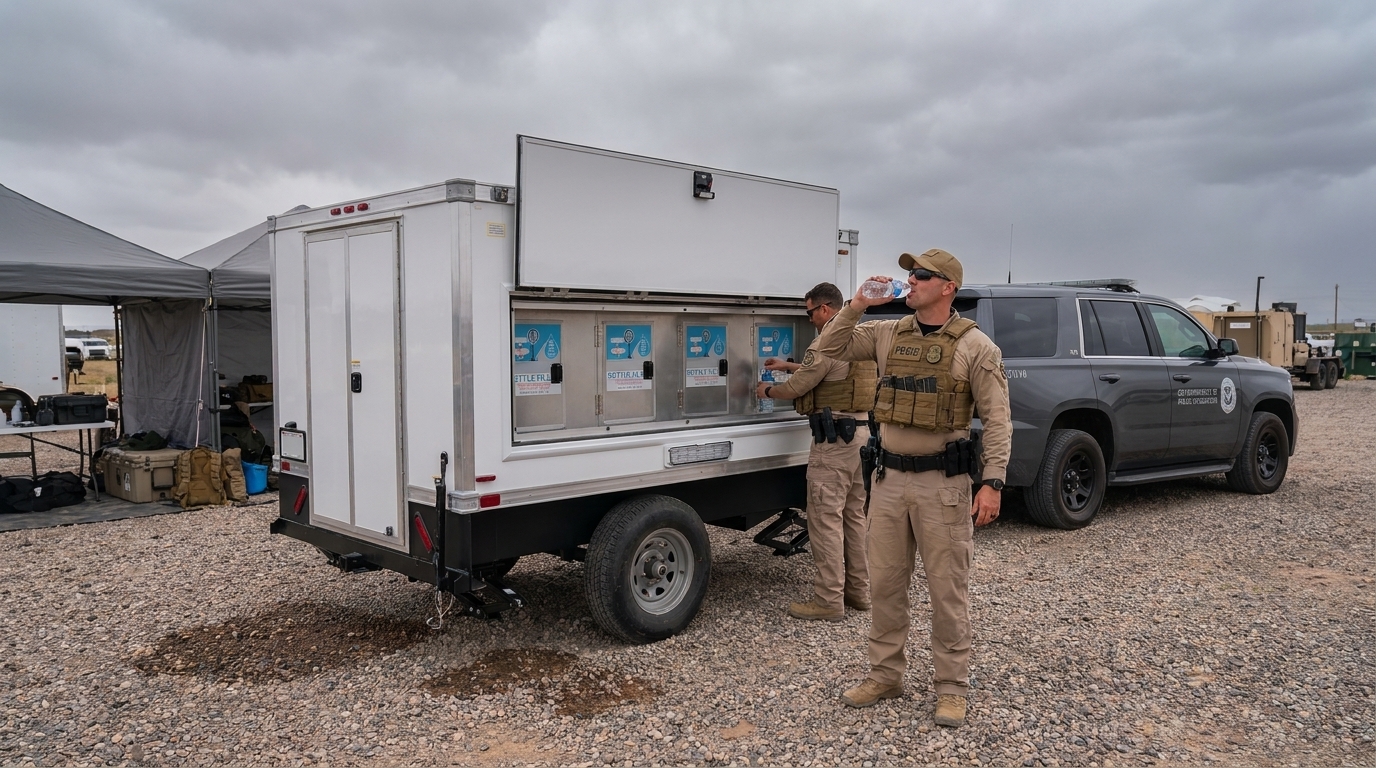
Water tastes different in every corner of this state, from Bull Run supplied taps in the Portland metro to valley systems fed by melting snow along I-5 to hard well water on ranch ground east of the Cascades. Every trailer pulls whatever it is handed through three filter stages and a UV chamber, then chills it before it reaches the tap, so a crew in Ontario gets the same cold, clean glass a crew in Salem does.
The opening filter traps sand, scale, and the fine grit local mains occasionally push through. On a dusty Oregon lot, that's what keeps a pour from tasting like the parcel it's parked on.
Activated carbon comes next, lifting the chlorine bite and the dull seasonal notes local tap can carry until the taste lands clean and neutral. When it's 100 out, that flavor decides whether a crew keeps drinking or walks past the tap dry.
A finer cartridge then catches the microscopic particles that slip past the first two, so what reaches the spout is clear rather than merely cold for the crews and crowds across Oregon.
The last step is an ultraviolet chamber that wipes out bacteria and microbes without adding a single chemical. Even after a long tow to the far edge of Oregon, the water off the nozzle is clean.
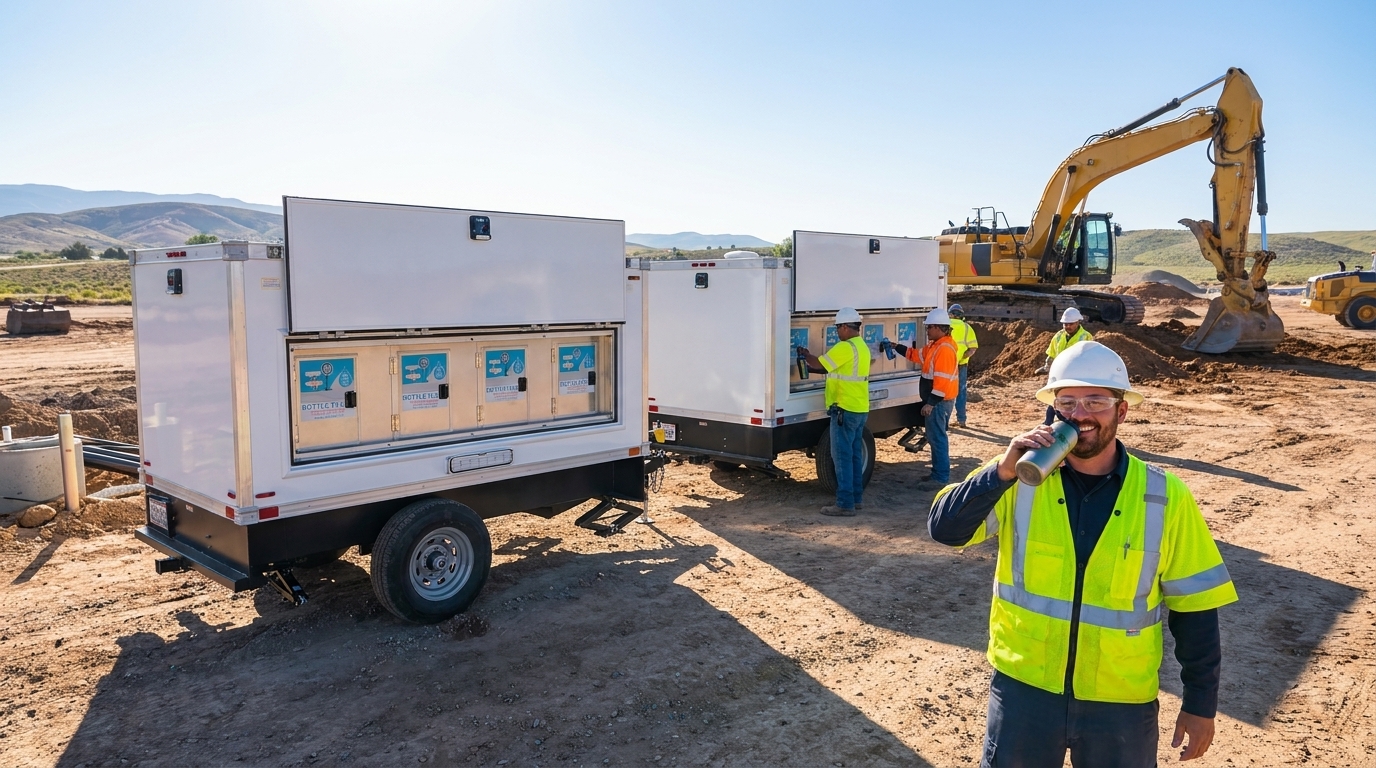
Along the wall sit four adjustable push-back taps, press a bottle to the bar and it pours. One of them is set at ADA-reachable height, so a single trailer includes everybody at an Oregon crew or crowd with no add-on gear. Out back, a large-jug spout services five-gallon coolers and hydration packs, while a bank of hose connection taps handles work-site chores, event support, and refills down the orchard rows. Stainless, food-grade plumbing the whole way through keeps the filtered, chilled water at quality right to the spout.
Every Signature trailer carries a 300-gallon load, roughly 2,400 cups at sixteen ounces each, and we recharge it on demand, so the unit doesn't turn into the choke point on a busy Oregon shift or a packed show night.
Oregon OSHA runs its own state plan and its own heat rule.
OAR 437-002-0156 has been permanent since June 15, 2022, with OAR 437-004-1120 covering agricultural employers. It applies the moment the heat index reaches 80 degrees, indoors or outdoors, and it is written in numbers rather than good intentions. Employers have to supply enough drinking water for each worker to take in up to 32 ounces an hour, and that water has to be cool, between 66 and 77 degrees, or cold, between 35 and 65 degrees. Anything warmer stops counting even if the jug is still full. At a 90 degree heat index the rule adds required rest breaks on one of three schedules, shade within reach of the work, and a written plan for easing workers into the heat. Oregon also runs one of the most detailed wildfire smoke rules in the country, OAR 437-002-1081, with tiered duties that start at a PM2.5 reading of 35.5 micrograms per cubic meter.
Federal OSHA heat illness prevention guidance and the CDC/NIOSH heat stress program both point to the same baseline: cool water, close to the work, documented.
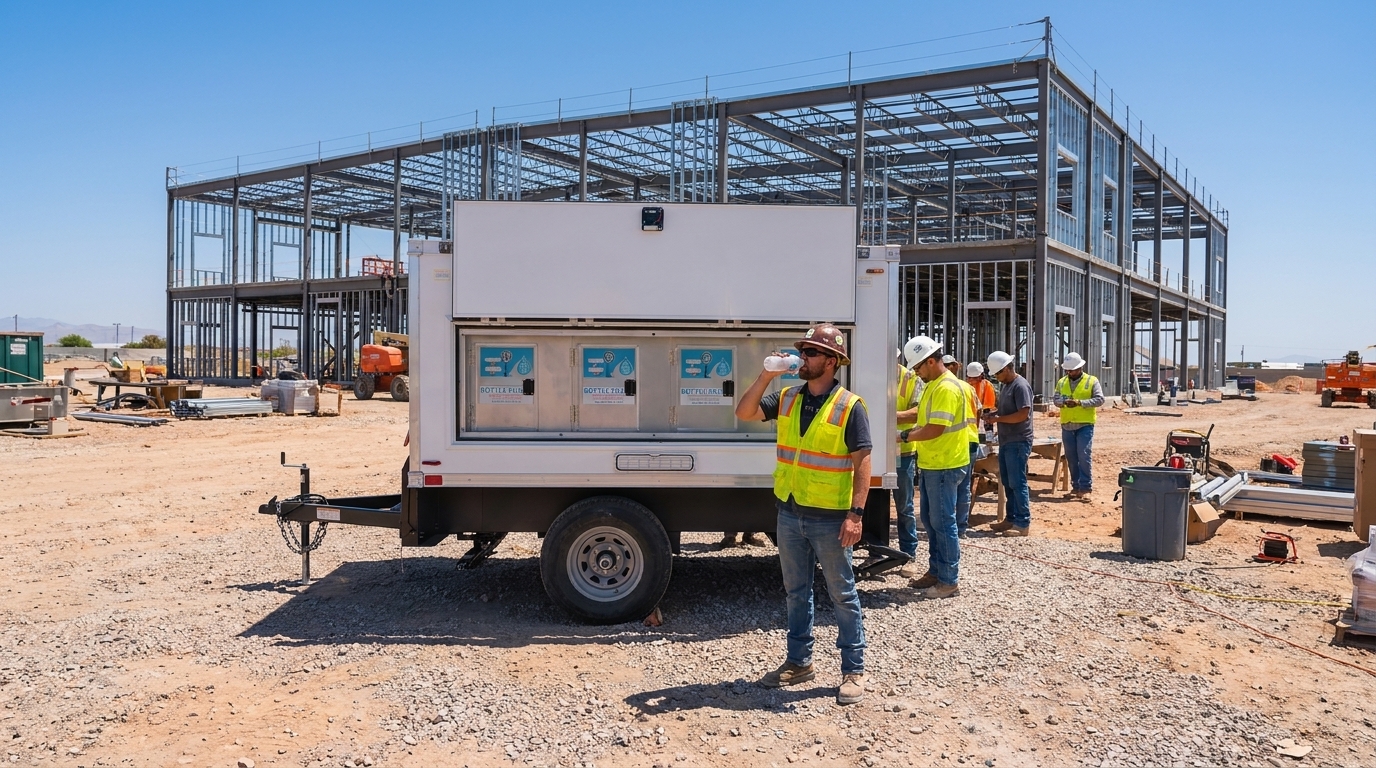
Need a station your written heat plan can point to? We can have one pouring cold within days.
The mild and rainy reputation stopped matching the record some time ago. June 26 to 28, 2021 brought 108 degrees, then 112, then 116 at Portland International Airport, an all time high, and Multnomah County alone recorded 72 heat related deaths that year, 69 of them from those three days. The heat dome covered the whole state, not one metro, and it is the reason Oregon wrote a numeric heat rule instead of leaning on a general duty clause.
The trend under that single event matters more for planning. Portland now averages about 12 more days a year above 90 degrees than it did in 1940, every year from 2021 through 2024 logged at least 24 days above 90, and projections put the average near 23 days a year over 90.9 degrees by 2050. East of the Cascades runs hotter and drier than that, and the valley harvest calendar sits inside the worst of it. With a rule that triggers at an 80 degree heat index, a summer job in Oregon is a compliance obligation for weeks at a stretch rather than a handful of bad afternoons.
Then the smoke arrives. The September 2020 Labor Day fires pushed Portland to an all time record air quality index of 477, and in the 2026 season smoke from the Rowe Creek Complex and the Grasshopper Fire near Mount Hood pushed the city to 160, briefly the worst air quality of any major city in the world, with advisories covering 27 of Oregon's 36 counties. Crews keep working through those weeks on a reduced schedule, respirators on at the higher tiers, and the water requirement does not pause while the air clears.
Where the work is happening has shifted too. Deschutes County has added more residents than any other Oregon county so far this decade, Crook County posted the state's fastest five year growth rate at 11.4 percent, and Multnomah County has declined about 4.5 percent since the 2020 census. New construction, new event infrastructure and new water expectations are forming fastest in Central Oregon and, behind it, the Rogue Valley, which is exactly where a hub page has to reach because the demand is no longer clustered in one metro.
The industrial layer on top of that is new. Oregon tracked 83 data center sites statewide at last count, 61 of them operational and 6 under construction across 33 cities, with the two hyperscale campuses in Prineville and out along the Columbia River corridor near Boardman and Hermiston. The Treasure Valley around Ontario grows roughly a third of the nation's storage onions. Wheat and cattle country runs through Pendleton and La Grande, and coastal tourism drew close to 2.5 billion dollars in visitor spending in 2023, about 20 percent above pre pandemic levels, into small downtowns with limited public infrastructure.
And the emergency history is right there beside all of it. The Almeda Fire swept the Rogue Valley on September 8, 2020, destroying more than 2,600 homes across Ashland, Talent, Phoenix and Medford in a matter of hours, and it is still the most destructive wildfire in Oregon's record by structures lost. The 2018 Klondike Fire burned 175,258 acres over nearly four months in Josephine County and pushed right up against Grants Pass. Two catastrophic named events in one valley inside a decade is a pattern, and it sits next to a theater season and an orchard harvest that both depend on the same air and the same water.
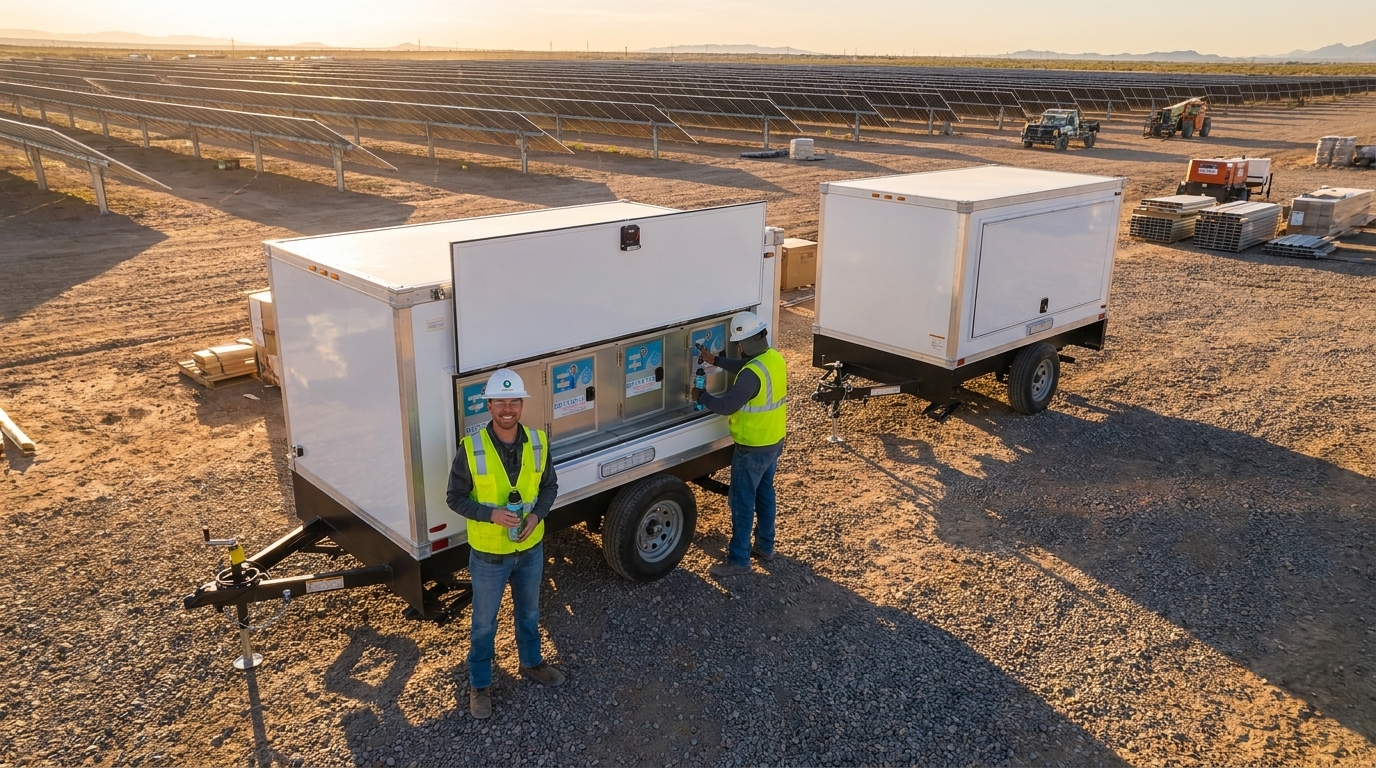
You don't have to run anything on your end. We handle placement, the fresh-water fill, and the power hookup, then walk your team through the unit before we leave the site.
People count, number of days, where exactly it parks on your Oregon site, and what power is there. Those four answers let us spec it correctly the first time around.
Reckon roughly 45 minutes from our nearest yard across the Oregon metros, longer on the outer routes, with round-the-clock emergency runs whenever a heat advisory or a power shutoff hits the area.
Once on site we set it level, charge the 300-gallon tank, and tie in power off one to four standard 120V circuits, or a single 50-amp 240V drop, depending on what the site gives us.
After that the tankers cycle back on a cadence matched to how fast your crew or crowd pulls it down, and we maintain the unit through the whole rental term.
Everyone sees the trailer. What they don't see is the support fleet behind it, the trucks that deliver fresh water, hold reserve on site, and carry wastewater off, so a single call wraps the entire loop rather than stringing together three vendors.
Our tankers run drinking-grade water in bulk, recharging the 300-gallon tank on whatever interval the headcount demands. Those same trucks also top up storage tanks, holding tanks, and bladder bags whenever a single drop can't keep pace, like a big slab pour or a downtown night that packs the square.
When demand spikes we set out fold-flat bladders to bank extra fresh reserve, and on a drain-less lot they'll temporarily hold greywater too. It isn't fancy equipment, but it's what keeps a far-flung job in Oregon pouring between tanker runs.
Water that has to move across a job is a pump truck's job, whether that's charging holding tanks or hauling supply end to end. It earns its keep on the sprawling parcels where the trailer and the fill point can end up a fair hike apart.
At the tail end, a vacuum truck draws off greywater and wastewater and carries it to permitted disposal, closing the loop clean. Nobody on your Oregon crew is left guessing where the used water ended up. That piece was built into the plan from day one.
Every job gets its own setup. A remote parcel might run a station plus a bladder bag for reserve and a recurring water-truck schedule. A heavy event night might call for a pump truck to move supply and a teardown waste run at the end. Describe the shape of your job and we'll put together the right combination, on one invoice, handled by one crew that already knows the ground.
A couple of minutes on the phone is enough for a real quote. Here's what we'll ask, so you can have it ready, and so you can see us tailor your Oregon job instead of giving one stock answer.
We deliver cold water across Oregon, with local crews who know the ground. Pick your metro below, or call and we'll route a trailer to wherever in Oregon the job is.
We run dedicated coverage for Portland water station and hydration rentals across Oregon, with local crews who know the ground on every one of those routes.
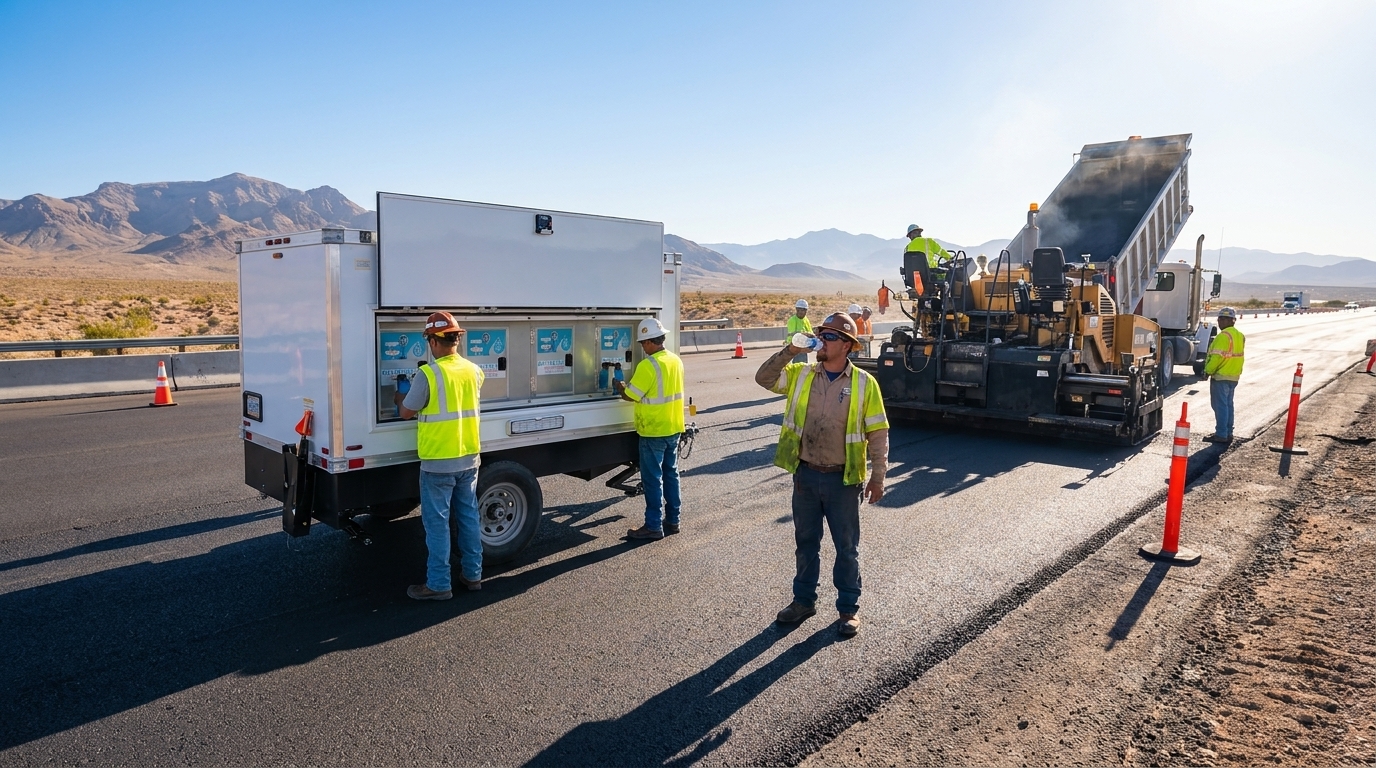
We also route stations to these Oregon markets, even where we don't yet keep a dedicated city page:
Still weighing it? Call and ask. Most of these questions get settled in one short conversation. See also: water station rentals in Portland, Signature Series water station specs and request a free quote for an Oregon water station rental.
Most placements in the Portland metro and along the I-5 corridor go out same day or next day, and we treat emergency calls as same day. Farther out, the drive is the honest variable. Pendleton and La Grande sit four to five hours east of Portland on I-84 and Ontario is another two hours past that, so an eastern Oregon placement gets scheduled around the haul rather than promised blind. Once the truck is on site the trailer levels, fills and pours cold water inside about an hour. Tell us the dates when you call and we will hold a unit, and if it is fire season we usually have filled units already hitched and staged.
Everywhere in the state. The road network makes that four corridors: I-5 down the valley from Portland through Salem, Eugene, Grants Pass and Medford, I-84 east through the Gorge to Pendleton, La Grande and Ontario, US 97 north and south through Bend and Redmond on the dry side of the Cascades, and US 20 running west to east from Newport on the coast through the valley and Bend out to the Idaho line. Coastal placements come either up US 101 or over a Coast Range pass, which is slower for a loaded trailer, so we build that into the schedule instead of discovering it on the day. Remote ranch ground, trailheads and fire camps get a generator with the unit.
Both, and the cold is the part that matters for Oregon's rule. City or well water enters the trailer, passes three filter stages and a UV chamber, and then an onboard cooling unit drops the temperature before it reaches the four filling stations. Oregon OSHA's heat rule does not just ask for water on site, it asks for water that is cool, between 66 and 77 degrees, or cold, between 35 and 65 degrees. A five gallon jug filled at seven in the morning stops satisfying that the moment it warms past 77, even with water still in it. A chilled station holds the range through the afternoon, which is when the rule actually bites.
Each Signature Series trailer carries 300 gallons of fresh water and pours from four bottle filling stations. What that covers depends entirely on headcount, shift length and the season, because a rule that allows for 32 ounces per worker per hour means a twelve person crew on an 85 degree day can draw about three gallons an hour, and a fifty person crew on a fair midway draws far more. We set a service cadence when you book, and a tech comes out on that schedule to top the fresh tank, check the cooling unit and the filters, wipe the fill points and leave a dated ticket. You do not call us for routine fills, though you should call any time the crew grows or a heat wave lands so we can tighten the interval.
Oregon runs its own OSHA approved state plan, so the rule you answer to here is written in Salem, not in Washington D.C. OAR 437-002-0156 has been permanent since June 15, 2022, it applies at an 80 degree heat index indoors or out, and it requires enough drinking water for each worker to take in up to 32 ounces an hour at a cool or cold temperature. A chilled station sized to your headcount is a practical way to hold the water quantity and the water temperature part of that rule hour after hour on a long job, which is the part that is hardest to sustain by hand. It does not cover the rest of the rule. Shade close to the work, the required rest schedule at a 90 degree heat index, and a written acclimatization plan are all separate obligations you still have to meet.
Yes. The unit includes an accessible fill point reachable from a seated position, with the approach kept clear when we set the trailer. Placement does most of the work here, so tell us if the station is going on a public event site, a school or campus job, a shelter, or any site with a public facing accessibility requirement, and we will pick a spot with a firm level approach rather than dropping it wherever the truck fits. On festival sites and fairgrounds we walk the route with the organizer before the unit is unhitched.
Events are a large share of what we run in this state. An eleven day fair in Salem, a rodeo week that fills Pendleton with three times its usual population, a repertory theater season that keeps Ashland busy from March into late October, a mountain to river relay in Bend, and harbor festivals in Newport and Astoria are all the same problem from our side: a crowd that arrives in waves on a site with no plumbing built for it. We size the number of units to the peak crowd rather than the average, place them where the walk is short from the busiest point, and schedule refills around the gate times instead of guessing. Multi unit placements are normal for anything on a fairground or a closed downtown course.
Four answers get you a real quote in a couple of minutes. Headcount or expected crowd, how long the unit needs to stay, where in Oregon it is going and what the approach looks like, and whether there is power on site. On power, what we need is 1 to 4 dedicated 20A/120V circuits or one dedicated 50A/240V circuit, and if the site has neither we bring a generator and size it for the job. It also helps to know if the spot is on a public street or in a right of way, since that can mean a permit and a lead time, and whether your crew takes regimented breaks, because a hundred people arriving at the water at the same minute is a different problem than a hundred people arriving all afternoon.
That is the work we staff for. Oregon's 2026 season passed two million acres across 60 large fires by early August with more than 12,000 people working fires, and the June 2021 heat dome showed how fast a statewide emergency turns into a shelter and cooling center problem. Through fire season and heat advisory weeks we keep filled, cleaned units hitched and ready so a call turns into a truck leaving rather than a fill cycle starting, and we staff heavier on purpose when the forecast warrants it. We bring our own power, because base camps, staging yards and evacuation shelter parking lots rarely have a spare circuit. Call the dispatch line and tell us where the camp or shelter is going in, and we will tell you honestly when we can be there.
Give us the headcount or crowd, the dates, and the spot it'll park. We'll match the job and roll a trailer out anywhere in Oregon.
These Oregon cities joined the route this season. Each page covers local delivery, water hookups on site and the jobsites we serve there.