On-Site Hydration Services is the go-to team for portable water station rentals across Berkeley. Our Signature Series trailer rolls up to UC campus pads, Downtown festival blocks, and West Berkeley yards already filled, filtered, chilled, and ready to pour the same day. Whether you are fencing a Southside tower job or mapping Book Festival stage nodes, we size the setup to the ground you actually have. Call now to lock your dates, or request a free quote and we will confirm station count before the day is out.
See the Signature Series water station specs
We have spent years placing cold filtered drinking water on tight Southside builds, Downtown street fairs, and waterfront public works jobs in Berkeley. Every Signature Series unit arrives set up for day one use, with triple filtration plus UV, flash chilling, and an ADA-height bottle fill already in the wall. We are SAM.gov registered, licensed and insured, and part of an A+ BBB rated network with a 99.9 percent incident-free record. Call us or request a quote and we will map refill cadence to your real shift chart, not a generic weekday guess. Local dispatch means Oakland, Albany, and Emeryville pads can share a weekday route when your GC jumps city lines.
One Signature trailer can pour for a weekend concert and be working a slab pour a couple of days later. Hiring one company for your events and a separate one for your worksites makes no sense. Either way, the planning, the delivery, and the refills are ours.
The onboard cooling unit keeps the tank genuinely cold all the way through a Berkeley afternoon, and that single detail carries the whole thing. Warm water is water people abandon, and midsummer is exactly when a crew or a crowd is drinking the most. Cold water gets finished, and finishing it is what keeps heat illness off the site.
Typical Berkeley deliveries land in about 45 minutes, and we keep emergency runs going around the clock whenever a heat advisory or a power shutoff hits the East Bay. The morning a foreman finds his 40-person crew stuck with one warm cooler, speed is the whole game.
One rule sits under every job we take: water that people walk past might as well not be there. We've stood on a bare Berkeley site and watched shrink-wrapped pallets cook next to the job-trailer while the crew baked thirty yards off. We've watched the opposite too, a chilled station ten steps off the work face run bone-dry twice inside one shift. Everything that matters lives in the distance between those two pictures. Which is why we don't drop a unit and disappear. We match it to your headcount or your gate count, set the refill rhythm to how hard you're really pulling on it, and treat a heat call the way you'd want your own treated, meaning right now, because out here one hot hour can swing the whole day.
Built for East Bay microclimates. Flatland fog mornings and hill afternoon sun show up on the same Tuesday. We season adjust gallons and chiller expectations instead of pretending Berkeley is always jacket weather.
“We needed the station inside the fence where the crew actually breaks. They hit that on day one and kept tanker visits lined up with our night pour week.”
“Split placement near the park stage and the main street block fixed the long walk we had last year. Lines moved. Volunteers stopped radioing about empty coolers.”
“Orientation weekend put families on the plaza for hours. The ADA height tap got used constantly. Setup took less of my morning than the bottle pallet used to.”
Street closures and meter rules define the day. Event load in windows are short, so we confirm curb space in writing before festival week.
Student pedestrian density is constant. Jobsite units stay inside fencing. Event support stays off the main sidewalk desire lines when possible.
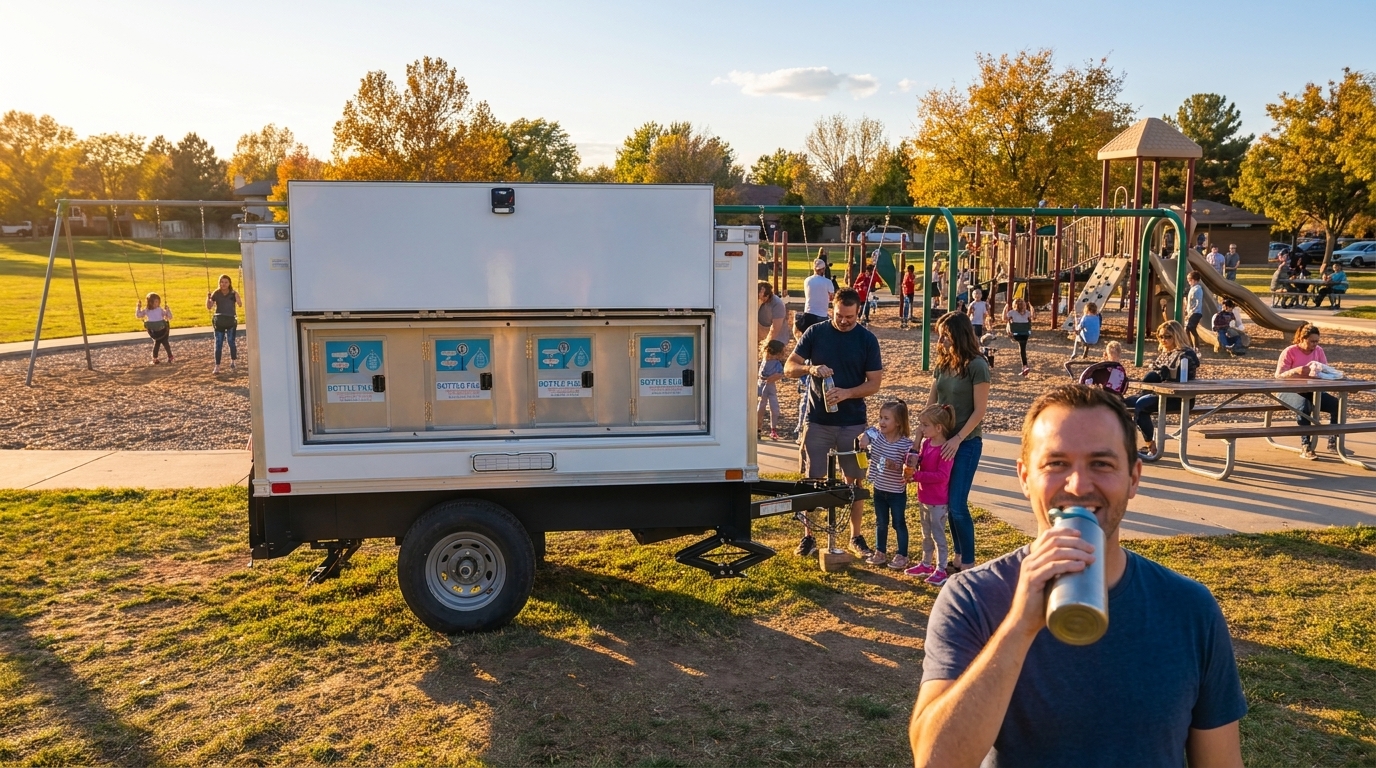
Retail and industrial mix with awkward aprons. We check gate width and overhead lines before promising a morning set.
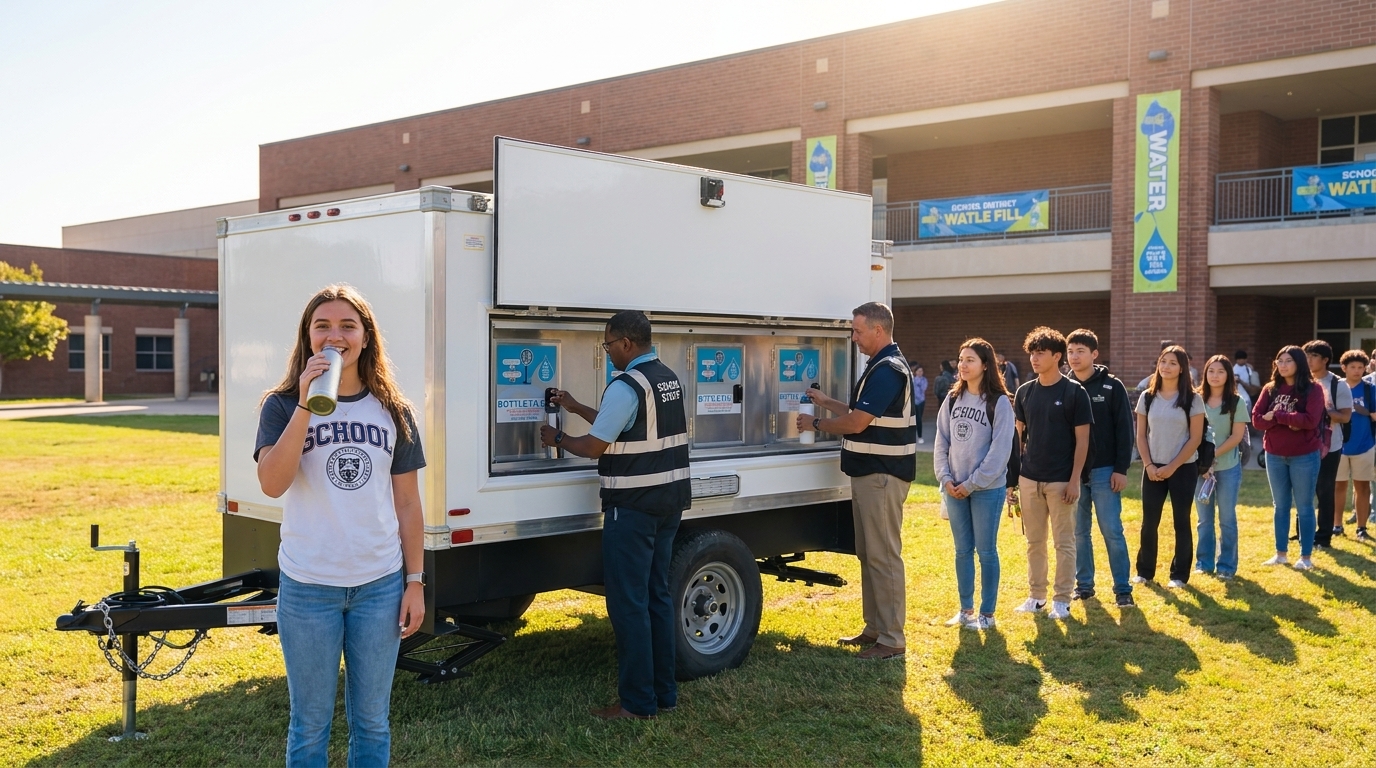
Restaurant corridor events and smaller outdoor activations need compact placement and quick teardown before dinner rush.
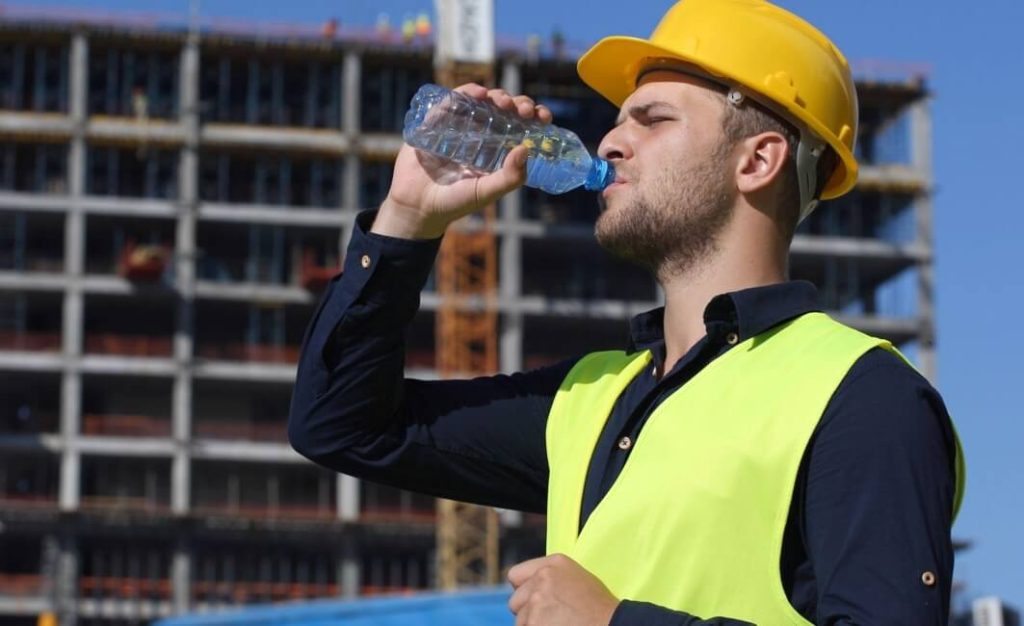
Wind and open exposure rule the site. Stations need firm footing and a plan that does not lean on scarce building taps for volume.
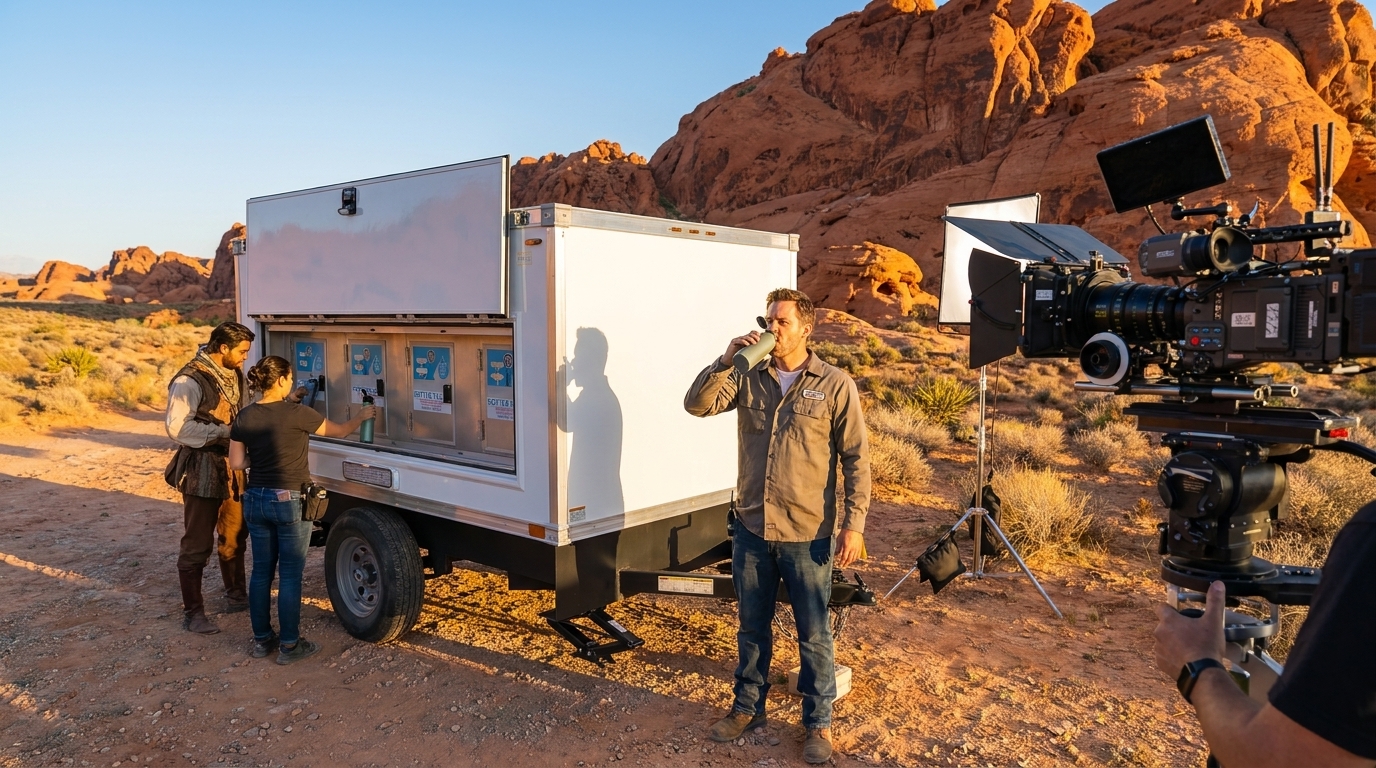
Grades and narrow roads change the tow conversation. Many hill jobs stage below and ferry jugs rather than forcing the trailer up.
Data center construction never really slows down. Pads get graded through the worst of the summer, steel goes up in winter, and commissioning teams keep working after the shell closes in. We support the data center corridors growing across the East Bay with site-ready stations, chilled filtered water at ADA height, and refill runs timed to trade headcounts that change week to week. If your build runs 24/7, so does our service.
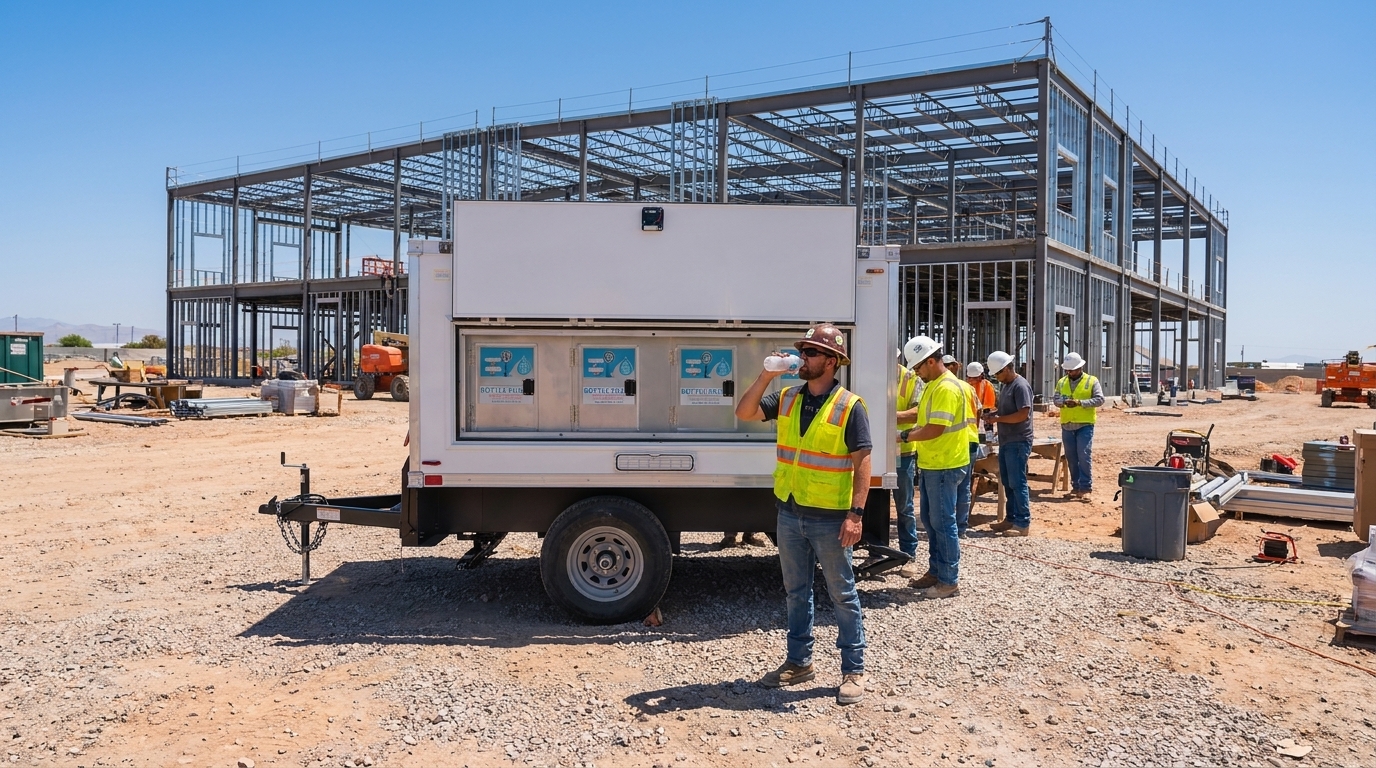
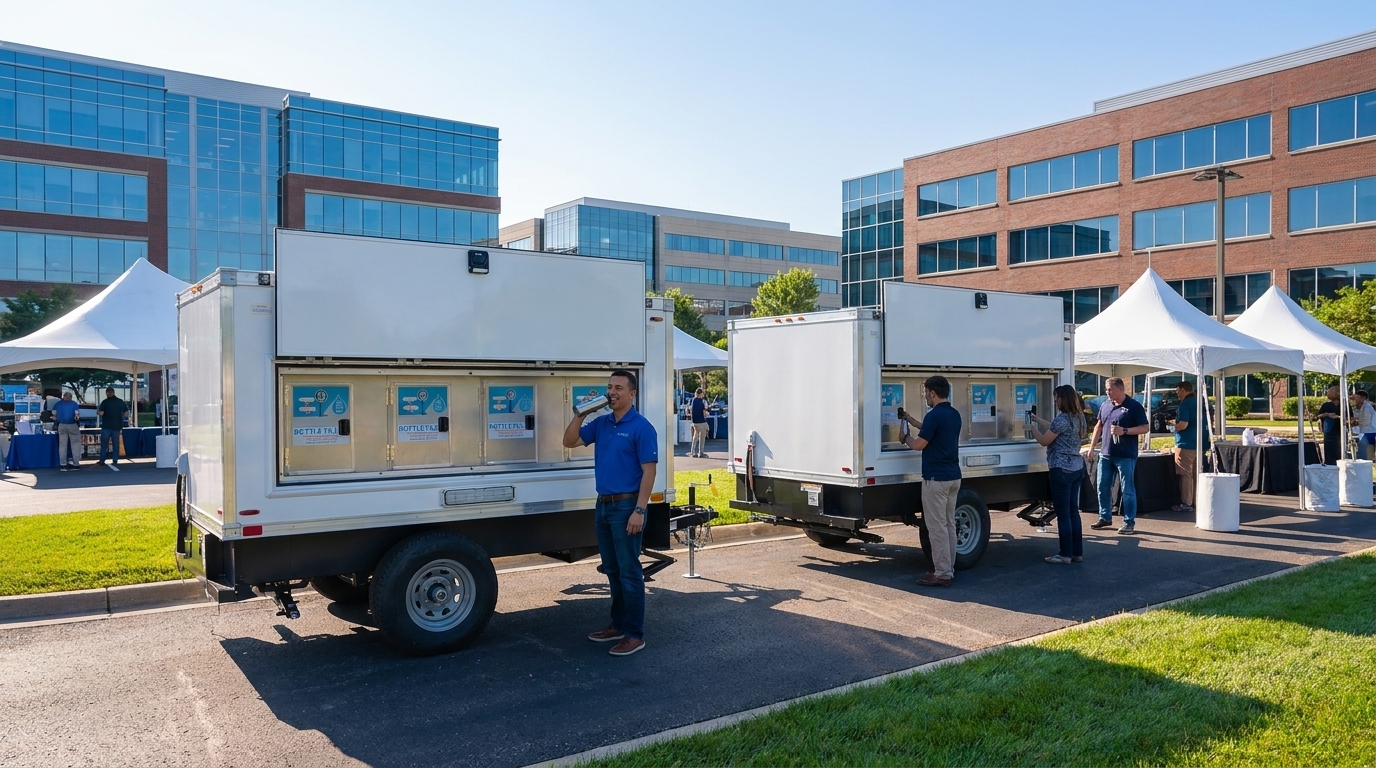
In Berkeley that usually means a unit inside a Bancroft fence line for tower crews, or a pair of stations split between a Shattuck stage block and Civic Center Park for a festival weekend.
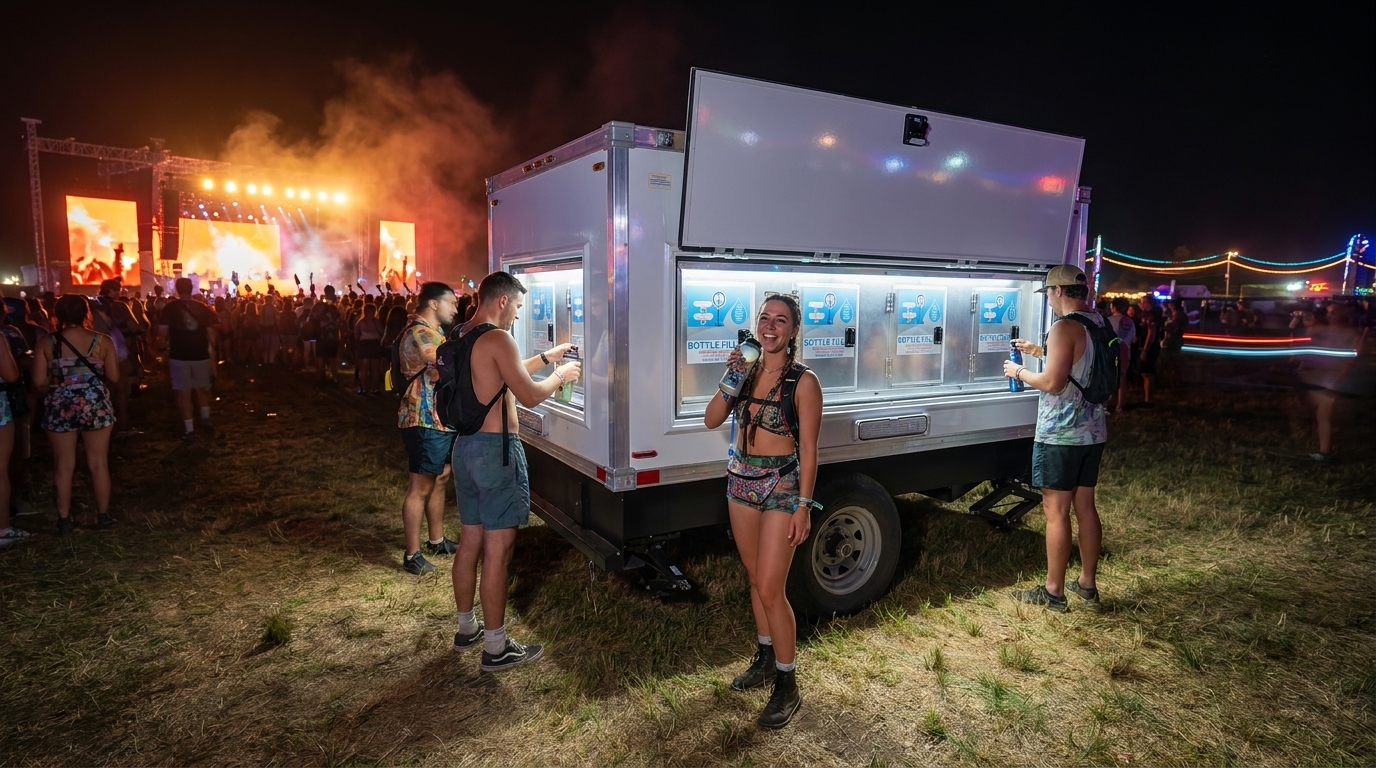
With a frame, a hitch, and tires under it, the unit hauls out to a remote build in the East Bay, an event field, a working orchard, or a disaster staging yard with equal ease. Berkeley contractors and event planners request this exact rig by name. The whole design is built around backing in, leveling off, and pouring cold by the same afternoon.
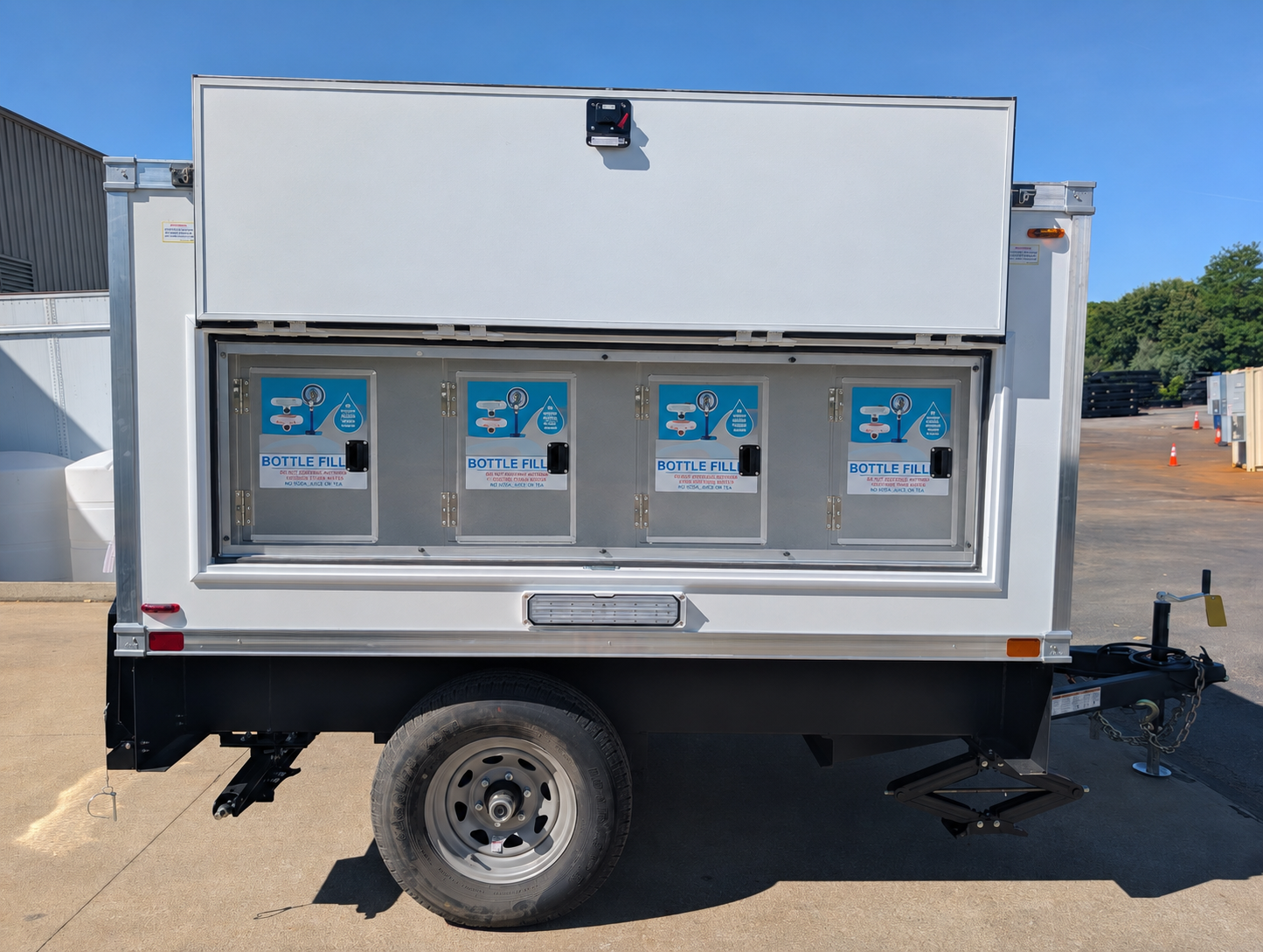
| No. of stations | (4) Bottle Filling Stations |
| Length | 12' 3" |
| Weight | 3,100 lbs. |
| Height | 8' |
| Fresh water tank | 300 Gallons |
| Power requirements | 1 to 4 dedicated 20A/120V circuits OR 1 dedicated 50A/240V circuit |
| No. of AC units | 1 |
Downtown Berkeley turns into a fairground more than once a year. The Bay Area Book Festival alone has drawn 25,000 plus visitors across Shattuck, Allston, and Civic Center Park, with more than 20 outdoor stages and a full Bookworm Block Party. Juneteenth fills five blocks of the Adeline corridor in the Lorin District. The Solano Avenue Stroll stretches about a mile across Berkeley and Albany on the second Sunday in September. None of those grids were built with permanent bottle fill capacity for a surge crowd.
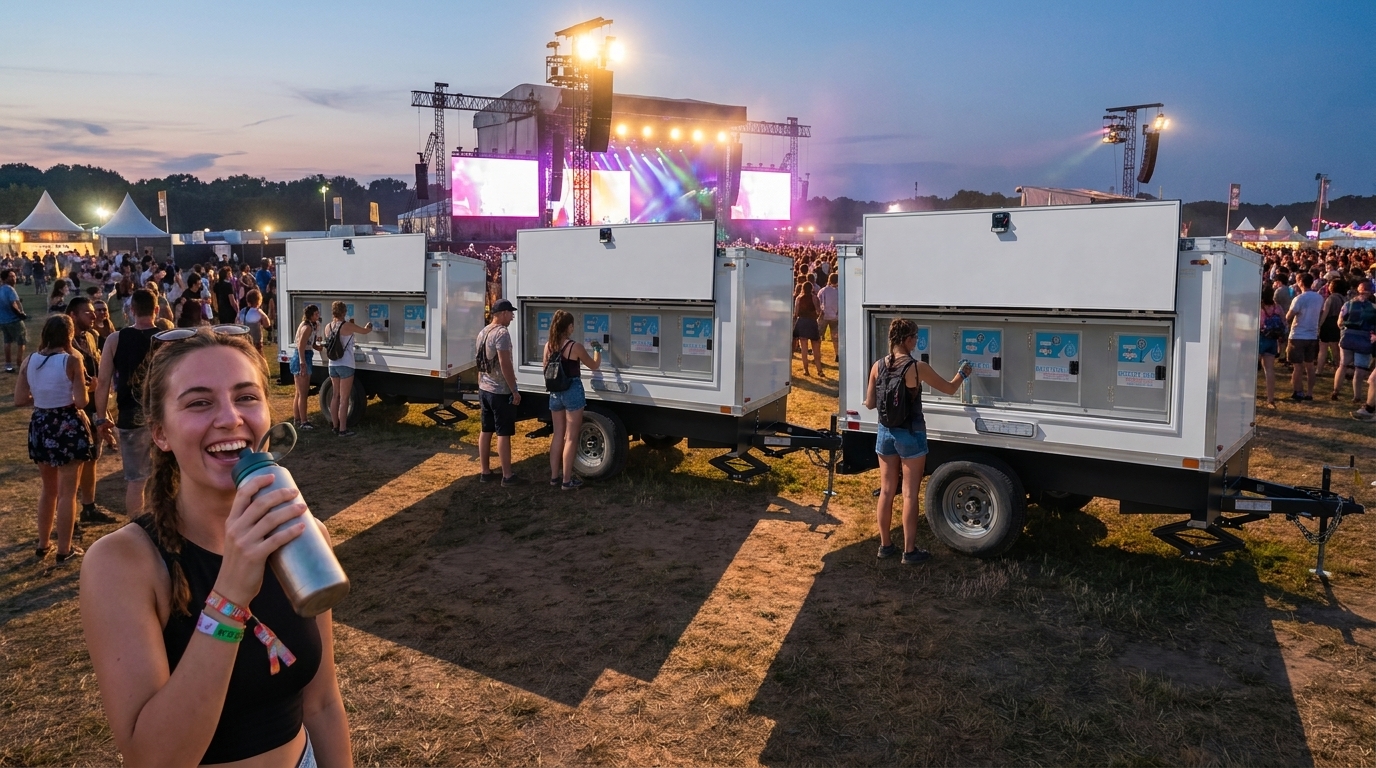
We place filtered water stations on the natural walking lines between stages, vendor rows, and family zones. One trailer at a single gate leaves the far end of Solano dry by mid afternoon. Split nodes keep lines short. ADA-height fills matter when grandparents and strollers share the same block as students.
Greek Theatre show nights add a hillside twist. Guests climb from remote parking and campus paths before doors. Staff and security work long outdoor shifts. A chilled station on the approach plaza beats a warm case of bottles under a merch table. The same unit that poured for a Saturday festival can sit a campus orientation plaza the next week.
Campus sustainability offices and event producers both ask about plastic. A 300 gallon fill is roughly 2,400 sixteen ounce bottles you do not have to buy, ice, and haul out. Call us or request a free quote with your peak gate count and we will sketch node count before you print the site map. Teams that also stage Peninsula dates often ask us about San Mateo portable water station rentals in the same planning call.
Freight & Salvage headliner nights sit next to free daytime programming, so drink patterns shift after dark when stages thin out and queues move indoors. We keep at least one outdoor node live through strike if your permit allows, because teardown crews drink too. If a sponsor insists on branded cups, the jug filler still cuts pallet volume behind the scenes.
We also handle San Mateo crew-ready water station rentals, Santa Clara bottle-fill water station rentals.
Six bottles per person on a 100-degree day in the East Bay, a 38-person crew, and you're already at roughly 228 plastic bottles to buy, cart in, ice down, and throw away. That's one day. The season is where it gets ugly.
Multiply across a 175-day build and the tally clears 39,000 bottles, with the larger commercial jobs running far past that. A single trailer makes the entire pile disappear, leaving cold water at the tap and nothing for the dumpster.
Sustainability is the easy part of the pitch. Roughly 60 million plastic bottles get thrown out daily in this country, only about a third are ever recycled, and one bottle can sit in a landfill for centuries. Worth reporting, sure. But the Berkeley project managers who actually switch usually do it to kill the daily hassle, not to pad a sustainability slide. A shared trailer means no recurring bottle order, no cooler going warm before first break, no wall of empty jugs baking by the job-trailer. The super runs the build, not the water program.
Because our own potable tankers cover the refills, the supply scales with the job rather than fighting it. Double the crew for a big pour and they still can't drink faster than the plan. And the tankers just swing back and bring the level up.
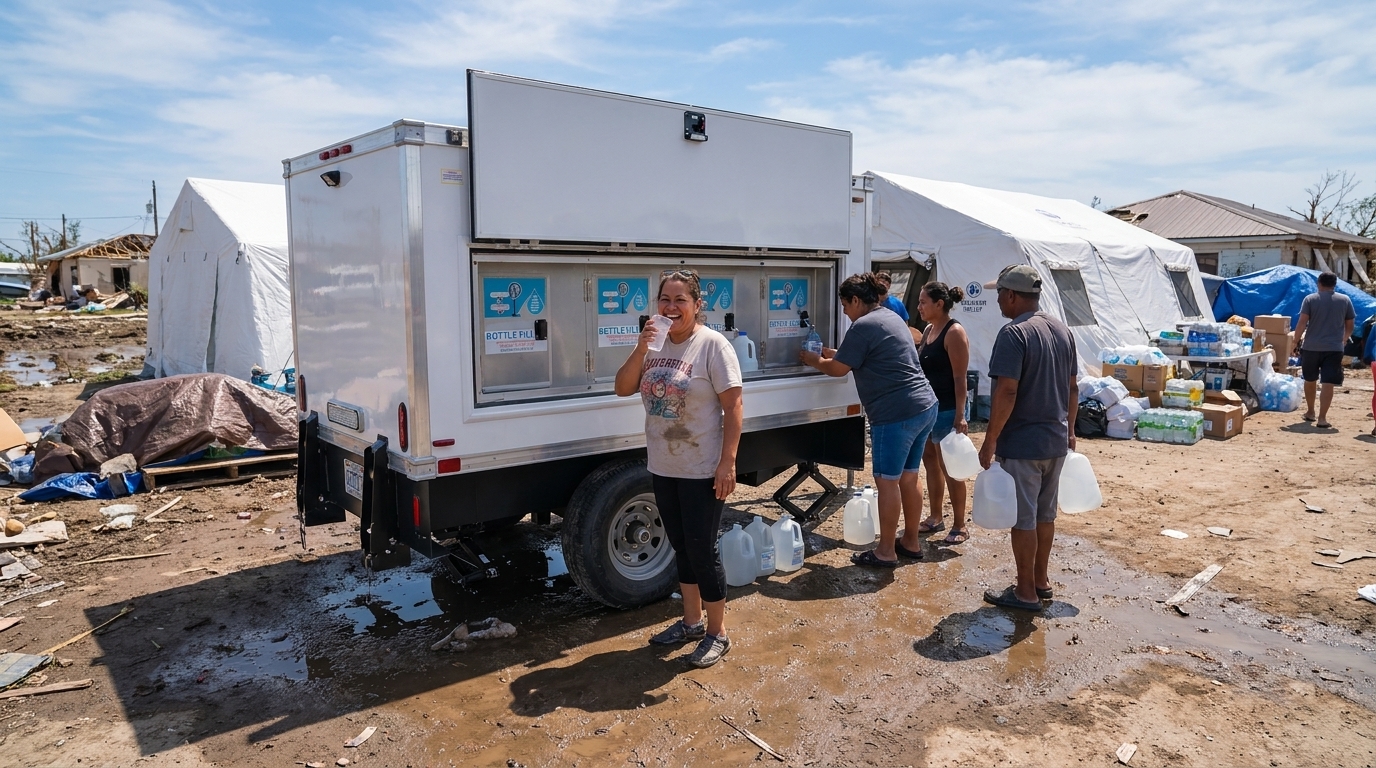
Want this math run for your own Berkeley job? Two minutes on the phone gets you a real number.
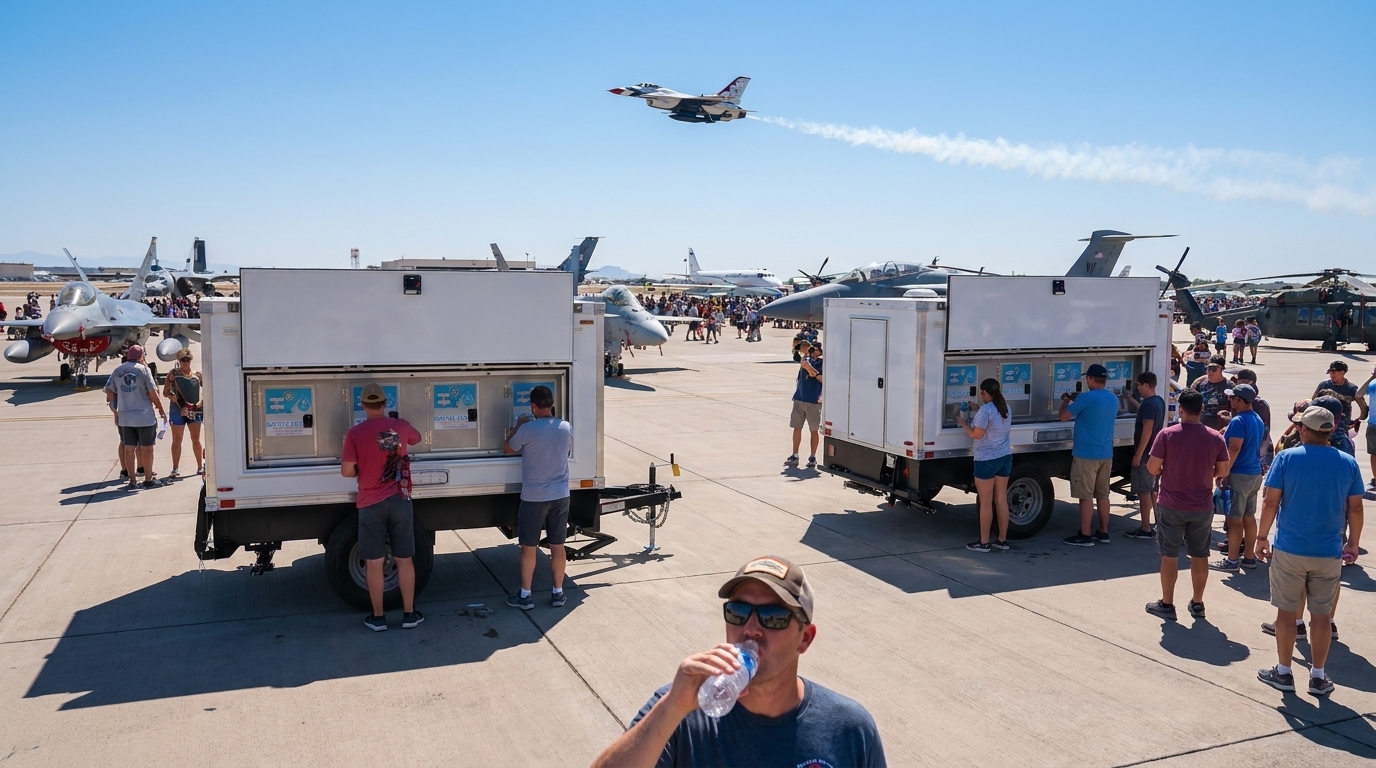
Approach plazas and security posts need cold taps before doors. We set a station where staff actually stand, not behind the merch truck.
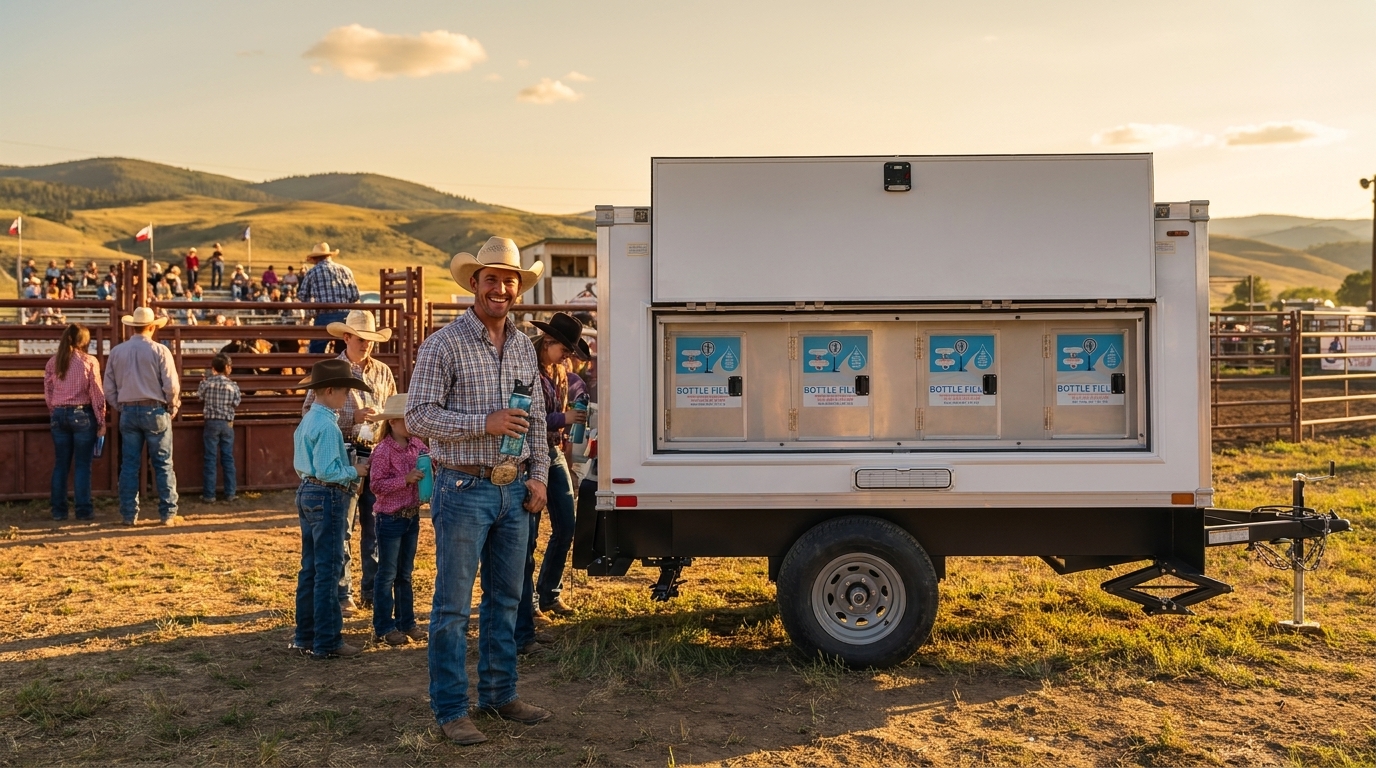
Practice days drink on a steady clock. Game days spike. We size refill to the week you are actually in, including band and grounds support.
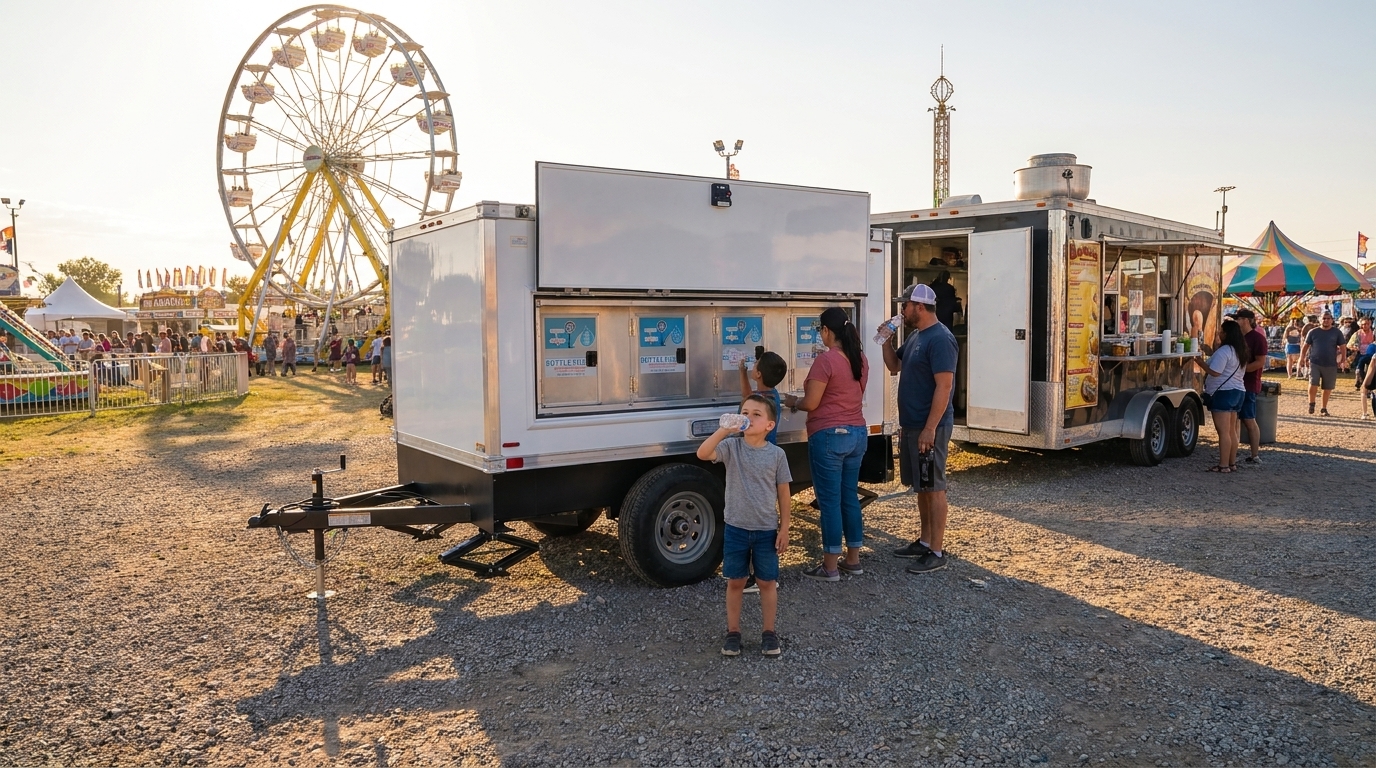
Hill park crews cover long outdoor loops. A self contained unit at a staging lot beats a long drive down to town for every bottle refill.
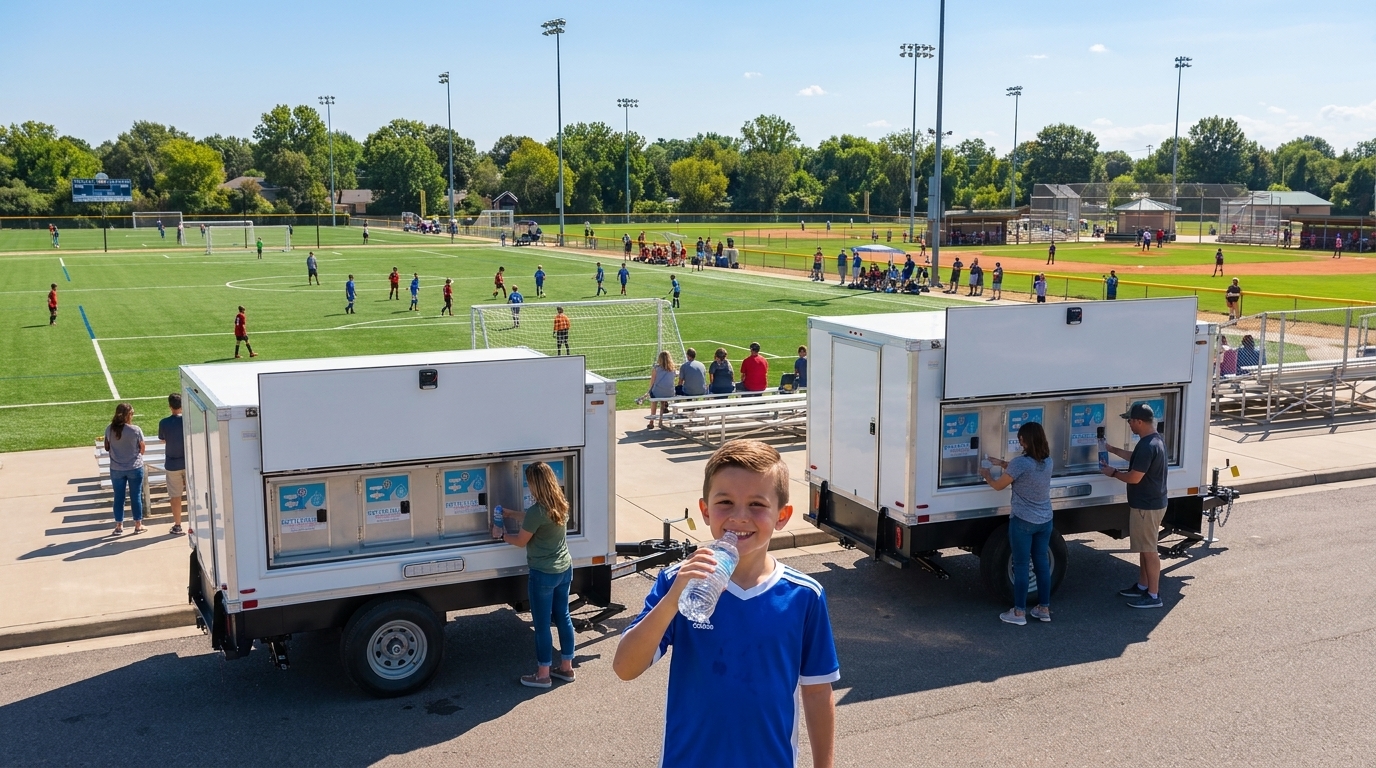
GCs running Berkeley and Emeryville addresses want one vendor. We keep both cities on the same weekday tanker route when schedules line up.
A water source people don't trust gets ignored, and an ignored station is rented money wasted. That's why municipal water doesn't reach the tap raw on our trailers. It passes through three filter stages and a UV chamber, then an onboard cooling unit drops the temperature. The result tastes clean and comes out cold, even on the worst Berkeley afternoon of the year.
The opening filter traps sand, scale, and the fine grit local mains occasionally push through. On a dusty Berkeley lot, that's what keeps a pour from tasting like the parcel it's parked on.
Activated carbon comes next, lifting the chlorine bite and the dull seasonal notes local tap can carry until the taste lands clean and neutral. When it's 100 out, that flavor decides whether a crew keeps drinking or walks past the tap dry.
A finer cartridge then catches the microscopic particles that slip past the first two, so what reaches the spout is clear rather than merely cold for the crews and crowds across Berkeley.
The last step is an ultraviolet chamber that wipes out bacteria and microbes without adding a single chemical. Even after a long tow to the far edge of the East Bay, the water off the nozzle is clean.
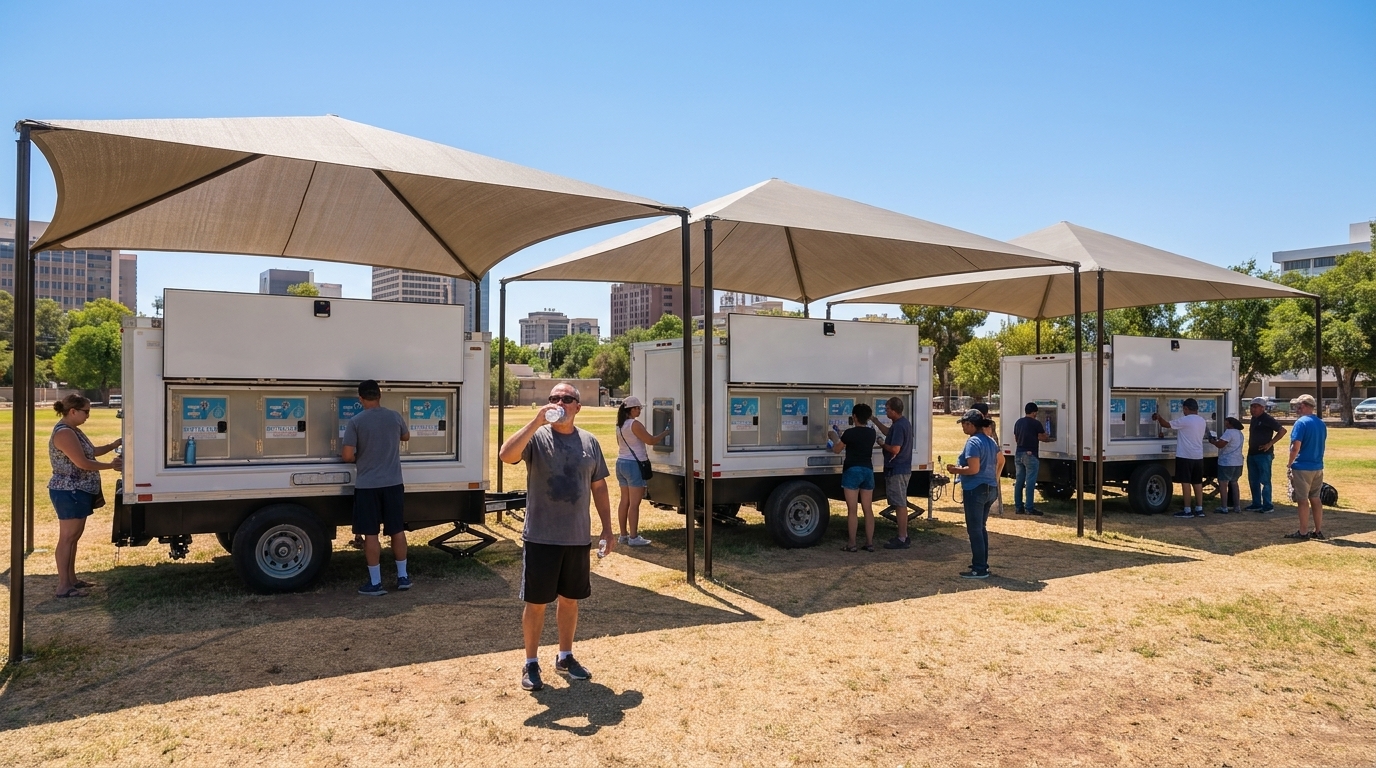
Along the wall sit four adjustable push-back taps, press a bottle to the bar and it pours. One of them is set at ADA-reachable height, so a single trailer includes everybody at a Berkeley crew or crowd with no add-on gear. Out back, a large-jug spout services five-gallon coolers and hydration packs, while a bank of hose connection taps handles work-site chores, event support, and refills down the orchard rows. Stainless, food-grade plumbing the whole way through keeps the filtered, chilled water at quality right to the spout.
Every Signature trailer carries a 300-gallon load, roughly 2,400 cups at sixteen ounces each, and we recharge it on demand, so the unit doesn't turn into the choke point on a busy Berkeley shift or a packed show night.
There's nothing here for you to run. Placement, fresh-water load, hookup, that's all on us, and then we walk your Berkeley crew or event staff through the basics before our truck pulls away.
People count, number of days, where exactly it parks on your Berkeley site, and what power is there. Those four answers let us spec it correctly the first time around.
Reckon roughly 45 minutes from our yard to anywhere in Berkeley or the East Bay, with round-the-clock emergency runs whenever a heat advisory or a power shutoff hits the area.
Once on site we set it level, charge the 300-gallon tank, and tie in power off one to four standard 120V circuits, or a single 50-amp 240V drop, depending on what the site gives us.
After that the tankers cycle back on a cadence matched to how fast your crew or crowd pulls it down, and we maintain the unit through the whole rental term.
No power on the parcel at all? We price that in. The unit draws very little, and with the service fleet backing it we've run Berkeley stations on lots that had no permanent power whatsoever. Lay out what the site offers and the rest is on us.
California’s outdoor heat illness rule in Title 8 section 3395 requires free potable water that is fresh, pure, and suitably cool, placed as close as practicable to where people work. If water is not plumbed continuously, employers must supply enough for about one quart per employee per hour for the full shift, or keep a real replenishment plan that never lets the supply run out. Construction sites are covered. High heat procedures at 95 degrees add observation and drinking reminders on top of the baseline.
Berkeley’s official summer highs often look mild next to inland cities. That does not waive the rule. Roof decks, trench cuts, and hill pads still create local heat, and inspectors can ask where water sits and whether it is actually cool. A fixed, documented station is easier to point to in a Heat Illness Prevention Plan than a scatter of coolers that moved overnight.
Long deployments also create greywater that must leave the site through permitted haul, not a quiet dump. University and city jobs commonly ask for current insurance, additional insured endorsements, and SAM.gov registration before a truck is cleared. We keep that packet ready so compliance talk does not delay a pour schedule.
Event producers on city streets answer to permit conditions that protect ADA paths and emergency lanes. A filtered water station that blocks a fire lane fails even if the water itself is perfect. We place inside the approved footprint and confirm curb control with your logistics lead before festival week starts.
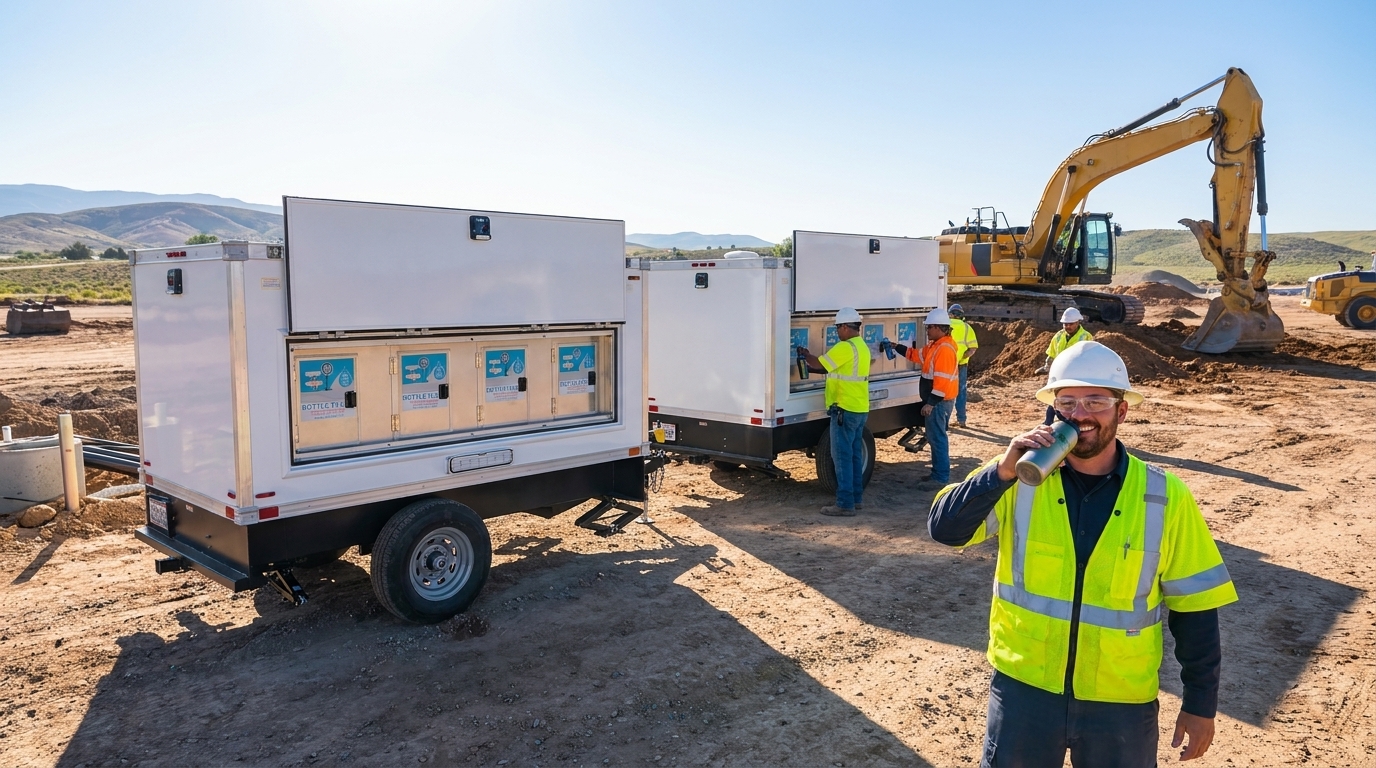
Need a station your written heat plan can point to? We can have one pouring cold within days.
A lot of the East Bay jobs have shaped how we run the next one. A few that stuck with us:
Superintendent on a Southside tower pad. Crew count jumped when formwork and electrical stacked on the same floors. We added tanker days mid month and kept the fence line station from running dry through a two week night pour stretch.
Festival ops lead, Downtown weekend. Prior year used one trailer at the main gate and the far stages ran out of patience. We split nodes near Civic Center Park and a Shattuck stage block. Lines stayed short through Sunday afternoon.
Public works foreman, waterfront CIP. Tide tube staging left the crew between freeway noise and thin shade. A self contained unit at the marshalling spot meant nobody drove off site for water during a short lunch window.
Safety lead on a multi trade South Berkeley pad. Apprentices rotated in during a warm September week. We helped them put the station on the walking line from the gang box so new workers saw cold water before they saw the vending machine across the street.
City capital work around Aquatic Park has stacked streetscape rebuilds on East Bolivar, paddling club parking upgrades, stormwater bioswales, and a multi year tide tube rehabilitation under I-80 backed by roughly 4.9 million dollars in combined funding. Those crews work between freeway noise, rail, and lagoon edges with thin shade. A towable station that carries its own fresh water fits better than hoping a marina hose can keep up.
Parks and waterfront staff still maintain Cesar Chavez Park and Marina event lawns even while some pathway excavation waits on environmental protocols. Tree planting, landscape restoration, and event setup days all put people outdoors on windy open ground. Cold filtered taps at the staging lot keep the day moving.
The I-80 Gilman interchange rebuild wrapped around spring 2025 after a roughly 100 million dollar corridor project. Residual landscaping and adjacent West Berkeley yard work still need crew water, and the new bike and ped overcrossing changed how we route deliveries into northwest parcels. Albany and Emeryville jobs often share the same weekday tanker loop.
Agency buyers want paperwork ready before the truck moves. We keep SAM.gov registration, insurance, and additional insured language current. Call now if a heat advisory or power shutoff staging request just landed on your desk. Emergency dispatch runs around the clock.
Parks tree crews and landscape restorers often arrive after the heavy civil looks finished. They still work full outdoor shifts. We will keep a smaller cadence running through punch list weeks so the water plan does not vanish the day the excavator leaves.
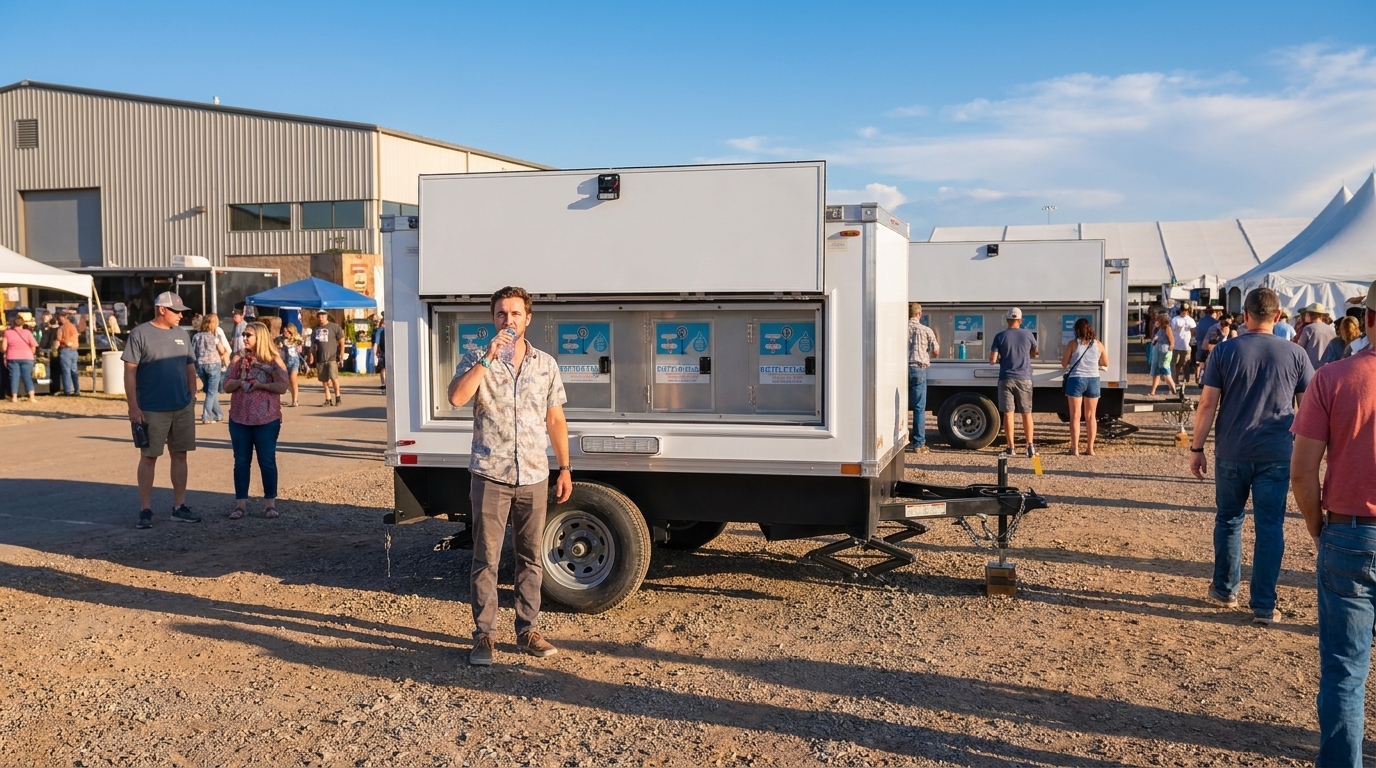
Everyone sees the trailer. What they don't see is the support fleet behind it, the trucks that deliver fresh water, hold reserve on site, and carry wastewater off, so a single call wraps the entire loop rather than stringing together three vendors.
Our tankers run drinking-grade water in bulk, recharging the 300-gallon tank on whatever interval the headcount demands. Those same trucks also top up storage tanks, holding tanks, and bladder bags whenever a single drop can't keep pace, like a big slab pour or a downtown night that packs the square.
When demand spikes we set out fold-flat bladders to bank extra fresh reserve, and on a drain-less lot they'll temporarily hold greywater too. It isn't fancy equipment, but it's what keeps a far-flung job in the East Bay pouring between tanker runs.
Water that has to move across a job is a pump truck's job, whether that's charging holding tanks or hauling supply end to end. It earns its keep on the sprawling parcels where the trailer and the fill point can end up a fair hike apart.
At the tail end, a vacuum truck draws off greywater and wastewater and carries it to permitted disposal, closing the loop clean. Nobody on your Berkeley crew is left guessing where the used water ended up. That piece was built into the plan from day one.
Every job gets its own setup. A remote parcel might run a station plus a bladder bag for reserve and a recurring water-truck schedule. A heavy event night might call for a pump truck to move supply and a teardown waste run at the end. Describe the shape of your job and we'll put together the right combination, on one invoice, handled by one crew that already knows the ground.
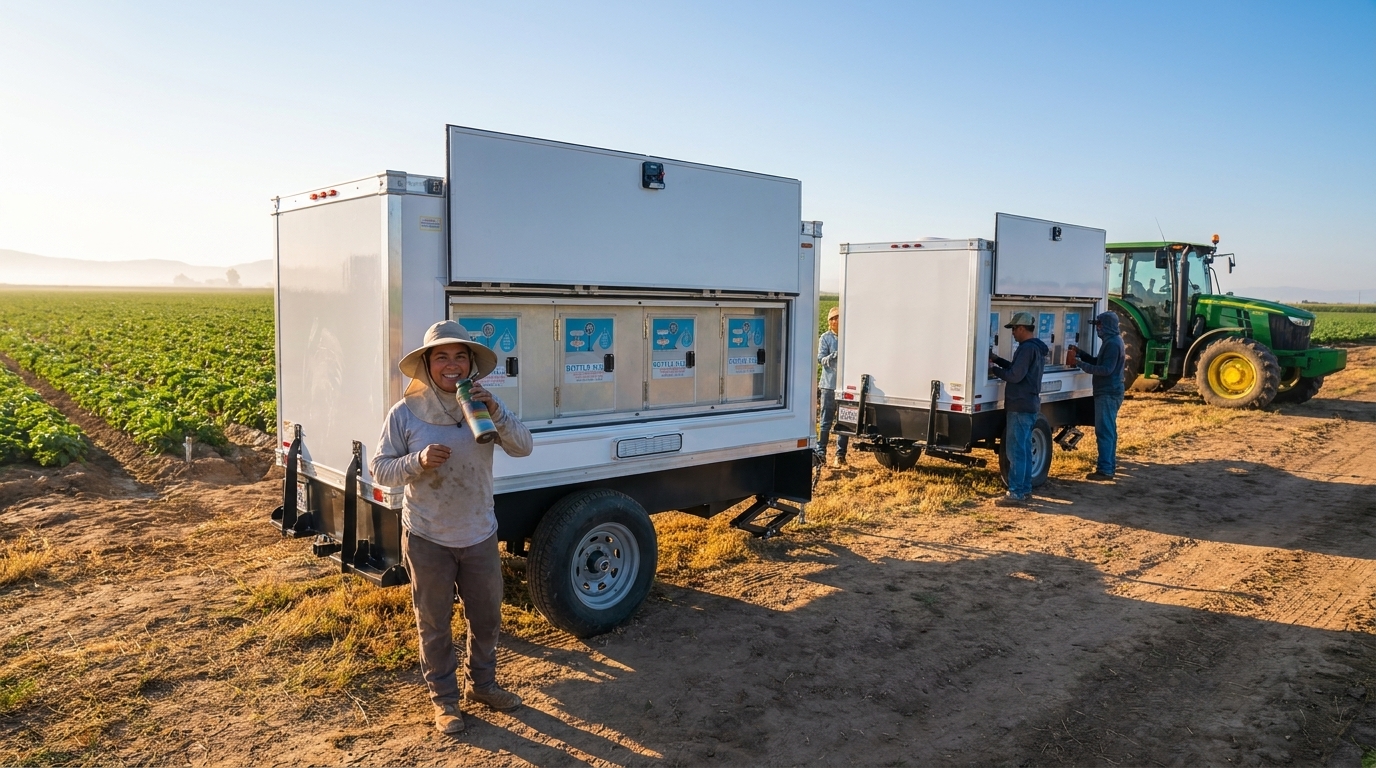
A couple of minutes on the phone is enough to get you a real number. Here's what we'll want to know, handy to have ready before you call, and proof that we size every job to the work in front of us rather than reading off one canned quote.
Bottled water reads as the budget choice on a purchase order. Its actual price tag is buried somewhere else, in handling hours, staging footprint, water that warms up, and trash piling up afterward, and on a hot inland lot each of those costs more than it would by the coast.
Look at everything bottled water actually demands of a person: cutting the order, receiving and breaking down pallets, icing coolers before dawn, topping them up through the day, then flattening empty bottles for the bin. On a large Berkeley crew that's hours of paid time burned every single day, scraped right off the work that's supposed to be getting done. The trailer erases that loop entirely. A local contractor once let us pencil it out with him, and the recovered labor by itself paid for the unit. His words were that the bottle runs had been quietly costing him close to a day of payroll a week. Our trailer arrives full, the tankers keep it full, and your superintendent owes it nothing but a parking spot.
Ice a cooler at 6 a.m. and by mid-morning in July around the East Bay it's as warm as a bath. Warm water is water people stop touching, and the slowdown that follows is precisely where heat illness gets its opening. A chilled station never rides that warm-up curve at all. Whatever pours at clock-out is as cold as the sunrise fill, which happens to be the moment a spent crew, or a crowd deep into a long concert, leans on it hardest.
Bottled-water pallets devour staging space, jam the lay-down area, and sit cooking in the sun until somebody finally cracks them open. Empties build up faster than anyone keeps up with, and on a tight commercial lot that pile turns into its own problem. Set a trailer in one parking stall instead and it serves a crew or crowd that would otherwise burn through hundreds of plastic bottles every day.
Every bottle bought is a bottle thrown out, and across a season a busy site or event generates a small mountain of them. That's a disposal line on the budget, a dent in the sustainability numbers, and, given that a single bottle can linger in the ground for centuries, a footprint that lasts longer than the project that made it. Move to a refill station and the line drops to zero, which finally gives your reporting a figure worth publishing.
On-Site Hydration Services runs portable water station rentals across Berkeley and the nearby East Bay grid. If your project jumps city lines in one week, you still get one crew and one refill route. The same standard behind filtered water station rentals across California applies when your next pad sits farther out.
Working a corridor instead of a single address? We follow the main routes across the East Bay, so multi-site projects get the same fast turnaround as one stop.
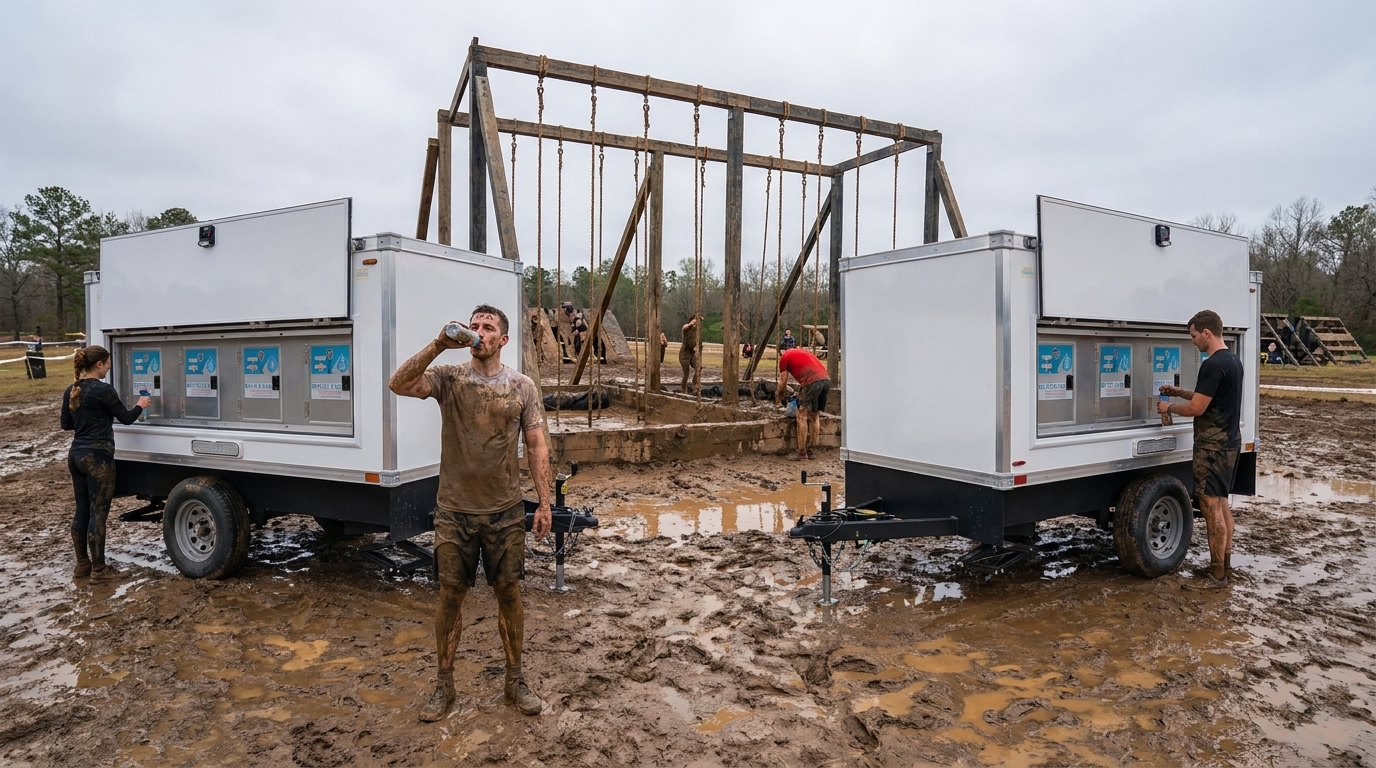
Still weighing it? Call and ask. Most of these questions get settled in one short conversation.
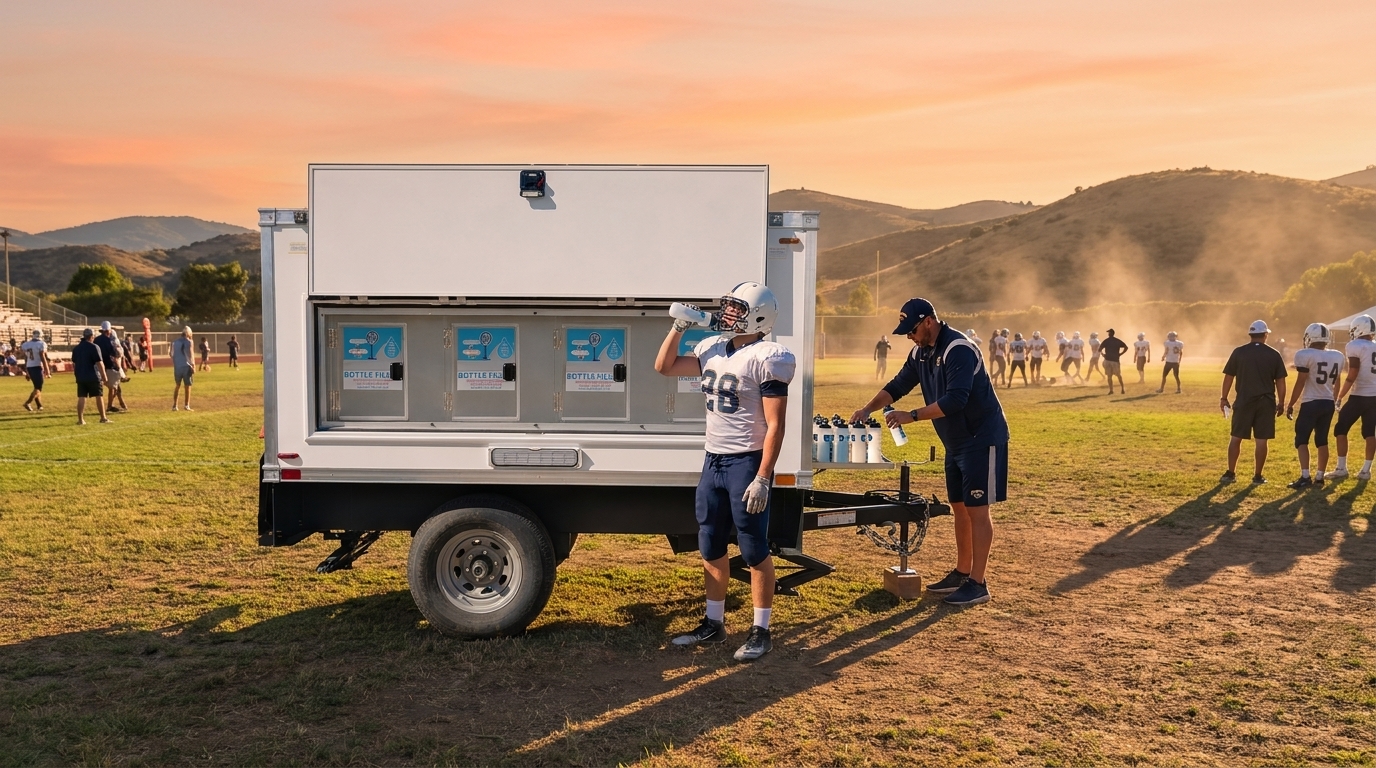
Plan on 1 to 4 dedicated 20A/120V circuits or one dedicated 50A/240V circuit. Shared lighting circuits are not enough. If the building next to your fence is in the middle of a utility conversion, say so early. We can discuss generator support for bare pads.
Section 3395 wants suitably cool potable water as close as practicable to the work. On a multi story pad that can mean more than one elevation. A trailer on the desire path beats a cooler farm at the far laydown gate.
Start from peak gate count and stage map, not average attendance. A Book Festival scale weekend with many outdoor stages usually wants more than one node. We sketch placements from your site plan before you lock sponsor layouts.
Yes. Tell us the real shift chart. We write tanker cadence around night cuts and weekend windows instead of forcing a daytime only route.
Emergency dispatch runs 24/7. Same day setup is the target when a unit is available in the East Bay loop. Call now with the gathering point address and power situation.
Yes. One of the four bottle fill stations is set at ADA reachable height. That matters for public festivals and mixed campus crowds, not only for jobsite crews.
Our vacuum route draws greywater and hauls it to permitted disposal. Long campus and CIP stays should include that schedule from week one so nobody is surprised later.
Often yes on UC pads. Start credentialing early. We will match the delivery to the approved gate and quiet hours you give us.
Hard freezes are uncommon on the flats, but unusual cold snaps happen. The winter package is a removable option we add when overnight lows threaten lines. Most summer festival jobs never need it.
That is a common use. Crews fill large containers at ground level and send them up, which cuts cardboard bottle freight on the hoist.
Yes. Cross border GCs and the Solano Stroll corridor regularly sit on one route. Ask when you request a quote if you want multi city coverage in one plan.
Station count, rental length, refill frequency, site access difficulty, power situation, and whether bladder reserve or pump out is bundled. We walk those drivers on the call. We do not post prices on the page.
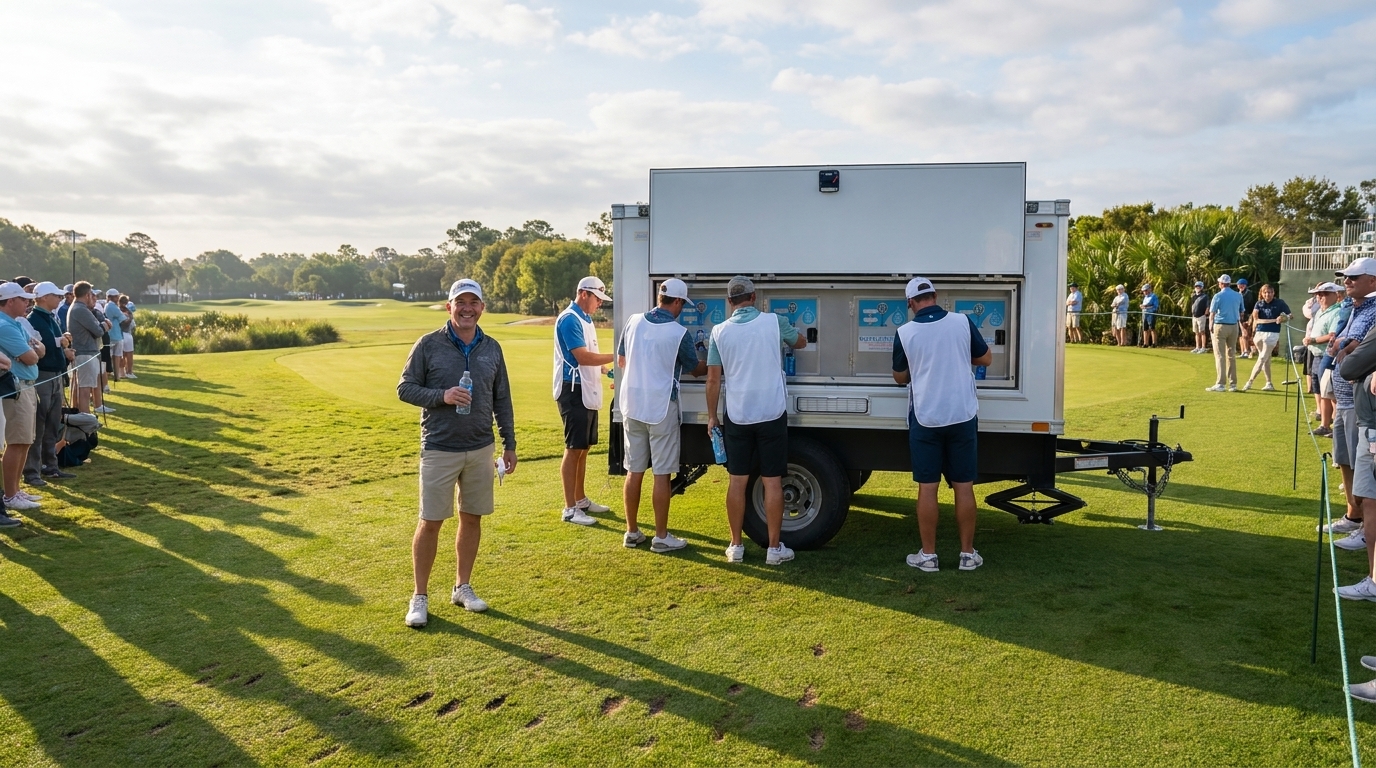
Start with the site map, not a single attendance headline. Downtown Berkeley festivals spread thirst across stages, vendor rows, volunteer tents, and family zones that never share one line.
The Bay Area Book Festival is the stress test most local producers already know. Tens of thousands of visitors, dozens of programs, and a Block Party footprint around Allston Way and Civic Center Park create several peaks in one weekend.
A multi month campus pad is not a weekend rental with extra weeks glued on. Access rules, phase headcounts, and utility outages rewrite the plan as the job moves.
Ask who owns the gate and which quiet hours apply. Bancroft edge work sits beside classrooms and residence life. A refused morning delivery wastes more than truck time.
Buyers want a number before they share scope. The honest reply is that a handful of drivers move the quote more than any brochure sentence.
Station count leads the list. One trailer at a single gate is not the same job as three nodes across a mile of Solano Avenue.
A polite forecast in the low 70s makes teams soft on the water plan. Heat illness rules and inspectors do not grade on coastal vibes.
Title 8 section 3395 still requires suitably cool potable water placed as close as practicable to the work, free to employees, with enough volume for about a quart per person per hour when supply is not continuous.
Sustainability reports want numbers you can defend. Bottle counts are some of the easiest ones on an outdoor job or festival.
A practical field model is six bottles per person on a hard outdoor day. Fifty people lands near 300 bottles before the shift ends.
“Shade is thin out by the lagoon work zone. Cold water at the marshalling spot kept people from driving off site mid shift.”
“Kids zone and main stage needed different pacing. They helped us put fills where families lingered, not only where the sound booth sat.”
“Fence lines moved every few weeks. They relocated the trailer without turning it into a change order drama.”
“We wanted fewer single use bottles at a large outdoor program. The tank math was easy to report upstairs after the weekend.”
“Staging at the lower lot and running jugs uphill worked better than forcing a trailer onto the grade. They were honest about that in the first call.”
“Our heat plan needed a fixed water point we could name. The station gave us that, and the water stayed cold past lunch.”
“Gate width was the whole game. They measured first, then delivered. No stuck truck story for me to explain.”
“Solano style layout needs water in more than one spot. Mid route placement mattered as much as the opening ceremony end.”
“Security posts drank more than we guessed. Having a crew side tap beat sending people into the guest concession line.”
“We had crews in Berkeley and Emeryville the same week. One refill route covered both. That alone cut the phone tag.”
“Wind on the open lawn was the worry. The unit sat solid and the water stayed cold through a full outdoor program day.”
Service information current as of September 2026.
Tell us the headcount or the gate count, the rental dates, and where the trailer should park, and we'll spec the right setup and roll one out to you anywhere in the East Bay, usually inside about 45 minutes of dispatch.
Peninsula sites often pair with San Mateo Peninsula filtered water stations for multi-campus weeks. Find every city on our locations.