On-Site Hydration Services is the top rated team for temporary water station rentals in Fernley, with filtered, chilled Signature Series trailers available now and same-day delivery for job sites, events, emergencies and more. Call now and we will talk through your site, or request a free quote online in under a minute. Our dispatch line answers around the clock.
Over 12,000 completed deliveries and counting · Licensed and insured, with A+ BBB rated service · Serving job sites along Interstate 80 and the Victory Logistics District south of Fernley
Free quote with no obligation to book. One call books delivery, setup and service.
See the Signature Series water station specs for Fernley events
A logistics park or campus build with hundreds of people on the clock needs several stations spread across the site, each one full and cold when the shift starts. On-Site Hydration Services stages Signature Series trailers in groups, places them where people actually walk, and schedules refills so no station runs dry by mid-afternoon. After years of planning water for large open sites, our first question is always the same: where will people be at ten in the morning, and how far is the nearest cold water? Phone the yard or ask for a quote online, and we will sketch a station plan for your ground. You can also see our water station rentals in Nevada for the wider service area.
One Signature trailer can pour for a weekend concert and be working a slab pour a couple of days later. Hiring one company for your events and a separate one for your worksites makes no sense. Either way, the planning, the delivery, and the refills are ours.
The onboard cooling unit keeps the tank genuinely cold all the way through a Fernley afternoon, and that single detail carries the whole thing. Warm water is water people abandon, and midsummer is exactly when a crew or a crowd is drinking the most. Cold water gets finished, and finishing it is what keeps heat illness off the site.
Across Fernley we answer every call 24/7 and do our best to deliver as quickly as possible, and we keep emergency runs going around the clock whenever a heat advisory or a power shutoff hits the I-80 corridor. The morning a foreman finds his 40-person crew stuck with one warm cooler, speed is the whole game.
The real test of a station is whether the crew walks to it, and that is how we measure our own work. On one warehouse site we saw shrink wrapped pallets heating up beside the job trailer while the crew worked far across the lot. On another, a chilled station near the work face emptied twice in a single shift. Those two sites had the same goal and very different results, and our service is built around the difference. We size the unit to the people on site, plan refills around how much they drink in the heat, and answer heat calls right away. In the high desert around Fernley, one hot hour with no cold water can change how a whole day goes.
Built for dust and wind. Fernley’s wind carries fine desert dust across every open lot. We position the fill points out of the worst of it and wipe them down at each service visit, so the spouts stay clean.
“We set up three stations across a big grading site and nobody had to walk far for cold water. The refill schedule was already agreed before the trailer showed up.”

“Dust everywhere out here, and the spout area still looked clean on week six. That told me someone was actually servicing it.”

“We had the station by the camping loop at a race weekend and the line never got long. People kept coming back for refills all afternoon.”

South of Interstate 80, this 4,300-acre site is mostly graded ground with new buildings rising. Water points are scarce, which makes a self-contained station the easy choice.
Truck stops, fuel and small businesses line this road. Stations here serve drivers, delivery crews and roadside work zones.
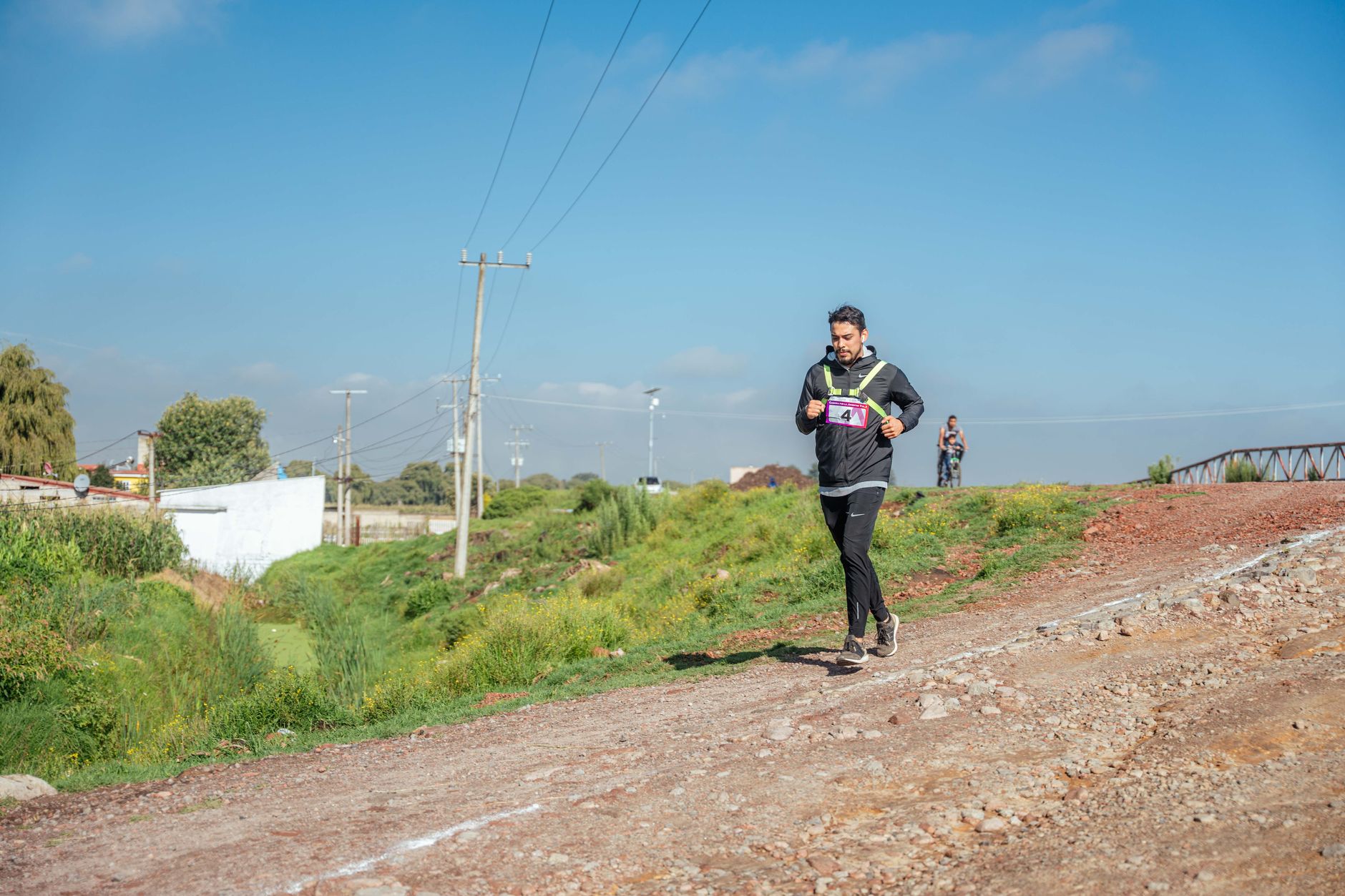
Community events and street work gather around Main Street and the highway. A station here suits parades, fundraisers and utility trenching.
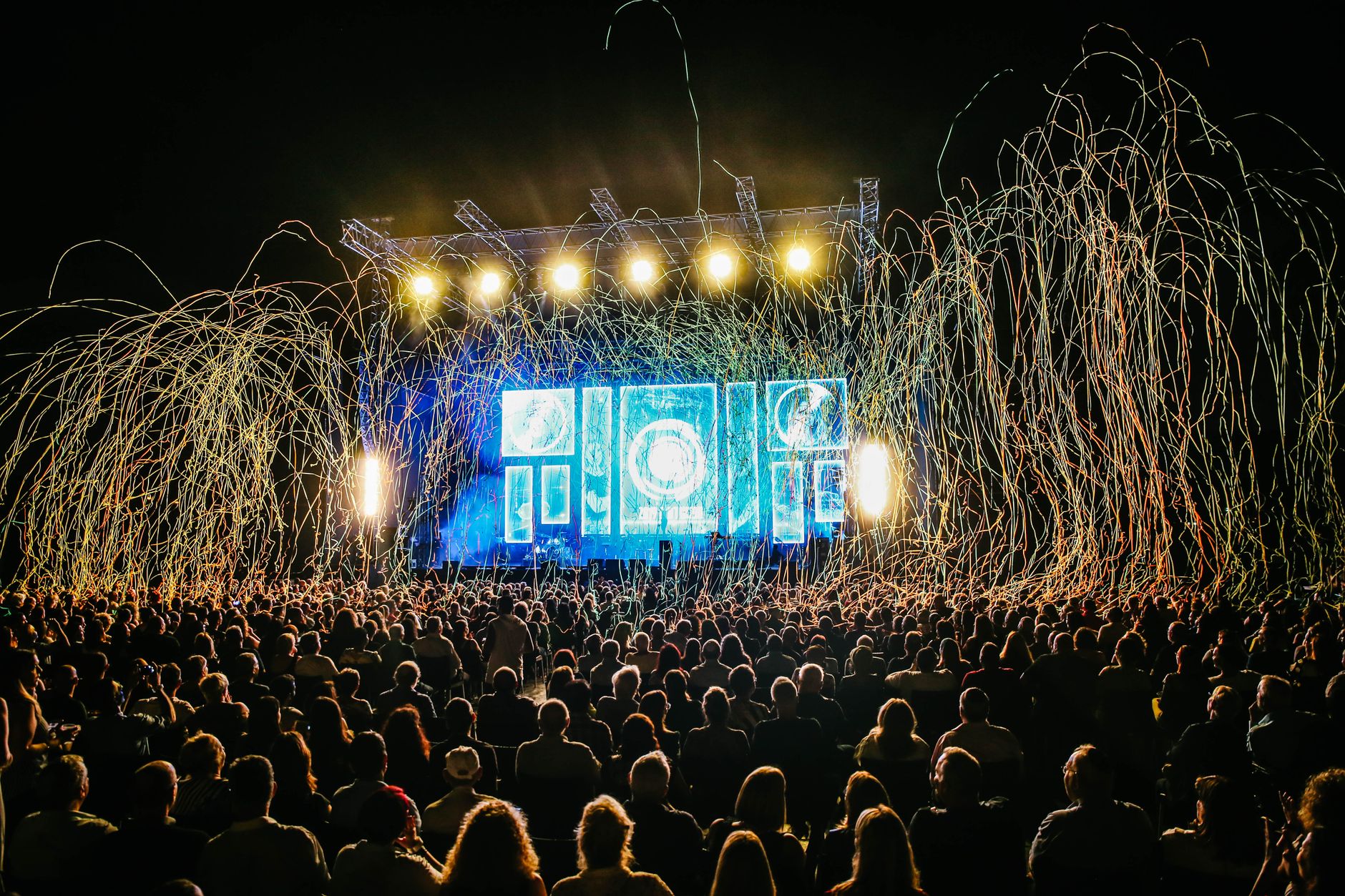
The canal runs through town in a long ribbon, and so do the work zones along it. A station that moves with the work is the right fit.
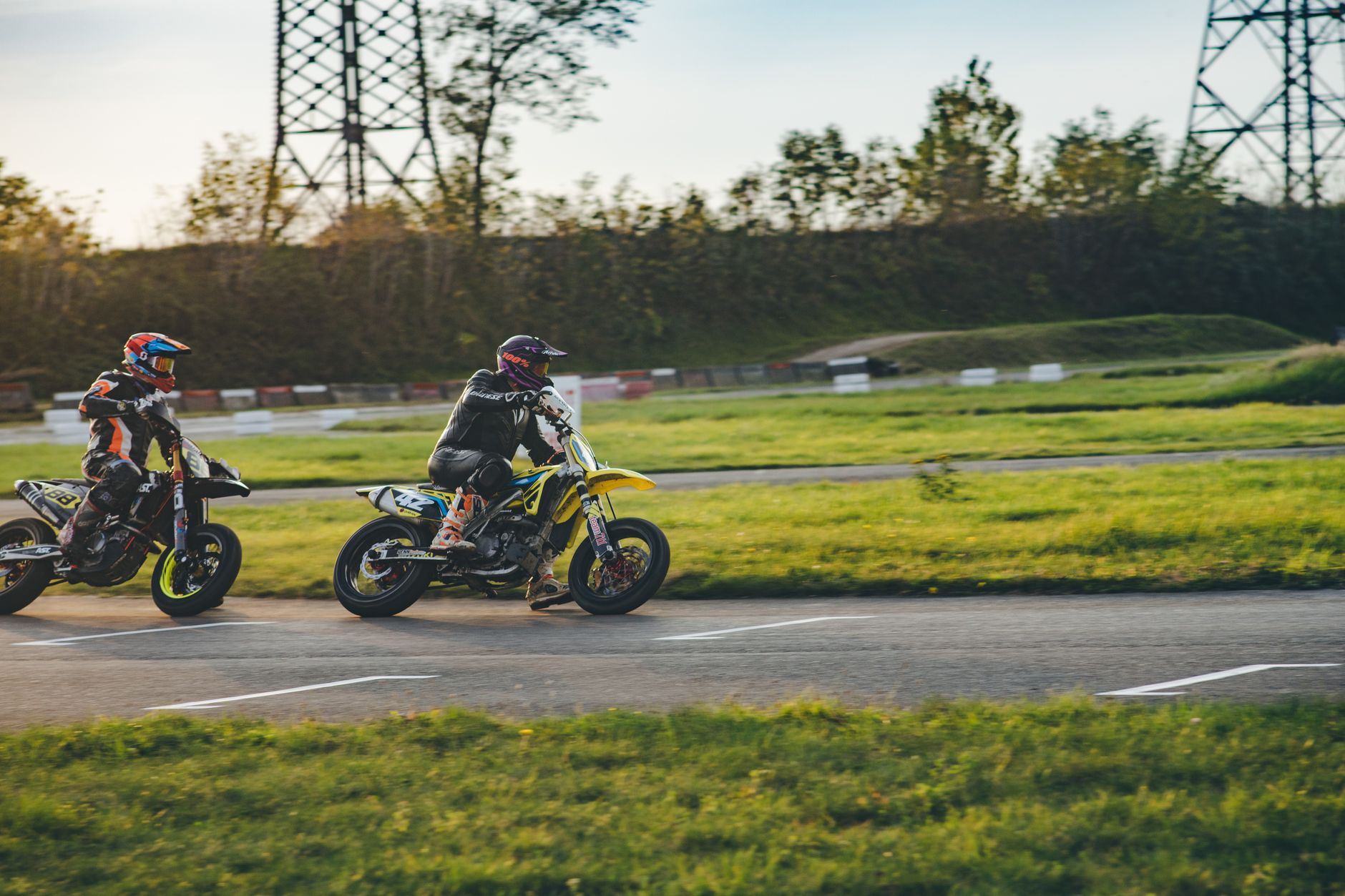
Race weekends fill the grandstand and the RV camping around it. Filtered water here is a crowd pleaser all day.
Fernley is a fuel and freight stop on Interstate 80, and the power grid is being rebuilt around it. Greenlink Nevada, NV Energy’s transmission program of about 700 miles of high-voltage line by about 2030, includes the Fort Churchill Substation expansion in Lyon County. Lyon County commissioners voted 5 to 0 to approve about 10 more miles of three 345,000-volt lines north of U.S. 50 through Dayton, Stagecoach and Silver Springs.
Turnaround work is different from steady construction. A plant or terminal shuts down on a planned date, hundreds of extra workers arrive, and the job has to finish before the shutdown costs more than it saves. The extra workers leave when the shutdown ends. A rented station gives them water without anyone building anything permanent.
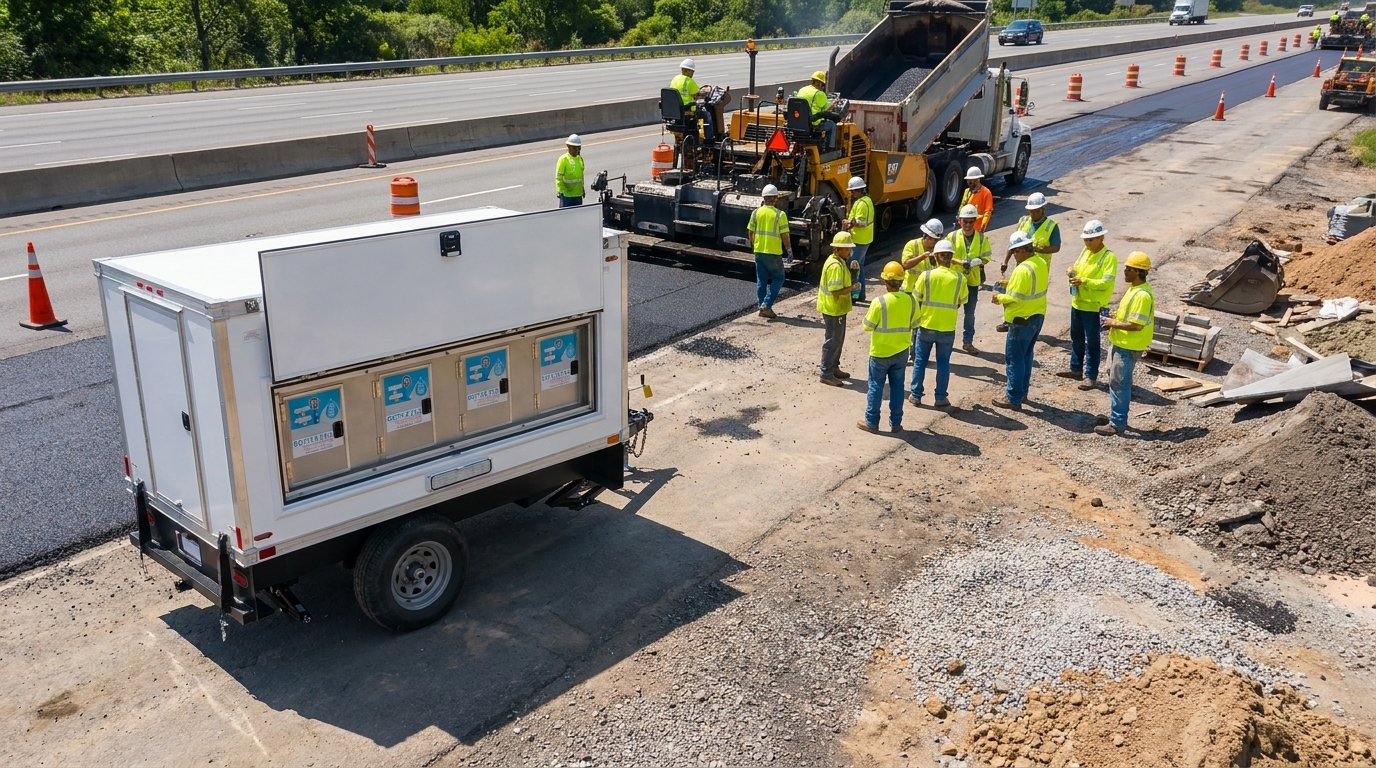
Substation and line work has its own pattern. Crews spread across miles of right-of-way, then gather at a staging yard at the start and end of the day. That yard is where a station belongs. We ask where the trucks park, where the safety meeting happens and where the crews load out, then place the station on that path.
Whichever kind of energy job you have, the questions we ask are the same. How many people at peak, how many hours, what power does the yard have, and who can be reached when the tank runs low? Answer those, and we can say what the setup looks like before you hang up.
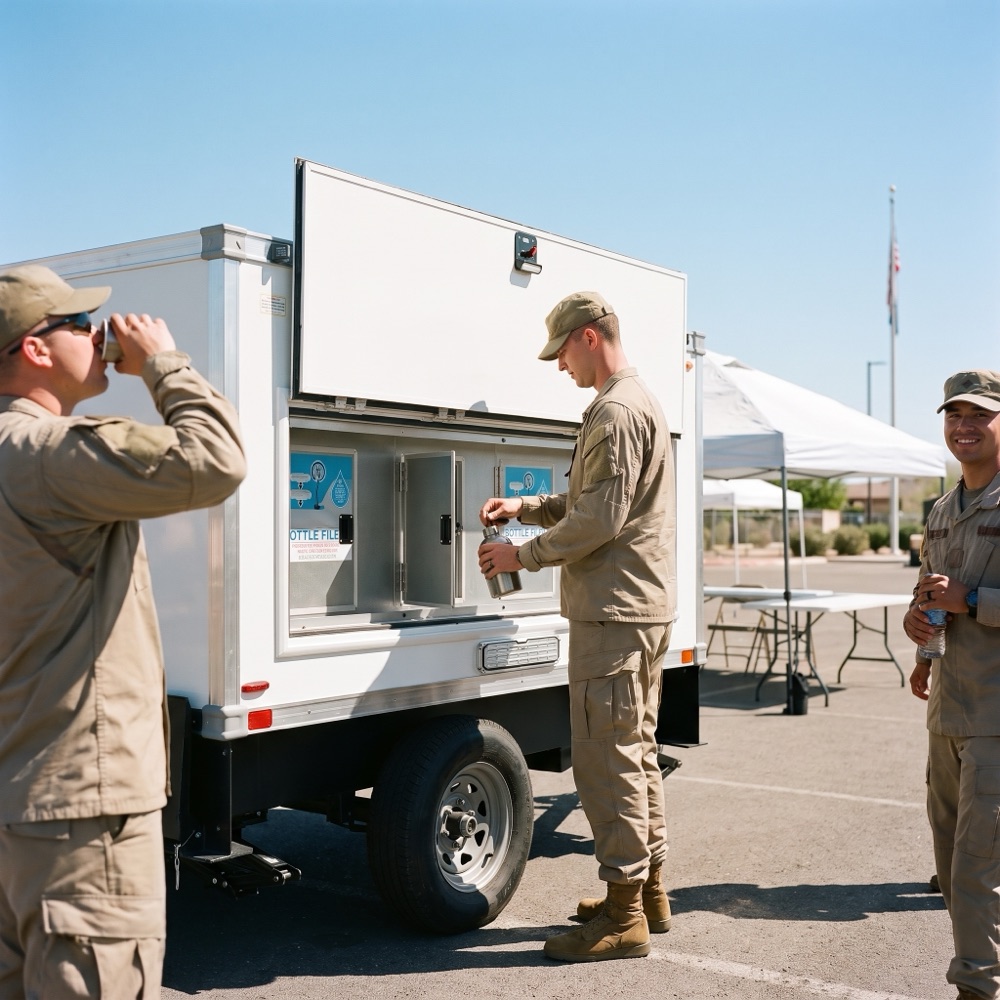
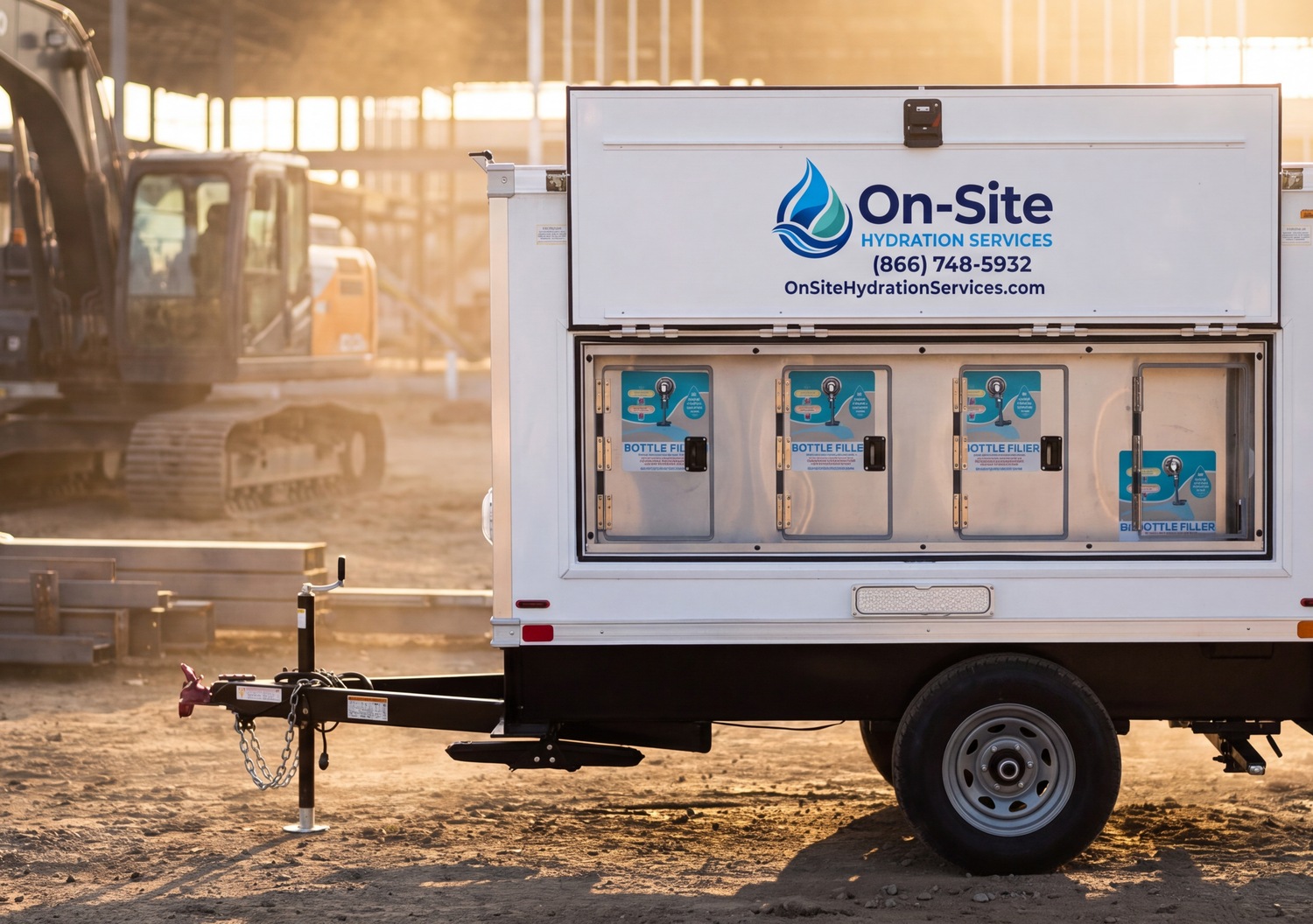
On a wide-open Fernley lot, one Signature Series trailer becomes a landmark that crews and visitors can find from across the site.
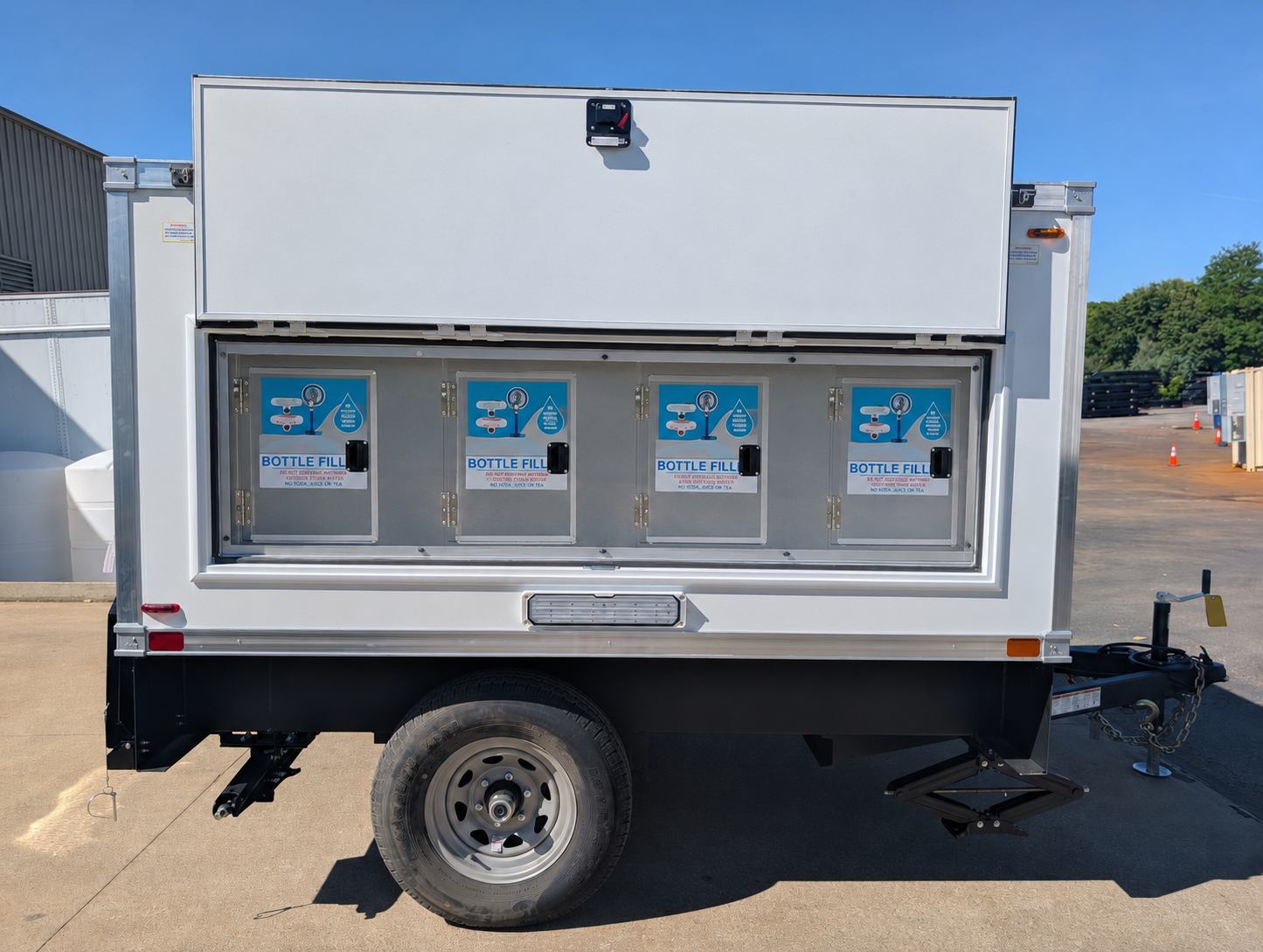
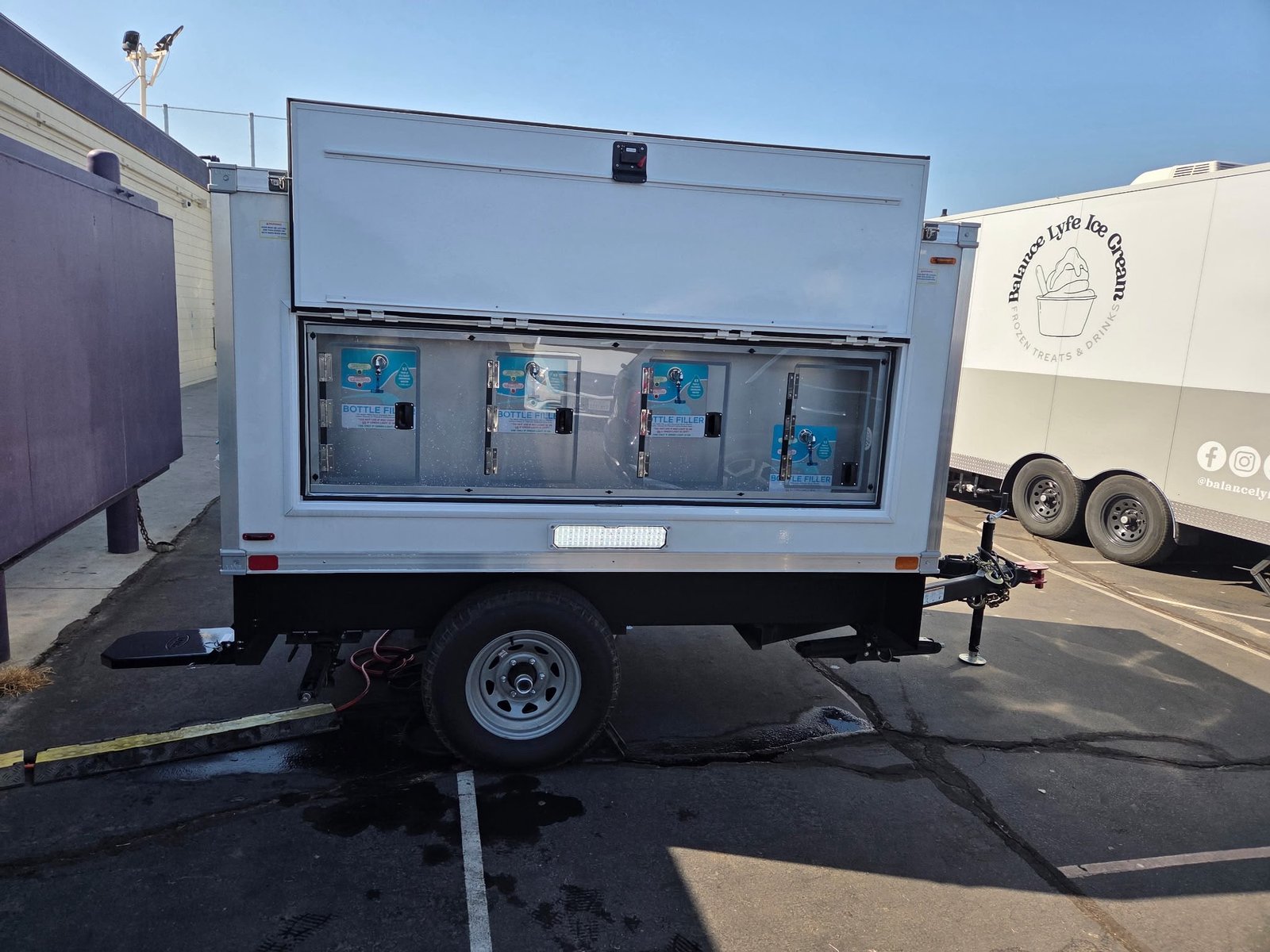
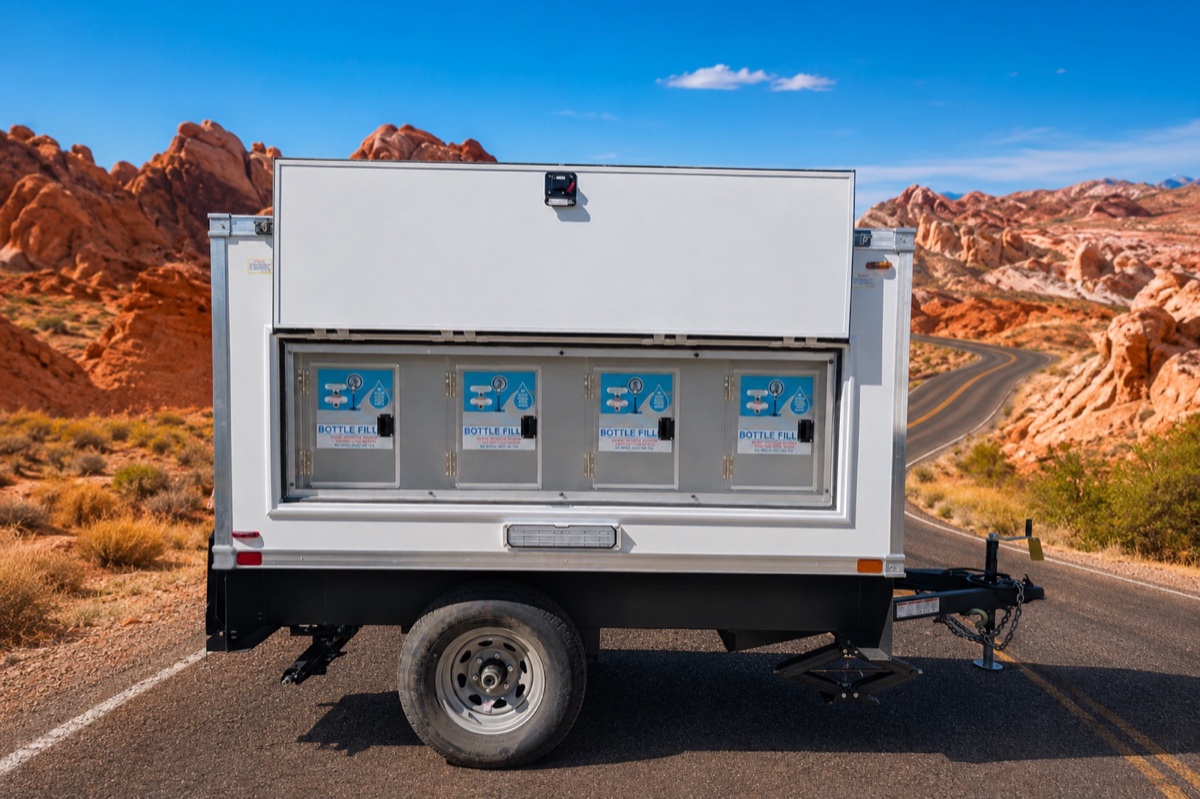
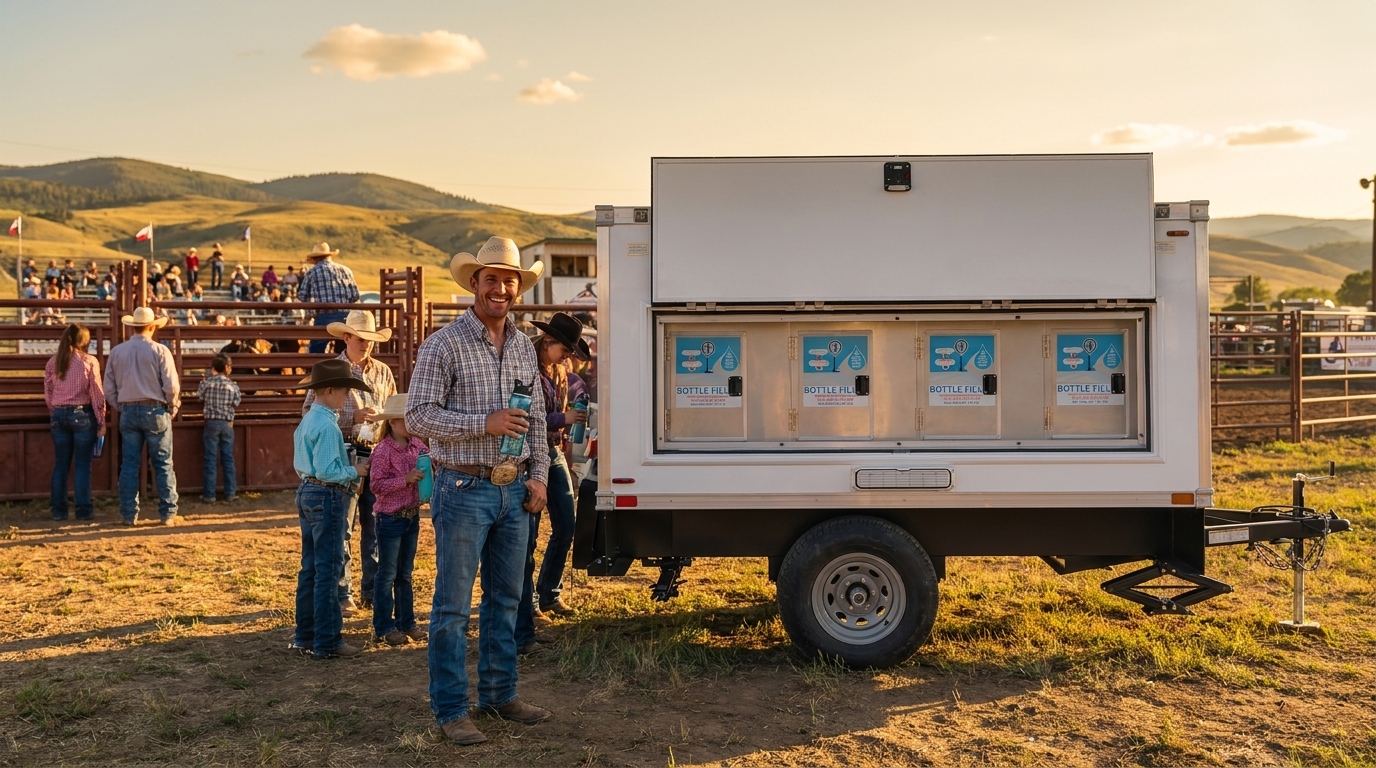
With a frame, a hitch, and tires under it, the unit hauls out to a remote build in the I-80 corridor, an event field, a working orchard, or a disaster staging yard with equal ease. Fernley contractors and event planners request this exact rig by name. The whole design is built around backing in, leveling off, and pouring cold by the same afternoon.
| No. of stations | (4) Bottle Filling Stations |
| Length | 12′ 3″ |
| Weight | 3,100 lbs. |
| Height | 8′ |
| Fresh water tank | 300 Gallons |
| Power requirements | 1 to 4 dedicated 20A/120V circuits OR 1 dedicated 50A/240V circuit |
| No. of AC units | 1 |
The Victory Logistics District covers 4,300 acres south of Interstate 80, and its developer lists data centers, manufacturing, distribution and cold storage as target users. The district’s builder moved more than 3 million cubic yards of earth to ready up to 1,600 acres for tenants. A major technology company also bought 300 acres there in 2025. Sites like this start as bare desert and stay that way for months.
On a campus build, the walk to the break trailer can eat a quarter of a break. We plan stations around the work zones instead: one near the electrical yard, one at the steel laydown area, one by the main gate. Each is a self-contained filtered hydration station, so the trades fill bottles at the point of work and get back to it.
The part nobody sees is the refill schedule. A station that serves a big mechanical and electrical crew drains faster than most people guess, and a warm tank at three in the afternoon is the first thing a foreman hears about. We set the refill cadence with your site lead before delivery and adjust it as headcount grows with each phase.
For planning, we ask about phase dates, how many trades work at once and where the gates and laydown yards sit. Power is simple: the Signature Series draws from one to four dedicated 20A/120V circuits or one 50A/240V circuit. Our portable chilled hydration station rental service delivered to Fernley give you a single contact from the first phase to the last.
Six bottles per person on a 100-degree day in the I-80 corridor, a 38-person crew, and you’re already at roughly 228 plastic bottles to buy, cart in, ice down, and throw away. That’s one day. The season is where it gets ugly.
Multiply across a 175-day build and the tally clears 39,000 bottles, with the larger commercial jobs running far past that. A single trailer makes the entire pile disappear, leaving cold water at the tap and nothing for the dumpster.
Sustainability is the easy part of the pitch. Roughly 60 million plastic bottles get thrown out daily in this country, only about a third are ever recycled, and one bottle can sit in a landfill for centuries. Worth reporting, sure, yet the Fernley project managers who actually switch usually do it to kill the daily hassle, not to pad a sustainability slide. A shared trailer means no recurring bottle order, no cooler going warm before first break, no wall of empty jugs baking by the job-trailer. The super runs the build, not the water program.
When a big pour in the Victory Logistics District doubles the crew for a day, our own potable water tankers come back and bring the trailer up to full level. People drink as much as they like, and the supply scales with the job.
Want this math run for your own Fernley job? One short call gets you a real number.
The 3/8-mile dirt oval runs a season from about mid-March to mid-October, and RV campers dry camp around the track. A station near the main seating area and another by the camping loop keep lines short.
The August fair draws a carnival crowd, a rodeo and a demolition derby to the fairgrounds. Filtered water at several points beats a single hose bib for that many people.
Pilots and families spend long hours on open tarmac with little shade. A chilled station on the flight line gives everyone a reason to stay.
A church lot or community site can host a station for a day or a month. It is self-contained, and we fill its tank again on a set schedule.
Nothing comes out of our trailers straight from the municipal line. On open ground at 4,100 feet, where July sun hits graded lots with no shade, the water first goes through three filters, then a UV chamber, and finally a cooling unit that chills it. Crews get a clean taste and a cold cup when they need it most.
Graded pads in the Victory Logistics District kick up fine dust and loose sand all day. The first stage is a sediment filter that catches the sand and grit this dust leaves in the mains, which protects the taste and the filters behind it.
Activated carbon comes next and softens the chlorine taste and the seasonal off flavors that tap water in a dry high desert town can carry. People working in the sun keep drinking only when the water tastes neutral, so this stage decides whether the station gets used all afternoon.
Grading crews and yard drivers beside Interstate 80 get a second, tighter filter after the first, so fine dust and grit from the lot stay out of the cup.
The last stage is an ultraviolet chamber that eliminates bacteria and microbes without adding any chemicals. Sites along the Truckee Canal and out toward the Fernley Hills can mean a long tow on dirt, and the water still arrives clean.
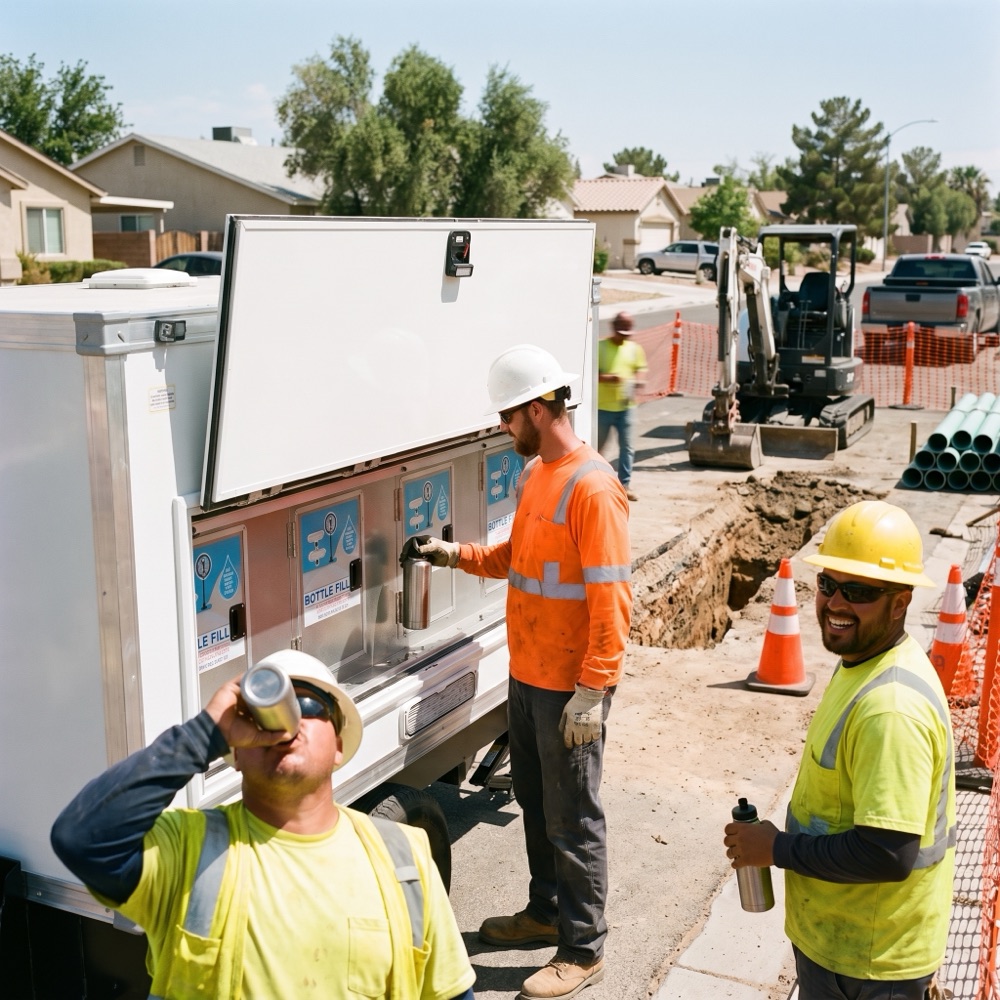
Four push back taps line the trailer, and a bottle held against the bar starts the flow, so nobody fumbles with handles in work gloves. One of the four is mounted low enough for a person in a wheelchair, which means a single trailer serves the whole site without extra equipment. Because a shift on the Victory Logistics District can mean a long walk across graded ground, crews fill their five gallon coolers and hydration packs at the large jug spout before they head out. Separate hose taps handle rinsing and event needs or fill containers elsewhere on the site, while food grade stainless plumbing between the tank and the spout keeps the cold filtered water tasting clean.
A Signature trailer holds 300 gallons, about 2,400 sixteen ounce cups, and we refill it on demand so it never holds anyone up when a large shift on a distribution build breaks for lunch together.
You do not operate anything. We position the trailer, fill the tank and connect power, then show your site foreman and safety lead how it works before we drive away from the warehouse pad.
Send over the crew size, the length of the job, where the trailer will sit and what power is close by. With those four details we can size the unit properly for an open parcel off the interstate.
We answer every call 24/7 and do our best to deliver as quickly as possible. When a heat advisory or a power shutoff hits the high desert, we make round the clock emergency runs along the corridor.
We set the unit level on the pad and charge the 300 gallon tank. Depending on the site it needs one to four standard 120 volt circuits or a single 50 amp 240 volt drop, and a freshly graded lot may not have either installed yet, which we plan for.
Our tankers return on a schedule matched to how fast the crew draws water down, and that pace picks up on a long summer shift working a slab. Our team looks after the trailer for as long as the job lasts, so a crew on a long slab pour never has to think about it.
The station needs very little electricity, our service trucks can back it up, and we have set up on ground with no permanent power. Let the yard know what the site has.
Most private worksites in Nevada fall under Nevada OSHA, part of the state’s Division of Industrial Relations, which follows the same heat and water ideas as federal OSHA. Those rules point to the same basics for any crew, which are cool water within easy reach, a place to rest and some shade. A filtered station on site is one of the simplest ways to meet that expectation.
Fernley summers reach into the mid-90s on an average July afternoon, and a recorded high of 110 degrees has been cited for the area. January nights average about 21 to 23 degrees. Those swings are the reason many project owners ask for water points early in the planning stage rather than after the first hot week.
For permits, health questions or wastewater rules at a specific site, check with the project owner and the Lyon County health authority. They decide what applies on a given parcel. Let the yard know what paperwork your inspector asks for and we will gather what we can before the unit arrives.
A tenant building out a warehouse in the district may need fresh water delivered, a reserve kept on the pad and used water taken away. One phone call to us covers all of it, so you do not hire a separate company for each task.
When a crew grows large, our potable water trucks haul drinking grade water in bulk and top up the 300 gallon tank at an interval based on head count. The same trucks fill storage tanks, holding tanks and bladder bags when one delivery cannot match a busy build, such as the big warehouse sites in the Victory Logistics District.
A bladder bag lies flat until a big crowd or a hot week calls for more fresh water, and then it holds the extra for us. It can also hold used water for a while where there is no drain, which keeps outlying parcels past the edge of town supplied between tanker visits.
On a site as big as the Victory Logistics District, the trailer and the fill point can sit a long way apart. Our pump trucks push water between holding tanks and across the site so supply reaches the station without anyone hauling jugs.
Vacuum trucks remove used water and carry it to permitted disposal, so the loop closes without your team tracking where it goes. We plan this from the start, which helps on a big grading job where a large crew shares a few stations.
A job in the Victory Logistics District rarely looks like a job at the I-80 truck stops, so we start from what you tell us about the site. On a graded parcel far from finished buildings, that may mean a station, a bladder bag for spare water and potable tankers coming back on a set schedule. For a busy event night at the fairgrounds, it may mean a pump truck feeding the trailer and a waste pickup after teardown. One crew and one invoice cover whichever mix you need.
Need a station your written heat plan can point to? We can have one pouring cold within days.
Every I-80 corridor job is a little different, but most follow a few common patterns. Here is how a typical setup plays out:
Planning for a shift change on a big logistics pad. When a few hundred people leave a pad at the same hour, we plan more than one station so no line builds at the gate. We set one near the parking lot and one near the work face. The refill truck is scheduled for early morning, before the first shift arrives.
Planning for a dirt track weekend. When a race weekend brings RV campers and a full grandstand, we place one station by the camping loop and one near the pits. We time a refill for the middle of race day so both stations stay full through the afternoon crowd. The accessible fill point goes on the flattest path.
Planning for a weeks-long staging yard. When a utility yard stays open for a month, we agree on a refill day, a wipe-down routine and a contact on site. Then we check in at the first visit to see whether the headcount has changed. If it has, we move the plan up a size.
Bottled water looks cheapest on a purchase order, but in Fernley’s dry July heat the costs of handling it and watching it warm up add up fast. Fernley sits high and dry in the Nevada desert, where a pallet left in July sun warms fast and the extra labor to handle it lasts all day.
On a warehouse build in Fernley, somebody has to place the bottle order, sign for pallets, cut the wrap, load coolers with ice before dawn, restock through the day and gather the empties at the end. None of that shows on a bid, yet it adds up to paid hours every day across a large crew. Because the trailer arrives full and our tankers do each refill, the crew never has to organize a bottle run, and the site only needs to give us a parking spot. One contractor sat down with us and added up his weekly bottle runs, which came to nearly a day of payroll, and the hours he got back covered the unit.
A cooler iced at 6 a.m. is warm by mid morning in July, when the sun on open desert ground is at its hardest. Crews skip warm water, they drink less, and the risk of heat illness climbs. A chilled station stays as cold at quitting time as it was at the morning fill, and that matters most for a tired crew at the end of a long summer shift.
Pallets of bottles eat staging room, crowd the lay down area and bake in the sun, and the empties pile up faster than anyone clears them. That is a real problem on a tight lot beside a distribution yard. Instead of stacking crates of bottles beside the distribution yard, a large crew can use one trailer that fits in a single parking stall.
Disposal costs money, and the sustainability report takes the hit from every empty. A refill station produces no bottle waste, which gives the owners of a multi year park build a number they can put in a report.
A short phone call is enough to get a real quote. Have your head count, dates, address and available power ready, especially if you are planning a build on open ground near the I-80 corridor. We size the quote to your job, not to a canned price.
Our home base for this area is Fernley, with units staged for jobs from Wadsworth to Silver Springs and along the I-80 corridor. Look at our on-site water station rentals hub in Fernley for the full list of cities, or call and send over your address.
Working a corridor instead of a single address? We follow the main routes across the I-80 corridor, so multi-site projects get the same fast turnaround as one stop.
Still weighing it? Call and ask. Most of these questions get settled in one short conversation. Some customers book more than one location and start by reading about water station rentals in Nevada.
We set it with you at booking, based on your headcount, shift hours and the weather that week. A big site might get a refill every morning, while a small yard might need one twice a week. If your headcount jumps, one call moves the schedule up.
Fernley’s January nights average about 21 to 23 degrees, so freeze planning starts before delivery. We ask how the station will be used overnight, where it sits and what the site offers for protection. Then we agree on a plan with you, because a good plan beats a surprise on a cold morning.
A quote depends on how many stations you need, how long you keep them and how often they are refilled. Distance, site access and the dates you pick also play a part. Delivery, setup, service and pickup are all part of the rental, and we explain each piece when we quote.
Yes. The tank and fill points are cleaned and sanitized between rentals, and the spout area is wiped down at every service visit. On a long job that routine matters more than the hardware, because day forty has to look like day one.
Usually the answer is two or three smaller stations, placed so the crowd splits naturally. We look at your expected attendance, where people line up and how long the busy stretch lasts. A midday refill covers the peak of a weekend like a 95A Speedway race.
Yes, the Signature Series includes ADA accessible fill access, so every worker or guest can reach clean water without asking anyone for help. We place it on the flattest, firmest path we can find, and we ask you to keep that approach clear of cables and gravel piles.
Let the yard know what your inspector or owner asks for, and we will pull together what applies before delivery. Questions about county or health rules go to the Lyon County health authority and the project owner, since they decide what a site needs. We keep the file simple so you can hand it over in a minute.
Start with a call and a rough headcount. We rent short and long term, and for a long rental we set refill dates ahead of time and give you one person to call. If the site changes phase, the plan changes with it.
The Signature Series draws from one to four dedicated 20A/120V circuits or one 50A/240V circuit. Let the yard know what your lot has and what it does not, and we plan the setup around it. We would rather solve it before delivery than at the gate.
Yes, this page is our local hub, and we stage units for work across Lyon County. Send over the address when you call and we confirm coverage on the spot.
Call the number at the top of the page or fill in the quote form. We ask for a headcount, a start date and the address, and we reply fast with a plan.
Water planning on a large site starts with a head count, but it should not stop there. A site with 400 people on the clock does not need one big station. It needs several, placed where people finish their work at the same time.
Start by listing your shifts. If two crews end at three in the afternoon, count both. The moment of the shift change is when a single station develops a line, and a line is the first sign that the plan is thin.
Setup goes smoothly when the ground under the trailer is firm and level and the way in is clear. Most delays come from small things that nobody checked, like a gate that is too narrow or a power panel that sits on the wrong side of the lot. A short checklist avoids every one of them.
First, find level, firm ground. Gravel or compacted dirt works, loose sand does not. Fernley’s wind moves a lot of fine silt, so pick a spot that does not sit downwind of a dig or a haul road.
Most people ask about cost first, but the better first question is how many people will drink from the station and for how long. The honest answer is that a quote is built from a few clear pieces, and knowing them helps you plan a budget before you call.
The biggest driver is how many stations you need. A single station is a different job from four. On a spread out lot like the big parcels of the Victory Logistics District, we count stations by walking distance as well as headcount.
When a fire or a flood pushes people out of their homes, drinking water is one of the first needs. The Red Cross reported that in August 2026 more than 450 people spent a night in the shelter at the Reno-Sparks Convention Center, with more than 200 others staying in cars and campers in the parking lot. You can read their account at [Red Cross Nevada, Hawk Fire shelter](https://www.redcross.org/local/nevada/about-us/news-and-events/hawkfireshelter.html).
A relief site is different from a job site. People arrive tired, often with children, and many have been without clean water for hours. A filtered, chilled station gives them something simple and welcome.
“Staging yard, no water on the lot, and a crew of twenty-five. The trailer came self-contained and the water tasted better than the stuff in the cooler.”

“I care about cold water during hot shifts, and this was the easiest thing on my checklist. One call set up the delivery and the refills.”

“I asked how the power hookup worked and got a straight answer in two minutes. A single 50 amp circuit was all the yard needed.”
“The accessible fill point was a hit with older visitors. Having it near the grandstand made a hot August day easier on everyone.”

“Half my guys stopped bringing their own jugs by the second week. The cold water stayed cold through the afternoon heat.”
“Our base camp was in the middle of nowhere and the water station made it feel like a real production office. Setup was quick and quiet.”

“We needed extra water points for a temporary workforce of a few hundred. Renting beat building anything permanent by a wide margin.”

“We set the station up at a church lot for a weekend event. It was simple to run and the people who came by appreciated the clean, cold water.”
“The work moves down the ditch and so did the station. Moving it took a phone call, and it was in the new spot the next morning.”

Service information current as of October 2026.
Send over the headcount or the gate count, the rental dates, and where the trailer should park, and we’ll spec the right setup and roll one out to you anywhere in the I-80 corridor, and we answer every call 24/7 and do our best to deliver as quickly as possible.