Tucson Drinking Water Station Rentals for Events & Job Sites, Call Now
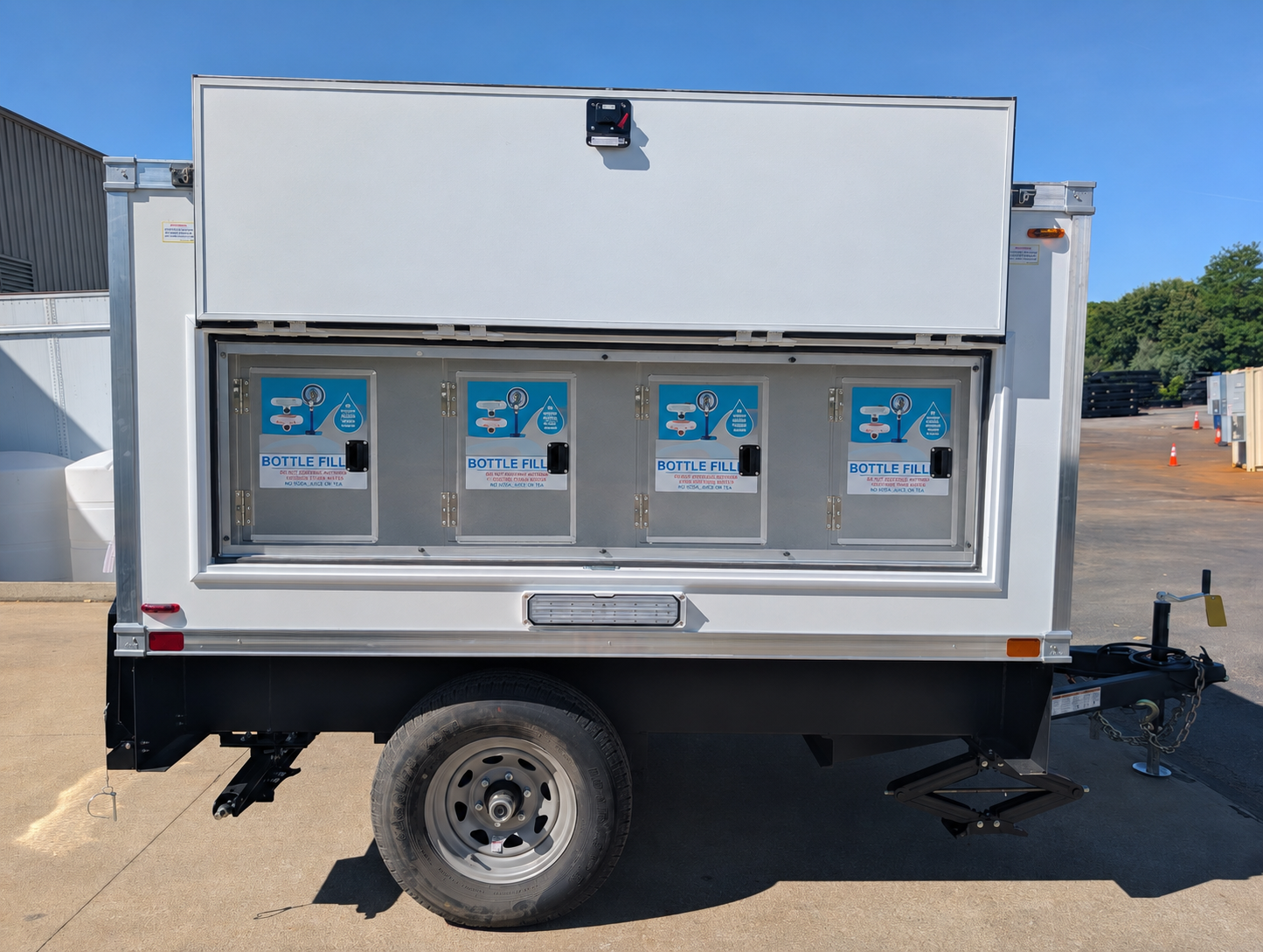
We deliver chilled, filtered drinking water to events and job sites across Tucson and Pima County. Whether it’s a Gem Show crowd downtown or a paving crew on the I-10, Tucson runs hot and the bottled-water plan always gives out first. We tow in a self-contained water station that pours chilled, filtered water and refills its own tank all day, so the event keeps flowing and the shift never stops to chase a cold cooler.
- Roughly 45-minute Pima County turnaround
- Four-stage filtered, genuinely chilled
- ADA-height bottle fill
- Built for federal heat-illness rules
- Fully licensed and insured
- Immediate and after-hours runs
We have staged drinking water on Tucson ground long enough to read it
Tucson is not a place where a warm cooler is a minor annoyance, it is the moment a festival gets a medical tent rush or a crew loses an afternoon to the heat. We park mobile water stations across Pima County for the people who can’t push pause: event producers filling the Tucson Convention Center grounds for the Gem & Mineral Show, contractors widening the I-10 and stacking the I-19 interchange, foothills landscape outfits that clock in at first light to beat the sun. The things a sharp operations lead wants to know (how soon can you roll up, will the water hold cold when the four-o’clock wall of heat hits, who tops the tank when 300 gallons runs thin on a rodeo-grounds Saturday) we have already answered, on this exact caliche, more times than I can count. So none of it is theory to us.
We move on Tucson’s clock
Most metro deliveries reach the site in roughly 45 minutes once we’re dispatched, and we run after-hours drops through the worst of monsoon-season heat. When an event lead realizes at dawn that the only water on a festival field is a stack of warm flats, that turnaround decides the day.
Truly chilled, all day long
Onboard chilling rides with each station, so the final teardown pour comes out just as cold as the opening one at gates-up. Tepid water gets left on the table, and water nobody drinks does nothing to stop heat illness, which matters more in this climate than almost anywhere.
Dropped, filled, serviced, pulled
You’re not stitching together a bottled-water account, an ice run, and a haul-off crew. We place the unit, keep it charged off our own water trucks, maintain it for the rental’s duration, and haul it off at the end, one phone number covering the entire hydration loop for your Tucson job or event.
I say the same thing on every first call with a Tucson client: if your crowd or your crew won’t drink it, the water isn’t doing its job. I’ve watched flats of bath-warm bottles sit full at a Reid Park event while people drifted toward the medical tent, and I’ve watched a chilled station ten steps off the midway get emptied and topped twice before noon. That gap is the entire assignment. Dropping a trailer and disappearing is not how we work here. We match the unit to your head count, tune the refill rhythm to how hard you’re drawing it down, and answer a heat call the way you’d want your own answered, on the jump, because out in the Sonoran Desert the difference between fine and an ambulance is a few degrees and a few minutes.
One road-built trailer made for Tucson sun, the festival lawn and the open desert spread alike
There’s just one purpose-built rig we run in the Old Pueblo, and that’s the Signature Series water station trailer. It sits on a full road chassis, so it hauls straight to wherever the day is happening, the grading job out past Marana, the street fair on Fourth Avenue, the solar field toward the Avra Valley. No building to tap into, no permanent plumbing, just chilled filtered water on tap the afternoon it lands.
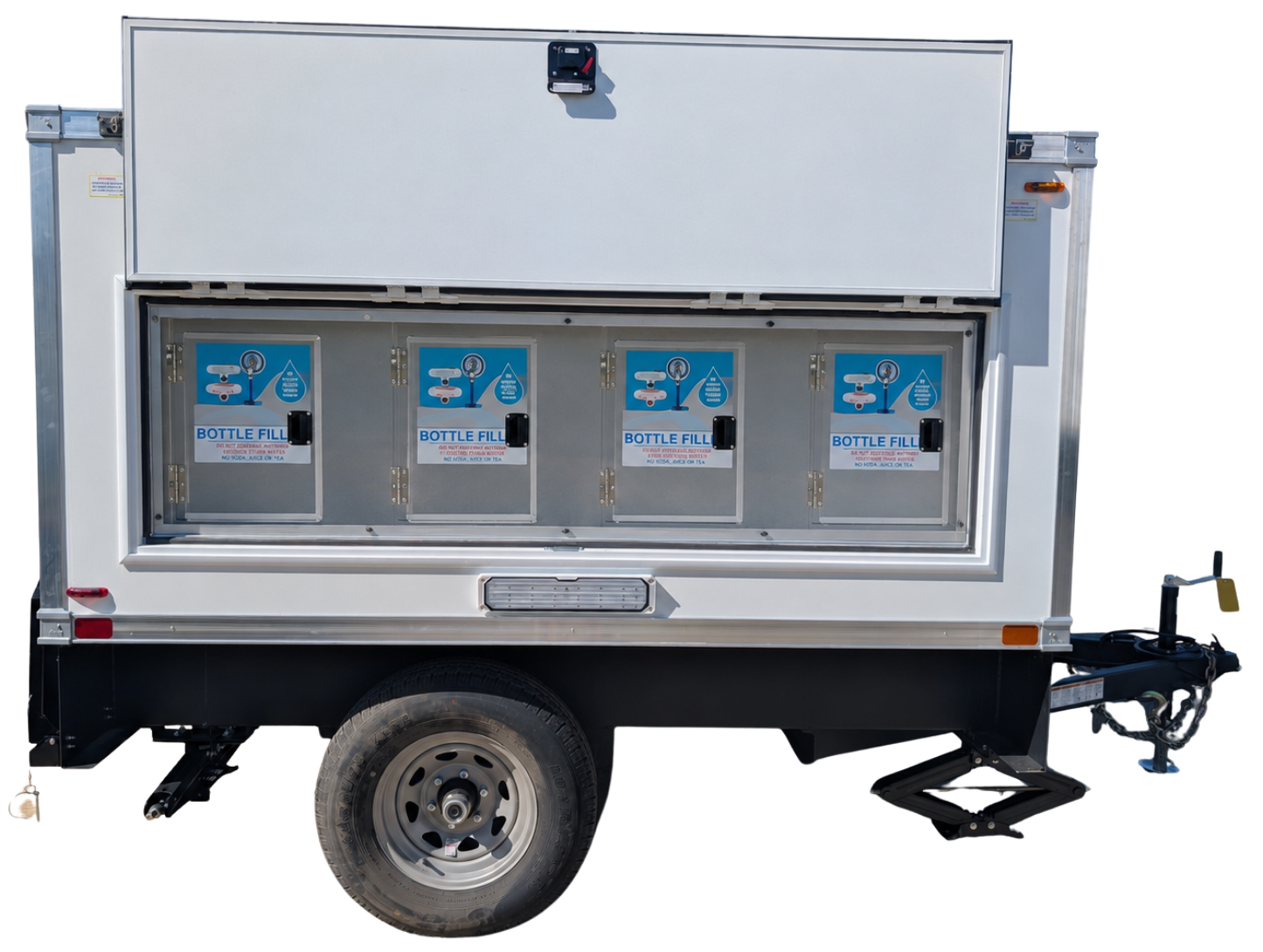
Signature Series specifications
Riding a complete trailer chassis on tires with a hitch, it hauls out to a far-flung build, a fairground, a desert farm operation, or an emergency staging yard. Tucson event producers and site superintendents ask for this exact unit by name, built to set down, level off, and begin pouring the very day it lands.
| Fresh-water capacity | 300 Gallons |
| Bottle-fill positions | (4) Bottle Filling Stations |
| Onboard cooling | 1 AC unit |
| Power needed | 1–4 dedicated 20A/120V circuits OR 1 dedicated 50A/240V circuit |
| Trailer length | 12′ 3″ |
| Trailer height | 8′ |
| Towing weight | 3,100 lbs. |
Why it’s the right trailer for the Sonoran Desert
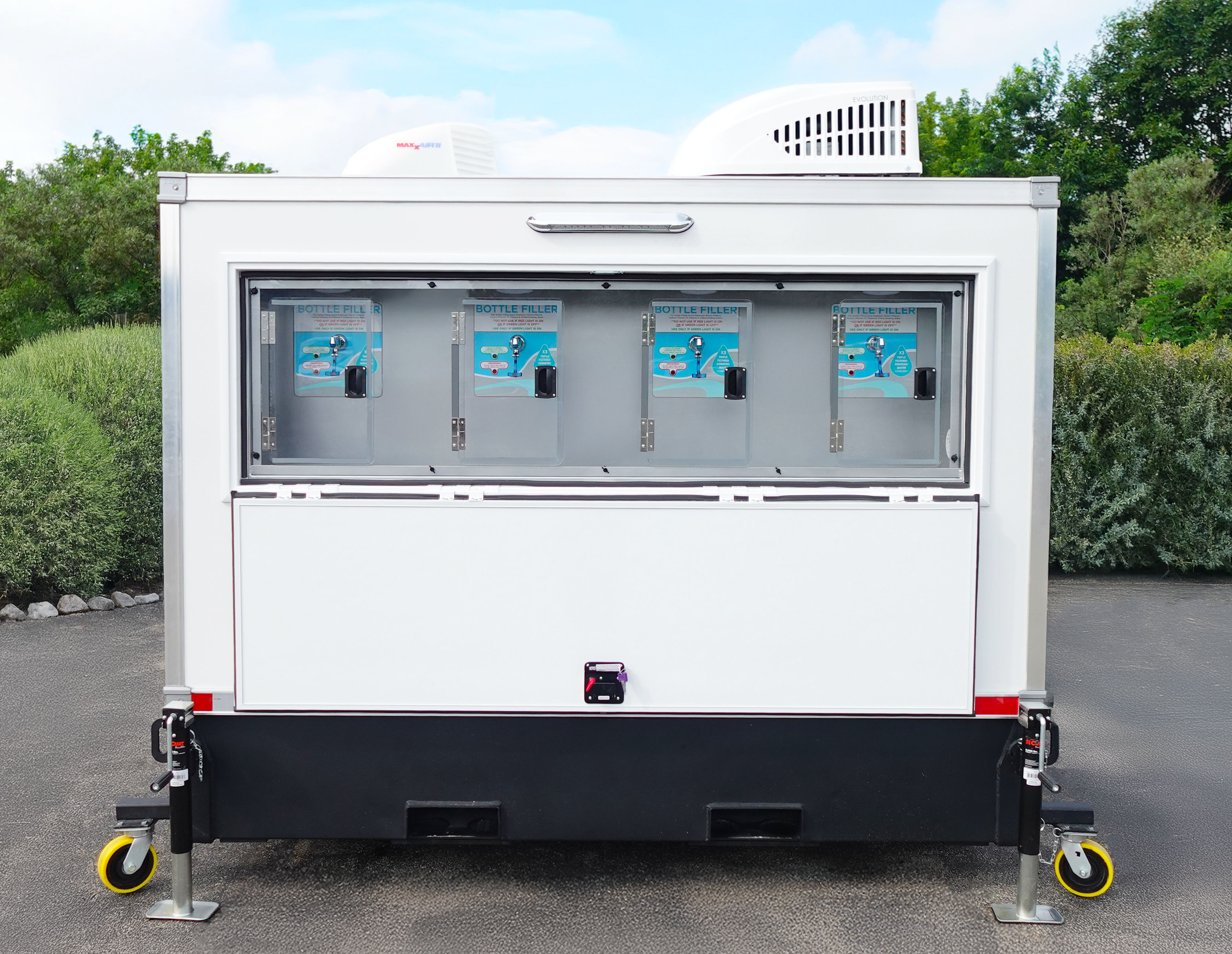
Every choice on the Signature is tuned for heat and for distance. Four push-back filling stations line an exterior wall under an awning, so an entire crew or a queue of fairgoers can cycle through fast on a hot break instead of bunching at one spigot. Onboard cooling and built-in chillers hold the supply cold even while the trailer sits in full Tucson afternoon glare, which is exactly the part a cooler or a pallet of bottles gets wrong out here.
Three hundred gallons aboard takes a good-size crew, or a packed event stretch, through the day, and since the whole rig tows, we can shift it across a big site or send it to the build’s next phase without breaking down any fixed plumbing. Because it accepts ordinary jobsite power across a broad range, the one trailer works equally on a fully wired venue or a stripped desert lot we improvise power for.
It also does more than the headline bottle taps suggest: a rear large-jug filling point handles five-gallon coolers and hydration packs, and several hose-bib outlets feed wash-up, crew tasks, and ag use. One trailer covers the whole hydration picture for a Tucson worksite or festival at once.
A station costs less than bottled water once you run the numbers
A 50-person Tucson crew goes through about 300 plastic bottles every day at six per person on a 105-degree afternoon, and every one has to be bought, hauled, iced, and tossed. We’ve walked this math with more than one skeptical PM.
Across a 200-day project that climbs past 60,000 bottles, and on the bigger multi-phase work out toward the mining districts and the Marana logistics parks, well north of 100,000. One station stands in for the whole stack, chilled water on tap and nothing left for the dumpster.
It is a logistics call long before it is a green one
The waste story holds up. Across the country roughly 60 million water bottles get thrown out daily, barely a third are ever recycled, and one bottle can persist in a Pima County landfill for hundreds of years. That number earns a line in your sustainability reporting. But most Tucson project managers and event producers switch for a flatter reason: a central station kills the daily scramble. There’s no recurring bottled-water order to chase, no cooler gone tepid by mid-morning, no stack of empties roasting by the entrance. Your superintendent gets the build back, and your event lead gets the show back, instead of riding herd on the water all day.
And because we keep the station filled from our own potable water trucks (no third party in the loop), supply tracks the day. A crew that doubles for a concrete pour, or a gate count that spikes when the headliner takes the stage, never out-drinks the plan. We simply top the tank.
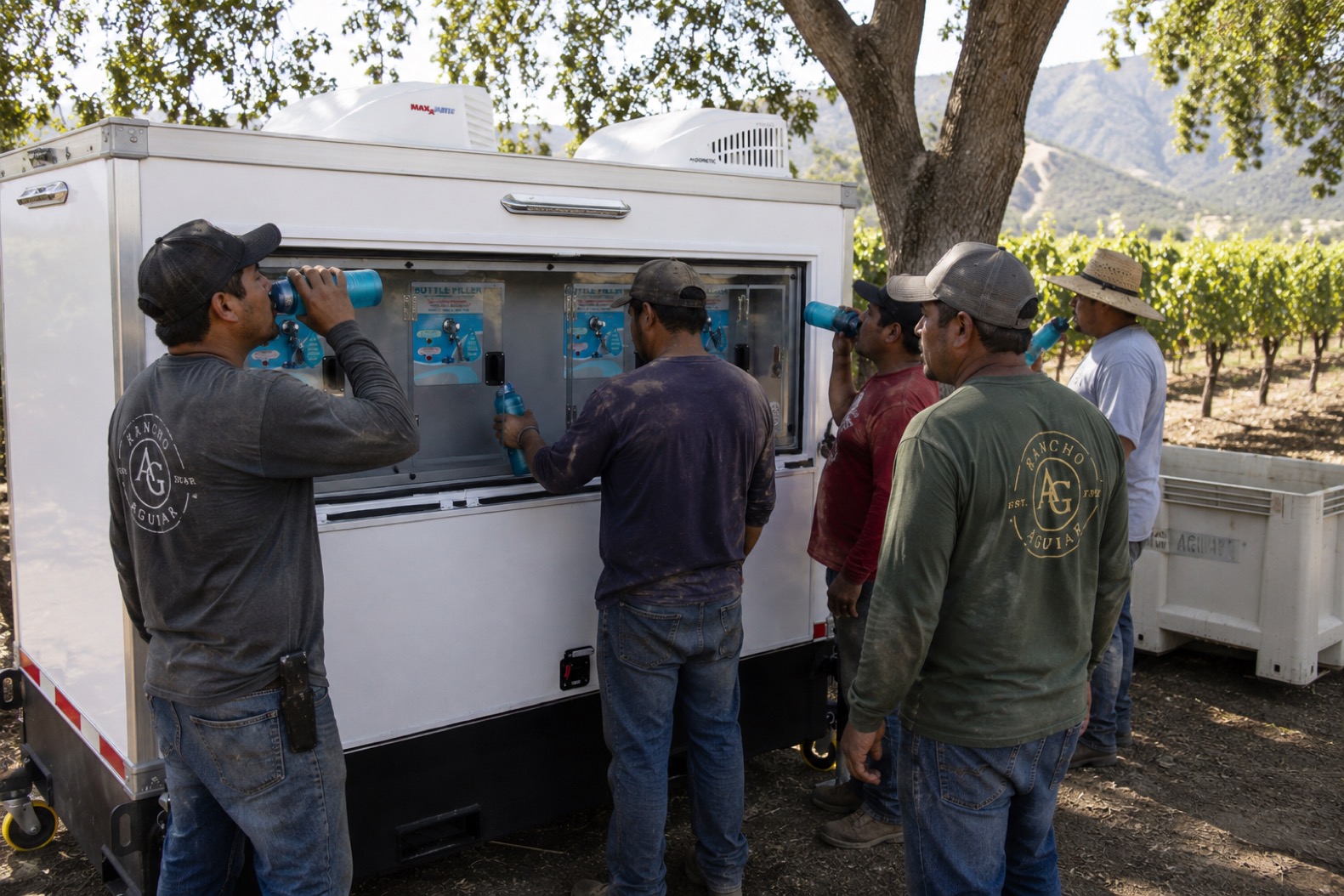
Hydration shaped to the way the Old Pueblo actually gathers and builds
Tucson doesn’t have one hydration problem, it has a calendar of them. A multi-week Gem Show downtown asks for something different than the El Tour de Tucson route, which asks for something different than a copper-district crew working an open pit. Here is where these stations go to work.
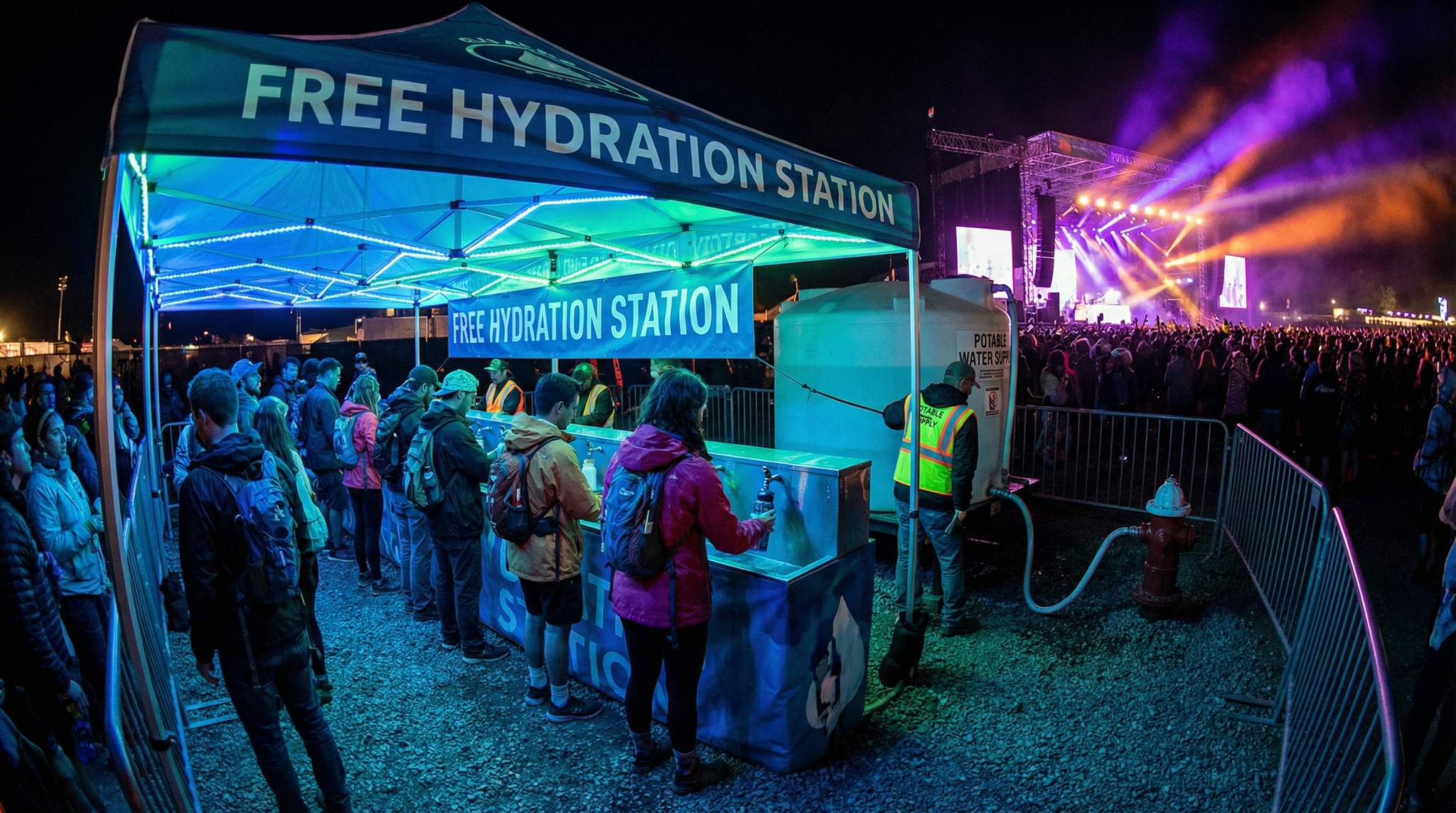
Festivals, the Gem Show & downtown events
The Tucson Gem, Mineral & Fossil event pulls more than 100,000 people across Downtown and the Convention Center over multiple weeks each winter, and Fourth Avenue street fairs, the Tucson Folk Festival, and All Souls Procession crowds all bake in open sun. A station hands organizers free-flowing chilled water and clean refill points without trucking in, and trucking out, a mountain of single-use plastic.
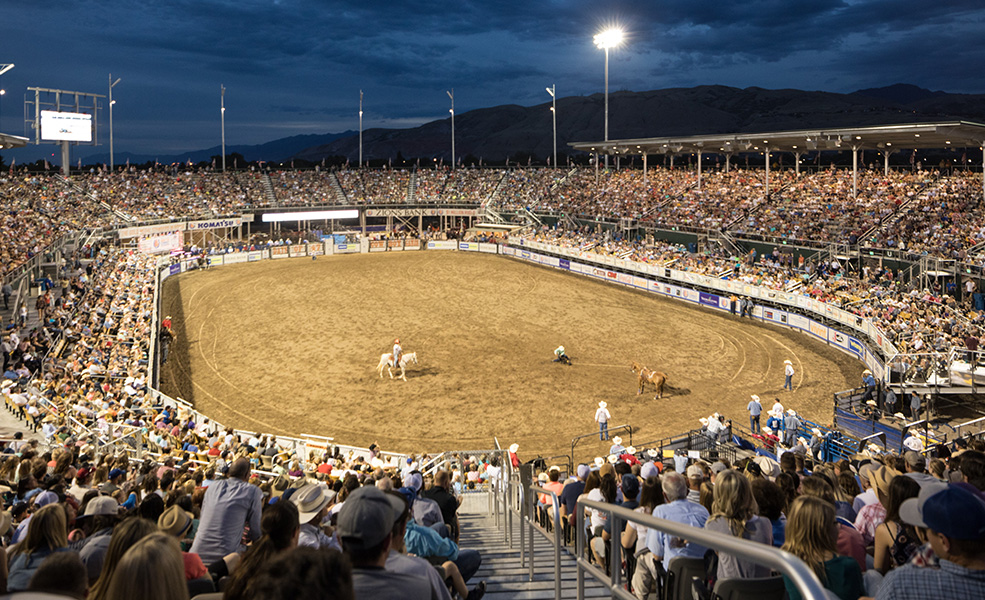
Fiesta de los Vaqueros & sporting crowds
The Tucson Rodeo fills the grounds every February, Arizona Wildcats game days flood the University district, and spring-training and tournament fields run all day in the heat. Multiple stations spread across a footprint keep nobody more than a short walk from a cold refill, and our crew times delivery and pickup to your event window.
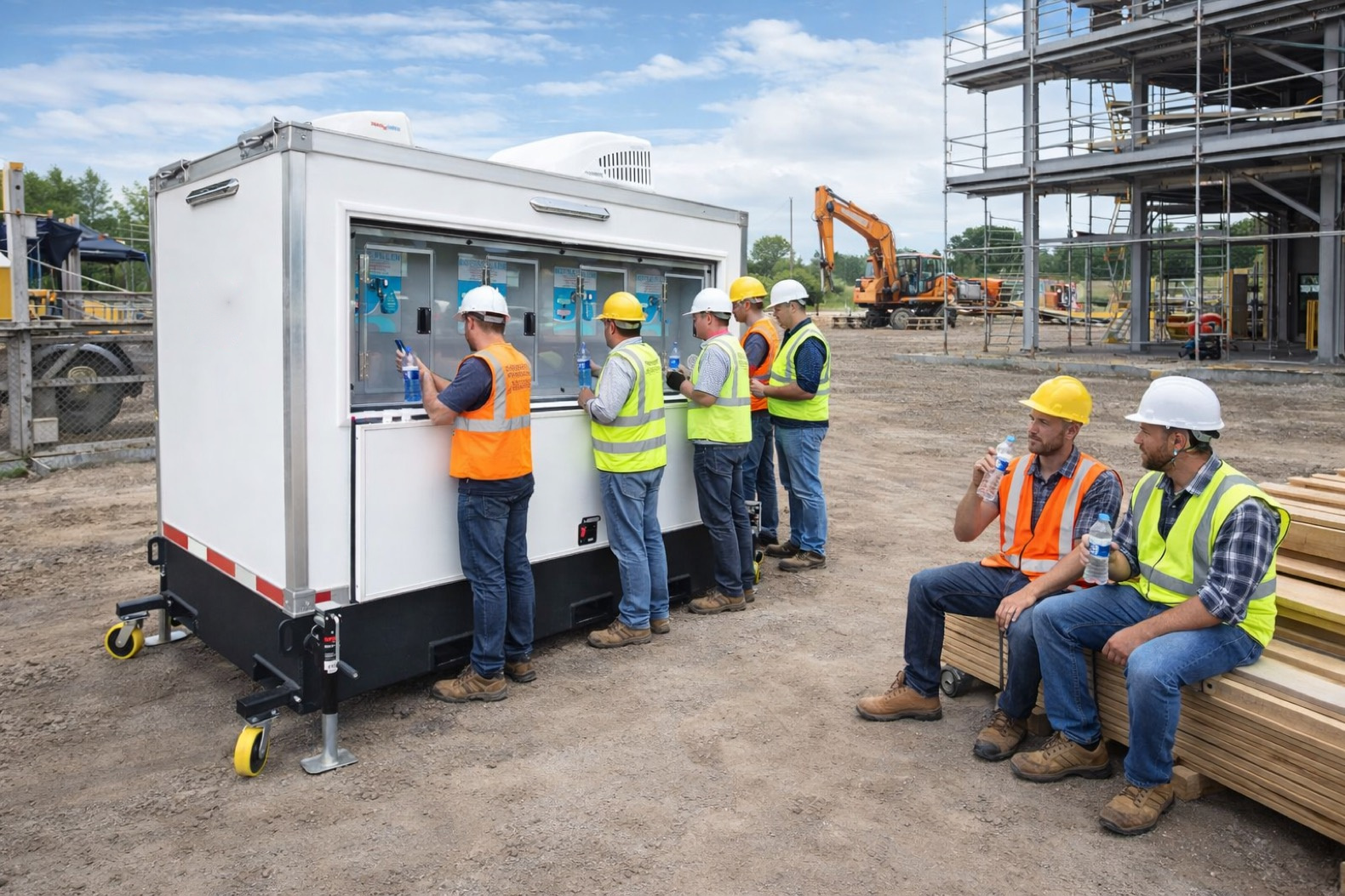
Construction & the I-10 / I-19 corridors
Tucson’s build-out runs on crews in open sun: the I-10 widening through town, the I-19 work south toward Sahuarita and Green Valley, warehouse and logistics parks rising around Marana, and the steady commercial work near Davis-Monthan and the Raytheon (RTX) campus. We stage stations along these routes so general and trade contractors put documented, chilled hydration a short walk from every work face.
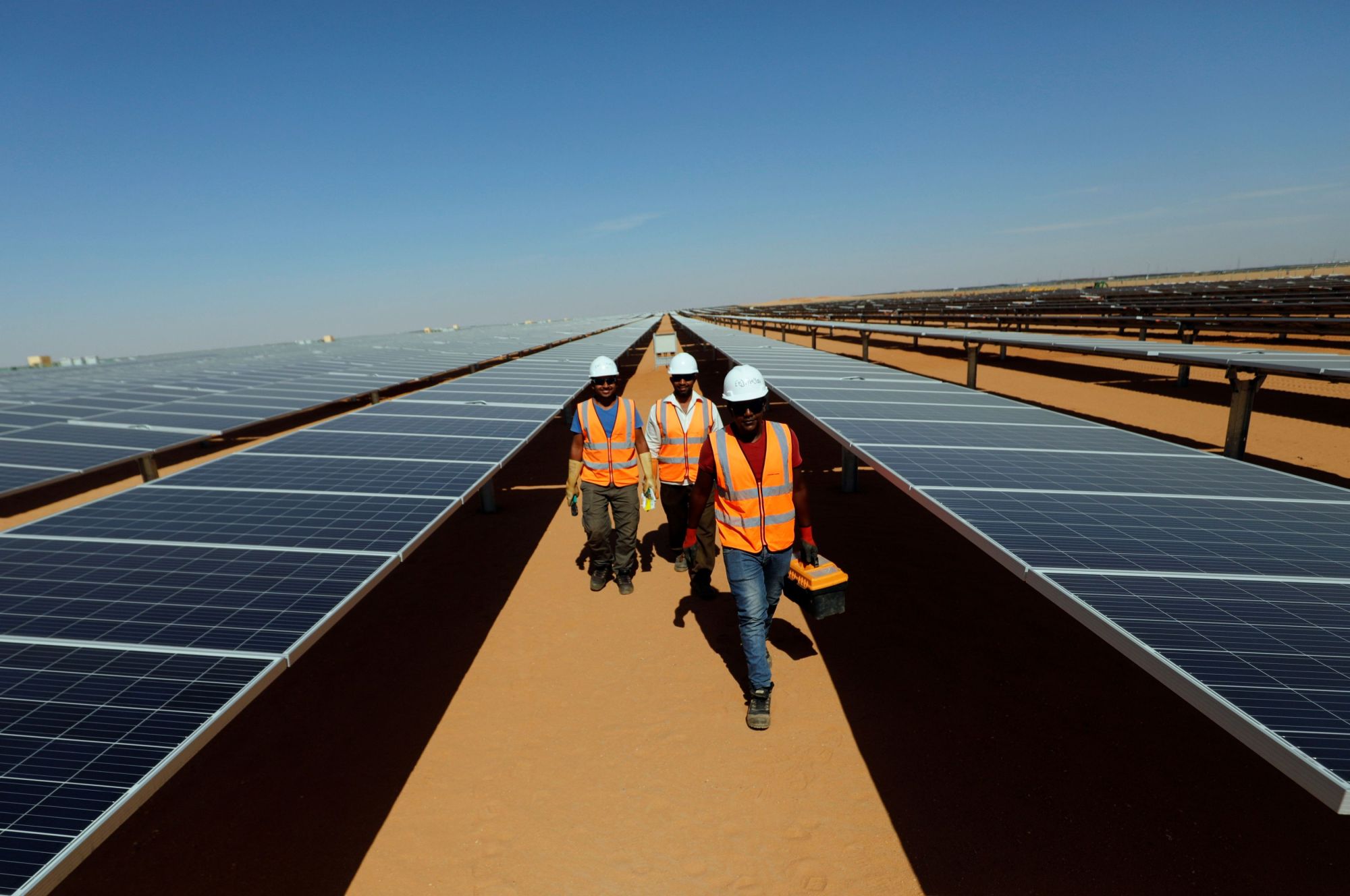
Mining, solar & desert ag labor
The copper operations around Green Valley and Sahuarita, the solar installs out in the Avra Valley, the pecan groves and the cotton and hay ground toward Marana, this is some of the most heat-exposed work in the state. With the jug-fill point and the hose-bib taps, field crews refill coolers and personal gear on the spot, no trudge back to the truck required.
Treated through four stages, disinfected, then chilled before it pours
A water station only earns its rental if people genuinely want to drink from it. Ours pass city water through a complete treatment train and a UV chamber, then an onboard chiller takes over, so what leaves the nozzle tastes the way it should and is truly cold even on the meanest afternoon of a Tucson June.
Sediment stage
Captures grit, rust flecks, and the fine particulates that Tucson’s groundwater and supply lines can carry before anything else reaches the water.
Carbon stage
Lifts out chlorine, odors, and off-flavors so the pour is clean on the palate, the line between a station people drain and one they walk past.
Micro-particulate stage
A sub-micron filter takes out the fine particles the earlier stages cannot catch, looking after workers and the public the same.
UV disinfection
An ultraviolet chamber knocks down bacteria and pathogens with light rather than added chemistry, a final safeguard before the tap.
Three ways to fill, ADA height included
Four push-back filling positions with adjustable nozzles ride on each trailer. Press a bottle to the bar and it runs hands-free. One position rides at an ADA-accessible height, so the station serves every guest and every crew member on site without a separate workaround. Around back, a large-jug station fills five-gallon coolers and personal packs, while a bank of hose-bib taps covers crew chores, event support, and farm work. Food-grade components and stainless equipment carry that filtered-and-chilled quality clear through to the nozzle.
A Signature trailer’s 300-gallon load is good for something like 2,400 sixteen-ounce pours, refilled as needed, so it won’t turn into the choke point on a jam-packed Tucson day.
We deliver, fill, and hook it up, usually pouring cold water within the hour
There’s no project to run on your end. I tell clients to picture it as one delivery, not a build. Placement, the fresh-water charge, and the hookup are ours to handle, and we run your team through the unit before pulling off the lot.
You give us the basics
Your headcount, the rental length, the placement on site, and the available power. That short list is enough for us to scope it accurately.
We roll across metro Tucson
Generally inside 45 minutes of dispatch to any point in Pima County, plus after-hours runs during heat events.
We set it in place
We square it up level, charge all 300 gallons, and energize it from one to three 20-amp 120-volt circuits, or alternatively a single 50-amp 240-volt feed.
We keep it pouring
On a rhythm set by how fast you draw it down, our trucks keep the tank full, and we maintain the unit start to finish of the rental.
No generator on a far-flung site? It gets handled in the quote. Given how little power the trailer pulls, plus the backing of our service fleet, we’ve run stations on stripped desert lots that had no permanent power whatsoever. Walk us through what’s on the ground and we’ll build the workaround into the plan.
Under a Sonoran summer, cold-water access is a documented duty, not a courtesy
Tucson logs more than 100 days at or above 100 degrees in a typical year, with long June and July runs that stay brutal into the evening. Because Arizona carries no heat standard of its own, a Tucson employer answers to federal OSHA, whose rules already call for accessible potable drinking water on the job and whose General Duty Clause covers heat hazards. The Heat Illness Prevention standard OSHA has proposed nationally would raise the bar again, pointing toward documented, suitably cool water staged near the people doing the work.
A water station turns that duty into something you can point an inspector at. You get a fixed, mapped source pouring chilled potable water on demand, the spine of a defensible Heat Illness Prevention Plan (HIPP) and precisely the sort of infrastructure a safety audit expects to see on a Tucson site.
- Suitably cool, potable water within reach at the work face, all shift long
- Mapped, on-the-record hydration points that feed straight into your HIPP file
- Backs up acclimatization protocols and timed water breaks for crews working in the heat
- Positioned ahead of the tightening federal heat rule instead of reacting after it takes effect
What years of Tucson dispatch taught us about staging water
Dropping stations across Pima County for years has shaped how we run every job. Here are a few lessons (paid for in the field, every one) that stuck with me:
We learned early that where you set the trailer matters as much as the trailer. At one downtown Gem Show venue we positioned a station near the loading gate on setup day and watched it sit half-used, because the exhibit floor and the crowd were a long block away and nobody wanted the walk in the heat. So we moved it. We slid it beside the main entry plaza the next morning, and draw doubled before lunch. The site manager put it plainly: “Make the water closer than the shade and people will use it.” So we have repeated that exact move on a dozen Tucson footprints since.
We also rebuilt our refill planning around the weather report instead of a fixed schedule. During one June heat stretch we pre-positioned extra water trucks, and when a Marana build and two foothills events all rang the same afternoon, every one of them stayed wet without a tank going empty. A safety lead texted that night: “You topped us off before we knew we were low.” But the lesson stuck deeper than that one job, and that margin is something we now write into every hot-season contract from the start.
And we found out the bottled-water habit holds on tight right up until people taste the alternative cold. At a solar install out in the Avra Valley, the superintendent flat doubted we could keep a 300-gallon tank genuinely cold on an exposed desert pad. Once it landed, we matched the top-off schedule to his crew, and barely a week on he called wanting a second trailer, putting it bluntly: “The guys quit asking for ice.” Cold water that stays cold is the entire pitch, and in this climate it closes itself once it lands.
Each of those jobs drove home the same thing the desert never stops repeating: in Tucson, drinking water isn’t a checkbox you tick once and walk away from. It is an operation, and we run it like one for the full length of every rental, festival or worksite alike.
When the crowd is outdoors and the desert offers no shade
Tucson event producers plan around heat the way other cities plan around rain. I’ve sat in enough of those production meetings to know it’s the first agenda item, not the last. Whether it’s a Fourth Avenue street fair, a Reid Park concert, a charity run on the bike loop, or a corporate gathering at a foothills resort, a self-contained station gives attendees free-flowing chilled water and clean refill points. It also keeps your team from hauling in, chilling, and carting off a small hill of single-use plastic.
Across a wide footprint we’ll plant several stations so nobody has a long walk to water, and our team works the delivery and the pickup on your event’s clock. A downtown festival taught us that the hard way: one station parked by the main stage had a thirty-person line by mid-afternoon, since heat times a few thousand people adds up quickly. So the following year I split four units across the grounds, and the lines I had braced for simply never formed. To your guests it reads as hospitality, and to your operations lead it reads as risk management.
Why a Sonoran summer is one of the toughest hydration jobs to plan
A lot of cities sweat through a hot week or two and call it summer. Tucson gets a hot season counted in months, and the people building the region’s future, and the crowds celebrating in it, are out in the worst of it.
Tucson heat is relentless. In an ordinary year the count tops a hundred days hitting 100 or better, June regularly pushes past 105, and once July’s monsoon moisture arrives the same temperature lands harder on the body. Ground temperatures on fresh asphalt and exposed caliche sit well over whatever the air gauge shows, so a crew can already be in genuine heat-illness range by mid-morning while the readout still claims a mere 101. Cold water in that environment is not a nicety. It’s the cheapest piece of safety gear on the whole site.
But what really makes the planning hard, in my experience staging this town, is the sheer length of the danger window. A milder-climate contractor can ride out a hot spike on extra coolers. Set a Tucson contractor on a six-month summer calendar and the cooler-and-ice routine breaks down: the daily volume is enormous, the water turns warm fast, and the hauling, icing, and tossing of bottles piles labor on top of labor every day. A central, self-chilling station is the only arrangement that holds across a full Sonoran summer without becoming its own logistics project.
And the demand keeps climbing, because the region is busy. The University of Arizona anchors a campus and medical district that runs year-round, Davis-Monthan Air Force Base and the sprawling RTX (Raytheon) operations near the airport keep a steady industrial workforce in the open, and warehouse and logistics parks keep spreading around Marana and the I-10 spine. The copper districts toward Green Valley and Sahuarita put crews in open-pit sun, and the events calendar, from the multi-week Gem Show to the February rodeo to El Tour de Tucson in the fall, stacks tens of thousands of people outdoors at a time.
We built our Tucson dispatch around exactly that mix. Early on, staging units down the I-10 and I-19 corridors and across the big downtown event grounds, we keyed refills to the actual head count instead of a set calendar, and we layered in after-hours drops whenever a heat advisory hit. Because here a hydration gap doesn’t just slow the work or sour the event, it can stop one cold and put a person in an ambulance.
Saguaro National Park trailheads, the Davis-Monthan flight line, and every venue between
In Tucson, where you deliver matters as much as the weather. Over the years our trailers have rolled out to a long list of named sites across the area, and that local knowledge is a big part of what we offer.
Out at the edges of town, the trailheads ringing Saguaro National Park (east and west units both) and the climb up Sabino Canyon draw hikers and trail crews into exposed Sonoran terrain where shade is scarce and the nearest tap can be miles off. I’ve staged potable water for trail-maintenance days and organized hikes alike, because a ranger-led group at the base of the Rincons can drain a tank faster than a small jobsite. One trail lead told me, “We lost more volunteers to the heat than to the terrain.” The same is true of film and photo shoots out at Old Tucson and across the saguaro forests that double as Western movie backdrops, where on-set hydration has to travel out to the location rather than the other way around.
Closer in, Mission San Xavier del Bac draws steady visitor crowds onto an open desert plaza south of the city, and the Tohono O’odham community events nearby run outdoors through the warm months. Up north, the resorts of the Catalina Foothills and the master-planned stretches toward Oro Valley host weddings, golf tournaments, and corporate retreats that all expect cold water on a 100-degree afternoon without a wall of plastic flats to show for it.
On the institutional side, we know the rhythm of the University of Arizona’s outdoor calendar, from move-in week to Arizona Stadium game days to the spring commencement that fills the mall. The Pima Air & Space Museum and the adjacent boneyard host large open-air gatherings beside acres of sun-baked tarmac, and Davis-Monthan’s flight line and exercises put personnel outdoors in full Tucson heat. Kitt Peak and the observatory road southwest of the city, the Tucson Speedway out on the northwest side, and the Pima County Fairgrounds southeast of town each bring their own crowds into the open at different points in the year.
None of those venues is a one-size-fits-off situation, and we don’t treat them that way. And a fairgrounds weekend and a foothills wedding draw water on completely different curves (one is steady all day, the other spikes hard at sundown), so knowing those curves before we arrive is exactly why a local operator beats a number pulled off a national directory. We have parked a trailer in most of these spots already, and that institutional memory rides along on every quote.
Past the station: the trucks that keep a Tucson site supplied
The water station is the visible piece. Behind it runs a support fleet that moves fresh water in, holds it on site, and carries waste out, so one phone call covers the entire loop rather than three separate vendors.
Potable water trucks
Hauling drinking-grade water by the load, our trucks keep that 300-gallon tank charged on a rhythm matched to your crowd or crew. When a project’s draw outpaces one delivery, say a concrete pour or a peak gate day, those same trucks also charge cisterns, onsite tanks, and bladder bags.
Bladder bags & buffer supply
Collapsible portable bladders give you a fresh-water cushion through high-demand windows, or temporarily catch greywater on a site with no drain. They’re the quiet piece that keeps a remote Tucson job moving between truck visits.
Pump trucks
Anytime water needs shifting, pumping, or drawing off, a pump truck does the work, charging storage or repositioning supply over a broad footprint. It pays for itself on big, stretched-out sites where the trailer and the water source sit far apart. One yard super told me, “The pump truck saved us a quarter-mile of garden hose.”
Vacuum & waste trucks
A waste truck draws down and carries greywater and wastewater off to permitted disposal, which closes the loop. Where the used water ends up is never your problem to solve, because we folded that step into the service from the very beginning.
These pieces interlock. An out-of-the-way desert pad might call for a station, a bladder bag held in reserve, and a standing water-truck fill. A multi-week downtown event might want a pump truck to shuttle supply and a waste pickup at teardown. Describe how your job is laid out and we’ll put together the right mix, with a single point of contact, a single invoice, and a crew that already has your site mapped.
The questions we’ll ask, and why every answer moves the plan
Two minutes on the phone is usually all it takes to land an accurate quote. Below is what we’ll ask, so you can have the answers handy and watch how we tailor every job rather than defaulting everyone to one setup.
The four answers that steer our recommendation
- How many people? A 15-person framing crew and a 5,000-attendee street fair are different problems entirely. The number of people sets how many stations go out and how tight we run the refill rotation.
- For how long? A weekend rodeo block, a three-week pour, a multi-week Gem Show, or a nine-month build each get a different service cadence. Short events lean on reserve storage, long jobs lean on scheduled truck fills.
- Where will it sit? The towable Signature backs into a yard, a lot, a fairground, or a corridor staging area. Once we know the exact spot and the path a delivery truck takes to it, we can park it where the foot traffic already is.
- What power is on site? Running a station takes one to three 20-amp circuits, or one 50-amp drop on its own. Out here a remote site with no permanent power is routine, and it’s a solvable problem, so long as you flag it for us early.
The details that help us get it perfectly right
- Which patch of the site it should occupy, and whether a delivery truck has a clean shot to that patch
- Whether everyone clusters at one location or is fanned out end to end across the grounds
- Any heat-illness documentation your safety program needs the station to support
- Whether you’ll also want bulk water delivery, bladder storage, or waste pickup as part of the same job
The costs a pallet of bottled water never prints on the invoice
On paper, a pallet of bottled water reads as the budget option. The true bill is buried in handling, in storage space, in water that warms up, and in disposal, and a Tucson summer drives every one of those higher than a gentler climate would.
The labor nobody puts in the budget
A person on your payroll places the bottled-water order, receives the pallets, breaks them open, ices coolers at dawn, refills them all day, and then flattens the empties for the trash. On a large Tucson crew or a multi-day event that’s hours of paid labor daily, and it’s labor pulled straight off the actual work. A station erases the chore. A Marana builder with a couple of crews going walked us through his real costs. And the working hours we put back in his pocket came to more than the rental. His words afterward have stayed with us: “I never clocked that the bottles were burning half a day of payroll every week.” The unit rolls in already full, refills from our own trucks, and asks nothing of your super except somewhere to set it.
The warm-up problem
On a Tucson July morning, a cooler that was iced down at 6 a.m. has gone bath-warm by ten. Once water goes warm people quit drinking it, and the instant they quit drinking is the instant heat illness begins to set in, at a festival and on a worksite both. An onboard-chilled station simply doesn’t have that warm-up curve. None of it. The pour at teardown comes out as cold as the pour at first light, which happens to be the exact moment a worn-down, overheated crew or crowd needs it most.
The storage and footprint tax
Pallets of bottled water swallow staging space, block laydown and back-of-house areas, and cook in the sun until they’re used. The empties pile up faster than anyone hauls them, and on a tight downtown event site or a packed urban jobsite that clutter becomes its own headache. One trailer takes up a single parking space yet handles the drinking water for a crowd or crew that would otherwise tear through hundreds of bottles daily.
The waste that trails you
Each bottle you buy becomes a bottle to discard, and a busy Tucson site or a weeks-long event throws off a heap of them. Add up disposal fees, the demerit on a project or event scorecard, and the fact that out here a tossed bottle can sit for centuries, and you’ve got a footprint that outlives whatever you built. Switching to a refill station zeroes that line and hands your sustainability reporting a number worth printing.
Staging chilled water across metro Tucson and Pima County
From our local yard we cover the whole Tucson and Pima County metro, the Downtown and University core, the Catalina Foothills, the northern stretch toward Oro Valley, and the building and farming ground out south and west. If your address falls inside the Tucson metro, it falls inside our delivery range.
Catalina FoothillsOro Valley edgeMarana
SahuaritaGreen ValleyVail
Rita RanchMidtownSouth Tucson
Davis-Monthan areaAvra ValleyTucson Mountains
Casas AdobesDrexel Heights
Working a corridor more than a single address? We run the arteries this region was laid along, I-10 cutting through town, I-19 dropping south to Green Valley, and the surface routes reaching Marana and the Avra Valley, so a corridor job or a multi-site spread gets the same quick turnaround as a single address.
The questions Old Pueblo crews and organizers really ask
How quickly can you get a water station to my Tucson site?
Most deliveries across Pima County land within about 45 minutes of dispatch. We keep after-hours runs going right through heat events, so when a crew clocks in, or a gate swings open, to zero cold water on a 108-degree morning, a station is usually flowing before noon. The one real wild card is your site access and the power on hand. Give us that picture and we’ll order the delivery around it.
Does it pour cold, or only filtered?
Both. Every station chills its own supply with an onboard chiller, so the water stays truly cold all day, the first fill and the teardown fill alike. That’s intentional, because in the Sonoran Desert lukewarm water sits untouched while people quietly slide toward dehydration. People actually drink cold water, and water that gets drunk is what holds heat illness off, which is why we count chilling as safety gear and not a comfort perk.
What’s the tank capacity, and who refills it on a long day?
Each Signature trailer holds 300 gallons aboard, which works out to somewhere near 2,400 sixteen-ounce pours. On a big crew or a heavy event day we keep that tank replenished from our own potable water trucks, on a cadence set by how fast you’re drinking it down, so its capacity is never the thing that runs out. Refills aren’t your job. They’re ours.
Does renting a station help with federal-OSHA heat-illness compliance?
It supports it directly. Federal OSHA already puts accessible potable drinking water on the job in the rulebook, and the Heat Illness Prevention standard now on the table would raise it toward documented, suitably cool water positioned beside the crew. Since Arizona keeps no separate state heat rule, a Tucson employer operates under that federal framework. A station gives you a fixed, mapped, chilled hydration point that you can write into your Heat Illness Prevention Plan and walk an auditor straight to. Authoring your safety program is on you, but the hydration backbone that program stands on is what we deliver.
Are the stations ADA accessible?
Yes. Every trailer carries four push-back filling positions, and one of them sits at an ADA-accessible height, so a jobsite or an event is fully covered without bolting on a separate fixture. Out back there’s a large-jug fill point sized for five-gallon coolers and hydration packs, and a set of hose-bib taps feed crew chores and ag work.
Can you handle festivals as well as construction crews?
Absolutely, and Tucson events are a core part of what we do. Whether it’s the Gem Show, a Fourth Avenue street fair, the rodeo grounds, a race, or a company gathering, we’ll set a single station or spread several across a big footprint, with the drop and the pull scheduled around your event window. Your crowd gets open-flowing chilled water and tidy refill points, and you sidestep the expense and the trash of hauling in single-use bottles.
What information do you need to get one staged?
Just four quick things: your head count, how long you’ll keep the station, the spot on site where it lands, and what power is available. On power, the Signature accepts one to three 20-amp 120-volt circuits, or instead one 50-amp 240-volt feed. Working a remote desert pad with no power? Flag it, and we’ll roll the fix into your quote.
Is your coverage just the central city, or the full Tucson area?
The whole metro. Our local dispatch covers Tucson proper plus the Foothills, the Oro Valley edge, Marana, Sahuarita, Green Valley, Vail, and the rest of Pima County. Corridor projects along the I-10 and I-19 are routine for us (we keep trailers staged near both), and so are multi-site jobs that move with the work.
How does the taste compare to a store-bought bottle?
Clean, with no chlorine bite. Our carbon stage strips the chlorine and the flat off-notes Tucson tap can carry, so the pour comes across clean and neutral instead of garden-hose flat. It counts for more than you’d think: the station only works if people would rather drink from it than not, which is why taste sits inside our safety math instead of off to the side.
What head count can one trailer realistically serve?
More than you’d guess, because the ceiling is how often we refill, not the spigot itself. Four taps move a crew or crowd through quickly, and 300 gallons aboard yields on the order of 2,400 sixteen-ounce pours before the next fill. For really large head counts we either tighten the water-truck rotation or set a second trailer alongside, so the station grows with your numbers rather than putting a lid on them. Give us your peak crowd or crew figure and we’ll build the supply to meet it.
Will you roll out fast when a heat emergency hits?
Yes, and short-notice heat response is a big part of why clients hang onto our number. We keep running drops straight through heat advisories and pre-position spare water trucks whenever the forecast turns ugly. When a crew clocks in, or a gate opens, to no working hydration on a triple-digit Tucson day, one fast call to us usually puts a station pouring chilled water on site before the afternoon peaks.
Made for the people who can’t afford a hydration gap
“Forty guys on a south-side pour in June, and the bottled-water plan was done by ten in the morning. By that afternoon they’d parked a station on the pad and it poured genuinely cold. We haven’t bought a flat since.”
“Across our downtown event run during the Gem Show weeks, those refill stations knocked our single-use order down to almost nothing and the queues never stalled. They scheduled the drop and the pickup around us, not the other way round. We rebooked on the spot.”
“Our safety audit wanted documented cold-water access for a heat-exposed crew out past Marana. A mapped station checked that box for the HIPP, and the top-offs always landed ahead of us running short.””
Service information current as of June 2026.
Get chilled, filtered water on your Tucson festival or worksite before the next heat wave
Give us your headcount, your dates, and the spot on site where it should land. We’ll scope the job right and send a trailer your way across the metro, usually within about 45 minutes of dispatch.