On-Site Hydration Services is the go-to team for Signature Series chilled water stations across Fort Collins. We deliver chilled and ready on day one for Colorado State University pads, arterial CIP crews, and Canvas Stadium event weekends. Call now or request a quote and we will lock dates against Front Range heat and your look-ahead. Licensed local staging, not a reseller chain, with operational planning that accounts for delivery windows, power verification, and crew volume.
See the Signature Series water station specs
We stage Signature Series portable water stations on CSU construction pads, Shields and Trilby CIP corridors, and Canvas Stadium event zones that keep northern Front Range crews and guests outdoors through dry high-sun afternoons. Cold filtered water shows up as documented cool-water access serious employers already run. Call us or request a quote and we confirm power, placement, and tanker cadence before the truck rolls. Teams that already use Denver mobile water station rentals keep us on the Front Range loop for Fort Collins drops. Licensed and insured crews own the units we deliver across Larimer County. You are not waiting on a brokered trailer when a 90-degree afternoon hits.
One Signature trailer can pour for a weekend concert and be working a slab pour a couple of days later. Hiring one company for your events and a separate one for your worksites makes no sense. Either way, the planning, the delivery, and the refills are ours.
The onboard cooling unit keeps the tank genuinely cold all the way through a Fort Collins afternoon, and that single detail carries the whole thing. Warm water is water people abandon, and midsummer is exactly when a crew or a crowd is drinking the most. Cold water gets finished, and finishing it is what keeps heat illness off the site.
Typical Fort Collins deliveries land in about 45 minutes, and we keep emergency runs going around the clock whenever a heat advisory or a power shutoff hits the northern Front Range. The morning a foreman finds his 40-person crew stuck with one warm cooler, speed is the whole game.
One rule sits under every job we take: water that people walk past might as well not be there. We've stood on a bare Fort Collins site and watched shrink-wrapped pallets cook next to the job-trailer while the crew baked thirty yards off. We've watched the opposite too, a chilled station ten steps off the work face run bone-dry twice inside one shift. Everything that matters lives in the distance between those two pictures. Which is why we don't drop a unit and disappear. We match it to your headcount or your gate count, set the refill rhythm to how hard you're really pulling on it, and treat a heat call the way you'd want your own treated, meaning right now, because out here one hot hour can swing the whole day.
Elevation-aware refill margin. We build dry-air margin into warm-season Fort Collins contracts on purpose because phone forecasts understate fluid loss.
“Dry-week heat cooked our coolers. Chilled trailer at the tower fixed it. Would use them again on the next Front Range phase.”
“Needed a cool-water point on the drawing. Closure station made briefs clean. Would use them again on the next Front Range phase.”
“Cold taps ten steps off the wall beat a conex cooler. Would use them again on the next Front Range phase.”
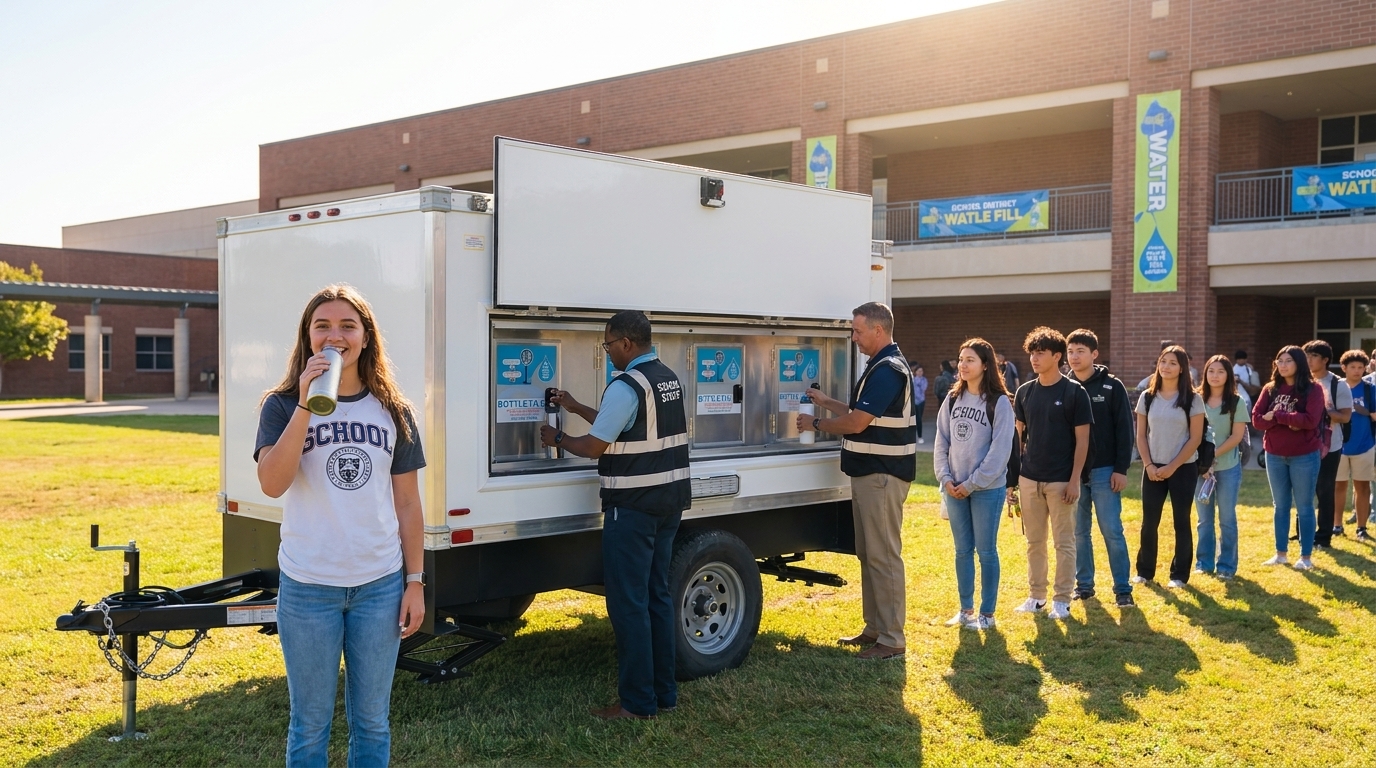
Builds, move-in, and academic events. Gate timing shapes staging. Delivery windows flex around lane closures and event load-in on this side of town.
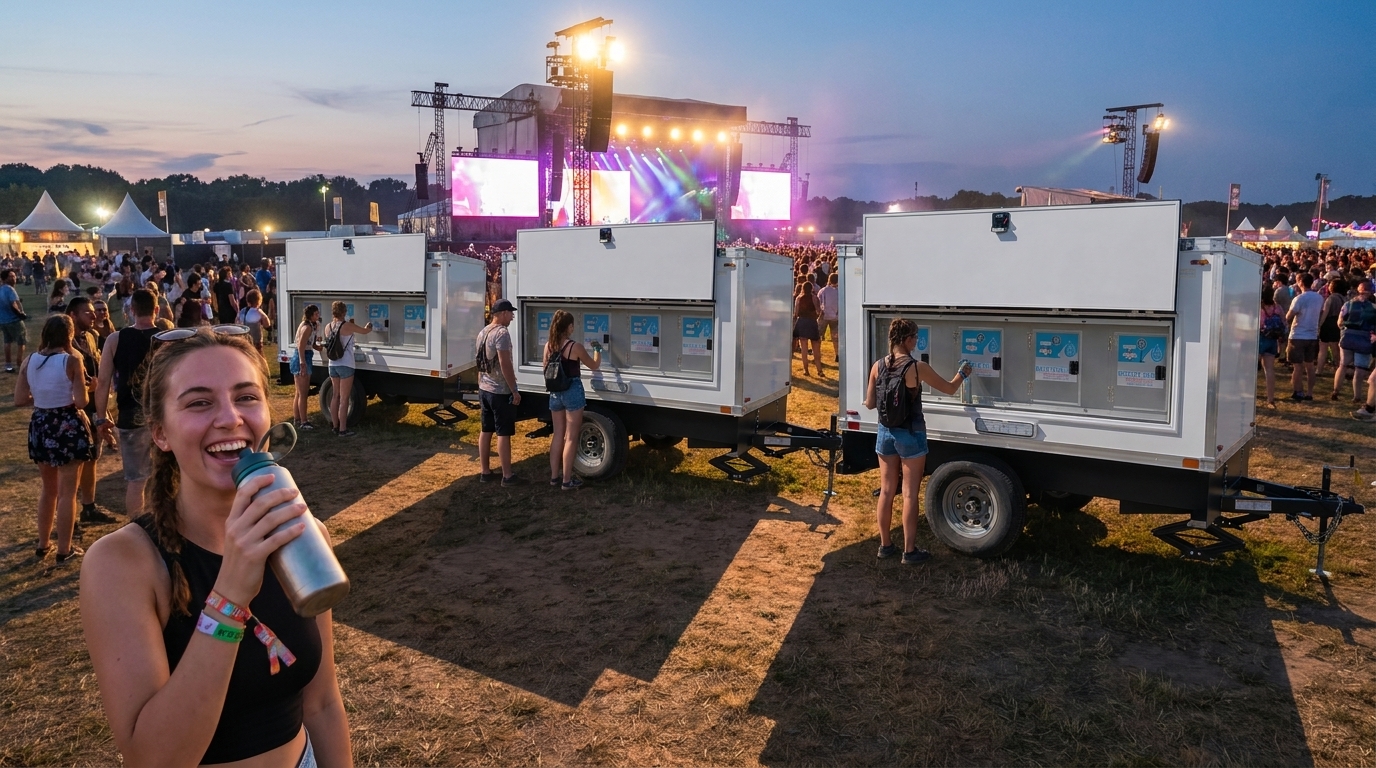
Festivals and downtown builds. ADA street placements first. Delivery windows flex around lane closures and event load-in on this side of town.
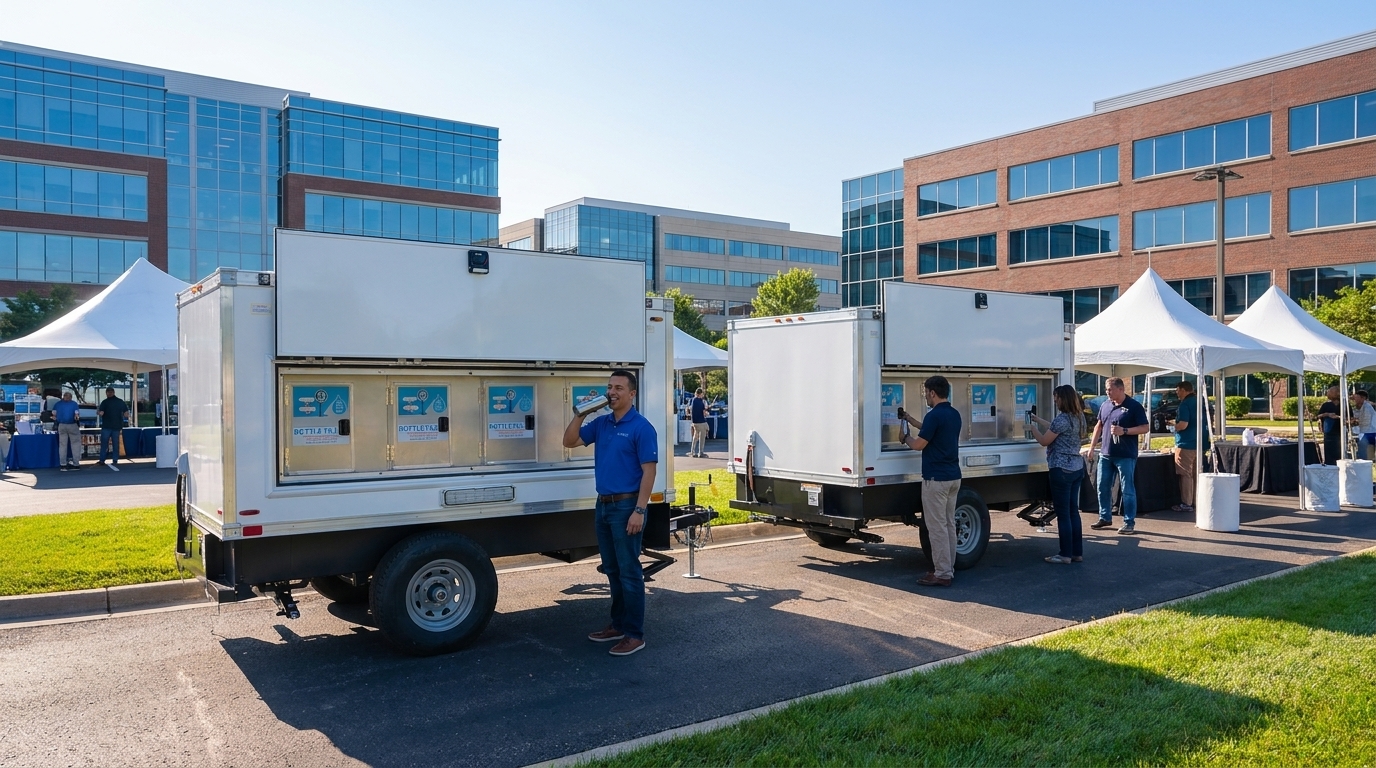
CIP corridors and commercial pads. Linear re-spots. Delivery windows flex around lane closures and event load-in on this side of town.
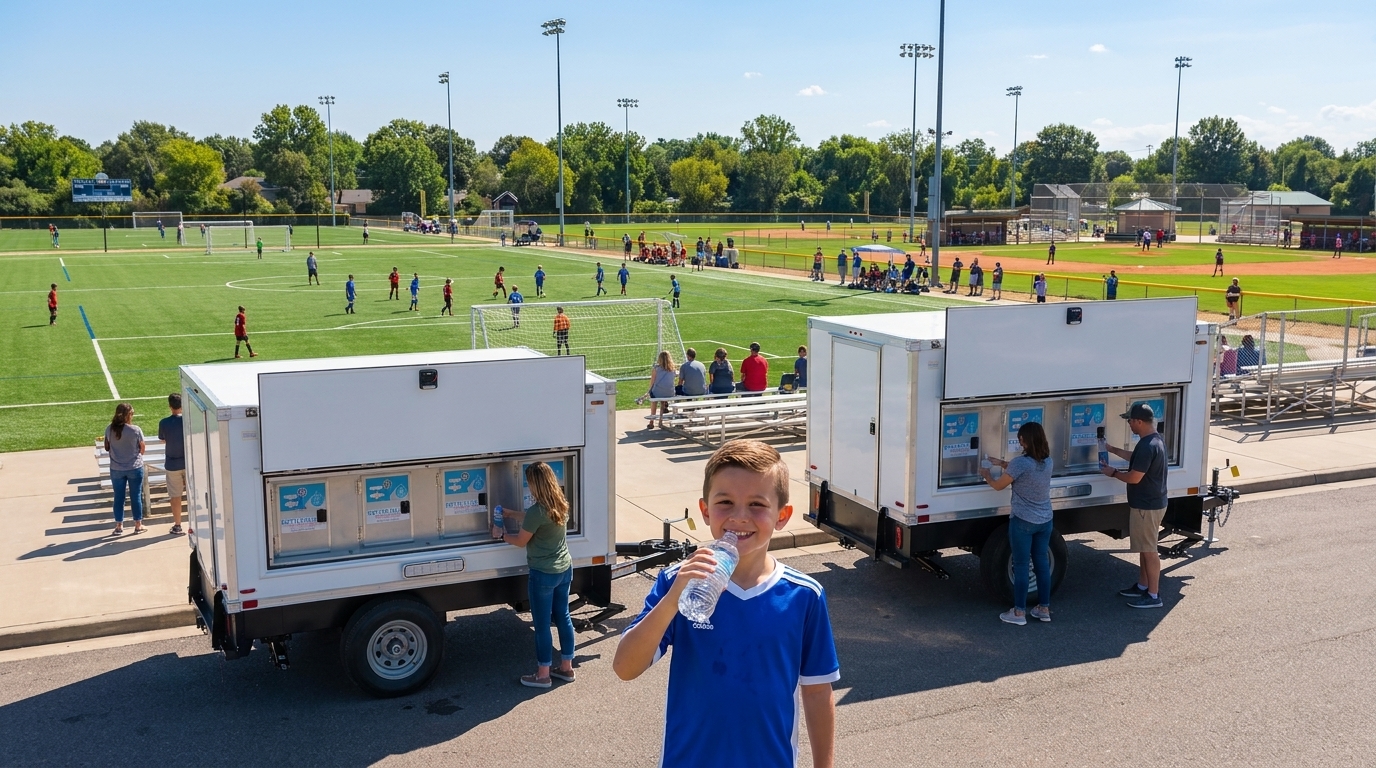
Growth pads and arterial heat. Delivery windows flex around lane closures and event load-in on this side of town.
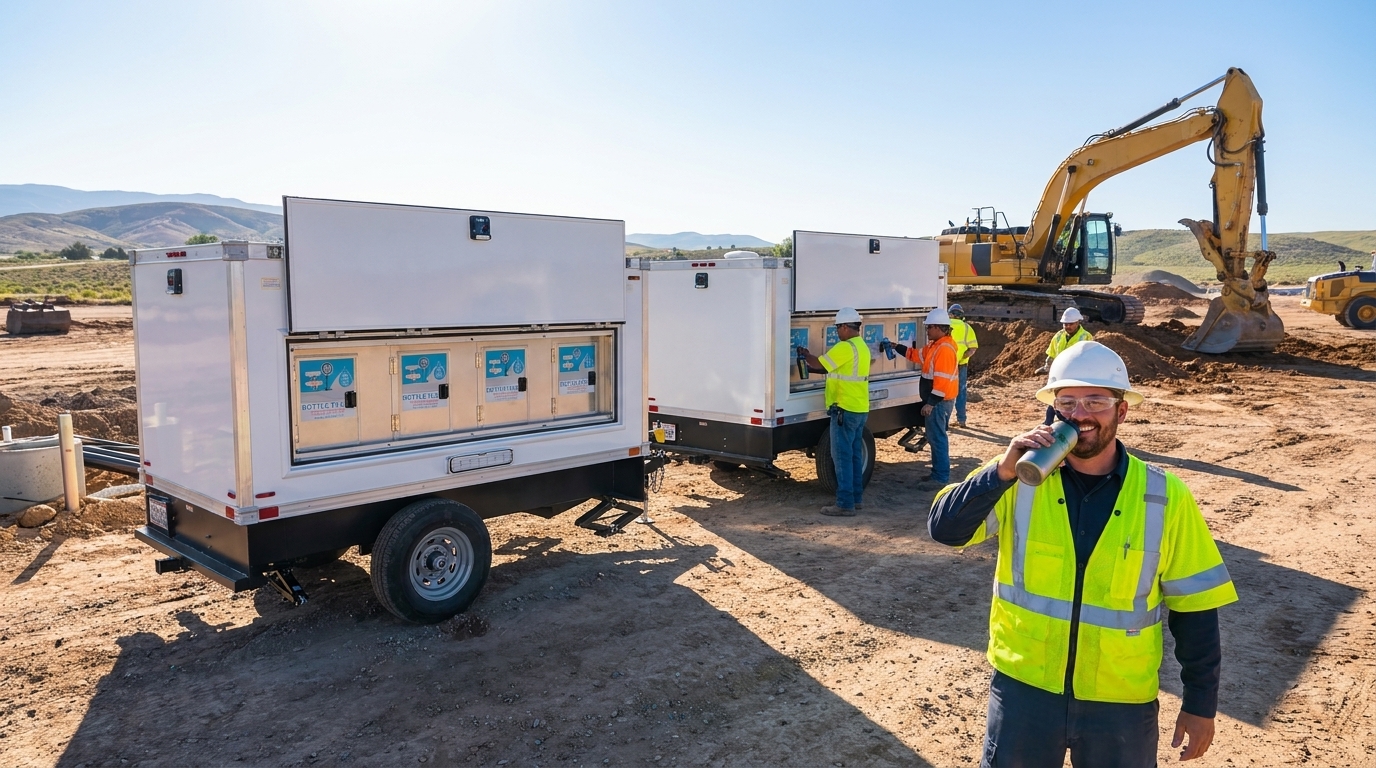
Culvert and intersection work. Open sun. Delivery windows flex around lane closures and event load-in on this side of town.
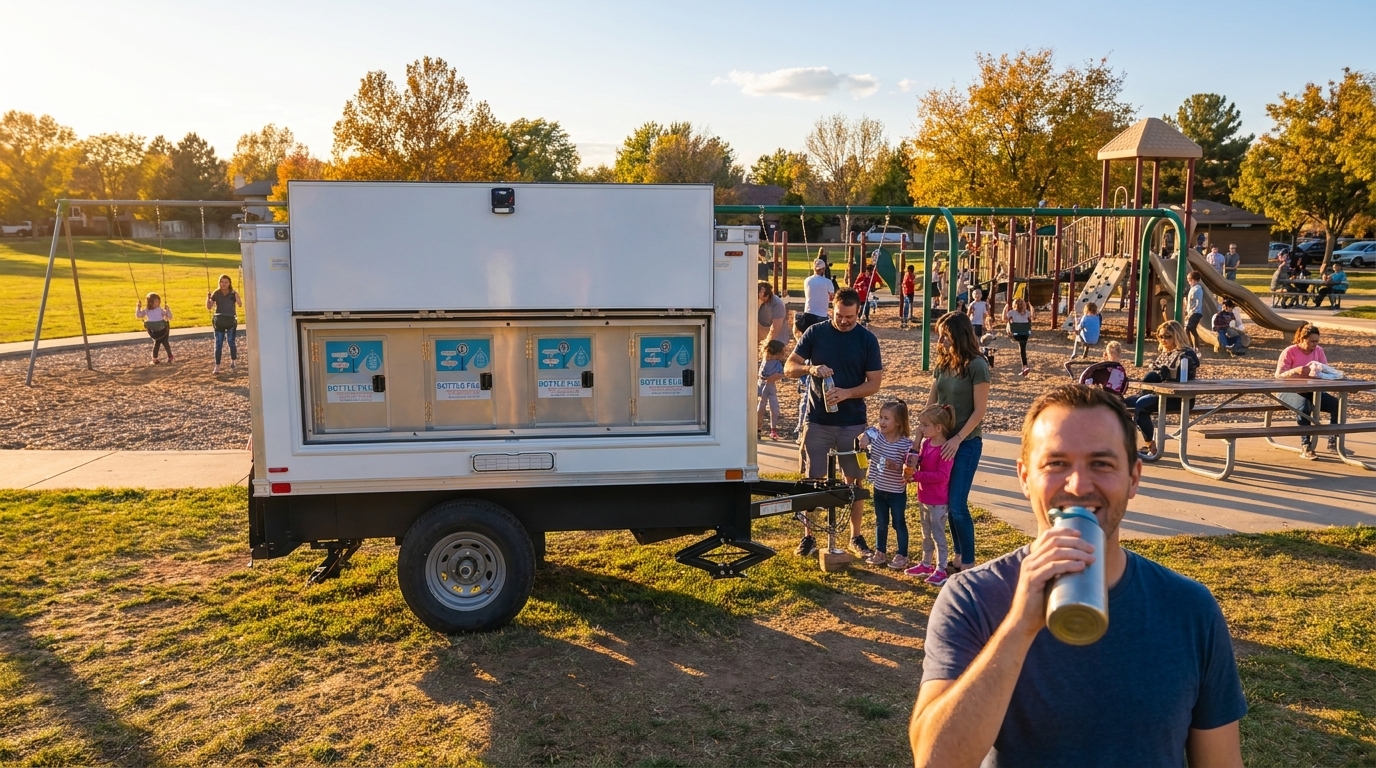
Neighbor growth. Shared GCs. Delivery windows flex around lane closures and event load-in on this side of town.
Data center construction never really slows down. Pads get graded through the worst of the summer, steel goes up in winter, and commissioning teams keep working after the shell closes in. We support the data center corridors growing across the northern Front Range with site-ready stations, chilled filtered water at ADA height, and refill runs timed to trade headcounts that change week to week. If your build runs 24/7, so does our service.
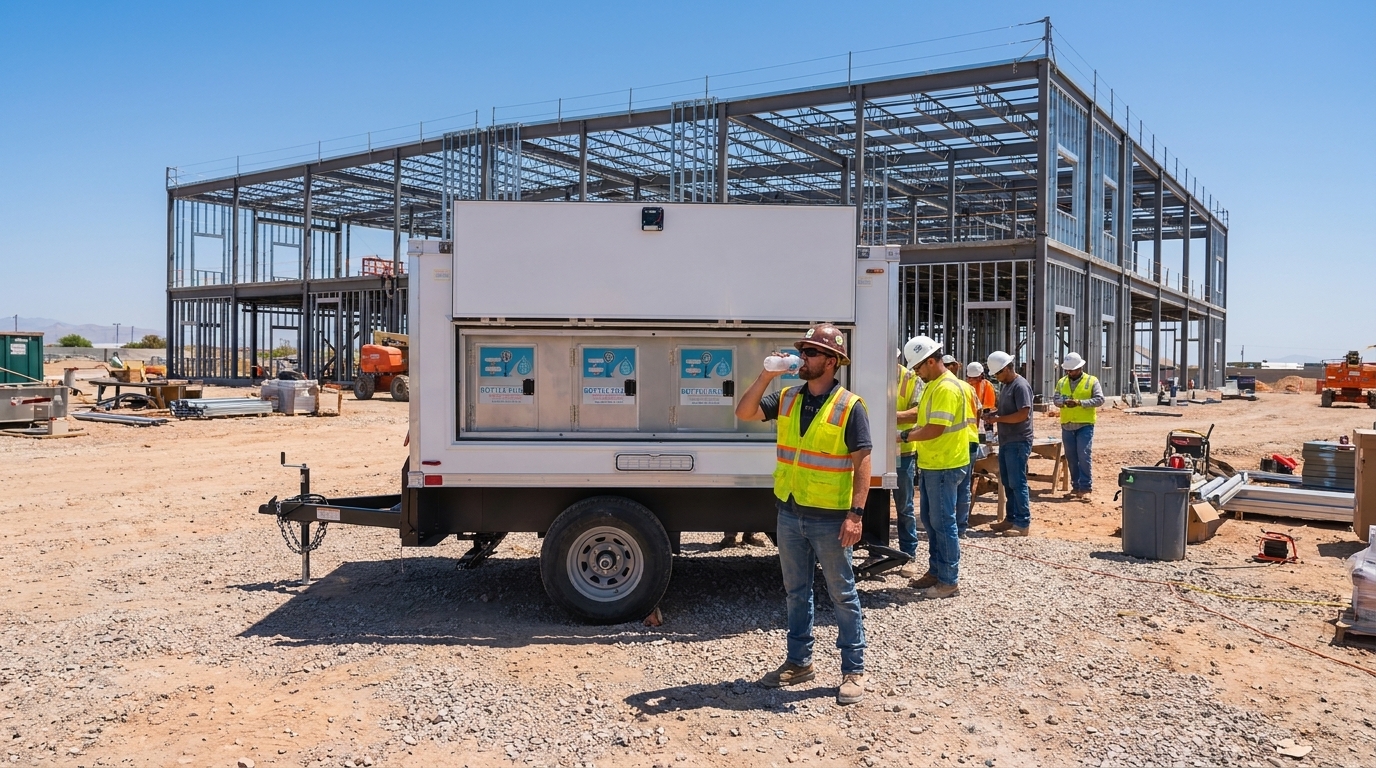
In Fort Collins the Signature Series earns its keep on campus pads and stadium weekends where elevation sun and dry air raise fluid loss faster than newcomers expect.
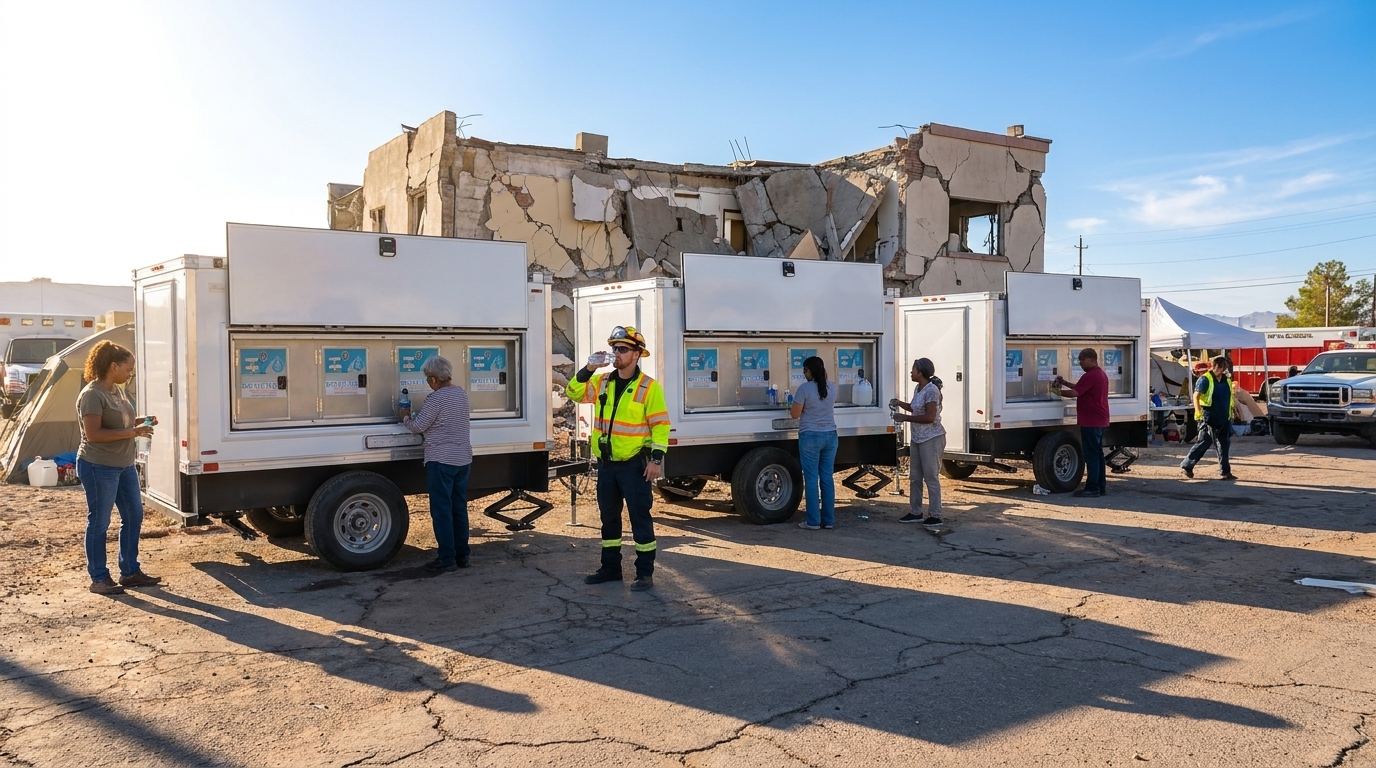
With a frame, a hitch, and tires under it, the unit hauls out to a remote build in the northern Front Range, an event field, a working orchard, or a disaster staging yard with equal ease. Fort Collins contractors and event planners request this exact rig by name. The whole design is built around backing in, leveling off, and pouring cold by the same afternoon.
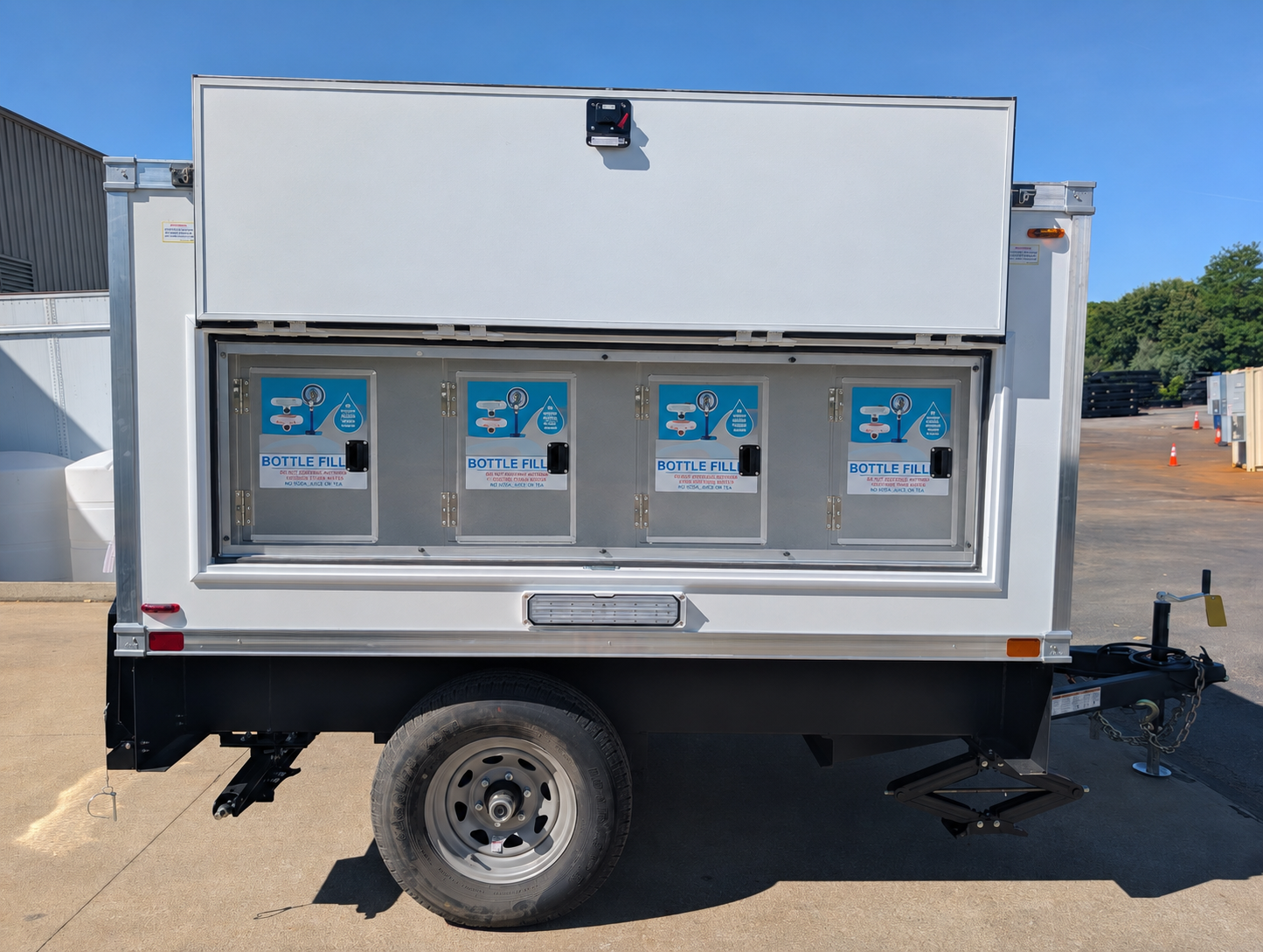
| No. of stations | (4) Bottle Filling Stations |
| Length | 12' 3" |
| Weight | 3,100 lbs. |
| Height | 8' |
| Fresh water tank | 300 Gallons |
| Power requirements | 1 to 4 dedicated 20A/120V circuits OR 1 dedicated 50A/240V circuit |
| No. of AC units | 1 |
CSU campus construction and academic calendars overlap with move-in weeks and event weekends. Multi-trade pads sit in strong Front Range sun at about 5,000 feet.
A portable water bottle filling station at the active pad beats a cooler farm behind connex boxes. We re-spot when the look-ahead moves.
Dry air raises fluid loss even when air temps look moderate. Cold taps on the desire line keep people drinking through long shifts.
Request a quote with crew count and campus gate notes. Teams comparing Aurora crew-ready water station rentals along the metro loop often keep one vendor for Front Range drops.
Winter package mornings matter on shoulder-season pours when nights drop hard. Ask for it on January structural work.
We also handle Denver filtered water station rentals.
Six bottles per person on a 90-degree day in the northern Front Range, a 38-person crew, and you're already at roughly 228 plastic bottles to buy, cart in, ice down, and throw away. That's one day. The season is where it gets ugly.
Multiply across a 175-day build and the tally clears 39,000 bottles, with the larger commercial jobs running far past that. A single trailer makes the entire pile disappear, leaving cold water at the tap and nothing for the dumpster.
Sustainability is the easy part of the pitch. Roughly 60 million plastic bottles get thrown out daily in this country, only about a third are ever recycled, and one bottle can sit in a landfill for centuries. Worth reporting, sure. But the Fort Collins project managers who actually switch usually do it to kill the daily hassle, not to pad a sustainability slide. A shared trailer means no recurring bottle order, no cooler going warm before first break, no wall of empty jugs baking by the job-trailer. The super runs the build, not the water program.
Because our own potable tankers cover the refills, the supply scales with the job rather than fighting it. Double the crew for a big pour and they still can't drink faster than the plan. And the tankers just swing back and bring the level up.
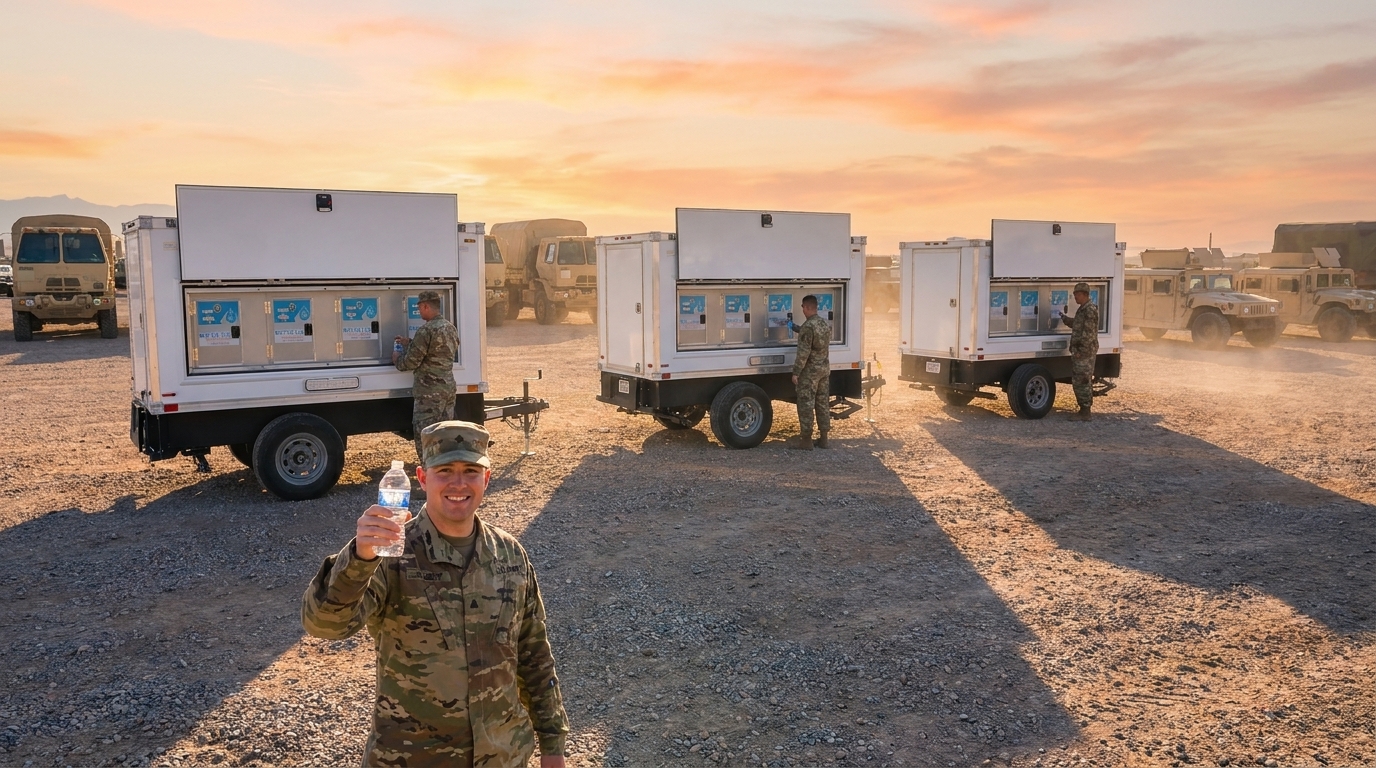
Want this math run for your own Fort Collins job? Two minutes on the phone gets you a real number.
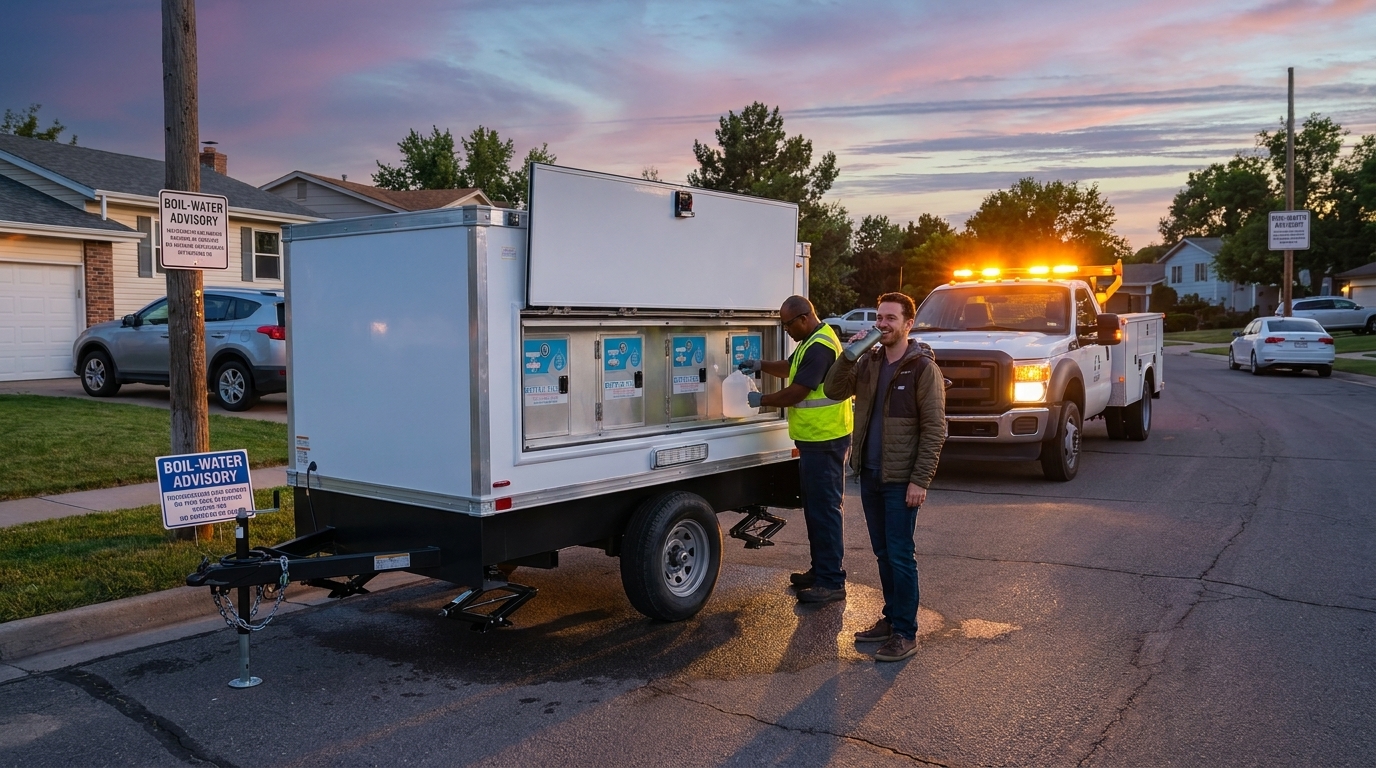
Multi-trade campus pads get chilled water through dry-season peaks. Tell us the look-ahead and we will match refill timing to the hottest hours.
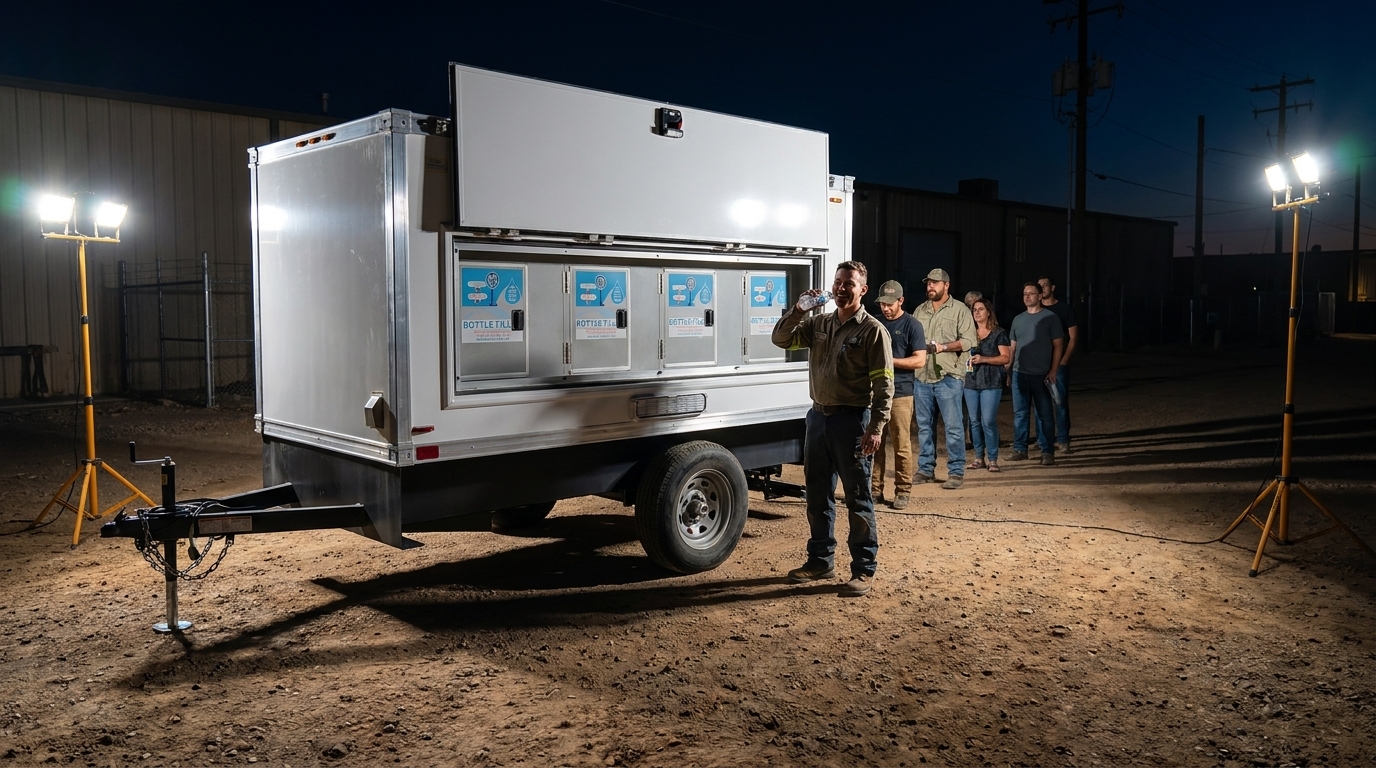
Bike-lane and roadway crews keep a unit at the active closure. Tell us the look-ahead and we will match refill timing to the hottest hours.
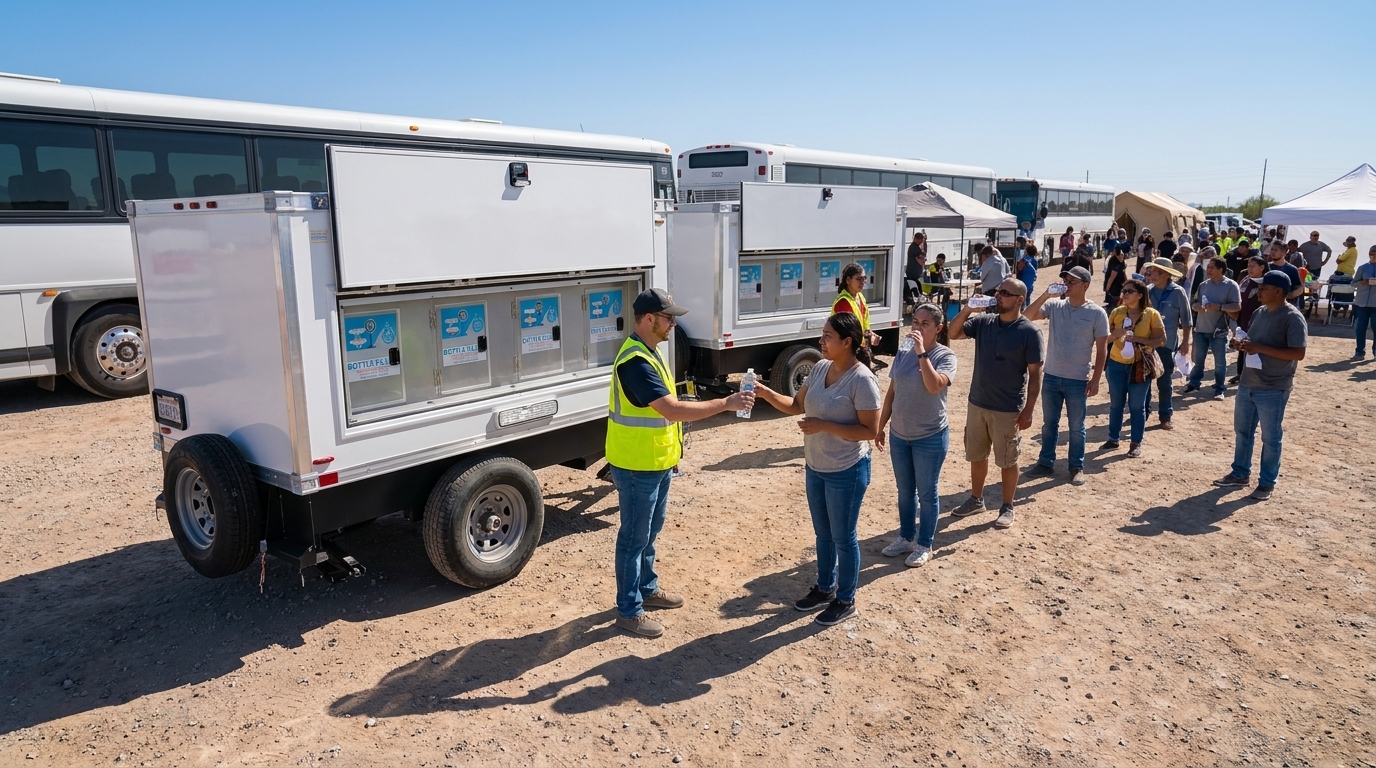
Fossil Creek work gets self-contained water away from open businesses. Tell us the look-ahead and we will match refill timing to the hottest hours.
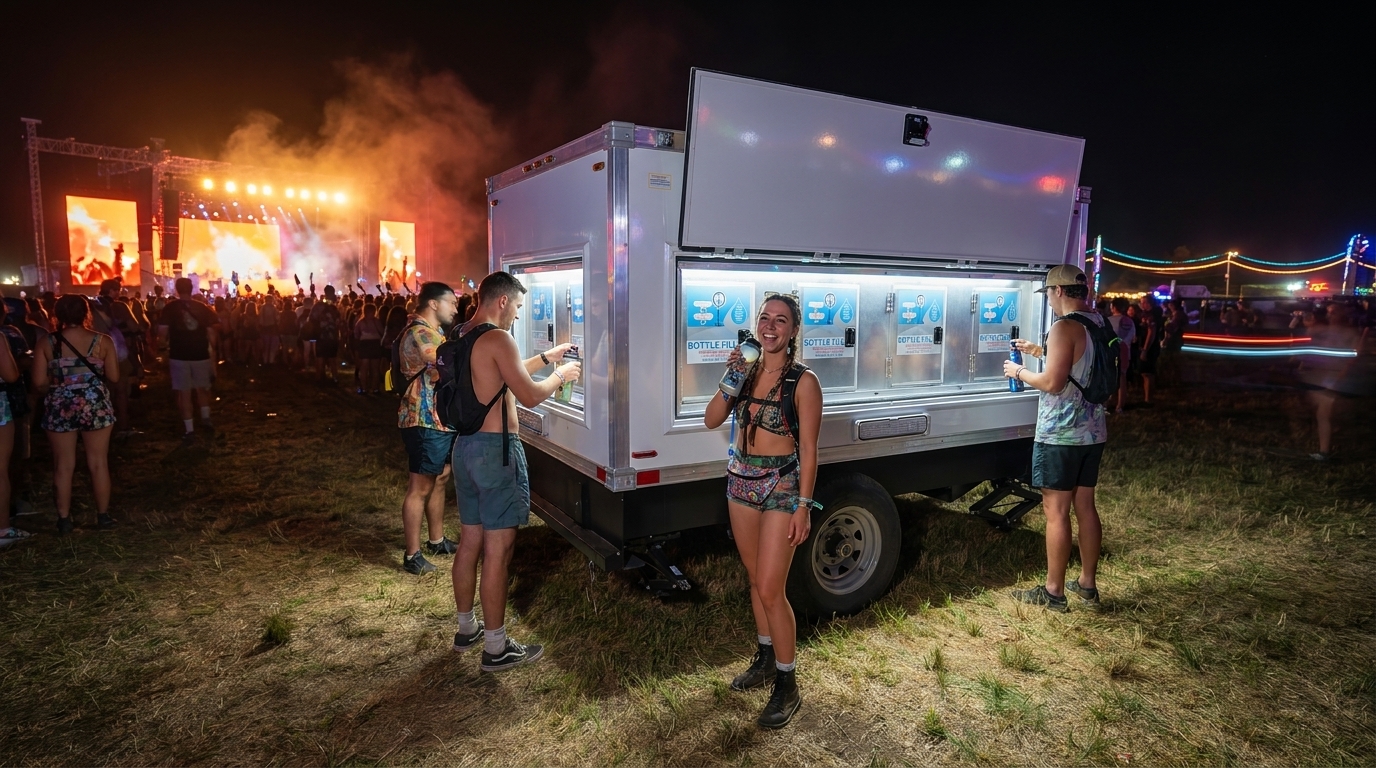
Concourse fills for game days and concerts. Tell us the look-ahead and we will match refill timing to the hottest hours.
A water source people don't trust gets ignored, and an ignored station is rented money wasted. That's why municipal water doesn't reach the tap raw on our trailers. It passes through three filter stages and a UV chamber, then an onboard cooling unit drops the temperature. The result tastes clean and comes out cold, even on the worst Fort Collins afternoon of the year.
The opening filter traps sand, scale, and the fine grit local mains occasionally push through. On a dusty Fort Collins lot, that's what keeps a pour from tasting like the parcel it's parked on.
Activated carbon comes next, lifting the chlorine bite and the dull seasonal notes local tap can carry until the taste lands clean and neutral. When it's 90 out, that flavor decides whether a crew keeps drinking or walks past the tap dry.
A finer cartridge then catches the microscopic particles that slip past the first two, so what reaches the spout is clear rather than merely cold for the crews and crowds across Fort Collins.
The last step is an ultraviolet chamber that wipes out bacteria and microbes without adding a single chemical. Even after a long tow to the far edge of the northern Front Range, the water off the nozzle is clean.
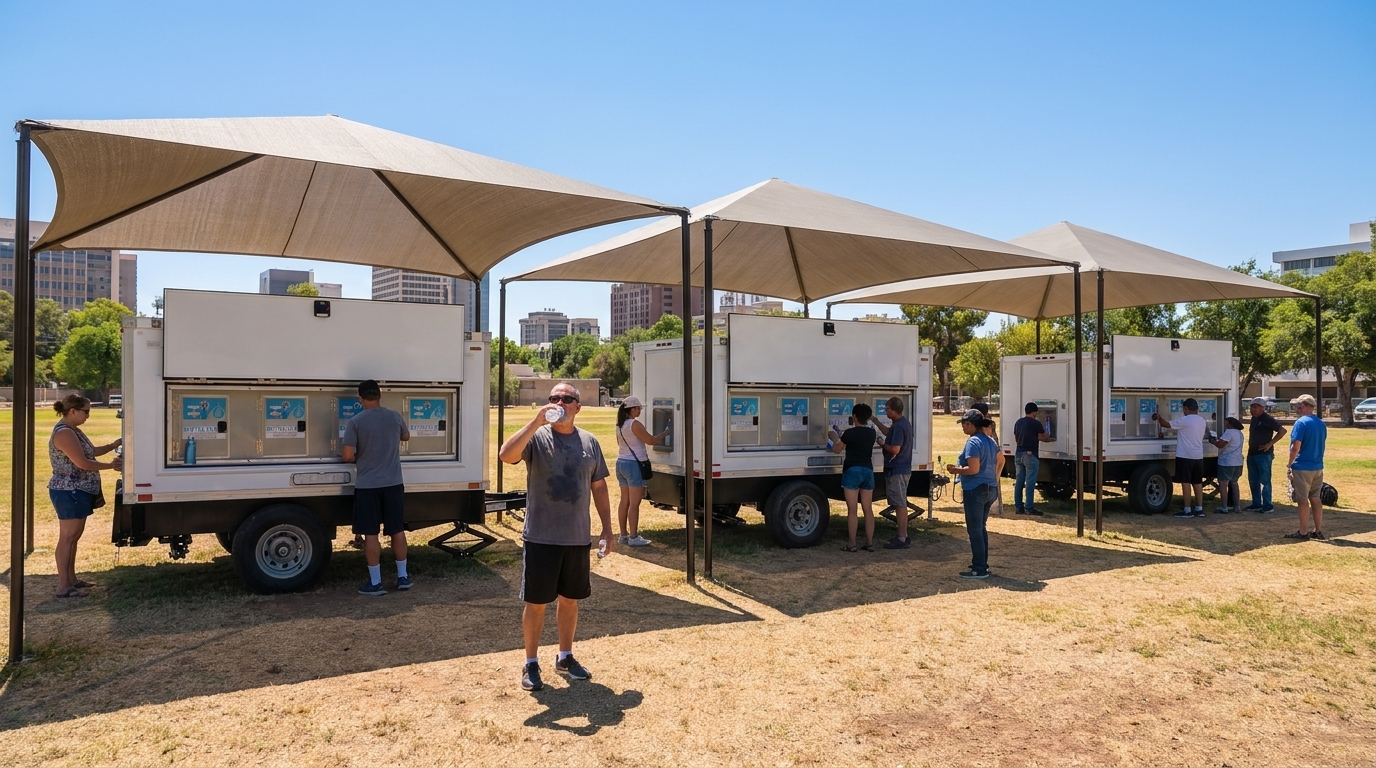
Along the wall sit four adjustable push-back taps, press a bottle to the bar and it pours. One of them is set at ADA-reachable height, so a single trailer includes everybody at a Fort Collins crew or crowd with no add-on gear. Out back, a large-jug spout services five-gallon coolers and hydration packs, while a bank of hose connection taps handles work-site chores, event support, and refills down the orchard rows. Stainless, food-grade plumbing the whole way through keeps the filtered, chilled water at quality right to the spout.
Every Signature trailer carries a 300-gallon load, roughly 2,400 cups at sixteen ounces each, and we recharge it on demand, so the unit doesn't turn into the choke point on a busy Fort Collins shift or a packed show night.
There's nothing here for you to run. Placement, fresh-water load, hookup, that's all on us, and then we walk your Fort Collins crew or event staff through the basics before our truck pulls away.
People count, number of days, where exactly it parks on your Fort Collins site, and what power is there. Those four answers let us spec it correctly the first time around.
Reckon roughly 45 minutes from our yard to anywhere in Fort Collins or the northern Front Range, with round-the-clock emergency runs whenever a heat advisory or a power shutoff hits the area.
Once on site we set it level, charge the 300-gallon tank, and tie in power off one to four standard 120V circuits, or a single 50-amp 240V drop, depending on what the site gives us.
After that the tankers cycle back on a cadence matched to how fast your crew or crowd pulls it down, and we maintain the unit through the whole rental term.
No power on the parcel at all? We price that in. The unit draws very little, and with the service fleet backing it we've run Fort Collins stations on lots that had no permanent power whatsoever. Lay out what the site offers and the rest is on us.
Federal OSHA continues to enforce heat hazards and is advancing national heat-illness expectations. Colorado has also moved additional heat-protection policy in recent cycles. The practical standard serious employers already meet is documentable cool potable water close to outdoor workers Compliance documentation and site-specific heat protocols should be reviewed before the first pour.
A chilled station on the site map gives safety leads a concrete water point for briefs and reviews instead of a vague cooler promise. Elevation sun and dry air make that closeness non-negotiable on Front Range pads.
Campus, CIP, and stadium employers who treat cool water as infrastructure pass heat planning with less drama. We supply the station and refill loop. Your safety lead owns the written plan. Call us or get a free quote before the next 90-degree stretch.
Smart northern Front Range employers already treat cool water as infrastructure because dry air hides fluid loss. Stronger documentation rules only raise the bar further.
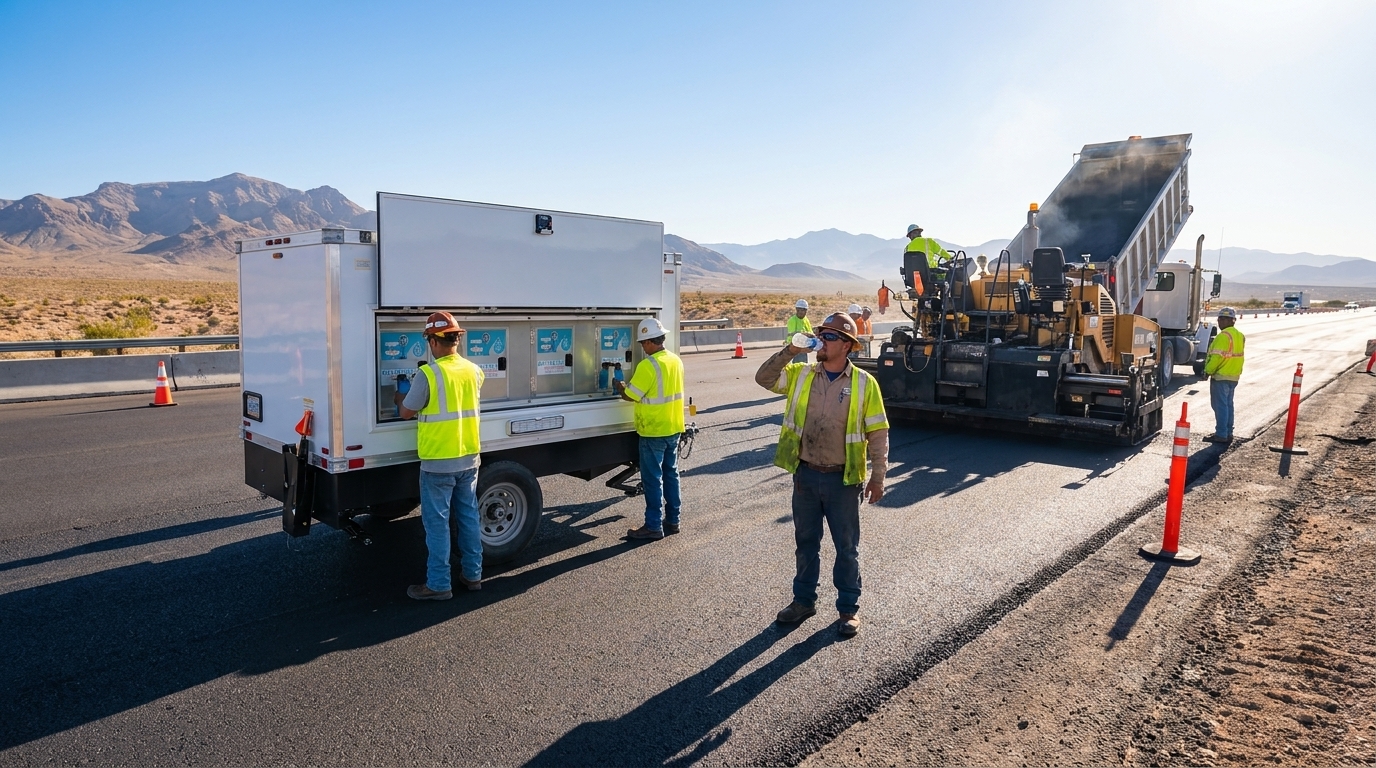
Need a station your written heat plan can point to? We can have one pouring cold within days.
A lot of the northern Front Range jobs have shaped how we run the next one. A few that stuck with us:
Superintendent, CSU campus pad. Dry-week heat cooked the cooler program. We set a Signature Series at the stair tower the same day. That is the kind of plain fix that keeps heat planning real on a long Fort Collins schedule.
Safety lead, Shields CIP. Needed a cool-water point on the drawing. One trailer at the closure made briefs simple through a 90-degree stretch. That is the kind of plain fix that keeps heat planning real on a long Fort Collins schedule.
Event ops, Canvas Stadium weekend. Concourse fountain lines stacked. Plaza unit on the accessible path kept staff and guests moving. That is the kind of plain fix that keeps heat planning real on a long Fort Collins schedule.
Canvas Stadium hosts football, commencement, concerts, and other outdoor events on exposed seating bowls. Turf work windows and event load-ins add staff peaks.
NewWestFest downtown stacks guests on hot pavement with limited shade. Plaza fills on hard paths beat fountain lines.
ADA placements matter for stadium concourses and festival streets. Keep the low tap on hard route.
Event leads who also plan Colorado Springs bottle-fill water station rentals for southern Front Range weekends often add Fort Collins dates on the same seasonal calendar.
Gate layouts should keep jug fill facing staff cooler traffic and bottle bars facing guest flow.
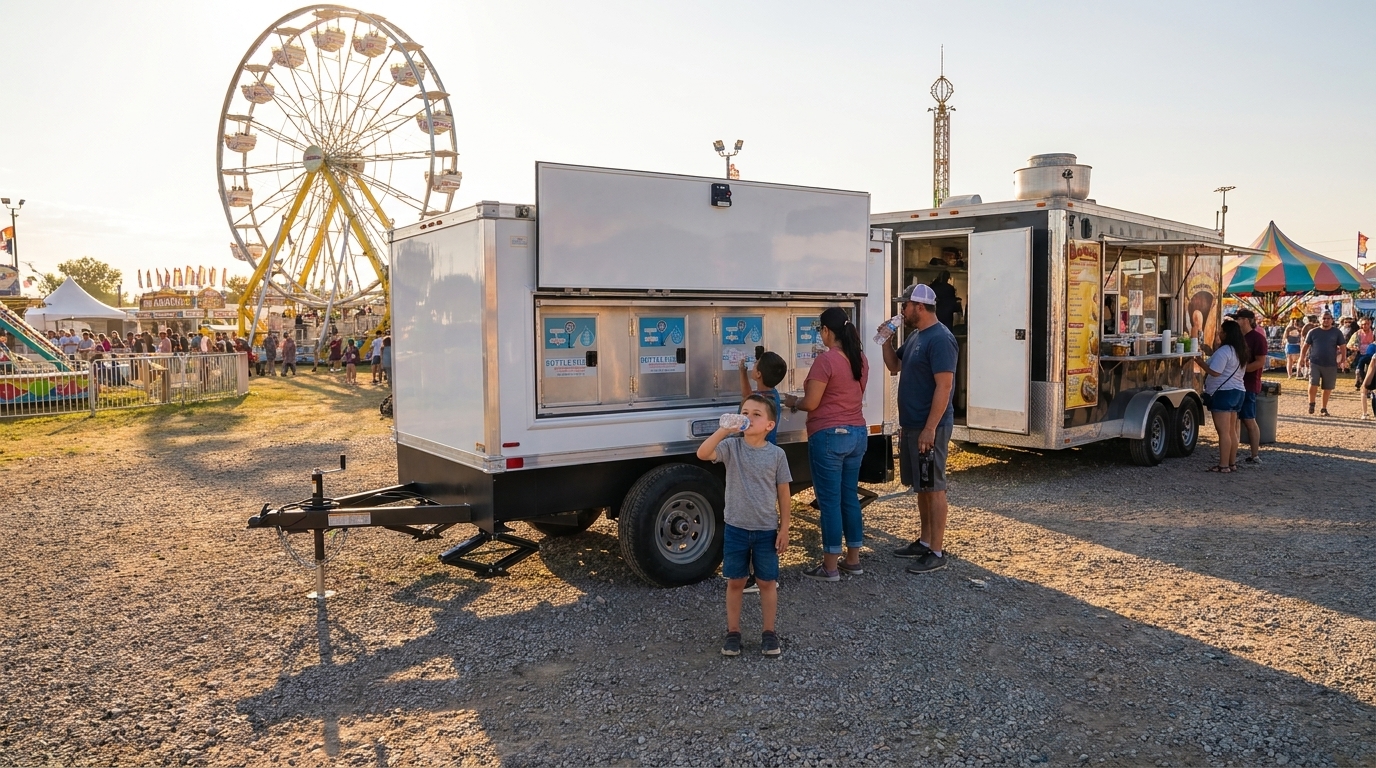
About 5,000 feet of elevation plus dry air raises fluid loss faster than coastal visitors expect. Summer highs commonly sit in the upper 80s with growing 90-degree stretches and occasional triple-digit spikes. Operational coordination across overlapping delivery windows, generator verification, and documented heat protocols typically requires a site walkthrough before the first pour, particularly when multiple contractor crews share a temporary distribution point.
Radiant heat off asphalt on Shields, Trilby, and College corridors understates phone forecasts. Stadium bowls and festival streets add the same problem for guests.
We quote Fort Collins jobs against Front Range sun and dryness, not a mild shaded courtyard reading.
Campus and stadium calendars are why we refuse to treat Fort Collins like a low-elevation mild market.
College and Trilby intersection work, Shields Street bike-lane improvements, Trilby culvert replacement at Fossil Creek, and Lemay paving windows put civil crews on dark asphalt through 2026 schedules.
A bottled-water refill station at the active closure beats a cooler that dies by lunch. We move with the phase.
Documentable cool-water access supports toolbox talks and heat planning even while federal heat standards continue to evolve. Smart Front Range employers already run it.
Call now if your GC runs Fort Collins and Loveland pads on one schedule. One dispatch covers the northern Front Range mesh.
Tight Old Town-adjacent closures need honest trucking notes on the first call.
Everyone sees the trailer. What they don't see is the support fleet behind it, the trucks that deliver fresh water, hold reserve on site, and carry wastewater off, so a single call wraps the entire loop rather than stringing together three vendors.
Our tankers run drinking-grade water in bulk, recharging the 300-gallon tank on whatever interval the headcount demands. Those same trucks also top up storage tanks, holding tanks, and bladder bags whenever a single drop can't keep pace, like a big slab pour or a downtown night that packs the square.
When demand spikes we set out fold-flat bladders to bank extra fresh reserve, and on a drain-less lot they'll temporarily hold greywater too. It isn't fancy equipment, but it's what keeps a far-flung job in the northern Front Range pouring between tanker runs.
Water that has to move across a job is a pump truck's job, whether that's charging holding tanks or hauling supply end to end. It earns its keep on the sprawling parcels where the trailer and the fill point can end up a fair hike apart.
At the tail end, a vacuum truck draws off greywater and wastewater and carries it to permitted disposal, closing the loop clean. Nobody on your Fort Collins crew is left guessing where the used water ended up. That piece was built into the plan from day one.
Every job gets its own setup. A remote parcel might run a station plus a bladder bag for reserve and a recurring water-truck schedule. A heavy event night might call for a pump truck to move supply and a teardown waste run at the end. Describe the shape of your job and we'll put together the right combination, on one invoice, handled by one crew that already knows the ground.
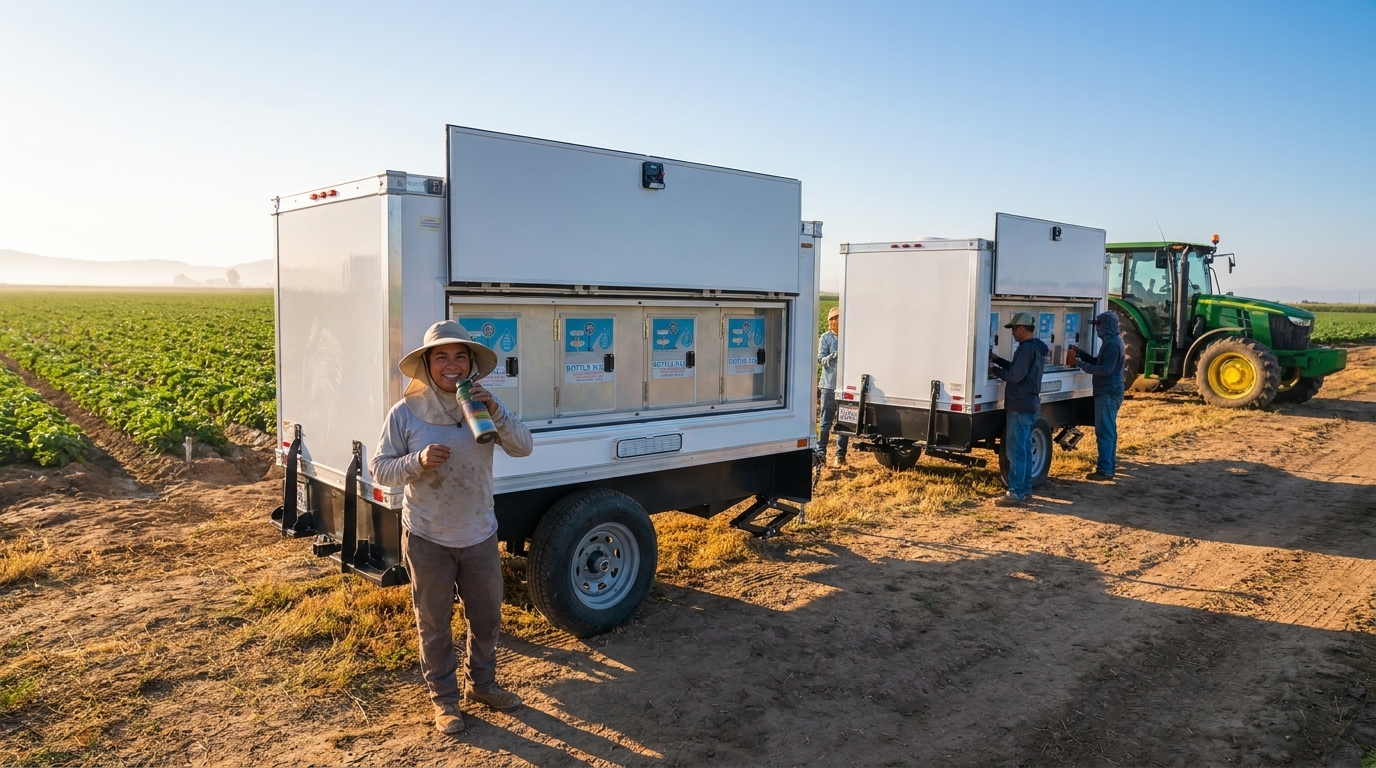
A couple of minutes on the phone is enough to get you a real number. Here's what we'll want to know, handy to have ready before you call, and proof that we size every job to the work in front of us rather than reading off one canned quote.
Bottled water reads as the budget choice on a purchase order. Its actual price tag is buried somewhere else, in handling hours, staging footprint, water that warms up, and trash piling up afterward, and on a hot inland lot each of those costs more than it would by the coast.
Look at everything bottled water actually demands of a person: cutting the order, receiving and breaking down pallets, icing coolers before dawn, topping them up through the day, then flattening empty bottles for the bin. On a large Fort Collins crew that's hours of paid time burned every single day, scraped right off the work that's supposed to be getting done. The trailer erases that loop entirely. A local contractor once let us pencil it out with him, and the recovered labor by itself paid for the unit. His words were that the bottle runs had been quietly costing him close to a day of payroll a week. Our trailer arrives full, the tankers keep it full, and your superintendent owes it nothing but a parking spot.
Ice a cooler at 6 a.m. and by mid-morning in July around the northern Front Range it's as warm as a bath. Warm water is water people stop touching, and the slowdown that follows is precisely where heat illness gets its opening. A chilled station never rides that warm-up curve at all. Whatever pours at clock-out is as cold as the sunrise fill, which happens to be the moment a spent crew, or a crowd deep into a long concert, leans on it hardest.
Bottled-water pallets devour staging space, jam the lay-down area, and sit cooking in the sun until somebody finally cracks them open. Empties build up faster than anyone keeps up with, and on a tight commercial lot that pile turns into its own problem. Set a trailer in one parking stall instead and it serves a crew or crowd that would otherwise burn through hundreds of plastic bottles every day.
Every bottle bought is a bottle thrown out, and across a season a busy site or event generates a small mountain of them. That's a disposal line on the budget, a dent in the sustainability numbers, and, given that a single bottle can linger in the ground for centuries, a footprint that lasts longer than the project that made it. Move to a refill station and the line drops to zero, which finally gives your reporting a figure worth publishing.
We cover Fort Collins, Loveland, Windsor, Timnath, and nearby northern Front Range towns along I-25 and Harmony. Multi-site GCs get one dispatch rhythm across campus, CIP, and stadium pads. Timberline and Horsetooth-edge work sits inside the same mesh as Old Town drops.
Working a corridor instead of a single address? We follow the main routes across the northern Front Range, so multi-site projects get the same fast turnaround as one stop.
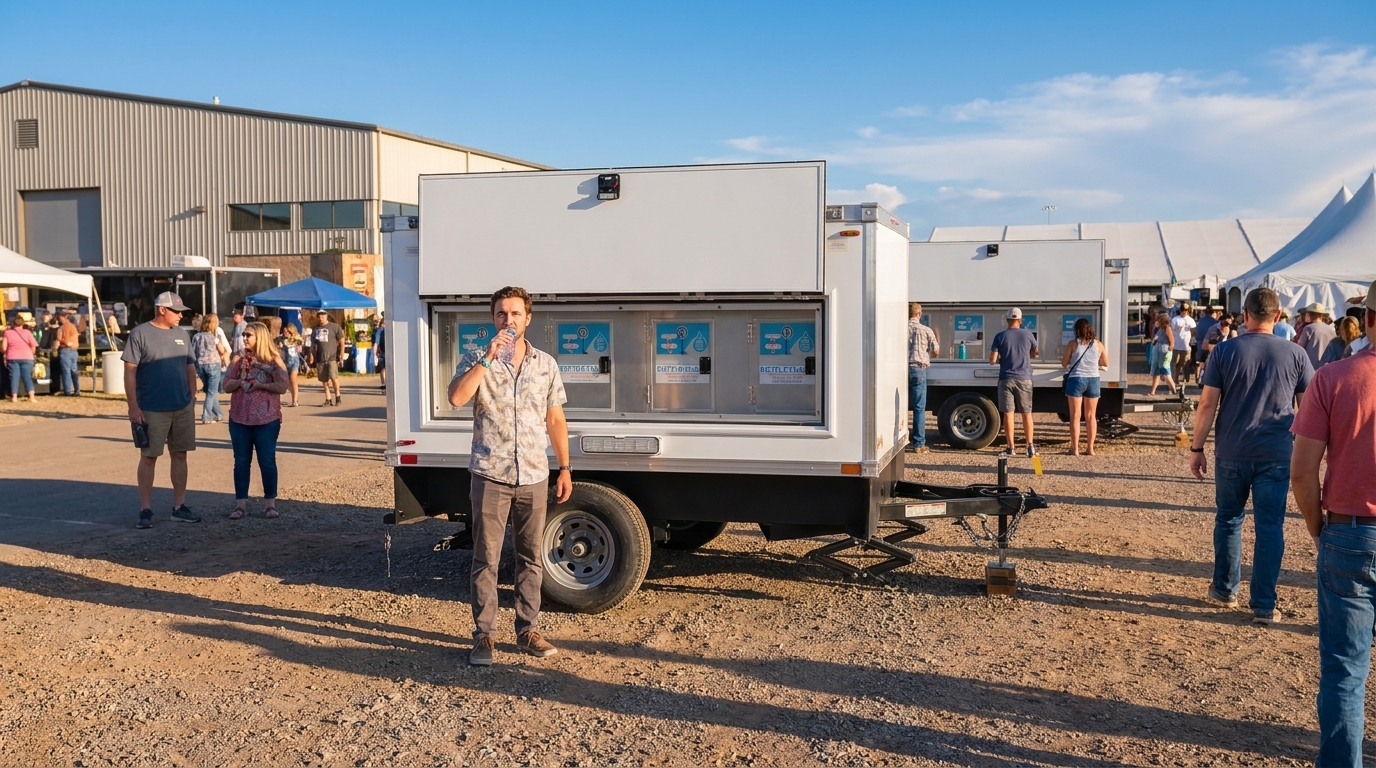
Still weighing it? Call and ask. Most of these questions get settled in one short conversation.
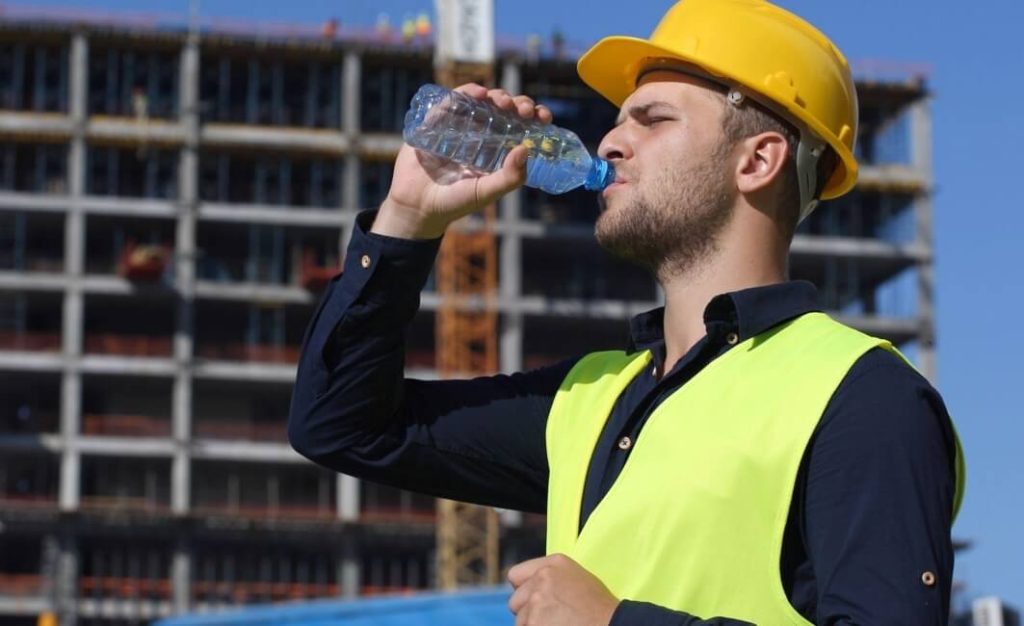
About 5,000 feet plus dry air raises fluid loss even when air temps look moderate. Strong sun on asphalt and stadium bowls adds radiant load. Cold water close to people is the dull fix. If your site has unusual gate timing or temporary power, put that in the first call so the quote matches reality.
Yes. We plan around campus gates and academic calendars. Confirm power early: 1 to 4 dedicated 20A/120V circuits or one 50A/240V circuit. Request a quote with look-ahead notes. If your site has unusual gate timing or temporary power, put that in the first call so the quote matches reality.
Concourse and plaza placements on hard accessible paths work best. We time delivery around load-in and may schedule mid-event top-offs. Share door times and expected flow. If your site has unusual gate timing or temporary power, put that in the first call so the quote matches reality.
Yes. Arterial closures are normal work for us. We place at the active pocket and re-spot when the phase moves. If your site has unusual gate timing or temporary power, put that in the first call so the quote matches reality.
Yes. Northern Front Range GCs keep one vendor across those towns. Same trailer, same refill habit. If your site has unusual gate timing or temporary power, put that in the first call so the quote matches reality.
Plan on 1 to 4 dedicated 20A/120V circuits or one dedicated 50A/240V circuit. If nothing is live yet, we sort temporary power with your GC before delivery. If your site has unusual gate timing or temporary power, put that in the first call so the quote matches reality.
On-Site Hydration Services is SAM.gov registered, licensed, and insured. Ask which certificates your job needs. If your site has unusual gate timing or temporary power, put that in the first call so the quote matches reality.
We dispatch around the clock. Front Range reach depends on traffic and gates. Call now with the address for a real ETA. If your site has unusual gate timing or temporary power, put that in the first call so the quote matches reality.
Each Signature Series includes an ADA-height bottle filling point. We place that face on hard accessible routes. If your site has unusual gate timing or temporary power, put that in the first call so the quote matches reality.
Sediment, carbon for chlorine taste and odor, then micro-particulate filtration, followed by separate UV disinfection. We do not market lead reduction. If your site has unusual gate timing or temporary power, put that in the first call so the quote matches reality.
Multi-month holds are normal. We set refill rhythm and re-spot when work faces move. If your site has unusual gate timing or temporary power, put that in the first call so the quote matches reality.
Yes. Ask for it when morning CIP or campus work runs through cold Front Range starts. If your site has unusual gate timing or temporary power, put that in the first call so the quote matches reality.
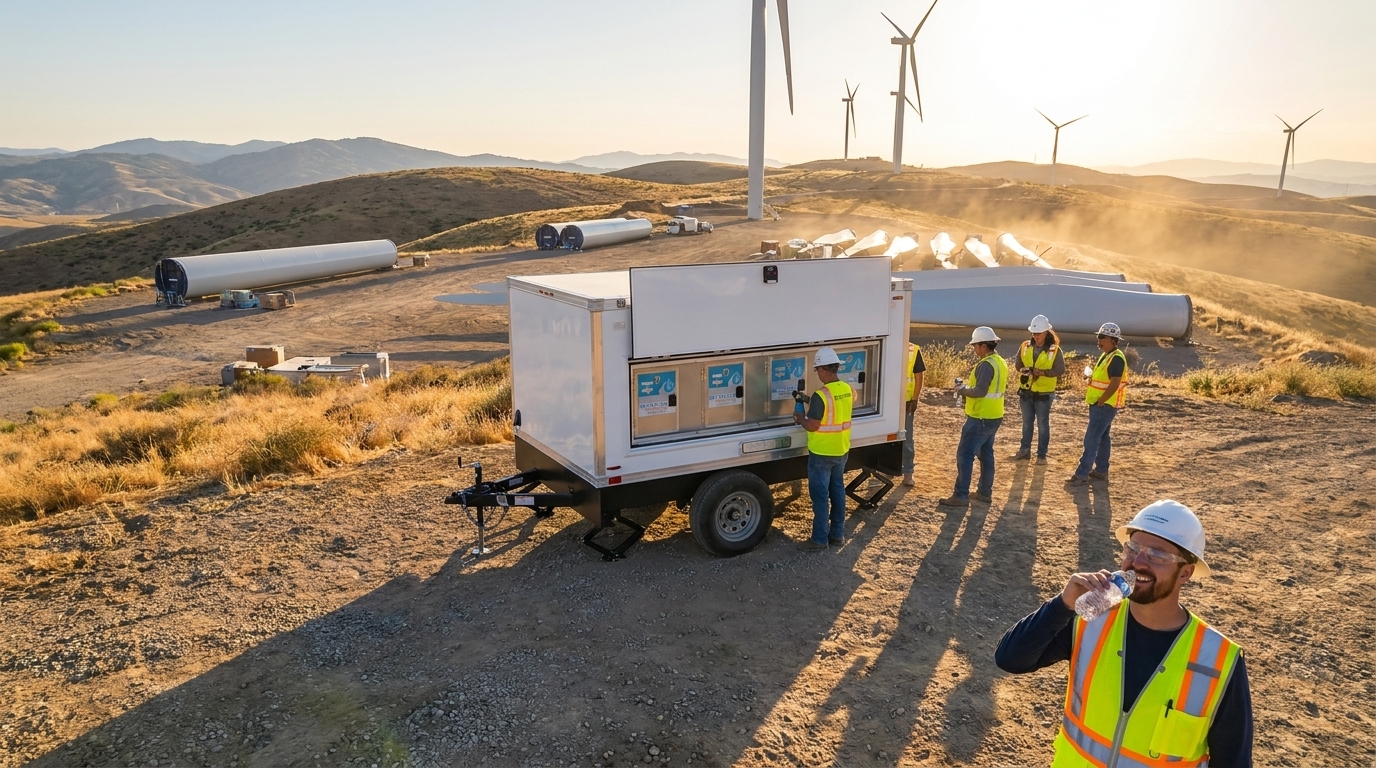
Front Range sun and dry air change the math. Size water to peak staff and guest headcount, not average mornings.
One Signature Series carries about 300 gallons. Stadium pulses still drain tanks faster than polite math. Schedule tanker visits before peak hour.
Linear CIP fails when water sits at last week's closure. Re-spot with the pave or culvert face.
Dark asphalt raises radiant load past the air number.
Downtown festival streets stack guests on hot pavement with limited shade.
Place units on hard accessible paths. Do not bury them behind booths.
Federal OSHA heat enforcement and emerging national standards keep raising documentation expectations. Colorado policy movement adds local attention.
Practical employers already put cool water close to outdoor workers and write it into site plans.
Duration comes first. A stadium weekend and a four-month CIP hold are different rhythms.
Refill frequency tracks headcount and high-sun pull rates.
“Concourse lines stacked until the plaza unit landed. Would use them again on the next Front Range phase.”
“They moved the trailer when the culvert phase moved. Utilization stayed high. Would use them again on the next Front Range phase.”
“Festival street heat. Guests filled bottles instead of leaving for stores. Would use them again on the next Front Range phase.”
“Look-ahead changes weekly. Re-spots kept water close. Would use them again on the next Front Range phase.”
“Youth tournament sun is no joke at elevation. Trailer kept coaches and players filling bottles. Would use them again on the next Front Range phase.”
“Water stayed cool and close, out of the pave box. Would use them again on the next Front Range phase.”
“After-hours drop during a 90-degree stretch. No drama. Would use them again on the next Front Range phase.”
“Campus and Loveland pads on one vendor now. Would use them again on the next Front Range phase.”
“NewWestFest weekend ran hot. Plaza unit earned its keep. Would use them again on the next Front Range phase.”
Service information current as of September 2026.
Tell us the headcount or the gate count, the rental dates, and where the trailer should park, and we'll spec the right setup and roll one out to you anywhere in the northern Front Range, usually inside about 45 minutes of dispatch.
Browse every Front Range and West Coast city on our locations, or open the Colorado water station rentals hub.