Glendale Cold Water Station Rentals for Events & Job Sites, 24/7 Dispatch
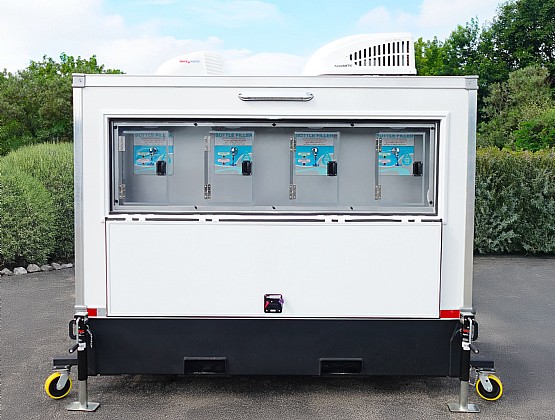
On-Site Hydration Services stages cold, filtered drinking-water trailers anywhere in Glendale and the LA County metro, whether that’s a summer festival on the lawn at the Americana at Brand or a framing crew baking on a Verdugo foothill pad in August. A single standalone rig backs into your spot, cools its own tank and tops it off through the day, and gives a wedding party or a construction crew genuinely cold water the entire day, first guest through last truck. Skip the warm-bottle pallets. Skip the noon ice run.
- ~45-minute delivery across LA County
- Cold, four-stage-filtered water
- ADA bottle filling
- Cal/OSHA heat-illness ready
- Licensed & insured
- 24/7 emergency dispatch
Cold drinking water for Glendale events and job sites, delivered and kept full
Our trailers put chilled, filtered drinking water right at Glendale events and job sites across the San Fernando and San Gabriel valleys, and a crew of ours keeps the tank refilled from open through teardown. When a Montrose afternoon hits 98° and a bare grading cut runs hotter still, water that’s gone warm is water that goes untouched, and the moment a crew quits drinking is the moment it quits being safe. That’s the gap we close for clients who cannot afford to stop: the camera units working near the studios off San Fernando Road, the framing contractors raising apartments along Central Avenue, the grading and landscaping crews scattered through the Verdugo and Crescenta hillsides. Almost every booking call opens with the same three worries. How quickly can a trailer reach us? Will the pour still be cold by 3 p.m.? And once 300 gallons starts running thin on a July Friday, then what? Each of those gets a straight answer below.
Fast countywide turnaround
Plan on about 45 minutes between dispatch and arrival for most of LA County, with after-hours runs available any time an advisory parks heat over the valleys. The morning a foreman wakes up to a 50-person crew and one lukewarm cooler, the only number that matters is how quickly a trailer pulls in.
A pour that stays truly cold
Every rig flash-cools the water it carries, so the quitting-time fill comes out just as cold as the one poured at call time. Crews reach for cold and ignore warm, and a tap nobody touches does nothing against heat illness. Across a Glendale summer, that difference decides whether a shift wraps clean or ends with a 911 call.
Dropped, refilled, maintained, removed
No juggling a bottled-water supplier, a separate ice run, and a waste pickup. We position the trailer, recharge it off our own tankers, keep it serviced, and tow it out once the job closes. A single contact handles the full hydration cycle on your Glendale lot.
The point I make on most opening calls is simple: water a crew won’t drink may as well not be there. I’ve watched a shrink-wrapped stack of warm bottles bake by a Glenoaks job gate while the crew drifted toward heat trouble, and I’ve watched a cold trailer sitting ten paces from the work face get drained twice before quitting time. Closing that gap is the entire job. So our trucks don’t just drop a unit and disappear. We size it to your headcount, tune the refill rhythm to how fast you actually empty it, and answer an emergency heat call the way you’d want it answered, which is right now. In this heat, one hour and a couple of degrees decide how a shift turns out.
One road-towable trailer built to work a Glendale event lawn or a foothill grading pad
One purpose-built unit covers the whole LA County map for us: the Signature Series water station trailer. Because it sits on a true road chassis, it hauls directly to the work, a film basecamp in the Brand Boulevard arts district, a wedding terrace near Forest Lawn, or a fresh cut on a hillside above La Crescenta. No assembly, no fixed plumbing, just cold filtered water flowing the same afternoon the rig lands.
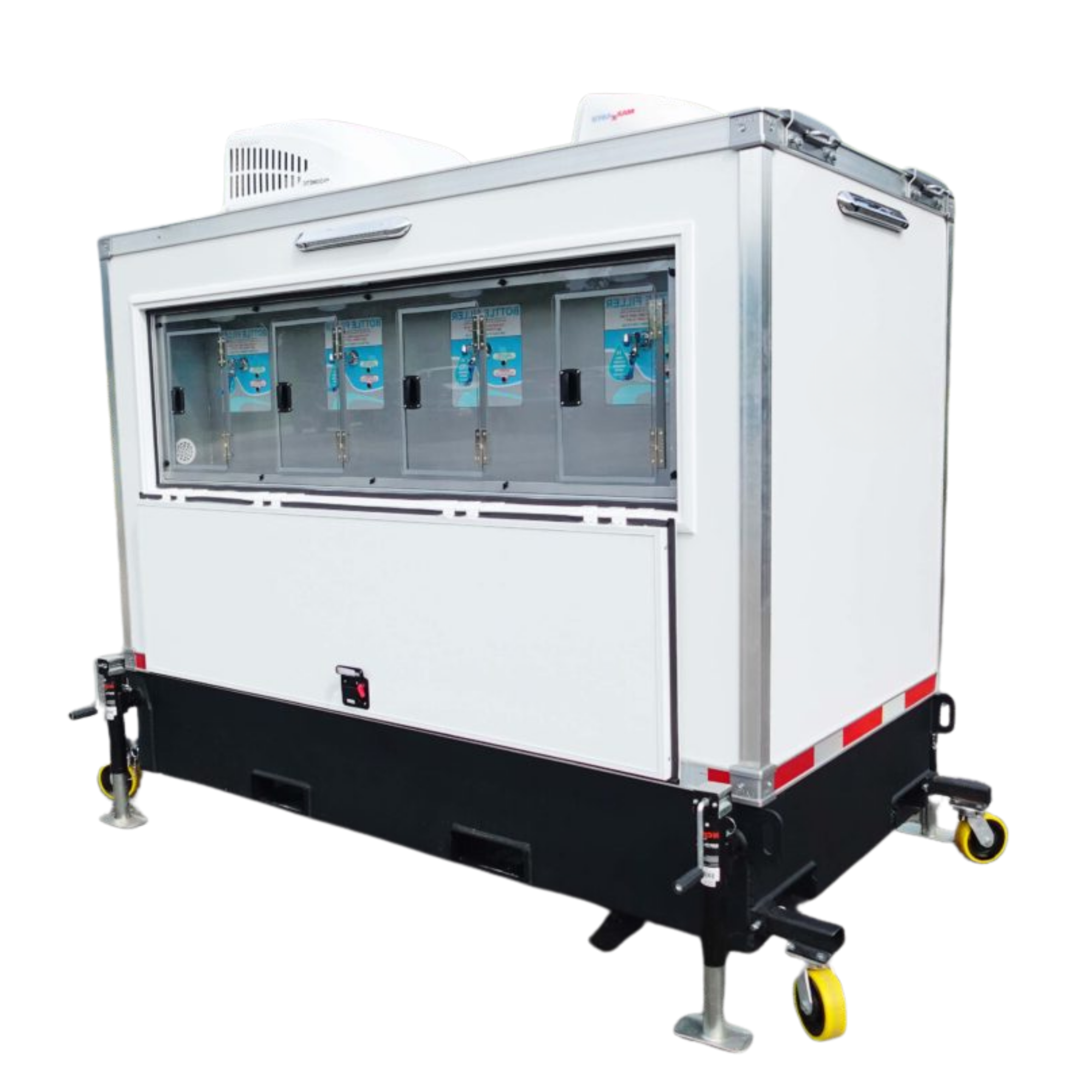
Signature Series specifications
Mounted on a complete trailer chassis with tires and a hitch, it hauls out to an event field, a production basecamp, an active build, or a disaster staging yard. Contractors and event planners around Glendale ask for this rig by name, since it’s engineered to back in, level out, and start pouring the very afternoon it’s set.
| No. of stations | (4) Bottle Filling Stations |
| Length | 12′ 3″ |
| Weight | 3,100 lbs. |
| Height | 8′ |
| Fresh water tank | 300 Gallons |
| Power requirements | 1–4 dedicated 20A/120V circuits OR 1 dedicated 50A/240V circuit |
| No. of AC units | 1 |
Why this trailer fits the way Glendale works
Heat and access drove every design choice on the Signature. Four push-back taps line an exterior wall beneath an awning, letting an entire crew or guest line cycle through quickly on a hot break rather than stacking up at one spout. The onboard AC and built-in chillers hold the water cold even while the rig bakes in late-day sun on an open Tujunga Wash pad, the exact conditions where coolers and bottled-water stacks let you down in this part of the valley.
That 300-gallon reservoir gets a large crew or crowd through a full day, and since the unit rolls on the road, we can reposition it across a wide event layout or move it to the next stage of a build with no permanent install to rip out. It accepts everyday site power over a broad range, which is why one trailer can serve a polished downtown venue or a raw hillside cut off Foothill Boulevard that we improvise power for.
The named taps are only part of it. A rear large-jug spout fills five-gallon coolers and personal bottles, while a set of hose-bib taps handles crew chores, wash-up, and grounds work. A single trailer covers the entire hydration need on a Glendale build or event. One unit has handled a Griffith Park-adjacent film shoot in the morning and an Americana courtyard reception that same night, with no second machine ever brought along.
Why one station beats buying bottled water all summer
Put a 40-person Glendale crew through a single summer and the math makes the call for you. Figure six bottles per worker on a 95° day, and you’re buying, lugging, icing, and tossing roughly 240 plastic bottles each working day.
Carry that out over a 180-day job and you’ve burned through more than 43,000 bottles, and on a drawn-out multi-phase build along the 134 or the 2 the count sails past 70,000. A lone trailer stands in for that whole heap, pouring cold water with nothing bound for the dumpster.
It’s a logistics call before it’s a green one
The plastic-waste side is no small thing. Americans throw out somewhere around 60 million water bottles every day, barely a third ends up recycled, and a single bottle can linger in an LA County landfill for hundreds of years. That figure belongs in any project’s sustainability report. Still, most Glendale project managers make the switch for a simpler payoff: one shared trailer ends the daily scramble. No recurring bottle order. No cooler turned tepid before mid-morning. No mound of empties roasting by the gate. Your superintendent runs the build rather than babysitting the water.
Because we recharge the unit from our own potable tankers, the supply grows with the job. A crew that swells for a concrete pour won’t drain past the plan. We just send an extra fill.
Hydration shaped to the way Glendale actually fills its calendar
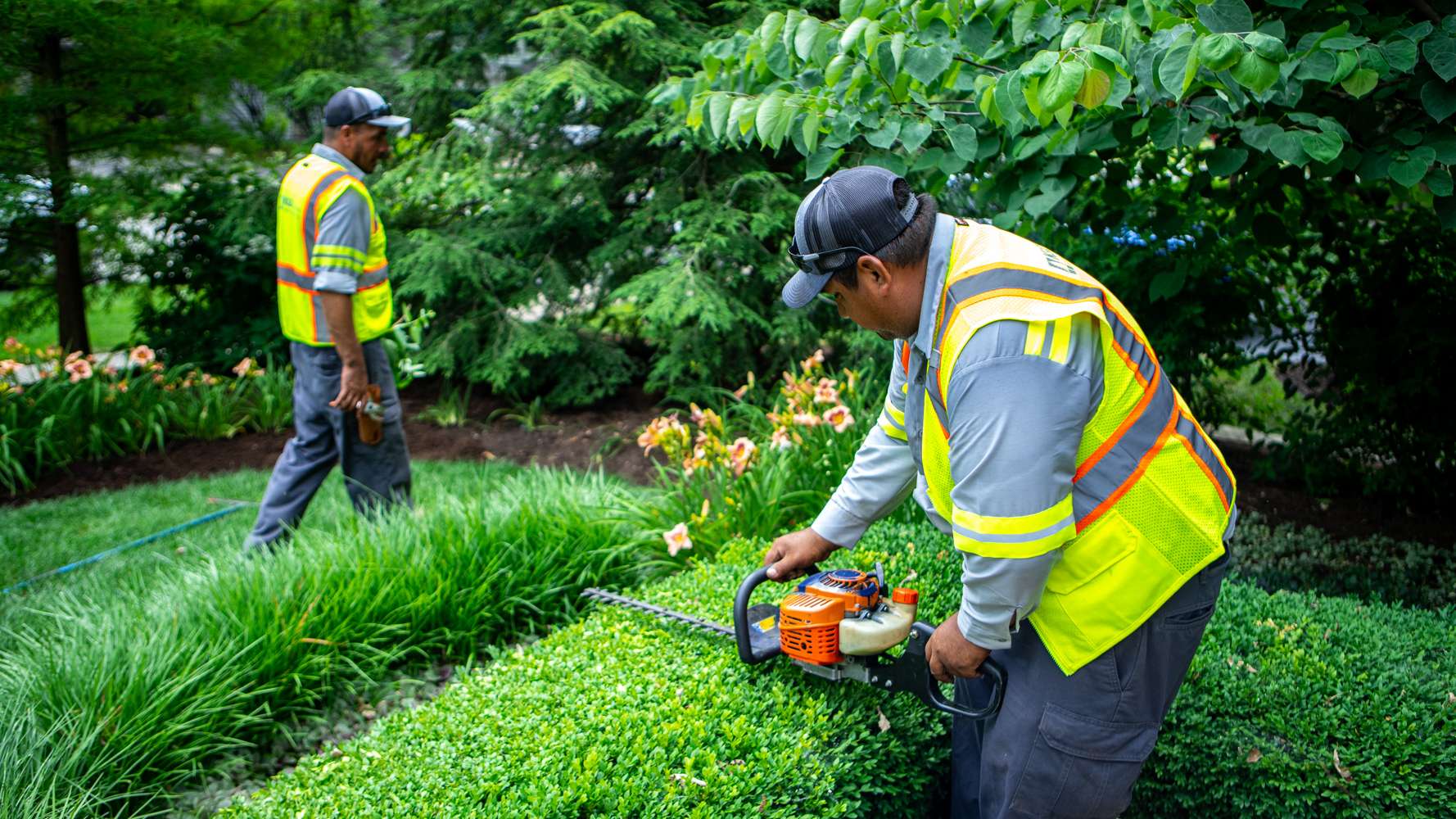
There isn’t a single hydration problem in Glendale, there’s a cluster of them that run together. A July film shoot off San Fernando Road calls for one approach, an autumn festival at the Americana wants another, and a grading crew on a slope above La Crescenta needs a third. These are the jobs where our trailers prove their worth, across the Brand Boulevard core and the Glendale Galleria district and on out to the Verdugo and Crescenta foothills, where the heat lingers the longest.
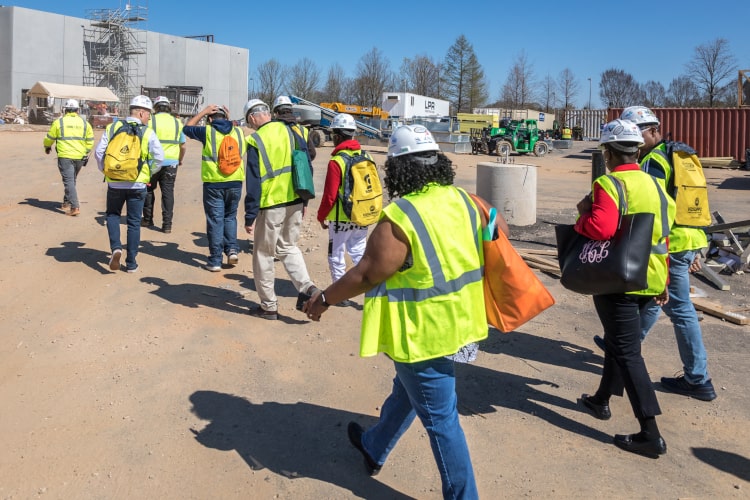
Construction & the building boom
Downtown Glendale keeps climbing, with mid-rise apartments and mixed-use blocks rising along Brand and Central, tenant build-outs in the Glendale Galleria district, and steady infill out along the Tropico and Adams Hill edges. Then there’s the grading and retaining work in the Verdugo and Crescenta foothills, where crews labor over bare cuts under full sun. We post trailers at these sites so general and specialty contractors keep documented, mapped cold hydration within a short walk of every work face.
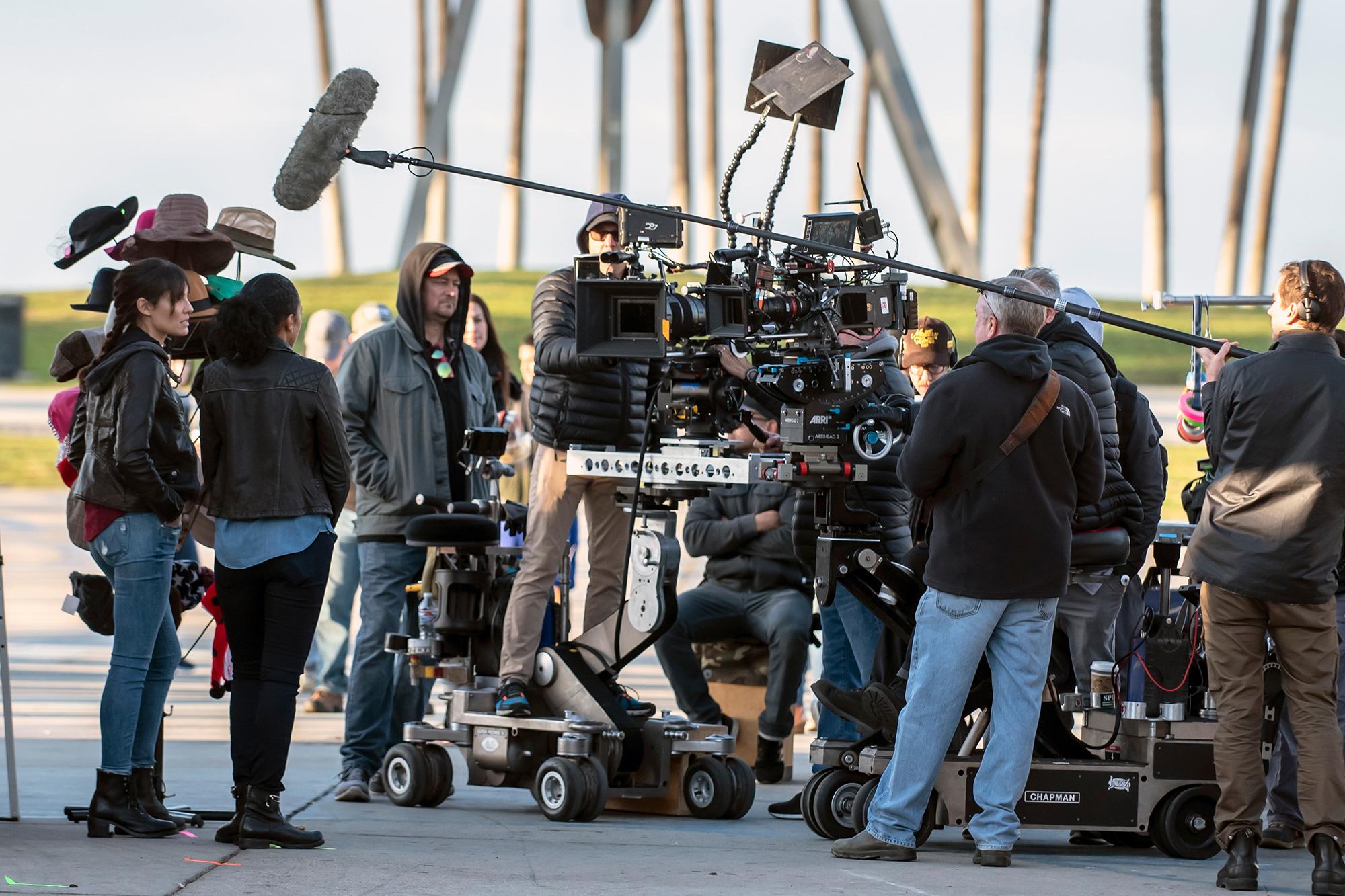
Film, TV & studio production
Glendale sits deep in the LA production scene, home to DreamWorks Animation off Flower Street, the nearby Walt Disney Grand Central operations, and a constant stream of location shoots winding through Brand Park, Forest Lawn, and the downtown streets. Catering and basecamp teams can put a hundred-plus people under the sun for a twelve-hour day. A trailer gives that production a clean, cold refill point and spares it the heap of single-use bottles to truck in and truck right back out.
Landscaping, grading & outdoor labor
Up in the hillside neighborhoods above Glendale and La Crescenta, landscaping, tree, and grading crews stay busy straight through the hottest stretch of the year, and brush-clearance season pushes still more workers onto the slopes ahead of fire weather. It’s heat-exposed labor with no tap anywhere near. The jug-fill and hose-bib outlets let those crews top off coolers and personal packs right where they stand, sparing the trek back down to the truck.
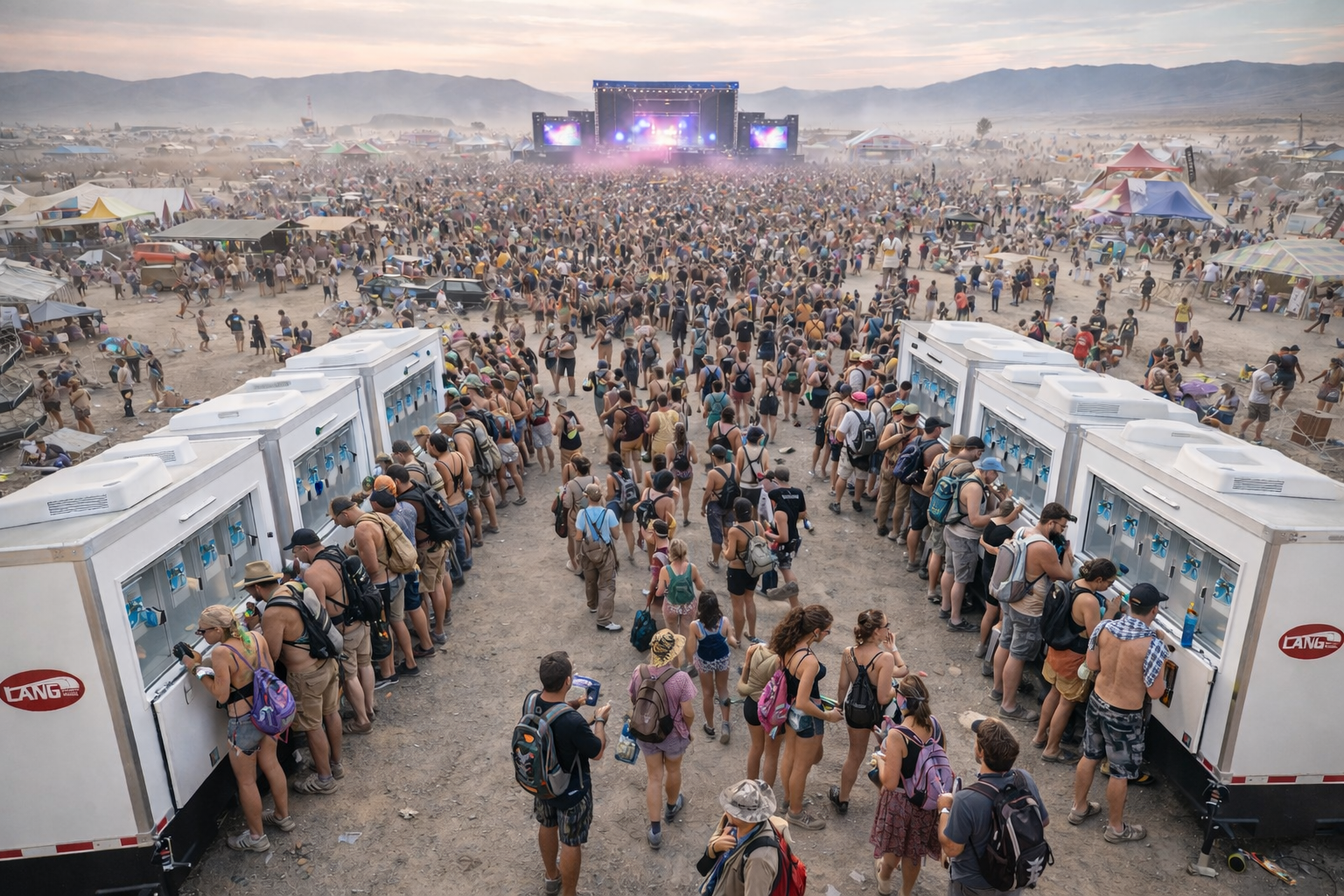
Events, festivals & public gatherings
Crowds flock to the Americana at Brand and the Glendale Galleria all year, and the local calendar fills with the Glendale Cruise Night car show, downtown street festivals, farmers markets, and charity runs looping through Brand Park. A Southern California summer crowd drains water quickly. A trailer hands organizers steady cold water and tidy refill points, and removes the pile of single-use plastic to cart in and back out.
Treated in three stages, run past UV, then chilled before the pour
A station only does its job when people actually drink from it, so taste isn’t a nicety here, it’s the whole point. Incoming city water runs four filtration stages and a UV chamber, then an onboard chiller takes the handoff. Glendale draws much of its supply from imported State Water Project and Colorado River water blended with local groundwater, which can read hard and faintly chlorinated by late summer. The train cleans that up before a drop reaches the tap, so the pour lands clean and cold even when the inland haze sits thick over the valley.
Sediment stage
The first filter traps sand, scale, and the fine rust that older Glendale water mains shed, plus the grit that rides a drinking-fountain line on a bare grading cut. Nothing gritty reaches the nozzle on a dusty bench above the Tujunga Wash.
Carbon stage
An activated-carbon bed pulls the chlorine edge and the flat, treated note imported supply can take on by August, so the water reads like nothing at all. That blank taste is what keeps a foothill crew finishing a bottle instead of leaving a half-full one to warm in the sun.
Micro-particulate stage
A sub-micron cartridge then captures the microscopic particles the earlier stages leave behind. On older Glendale and La Crescenta job sites tied into aging service lines, that stage earns its place, keeping the pour safe for every worker, guest, and grounds hand topping off.
UV disinfection
A UV lamp finishes the job, deactivating bacteria and microbes with no chemical added, so water sitting in a warm tank through a long afternoon on a Verdugo slope still leaves the nozzle clean.
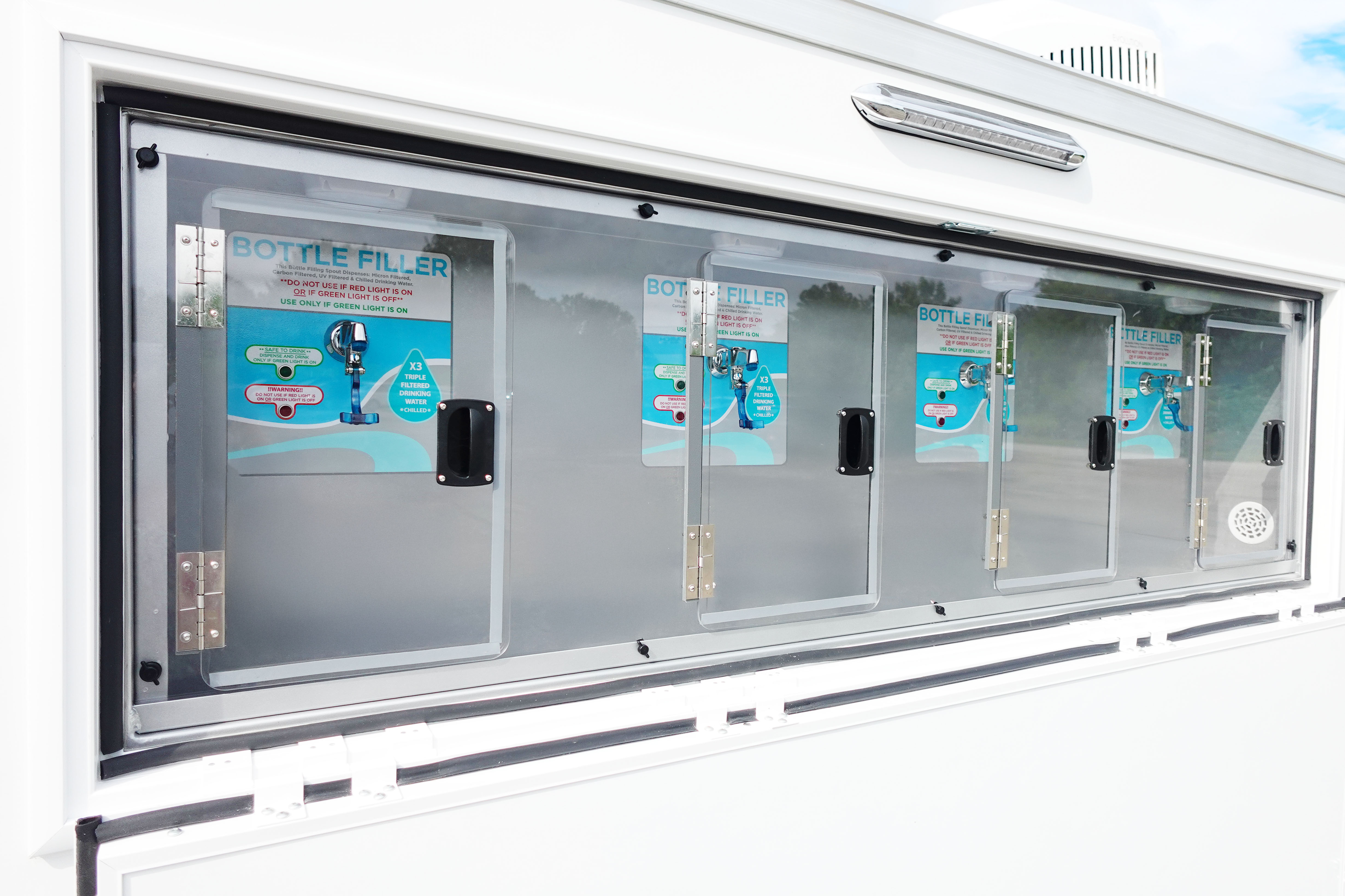
Three ways to fill, ADA included
Four adjustable push-back fill positions line the exterior wall, press a bottle to the bar and the water runs. One of those four is set low enough to reach from a wheelchair, which keeps the whole crew or guest list served off a single trailer instead of a second accessible unit. Out back, a large-jug outlet feeds bulk coolers and personal hydration gear, and a row of hose-bib taps takes care of chores, event support, and grounds work. Each surface the water meets is food-grade stainless, guarding that filtered, chilled quality right up to the moment it hits your bottle.
One Signature holds 300 gallons, about 2,400 sixteen-ounce pours, and since we recharge it on demand, the trailer never becomes the bottleneck on a hectic Glendale shift or a sold-out event day.
We tow it in, fill it, and hook it up, usually pouring cold inside the hour
You don’t touch the setup. We choose the placement, fill the tank, land the power, and walk your Glendale crew or event team through the unit before our truck rolls off. Start to finish it’s usually inside the hour.
Send us four details
Crew or crowd size, the rental window, the parking spot on your Glendale site, and the power that’s there. Those four let us size it right on the first pass instead of guessing and adjusting.
We dispatch countywide
Count on roughly 45 minutes between dispatch and arrival anywhere in the LA County metro, with after-hours runs any time an advisory parks heat over the San Fernando and San Gabriel valleys.
We level, fill, and power it
Hillside lots are rarely flat, so step three starts with leveling the chassis on the grade before anything else. Then we charge the 300-gallon tank and tie in the power, drawing on one to three 120V circuits or a single 50-amp 240V drop, whatever the site has. On a bare Verdugo cut with no service, we bring the power to it, since the trailer’s draw is light enough that our fleet covers the gap.
We keep it pouring
Our tankers come back on a rhythm set by how fast your people drain the tank, not a fixed date, and we service the unit every day of the rental.
No permanent power on a far-up hillside pad? We write that into the quote up front, so it’s settled before you sign rather than a scramble on delivery morning. Because the Signature pulls so little and our fleet fills the rest, we’ve kept stations pouring on Glendale lots that had no service whatsoever, from brush-clearance staging above Sunland to a fresh grading bench off Foothill Boulevard. Describe the pad and the access, and we’ll spec the rig to match it.
In a Glendale summer, cold water on the work face is a written legal duty, not a courtesy
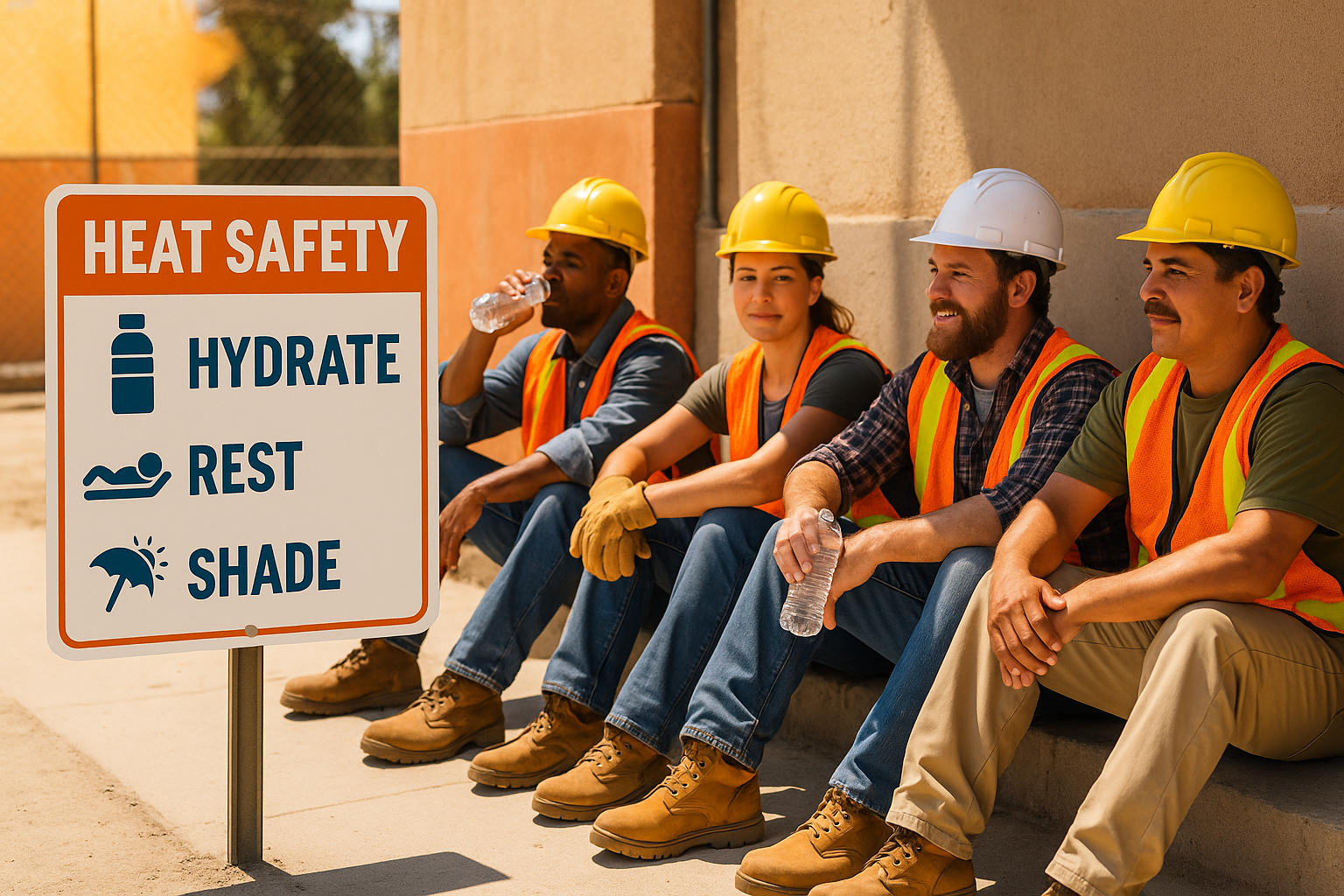
California ranks among the handful of states carrying a heat-illness law, and the rules bite. The Cal/OSHA Heat Illness Prevention Standard, Title 8 §3395, covers outdoor work across the state and lays out three core duties: supply fresh, suitably cool drinking water, furnish shade and access to it at 80°, and write acclimatization and rest into the schedule. It demands enough water for every worker to drink at least a quart an hour, held reasonably cool, and set as close as practicable to where the crew works. On a Glendale foothill job that runs hot from late spring through October, that’s no one-time checkbox. It’s a daily duty a Cal/OSHA inspector can cite you for.
A trailer turns the §3395 water rule into something concrete. It stands as a fixed, mapped source of cold, potable, filtered water on tap, the backbone of a real Heat Illness Prevention Plan and precisely what a Cal/OSHA reviewer expects to find staged beside the crew on a walkthrough. Factor in the regional smog and the inland heat banking up in the San Fernando and San Gabriel valleys, and a documented cold-water point turns into one of the easiest line items you can show an inspector.
- Steady access to fresh, suitably cool, potable water right at the work face, the core of §3395
- Plenty of on-board volume to carry the quart-per-worker-per-hour rule
- One central, recordable hydration point feeding your written HIPP file
- Reinforces acclimatization and scheduled water-and-rest breaks for heat-exposed crews
A few things staging water in Glendale has drilled into us
Years of placing units across LA County have shaped the way we handle every booking. A few of the lessons that stuck with us:
Lesson one: placement counts for as much as the equipment. On a Brand Boulevard mid-rise we set the rig at the street gate on day one and watched it go half-used, because the crew was working seven floors up and nobody was spending a hot break riding the hoist down for a drink. The next morning we shifted it to the deck landing and consumption doubled before lunch. The super said it flat out: “Put the water closer than the shade and they’ll drink it.”
We also figured out to schedule refills by the forecast, not the calendar. Through a September hot spell we’d parked spare tankers in advance, so when two foothill grading jobs and a film basecamp all called the same afternoon, every one stayed supplied and not a single crew ran dry. A safety lead messaged that night: “You showed up before we even knew we were low.” We now write that kind of buffer into every contract through the hot stretch.
And another: the bottled-water habit hangs on until a crew lives the difference firsthand. On a hillside cut above La Crescenta, the super didn’t believe we could hold 300 gallons genuinely cold on an open pad with zero shade. We set the unit, dialed in the refill timing, and a week on he called to book a second. “My guys just quit asking for ice” is how he summed it up. Cold water that holds its chill is the entire case, and in this climate it sells itself the moment it lands.
Each of those jobs hammered home what the heat keeps teaching: in Glendale, hydration is no set-and-forget line item. It’s an operation, and we run it like one for every day of the rental, whether the job is a four-hour event or a nine-month build.
When the crowd is outdoors and the sun is relentless
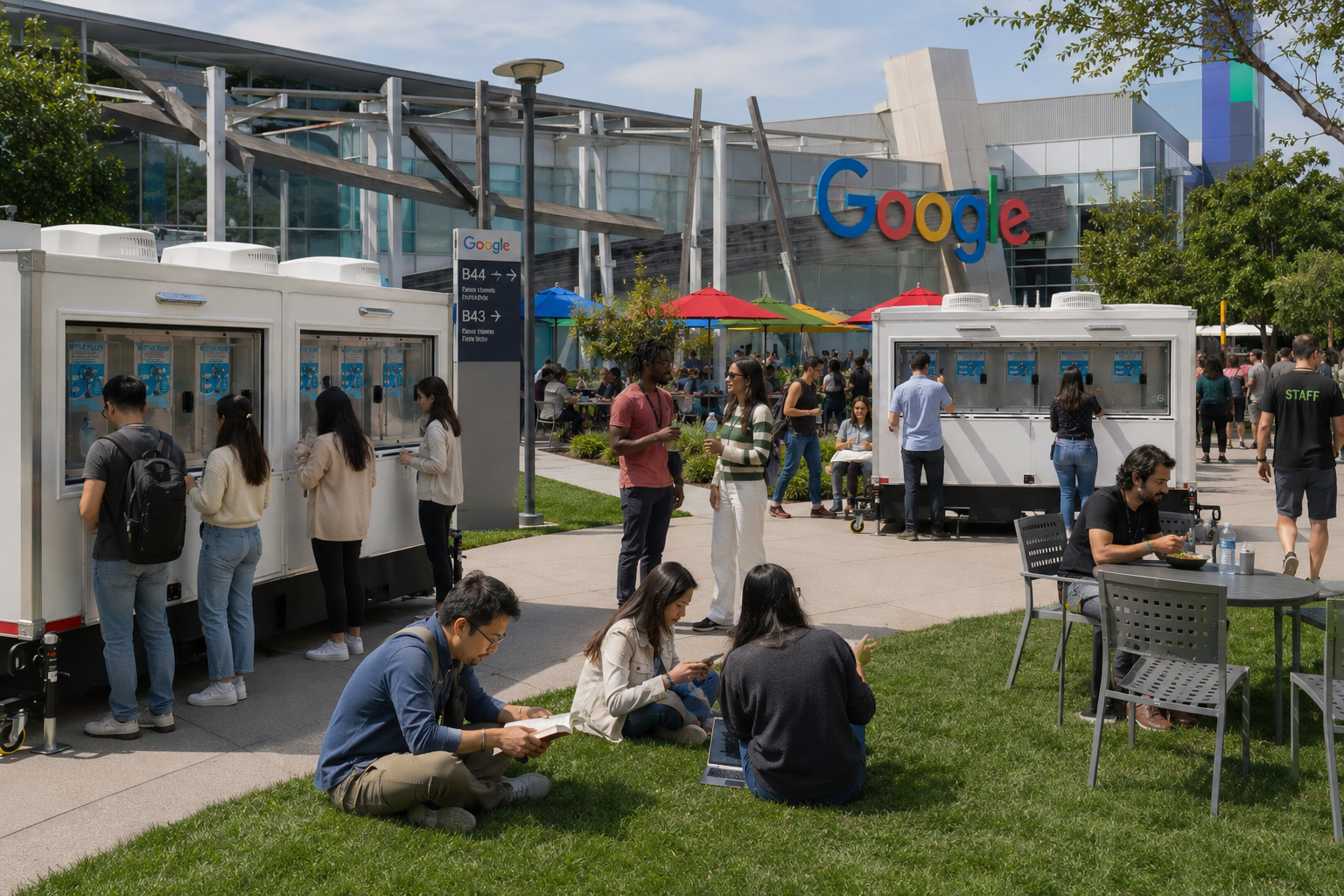
Event planners in Glendale build around heat the way coastal towns build around wind. An Americana festival, a Brand Boulevard street fair, a charity 5K winding through Brand Park, a corporate day on a studio backlot, each one gets its own standalone trailer pushing out steady cold water at clean refill points. It also spares your team the pallet orders, the dawn ice runs, and the pile of empties that an Americana-scale crowd burns through in an afternoon.
Across a wide footprint we can post several trailers so no guest walks far for a drink, and our crew schedules delivery and teardown to your run-of-show rather than our own. We learned that lesson the hard way at a downtown summer festival: a lone unit by the main stage had a thirty-deep line by mid-afternoon, since heat times a few thousand people stacks up fast. The following year we set three around the grounds and the lines disappeared. Guests take it as hospitality. Your ops lead takes it as risk control.
Why planning hydration in the LA County foothills is its own discipline
Glendale is no desert, yet the inland valleys it’s wedged between bank heat in a way the coast never registers. And the crews building and filming the city’s next chapter work right in the thick of it.
Glendale lies where the San Fernando and San Gabriel valleys come together, hemmed in by the Verdugo Mountains and the San Gabriels, and that basin traps heat. A typical summer strings together stretch after stretch of upper-90s and triple-digit days from June through October, far above anything nearby Santa Monica or the coast records, and the worst of it settles over the foothill pockets in Montrose, La Crescenta, and the Verdugo Woodlands. Surface readings on new asphalt and bare grading cuts climb well past the air figure, which is how a crew can drift into real heat-illness territory by mid-morning while the thermometer still shows a misleading 92°. In a climate like that, cold water isn’t a perk. It’s the least expensive safety gear anywhere on the site. California logs a heavy count of heat-related worker illnesses each summer, and outdoor crews across the inland LA basin sit right in that risk pool from late spring into fall.
The hard part of the planning is the sheer length of the danger window. A coastal contractor can coast through a heat spike on a few spare coolers. A Glendale contractor on a six-month foothill job from spring through October can’t ice-and-cooler their way past it, the volume runs too high, the warm-up hits too fast, and the chore of hauling, icing, and trashing bottled water mounts day after day. A single self-cooling trailer is the lone setup that carries a whole LA summer without becoming a logistics project in its own right.
And the demand only grows, because Glendale sits mid-stride in a long build-out. Downtown fills with mid-rise housing and mixed-use blocks along Brand and Central, the Galleria district reinvents itself yet again, and the foothill pockets carry steady remodel, grading, and brush-clearance work. Stack the production world on top: DreamWorks Animation, the Disney Grand Central campus, and the endless rotation of location shoots through Brand Park, Forest Lawn, and the downtown streets. Each of those puts dozens to hundreds of people outdoors under valley sun, often on long days that begin early to beat the afternoon.
We built our LA County dispatch around exactly that rhythm. When we first started setting trailers along the 134 and the 2 and on the foothill jobs above town, we keyed refills to crew size instead of a rigid schedule and folded in emergency drops during advisories. Because on a Glendale build or a shoot day, a hydration gap does more than drag the work. It can halt it outright and send someone to Glendale Memorial or Adventist Health by ambulance.
Past the trailer: the trucks that keep a Glendale site supplied
The trailer is what a crew gathers around, but it doesn’t run alone. Four kinds of truck back it up. Some bring drinking-grade water in, some bank a reserve on the lot when a tanker can’t reach a hillside cut on schedule, and one carries the used water back out. Book the loop through one number and you skip the headache of squaring three vendors’ calendars against a single Glendale gate window.
Potable water trucks
Our potable tankers haul drinking-water in volume and recharge the 300-gallon tank on a cadence we set by your headcount. A 5 a.m. window matters more here than most places, because Glendale’s hillside streets above Kenneth Road and through the Verdugo Woodlands are too tight for a loaded tanker once school traffic and the studio-bound commute clog Glenoaks. So we run the big fills early. The same trucks also charge cisterns and bladder bags when one delivery won’t cover the draw, say a deck pour off Central Avenue or a packed Saturday at the Americana.
Bladder bags & buffer supply
Fold-flat bladders bank a spare reserve through the hottest stretches, and they’ll hold greywater for a stretch when a foothill cut above La Crescenta has nowhere to drain. On the steep grading jobs in the Verdugos, where a tanker can only reach the bench at the bottom and the crew works the slope above, a bladder staged uphill is often the only way to keep the taps flowing between runs.
Pump trucks
A pump truck pushes water uphill or across a job when the trailer and the fill point can’t sit side by side. That comes up constantly on Glendale’s terrain. A retaining-wall job stepping up a Verdugo slope might put the only truck-accessible pad two switchbacks below the work, and a pump bridges that gap so nobody hand-carries jugs up a grade in 97° sun.
Vacuum & waste trucks
A vacuum truck draws greywater and wastewater off the lot and runs it to permitted disposal, so the cycle closes clean. That matters double in this watershed. Runoff here drains toward the Verdugo Wash and the LA River, and a film basecamp or a festival on a Brand Park lawn can’t leave used water on the ground without inviting a code problem. We’ve handled the haul-out since our first job in the valley.
Most jobs only need two or three of those trucks, not the whole fleet. A remote brush-clearance crew on a fire-road above Tujunga usually runs a station, a bladder uphill for buffer, and an early tanker fill. A two-day Americana event leans the other way, a pump truck to relay supply across the courtyard and a vacuum pickup once the crowd clears. Tell us the shape of the job and we’ll spec the trucks to it, one contact and one invoice, dispatched by a crew that already knows which Glendale streets a tanker can and can’t take.
The four answers that decide what we send, and why each one matters
Give us a couple of minutes on the phone and you’ll have a real number, not a placeholder. Four answers do most of the work, and walking through them shows why we spec each Glendale job on its own instead of handing everyone the same package.
The four questions behind the recommendation
- How many people? A ten-person tenant-improvement crew inside the Galleria and a sold-out Cruise Night car show on Brand are not the same problem. The count tells us whether one trailer covers it or whether a big footprint wants three or four, and how hard to push the refills.
- For how long? An afternoon farmers market in Brand Park, a four-week shoot parked near Grand Central, and a fourteen-month mid-rise on Central each draw their own cadence. The short jobs ride on a topped-off tank and a bladder. The long ones get a standing tanker route on our calendar.
- Where does it park? The towable Signature sets down on a backlot, a raw grading bench, an event lawn, or a hillside staging spot. The catch in Glendale is the approach. We need to know whether our truck can clear a Verdugo Woodlands switchback, fit a one-lane residential street near Forest Lawn, or thread a downtown loading dock, because that decides where the unit can actually land near the crew.
- What’s the power? A standard wall circuit or two will run the unit; the exact electrical is on the spec sheet above. Bare hillside cuts with no permanent service are routine in the Crescenta and Verdugo grading jobs, and they’re no obstacle. Just tell us up front so we plan the power instead of discovering it on arrival.
A few extras that sharpen the plan
- The exact drop spot, and whether a loaded tanker can actually reach it on a hillside or downtown approach
- Whether your people work one tight face or spread across a slope or an event footprint
- Any §3395 documentation your safety program needs a mapped cold-water point to back up
- Whether bulk tanker fills, an uphill bladder, or a waste pickup should ride along on the same booking
The costs a pallet of bottled water never prints on the invoice
A pallet of bottled water looks like the cheap option until you total what surrounds it. Four lines never make it onto the PO: the payroll spent moving the stuff, the tank-up space it eats, the chill it loses by mid-morning, and the trash it leaves behind. On a Glendale job each of those runs heavier than the sticker price hints.
The payroll line nobody quotes
Bottled water moves itself onto no truck and into no cooler on its own. A laborer cuts the shrink-wrap, hauls cases up to the work, dumps ice before the crew clocks in, restocks all day, then breaks down the empties at dark. Price that out on an LA-County prevailing-wage job, where a laborer’s loaded rate clears $50 an hour, and an hour of bottle-wrangling a day is real money walking off the schedule. A Brand Boulevard apartment builder told us his foreman was burning the better part of a shift a week just keeping coolers stocked across three floors. That’s a tradesman doing porter work. The trailer shows up filled, refills off our tankers, and asks your super for one thing: a place to park it.
The chill that’s gone by 10 a.m.
Ice a cooler at sunrise on a Glendale August day and it’s lukewarm before the morning break. The inland valley air sits heavy and the haze traps the heat, so a cooler in open sun on a Tropico pad warms faster than the crew empties it. Warm water is water a crew walks past, and the hour they stop drinking is the hour the heat starts winning. A trailer that chills its own 300 gallons has no such curve. The 4 p.m. pour comes out as cold as the 6 a.m. pour, which is exactly the stretch a sun-cooked grading crew needs it most. That single fact is the difference between a shift that ends on the truck and one that ends with a call to Glendale Memorial.
The space it steals on a tight lot
Pallets of water need somewhere to live, and Glendale rarely has the room to spare. A downtown infill site squeezed onto a quarter-acre off Wilson, or a film basecamp threaded along a residential block near Forest Lawn, has no acre of lay-down yard to surrender to plastic. The cases bake in the sun, the empties pile faster than anyone bags them, and on a cramped lot that clutter turns into a trip hazard and a neighbor complaint. One trailer slots into a single stall and serves the same crew that would otherwise plow through hundreds of bottles before lunch.
The trash that outlasts the project
Every bottle bought is a bottle headed for a bin, and a busy summer site stacks them into the thousands. That’s a hauling bill, a black mark on the project’s sustainability page, and around here a watershed problem, since loose plastic on a Verdugo-Wash-adjacent lot rides the first runoff straight toward the LA River. California’s container-redemption and waste-diversion rules already lean on big job sites to cut single-use plastic. A refill station zeroes the line out and hands your reporting a real diversion number instead of an excuse.
Cold water staged across Glendale and the surrounding LA County valleys
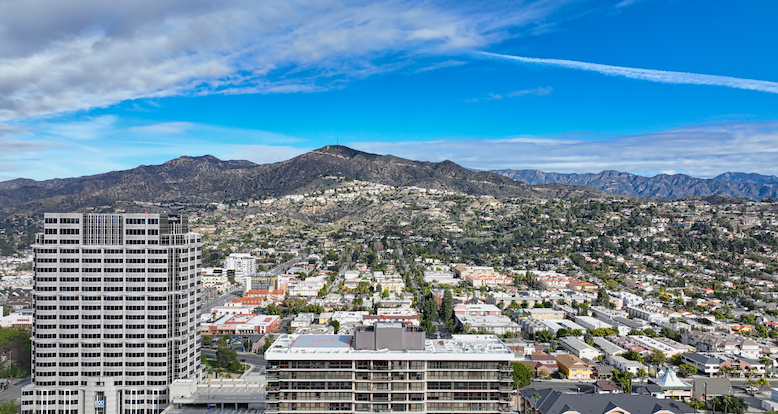
Our dispatch reaches Glendale and the broader LA County metro end to end, starting in the foothill neighborhoods up north, through the downtown core, and out over the San Fernando and San Gabriel valleys. If your job falls inside the metro, it falls inside our delivery range. That holds whether it’s a Brand Boulevard high-rise, a Forest Lawn-area event, a Montrose streetscape, or a hillside cut above La Crescenta.
La CrescentaVerdugo WoodlandsAdams Hill
TropicoGlassell ParkEagle Rock
BurbankPasadenaLa Cañada Flintridge
TujungaSun ValleyAtwater Village
Highland ParkNorth HollywoodSunland
Spanning a corridor instead of one address? We ride the freeways the region runs on, the 134, the 2, the 5, and the 210, so corridor and multi-site projects see the same fast turnaround as a single-spot drop.
The questions Glendale crews and event leads actually ask us
If I call this morning, when can a station be on my Glendale site?
For most LA County drops, figure around 45 minutes from the time we dispatch, and we keep running after hours for as long as a heat advisory holds. A crew that hits a 99° morning with nothing cold can usually have a unit pouring before the lunch break. The two things that move that window are gate access and power, and both get tricky on a narrow downtown block or a Verdugo hillside pad, so give us the site conditions and we route around them.
Is the water genuinely cold, or only filtered?
Both, and that’s the whole idea. An onboard chiller holds the trailer’s water cold all day, the sunrise pour and the quitting-time pour alike. On a Glendale July afternoon, room-temperature water gets ignored while crews quietly run down. A cold pour is a pour people actually finish, and consistent drinking is what holds heat illness off your crew, which is why we count the chiller as safety gear rather than an extra.
How does a station help with California’s Cal/OSHA heat law?
It backs it directly. California’s Heat Illness Prevention Standard, Title 8 §3395, calls for fresh, suitably cool drinking water for outdoor crews, enough for every worker to drink at least a quart an hour, kept near the work. A trailer hands you a fixed, mapped cold-water point you can cite in your written Heat Illness Prevention Plan and lead a Cal/OSHA inspector right to. We won’t author your safety program, but we provide the hydration backbone that §3395 hinges on.
How much does one station hold, and what happens once it gets low?
A full Signature tank runs 300 gallons, roughly 2,400 sixteen-ounce fills. Drive a large crew through a hot afternoon and our own tankers top it back up on a rhythm keyed to your draw, so tank size never becomes the ceiling. Staying ahead of the refills is on us to handle, not you.
Are the stations ADA accessible?
They are. The unit carries four push-back filling positions, one set low enough to clear ADA reach, so a lone station works for everyone on the Glendale job with no add-on required. The rear large-jug outlet handles five-gallon coolers and personal packs, while the hose-bib taps cover crew chores.
Can you handle events and film shoots, not just construction?
Absolutely, events and film work account for a big share of our Glendale jobs. An Americana festival, a charity 5K, a corporate field day, or a basecamp for a Forest Lawn-area shoot, we’ll place a single unit or several across the site and time delivery and teardown to your schedule. Your people get steady cold water at clean refill points, and you dodge the cost and trash of trucking in pallets of bottles.
What do you need from me to get one staged?
Four essentials: your headcount, the rental length, where it parks on the Glendale site, and what power’s on hand. The electrical the unit needs is listed on the spec sheet above, and it’s modest. No power on a remote hillside lot? Flag it and we’ll build a fix into the quote.
Do you only serve central Glendale, or the wider area?
The whole region. Our dispatch covers Glendale proper along with Montrose, La Crescenta, Burbank, Pasadena, La Cañada Flintridge, Eagle Rock, Atwater Village, Tujunga, and the rest of the surrounding LA County valleys. Multi-site work spread along the 134, the 2, the 5, and the 210 is everyday business for our trucks.
How does the water taste next to bottled?
Clean and neutral, with no chlorine bite. The carbon stage strips the chlorine and any flat, treated taste the tap can take on, so the pour reads fresh rather than like a garden hose left baking in the sun. And that counts: a trailer only earns its keep if people actually want to drink from it, which is why we put taste under safety, not under nice-to-have.
Can you roll out on short notice during a heat emergency?
We can, and it’s one of the big reasons clients keep our number close. Drops run at any hour during advisories, and we stage spare tankers whenever the forecast turns rough. A crew that meets a triple-digit Glendale morning with no working hydration can usually get a unit cold and pouring off one call, well before the afternoon peak.
Trusted by the operations that can’t gamble on warm water
“We had thirty-five people on a downtown Glendale pour in August and our bottled-water plan collapsed by 10 a.m. They had a station on our site that same afternoon, and the water was honestly cold. We’ve never returned to pallets since.”
“For a fall festival at the Americana, the refill stations dropped our single-use bottle order to next to nothing and the lines kept moving. Delivery and pickup happened on our schedule, not theirs. Simple decision to rebook for next year.”
“Our Cal/OSHA review asked for documented cold-water access for a heat-exposed foothill crew above La Crescenta. A mapped station delivered precisely that for the §3395 plan. Refills arrived before we ever dropped low.”
Service information current as of June 2026.
Get cold, filtered water on your Glendale site before the next heat wave or gate time
Give us your crew or crowd size, your dates, and where on the site the station belongs. We’ll size the job correctly and have a trailer out across LA County, usually within roughly 45 minutes of dispatch.