Santa Rosa Drinking Water Station Rentals for Events & Job Sites, Open 24/7
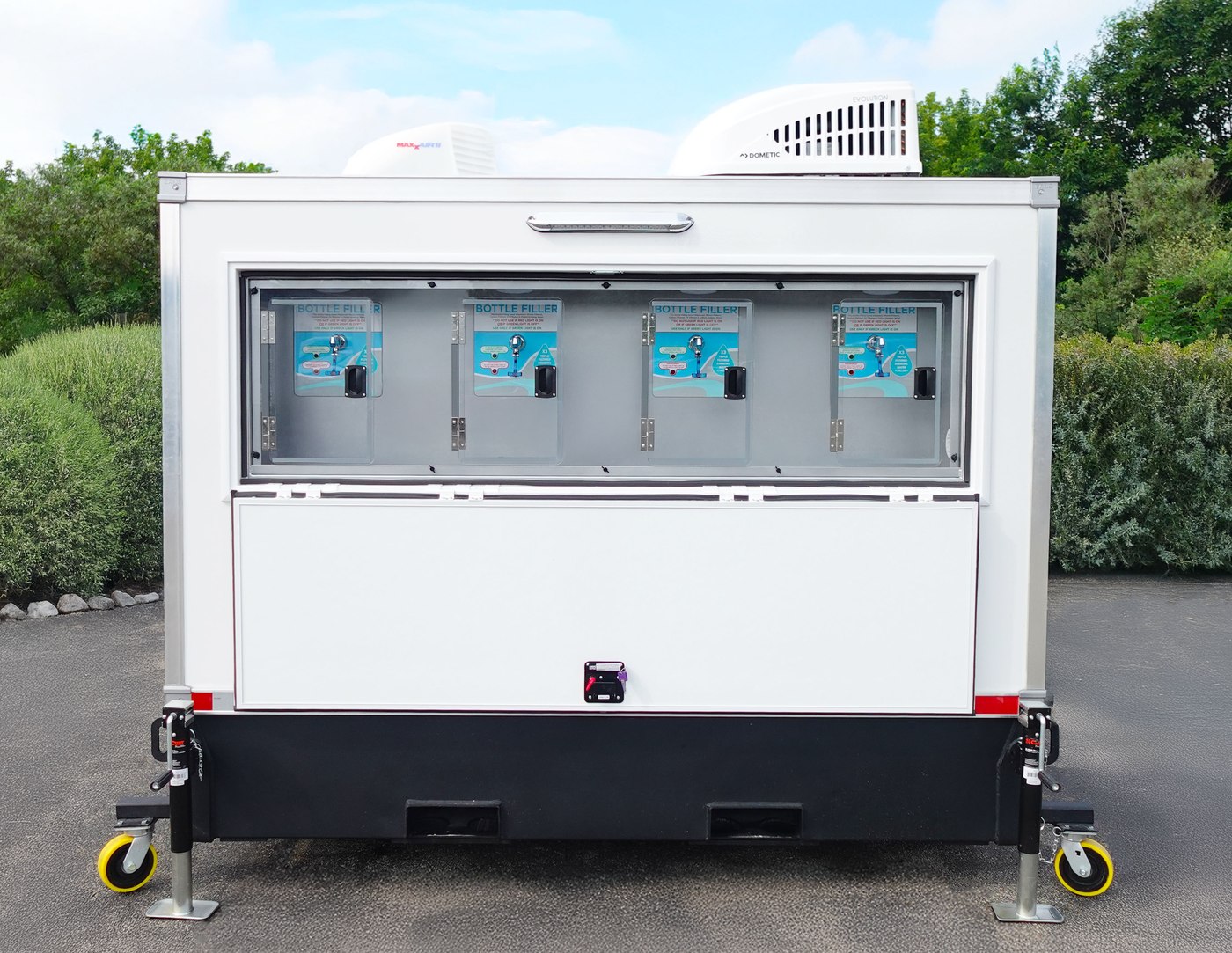
We drop a self-contained drinking-water station anywhere in Sonoma County and keep cold, filtered water flowing all day. A wedding at a Russian River vineyard, a paving crew on Highway 12, a fire-recovery base camp out past Fountaingrove, they all run on the same need: water people will actually drink. We deliver it, fill it, and keep it cold all day, first pour through last.
- ~45-minute county-wide delivery
- Four-stage filtered, chilled water
- ADA bottle filling
- Cal/OSHA heat-illness ready
- Licensed & insured
- 24/7 emergency dispatch
Filtered drinking water for Santa Rosa events and crews, delivered and kept full
Our trailers stage cold, filtered water for gatherings and work sites all across Santa Rosa and the rest of Sonoma County, and we keep the tank topped off from the time we arrive until the last person walks away. Three questions come up on nearly every first call: how soon can you be here, will the water still be cold by mid-afternoon, and what happens when a 300-gallon tank starts running low during a harvest push or a busy festival Saturday. And we answer all three the same way, with a unit that refills itself and a service crew that tracks the draw so you never have to.
Quick reach across the county
Most Sonoma County drops land within roughly 45 minutes of dispatch, and we run after-hours and emergency runs the whole calendar. When a coordinator at Wells Fargo Center realizes the day-of plan came up short, or a fire crew rolls into a staging area at 4 a.m., that turnaround is the whole job.
Water that stays genuinely cold
Each trailer chills its own supply, so the pour at clock-out tastes the same as the one early that morning. Warm water gets ignored, and water nobody drinks does nothing for a crew sweating through a Healdsburg afternoon. On an inland wine-country day, cold is what keeps people coming back to the tap.
Delivered, filled, serviced, pulled
You skip the juggling act, no bottled-water vendor, no ice runs, no separate hauler. We set the station, refill it off our own potable trucks, keep it serviced, and tow it out when you wrap. One point of contact handles the entire water loop on your Santa Rosa site.
Here’s the rule we run every job by: a hydration setup the crew walks past is no better than nothing at all. We’ve watched shrink-wrapped pallets of warm bottled water cook by a job-site gate while workers quietly skipped their water breaks, and we’ve seen a chilled trailer parked a few steps off the work face get drained twice before noon. The gap between those two outcomes is the entire reason we exist. So our trucks don’t just park a unit and drive off. We size it to your headcount, set the refill rhythm to how fast you actually draw it down, and treat an after-hours heat or fire call the way you’d want it treated, fast, because in this county a single hot afternoon or a sudden evacuation can change what a crew needs in an hour.
One road-towable trailer built for the way Sonoma County works outdoors
We run a single purpose-built rig across the county: the Signature Series water station trailer. A full road chassis takes it straight to wherever the work or the crowd is, a vineyard block off Westside Road, a fairground lot at the Sonoma County Fairgrounds, a burn-scar staging area in the hills above Rincon Valley. Nothing to assemble, no fixed plumbing, just filtered cold water on tap the same day it lands.
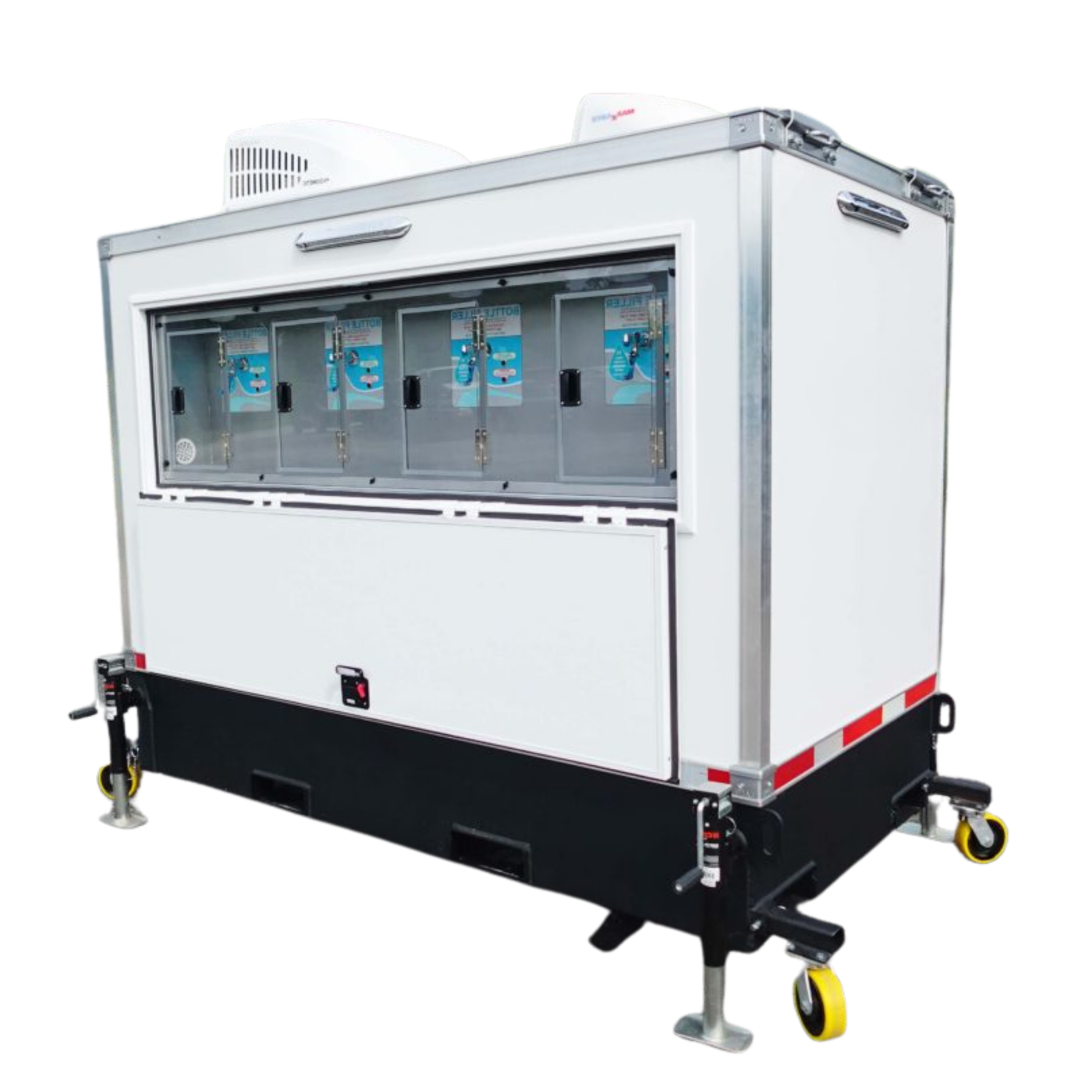
Signature Series specifications
It sits on a full trailer chassis with tires and a hitch, so it tows to a remote vineyard, an event field, an industrial yard, or a disaster staging area without a flatbed or a crane. This is the unit Santa Rosa planners and contractors ask for by name, sized to roll in, level out, and start pouring the same afternoon it arrives.
| No. of stations | (4) Bottle Filling Stations |
| Length | 12′ 3″ |
| Weight | 3,100 lbs. |
| Height | 8′ |
| Fresh water tank | 300 Gallons |
| Power requirements | 1–4 dedicated 20A/120V circuits OR 1 dedicated 50A/240V circuit |
| No. of AC units | 1 |
Why this trailer suits wine country
This rig was designed to beat two problems at once, the miles and the heat. Its four push-back taps sit along an outside wall under an awning, which lets a picking crew or a festival queue cycle through quickly on a break rather than crowding a lone spout. The built-in cooling and the AC keep the supply cold while the trailer cooks in full sun on a Sebastopol field, and that’s the very thing a pile of coolers or a bottle order botches on a baking Sonoma day.
Three hundred gallons sees a good-sized crew through a shift, and since the whole thing rolls on its own axles, we can nudge it across a big vineyard or shift it to the next build phase without ripping out any fixed plumbing. Its power needs span a wide band of ordinary site juice, so one unit covers a finished downtown venue or a bare hillside parcel we improvise power for.
And it does more than those four marquee taps imply. The rear jug outlet fills five-gallon coolers and personal packs, while a set of hose-bib taps takes wash-up, crew tasks, and farm work. That’s the entire Santa Rosa hydration picture in one piece of equipment. We’ve sent a single rig from a morning at a Windsor framing job to an evening load-in at the Luther Burbank Center, no second trailer required.
Why one station beats trucking in bottled water all season
Run a 40-person Santa Rosa crew through a long dry stretch and the arithmetic settles itself. Figure five or six bottles a head on a hot inland day and you’re ordering, hauling, icing, and trashing well over 200 plastic bottles daily, day after day.
Carry that across a 150-day job and you blow past 35,000 bottles, and on a multi-phase build or a full fair run it climbs higher still. One trailer stands in for the whole pile, cold water on tap and nothing rolling to the landfill.
It’s a logistics call before it’s a green one
Yes, the environmental side is real, and worth saying plainly: Americans discard tens of millions of these bottles every single day, recycling rates stay low, and the plastic outlives most of us in a dump. Put that figure in your sustainability report. In a county that has chased zero-waste goals for years, somebody on the review board will read it. Still, the reason most Santa Rosa supers and event coordinators make the switch is duller than the green pitch: a shared trailer ends the daily hassle. Nobody places a recurring water order. No cooler turns tepid by mid-morning. No mound of empties cooks at the entrance. The person running your job runs the job, not the water supply.
Because our own potable trucks keep the trailer charged, the supply flexes with the day. Double the crew for a pour, or watch a Saturday turnout beat the forecast, and the plan still holds, we simply send another fill.
Hydration sized for how wine country actually runs
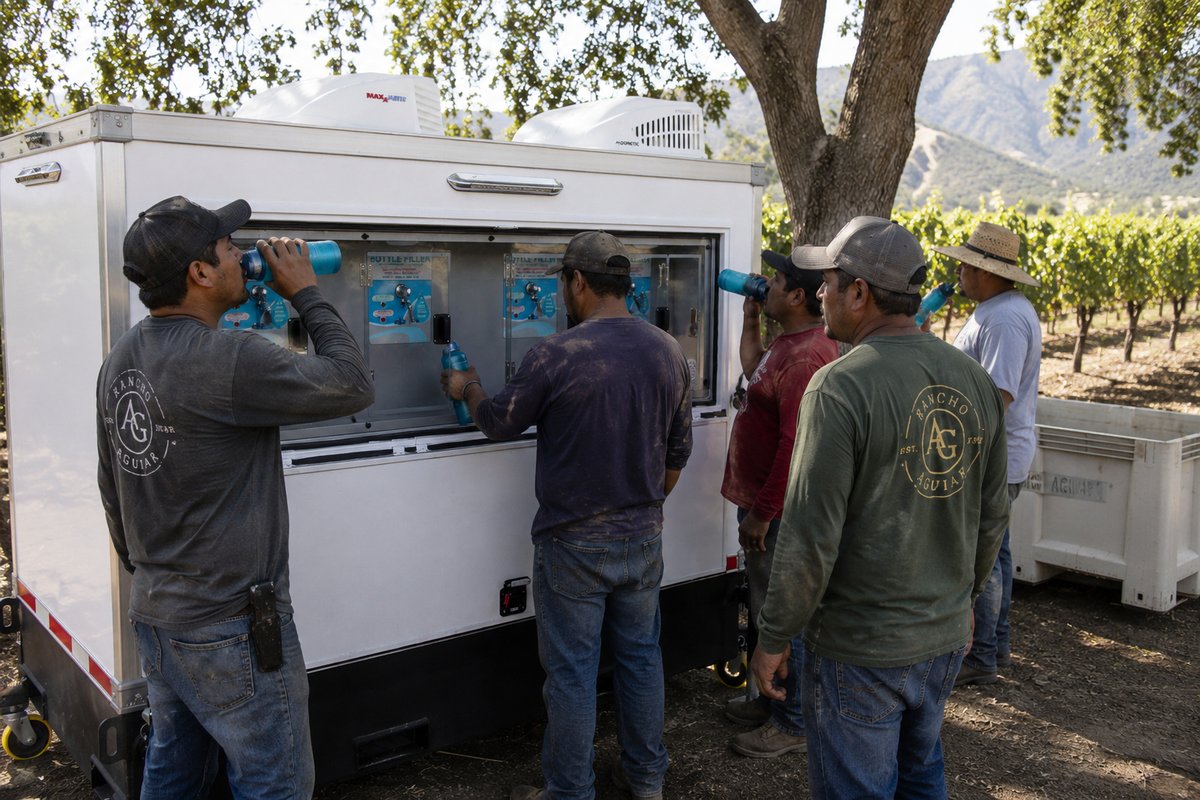
Santa Rosa doesn’t have one hydration problem, it has a handful that look nothing alike. A September crush at a Dry Creek winery needs one setup, a summer concert at the Green Music Center needs another, and a fire-recovery staging area in the eastern hills needs a third. Here’s where these trailers earn their rent, from the downtown core around Railroad Square out to the rural blocks past Kenwood and Glen Ellen.
Vineyards, harvest crews & outdoor labor
Sonoma County farms more than 60,000 acres of wine grapes, and crush brings long, hot days for the crews picking and hauling fruit across the Russian River, Alexander, and Dry Creek valleys. Add the landscapers, the road crews on Highway 12 and the 101, and the tree and vineyard-management teams, and you’ve got some of the most heat-exposed work in the North Bay. With the rear jug spout and the hose-bib outlets, pickers top off their coolers and packs right there at the row, instead of trekking back to the truck every time.
Fairs, festivals & outdoor events
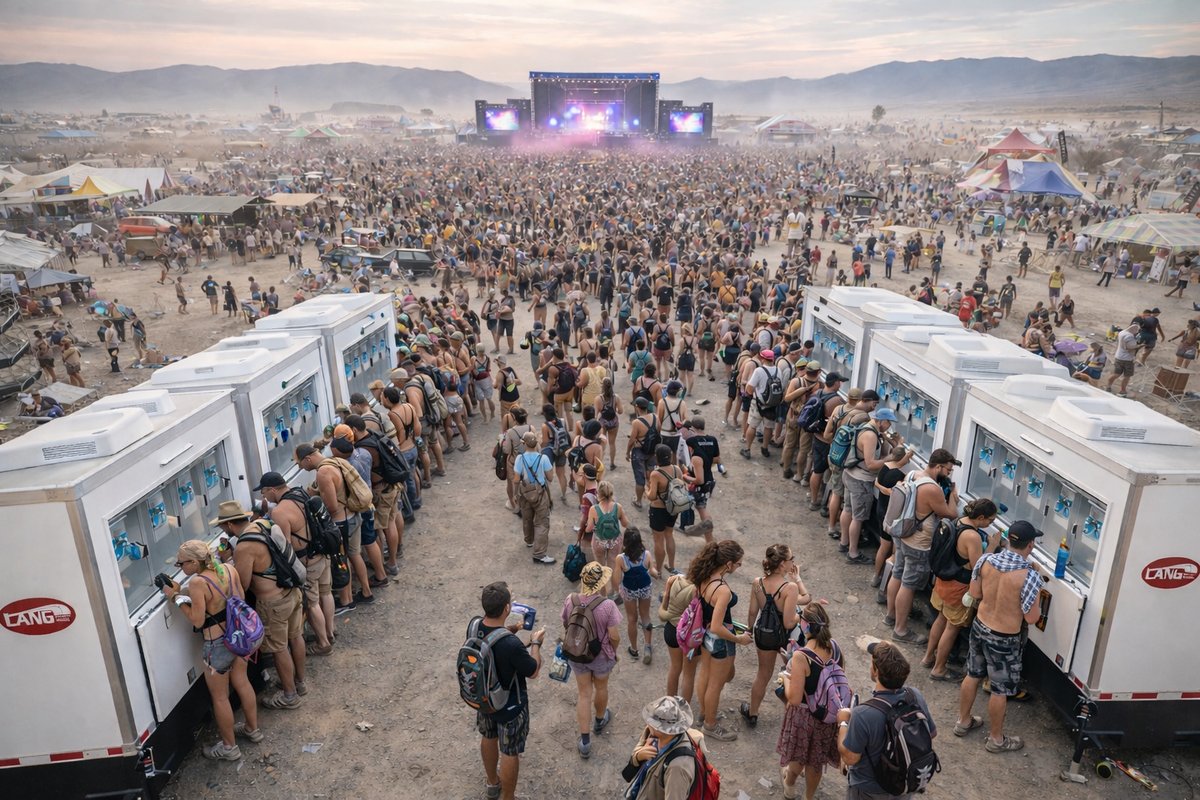
The Sonoma County Fair each summer at the fairgrounds, concerts at the Luther Burbank Center and the Green Music Center, games and shows at the Wells Fargo Center, the Wednesday Night Market on Fourth Street, harvest-season tastings up and down the valleys, an outdoor crowd here drinks fast. A trailer hands organizers steady cold water and clean refill points, with no mountain of single-use bottles to cart in and cart out.
Wildfire response & disaster recovery
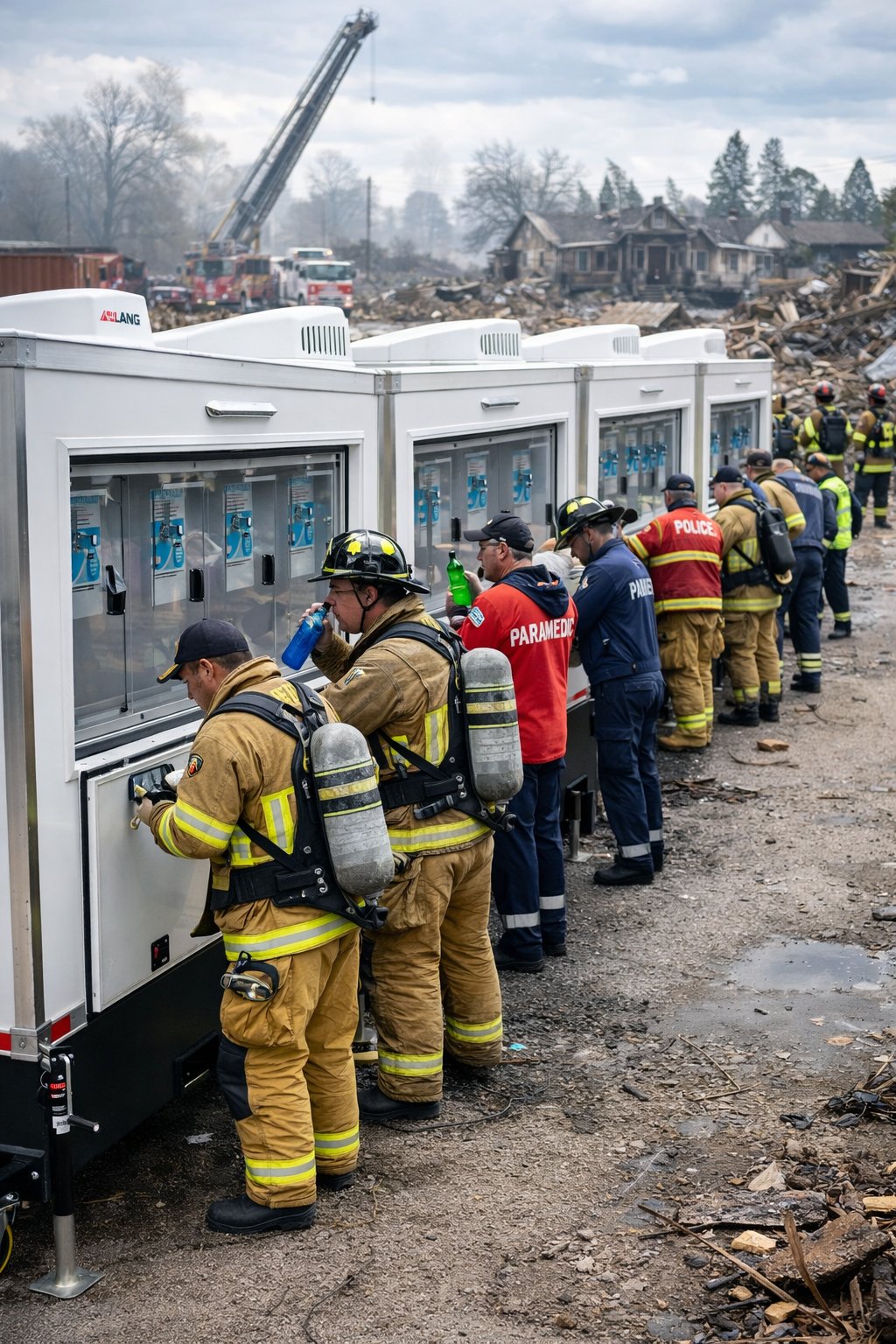
Santa Rosa knows this need better than almost any city in California. After the 2017 Tubbs Fire tore through Coffey Park and Fountaingrove, base camps, cleanup crews, and returning residents all needed clean drinking water for weeks. When fire season turns, or a main breaks, we push potable-water trailers to staging areas, cooling centers, and shelters on short notice, so responders and neighbors aren’t relying on a thin pallet of bottles.
Job sites, business campuses & industry
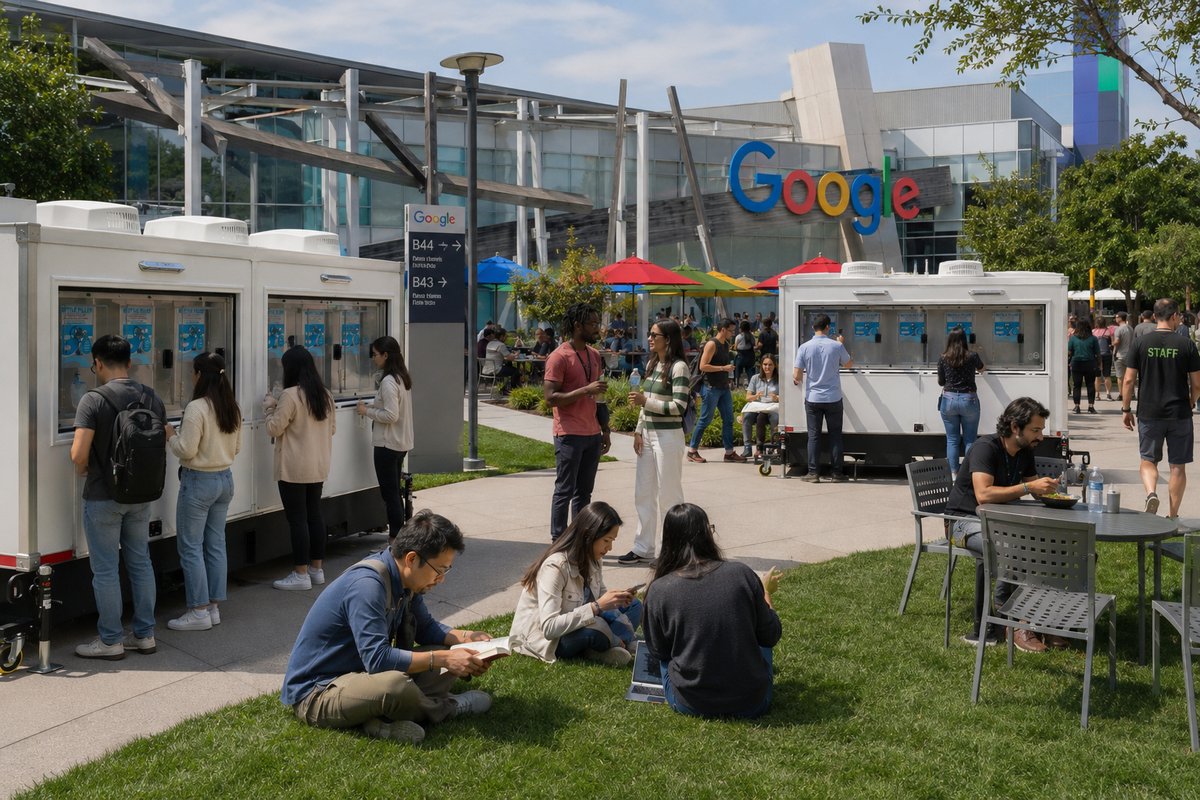
The housing and commercial rebuild that followed the fires kept Santa Rosa framing and grading crews busy for years, and the work hasn’t slowed, from north-county subdivisions to the SMART rail corridor and the warehouses off Airport Boulevard near Charles Schulz–Sonoma County Airport. Outdoor yards, laydown areas, and campus events all put people in the sun, and a towable trailer drops straight into the spot where they work.
Filtered through several stages, disinfected, then chilled
People have to want to drink from the thing, or it’s just expensive yard furniture. So we route city water through a stack of filters and a UV chamber before an onboard chiller takes over, which is why a fill comes out tasting clean and properly cold even when the inland thermometer near Santa Rosa is having its worst day of the year.
Sediment stage
The opening filter grabs grit, scale, and suspended particles before they go anywhere, so the water reads clear at the tap, never cloudy, even when the unit’s parked on a dusty service lane or a churned-up lot.
Carbon stage
Next, an activated-carbon bed pulls the chlorine sharpness and any seasonal funk out of the supply for a clean, neutral finish. During a hot crush, that taste is what keeps a picker coming back to the spout rather than ignoring it.
Micro-particulate stage
A sub-micron filter takes out the fine particles the earlier stages cannot catch, keeping every pour safe whether it’s a worker on the clock, a wedding guest, or a neighbor refilling during a power outage.
UV disinfection
Finally, a UV lamp neutralizes bacteria and microbes without dosing in any chemicals, so the water coming out the nozzle stays clean even after a long run up into the back-country hills.
Three ways to fill, and yes, it’s ADA
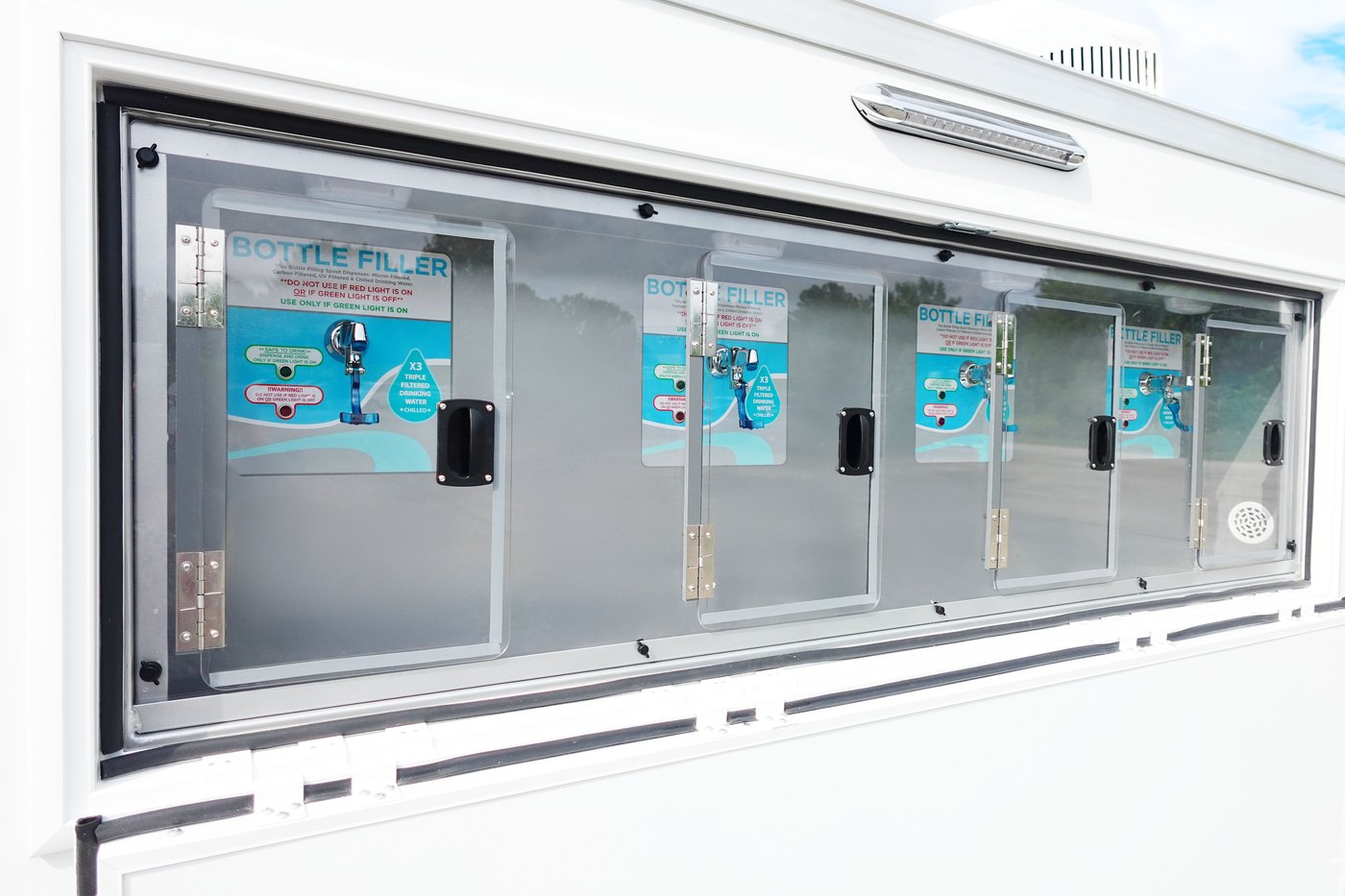
The four push-back filling positions use adjustable nozzles, you nudge a bottle against the bar and water flows, hands mostly free. We set one of them at a height a wheelchair user can reach, so an accessible drink is built in rather than bolted on as an afterthought. Around back, a large-jug outlet handles five-gallon coolers and hydration packs, and a handful of hose-bib taps take care of wash water, event needs, and ag tasks. The path the water travels is food-grade and stainless start to finish, so what you filtered and chilled is what you actually drink.
Each Signature trailer banks 300 gallons, somewhere near 2,400 sixteen-ounce pours, and our crews recharge it as the draw demands, which keeps the unit from ever becoming the choke point during a flat-out shift or a packed fair Saturday.
We deliver, fill, and hook it up, usually pouring cold water within the hour
None of this lands on your plate. We pick the placement, load the fresh water, and make the hookup, then walk your Santa Rosa crew or event staff through it before we pull off site.
You give us the basics
Headcount or crowd size, how long you need it, the exact spot it should sit, and what power you have on hand. That’s enough for us to size it right the first time.
We deliver county-wide
Usually around 45 minutes once we’re dispatched, reaching anywhere in Sonoma County, with around-the-clock runs when a heat stretch or a fire event hits.
We set it up
We get the trailer level, load its 300-gallon tank, and connect the power, working with whatever’s on site, whether that’s a set of standard 120-volt circuits or a single 50-amp 240-volt drop.
We keep it running
Our trucks refill on a cadence built around how fast you draw it down, and we maintain the unit for the length of the rental, start to finish.
No power on a remote vineyard block or a burn-scar lot? We flag it in the quote. Between the trailer’s light power draw and our service fleet, we’ve kept stations pouring on Sonoma County sites with no permanent hookup at all. Tell us what the lot has and we build the plan around it.
In a California summer, cool drinking water on site is the law, not a nicety
Santa Rosa sits in an inland valley where summer afternoons routinely push into the 90s and climb past 100 during heat waves, hotter than the cooler coast a short drive west. California is one of the few states with a binding outdoor heat standard, Cal/OSHA Title 8 Section 3395, the Heat Illness Prevention rule. It requires employers to give outdoor workers fresh, pure, suitably cool drinking water, free of charge, with enough on hand to allow at least one quart per worker per hour across an eight-hour shift. That’s a real volume to plan for on a long harvest or a grading job.
A trailer makes that obligation tangible. It’s a fixed, mapped feed of cold potable water on tap, the backbone of a workable Heat Illness Prevention Plan and exactly what a Cal/OSHA reviewer expects to see on a site walk. After the wildfire seasons of recent years, North Bay safety teams have leaned harder on documented hydration for both routine work and recovery operations, and a mapped on-site cold-water point is one of the cleanest line items to show an inspector.
- Fresh, suitably cool, potable water within easy reach of the work face
- At least one quart per worker per hour, the Cal/OSHA §3395 benchmark
- Centralized, documentable hydration points for your prevention plan
- Supports acclimatization and scheduled water breaks for heat-exposed crews
A city that learned the hard way what clean water in a crisis is worth
Most towns think about hydration as a summer-comfort issue. Santa Rosa has lived a harder version of it, and it shapes how we run every job in the county.
On the night of October 8, 2017, the Tubbs Fire crossed from Calistoga over the hills and into Santa Rosa, leveling whole neighborhoods, Coffey Park, Fountaingrove, Larkfield-Wikiup, in a matter of hours. More than 5,000 structures burned and the recovery stretched on for years. In the days and weeks after, base camps, debris-removal crews, utility teams, and residents picking through ash all needed one basic thing that’s easy to take for granted: clean, drinkable water, in volume, often in places where the taps were damaged or shut off. That experience is burned into how this community thinks about emergencies, and it’s why a mobile potable-water source is no abstract idea here.
Fire season hasn’t let up since. The 2019 Kincade Fire forced one of the largest evacuations in county history. Public-safety power shutoffs now arrive most autumns, knocking out water systems that depend on electric pumps. But through all of it, the constant holds: when normal water service falters, somebody has to bring drinking water to the people working and sheltering, fast, and keep it coming. A self-contained trailer that hauls its own 300 gallons and refills off our trucks is built for exactly that gap.
What makes the planning hard in Sonoma County is that the demand is unpredictable and the geography is spread out. A vineyard heat day you can forecast. An evacuation order at 11 p.m. you cannot. So we keep our dispatch flexible, with the ability to stage trailers at fairgrounds shelters, fire base camps, and cooling centers on short notice, and to pre-position spare water trucks when red-flag conditions are called.
When we first started supporting recovery and event work across the North Bay, we set our refill schedules by actual draw instead of a fixed calendar, and we built emergency drops into the way we operate. Because in this county a hydration gap during a fire or a heat wave isn’t a slow-down. It can be the difference between a crew that finishes safely and an exhausted responder headed to the ER, or a shelter that runs short of water for families who already lost their homes.
When the crowd is outdoors and the valley sun is up
Sonoma County organizers plan around heat the way coastal towns plan around fog. A vineyard wedding off Westside Road, a Fourth Street block party, a charity 5K through Howarth Park, a corporate retreat at a Kenwood estate, each one gets a self-contained trailer pouring steady cold water at clean refill spots. And your team skips the whole single-use-plastic cycle: no pallets to truck in, no coolers to ice down, no empties to haul off.
For a sprawling site we’ll scatter a few units so nobody walks far to fill up, and we work the drop-off and pickup around your run-of-show. A wine-country concert a few years ago taught us that: one trailer by the main stage had drawn a queue twenty-plus deep by mid-afternoon (heat plus a few thousand people piles up in a hurry). We placed three around the grounds the following year and the bottlenecks were gone. The attendee feels looked after. Your operations lead, meanwhile, sees one less liability on the day.
Beyond the station: the trucks that keep a Sonoma County site supplied
Everyone notices the trailer. What they don’t see is the fleet standing behind it, the rolling stock that hauls fresh supply in, parks reserve on the property, and carts wastewater back out. That’s why one phone number closes the whole circle, rather than chasing three vendors with three bills.
Potable water trucks
Drinking-grade water rides our tankers out to wherever the work is, and they refill that 300-gallon tank as often as your draw calls for. The same rigs charge cisterns, on-site tanks, and bladders whenever a single drop won’t cover the demand, think a packed fair gate or a foundation pour out by Windsor.
Bladder bags & buffer supply
Collapsible bladders bank extra fresh water for the peak hours, which matters on an out-of-the-way vineyard block or a burn-zone lot where a tanker can’t swing by hourly. Unglamorous gear, but it’s what keeps a distant Sonoma site flowing between scheduled fills.
Pump trucks
Got water that needs to reach a tricky spot? A pump truck loads storage tanks and relays supply over a big footprint. On the rambling rural properties around here, where the unit can sit a quarter-mile from where the water originates, it pays for itself.
Vacuum & waste trucks
If greywater or wastewater piles up, a vacuum truck draws it down and trucks it to a permitted facility, which seals the cycle properly. Where the used water goes is our problem, not something your Santa Rosa crew has to track. It’s been in the package from the very beginning.
All of it dovetails. An off-grid vineyard might want a station, a bladder for buffer, and a fill on a set schedule. A big day at the fairgrounds might call for a pump truck during the event and a waste pull at strike. Walk us through what your project looks like and we put together the combination that suits it, one point of contact, one invoice, and a crew that already knows the property.
What we’ll ask, and why each answer changes the plan
Give us two minutes on the phone and you’ll have an accurate quote. Below are the things we’ll ask, so you can have them handy, and so you can see how we tailor every job rather than handing everyone the same default rig.
The four things that shape the recommendation
- How many people? A 12-person harvest crew off Westside Road and a 3,000-person concert at the Green Music Center are completely different jobs. Your numbers tell us how many trailers to bring and how aggressive the refill cadence needs to be.
- For how long? A two-day fairgrounds run, a three-week pour, and a subdivision that takes the better part of a year all call for different servicing. Brief gigs ride on buffered reserve, drawn-out jobs ride on tanker visits we put on a calendar.
- Where does it park? The towable Signature settles into a yard, a raw lot, a row between vines, or an event lawn. Once we know the precise placement, plus how our truck threads past gates and skinny back-county roads, we can set it where the foot traffic actually is.
- What’s the power situation? A trailer runs off a few standard 120-volt circuits or one 50-amp 240-volt drop. Out in the hills and toward the coast, lots with no permanent power are routine, and entirely workable. Just loop us in on it ahead of time.
The extras that help us dial it in
- The spot you want the unit, plus how a truck gets to it
- Whether people are scattered over the property or clustered at one face
- Any heat-illness paperwork your safety plan needs this station to back up
- Whether bulk delivery, bladder reserve, or a waste pull should ride along on the same order
The hidden costs a pallet of bottled water never shows on the PO
Bottled water reads cheap on paper. The real cost hides in the labor, the storage, the warm-up, and the waste, and on a hot inland Santa Rosa job every one of those lines runs heavier than the price-per-case suggests.
The labor nobody budgets for
Think through the chain: a person orders the cases, receives the pallets, splits them, ices coolers before sunrise, tops them up through the day, then breaks down the empties for the bin. Across a decent-sized crew that’s paid hours bleeding off the schedule, every day. The trailer makes the whole routine disappear. A Windsor GC let us pencil it out with him once, and the labor he’d recover paid for the unit outright, he hadn’t realized the bottle runs were quietly costing him close to a full day of somebody’s week. Our trailer arrives full, tops up off our own trucks, and needs nothing from your super beyond a parking spot.
The warm-up problem
That cooler you iced at sunrise? On a 98-degree Santa Rosa afternoon it’s bathwater well before lunch. And lukewarm water is water crews quit reaching for, which is precisely when overheating starts sneaking up on them. An onboard chiller skips that curve entirely. The last fill of the day is as cold as the first, and a worn-out crew needs that cold pour most at quitting time, not least.
The storage and footprint tax
Stacked cases hog staging room, clutter laydown zones, and bake in the sun until someone tears into them. The empties accumulate faster than anybody clears them, and on a cramped downtown Santa Rosa parcel or a jammed event field that’s a mess all its own. The trailer needs one parking space and quietly serves a crowd that would chew through hundreds of bottles otherwise.
The waste that follows you
Buy a bottle and you’ve bought something to dispose of, and a busy operation racks up an alarming heap of them over a season. There’s the haul-away cost, there’s the dent in a project’s sustainability scorecard, and in a county leaning hard into zero-waste goals, it’s the kind of footprint that gets remarked on. Move to a refill station and that line item drops to zero, handing your report a figure you’d actually want to print.
Staging cold water across Santa Rosa and all of Sonoma County
Our dispatch runs Santa Rosa proper plus the whole county around it, north to the Russian River and Healdsburg, south to Petaluma, west to the coast at Bodega Bay, and east into Sonoma Valley. If you sit inside Sonoma County, you sit inside our delivery range. That holds whether the job is a downtown core build near Railroad Square, a winery event in Kenwood, a Roseland streetscape, or a vineyard block out past Forestville.
Rincon ValleyFountaingroveCoffey Park
Bennett ValleyWindsorHealdsburg
SebastopolRohnert ParkCotati
PetalumaSonomaKenwood
Glen EllenForestvilleGuerneville
Working a corridor instead of a single address? We follow the roads the county runs on, Highway 101, Highway 12, and the river routes, so multi-site and rural projects get the same fast turnaround as a job downtown.
The questions Sonoma County crews and organizers actually ask
How fast can you get a water station to my Santa Rosa site?
Most Sonoma County runs put us on site roughly 45 minutes after we’re dispatched, and through heat spells or active fire events we’ll deliver any hour of the day or night. A crew that hits a scorching morning with no cold water can usually expect one flowing by midday. What shifts the timing is gate access, the state of rural roads, and the power available, so give us the site details and we’ll plan the route to fit.
Does the water stay cold, or is it only filtered?
Both, and that’s the whole point. An onboard chiller keeps the supply cold from the first pour to the last, even while the trailer sits in open valley sun. Lukewarm water gets ignored, and ignored water does nothing to prevent heat illness, so we treat the chiller as safety gear rather than a perk.
Can you support wildfire response and evacuations?
Yes, it’s a big part of why Sonoma County clients keep us on speed dial. We can stage potable-water trailers at fire base camps, cooling centers, fairgrounds shelters, and recovery sites on short notice, and pre-position spare water trucks when red-flag conditions are forecast. After events like the Tubbs and Kincade fires, having a self-contained drinking-water source that doesn’t depend on local taps matters enormously.
What’s the tank capacity, and how do you handle it running low?
The Signature holds 300 gallons, around 2,400 sixteen-ounce fills. On a big crew or a busy fair day, our own trucks keep it charged on a cadence set by your draw, so the tank capacity never becomes the ceiling. Tracking the refills is our job, not yours.
Will a station back up our Cal/OSHA heat-illness plan?
It supports it directly. California’s Heat Illness Prevention standard, Cal/OSHA Title 8 §3395, requires fresh, suitably cool, free drinking water for outdoor workers, enough for at least one quart per person per hour. A trailer hands you a permanent, charted cold-water point you can write into the plan and walk an inspector right over to. The safety program is yours to author, but the hydration it rests on is ours to provide.
Are the stations ADA accessible?
Yes. Every trailer carries four push-back filling points, one set at an ADA-reachable height, so the station works for everyone on a Santa Rosa site without a separate rig. A large-jug spout at the rear loads five-gallon coolers and personal packs, while hose-bib outlets cover wash-up and crew tasks.
Can you handle outdoor events as well as job sites?
Definitely, events make up roughly half our county work. Whether it’s a fair, a winery wedding, a 5K, or a company retreat, we’ll position a single unit or several around the site and fit delivery and strike to your schedule. Your crowd gets dependable cold water at tidy fill points, and you shed the expense and trash of hauling in pallet after pallet.
What do you need from me to set one up?
Four things: your headcount, how long you need it, the parking spot on site, and what power is there. The Signature runs on one to three standard 120-volt circuits, or a single 50-amp 240-volt drop. Remote vineyard or hillside lot with no power? Mention it up front and the quote will include a workaround.
Do you only serve the city, or all of Sonoma County?
The whole county. Our dispatch covers Santa Rosa plus Windsor, Healdsburg, Sebastopol, Rohnert Park, Cotati, Petaluma, Sonoma, Kenwood, Glen Ellen, the Russian River towns, and the coast. Multi-site work strung along Highway 101 and Highway 12 is routine for our trucks.
Does it taste as good as bottled?
Neutral and crisp, without the chlorine tang you sometimes get straight from the tap. The carbon stage takes out the chlorine plus any seasonal off-flavors, so a fill tastes fresh instead of warm and hose-like. It’s not a small thing either: people only drink from a station they like the taste of, which is why we treat flavor as part of the safety equation.
How large a crew can one station keep hydrated?
A lot, since what limits a station is how often we refill it, not the number of taps. Four fill points keep a crew or a crowd moving, and 300 gallons is roughly 2,400 sixteen-ounce fills before a top-off. When the demand is really heavy, we either run the tanker more often or add a second trailer, so capacity rises with your numbers rather than putting a lid on them. Tell us your busiest moment and we plan the volume to it.
Built for the people who can’t afford to run out of water
“We had a picking crew working a Dry Creek block during a September heat wave and our cooler plan was hopeless by 10 a.m. They had a station on site that afternoon, water cold the whole shift. We’ve used them every crush since.”
“For our summer event at the fairgrounds, the refill stations cut our single-use bottle order to almost nothing and the lines moved fast in the heat. Delivery and pickup ran on our schedule. We rebooked on the spot.”
“During a fall power shutoff our site lost water for two days. They rolled a trailer to our staging area within hours and kept it filled. For a crew working a recovery zone, that’s not a convenience, it’s the job.”
Service information current as of June 2026.
Get cold, filtered water on your Santa Rosa site, for the next event or the next emergency
Give us your headcount or crowd estimate, the dates, and the parking spot, and we’ll match the job to the right setup and roll a trailer out anywhere in Sonoma County, usually within roughly 45 minutes once we’re moving.