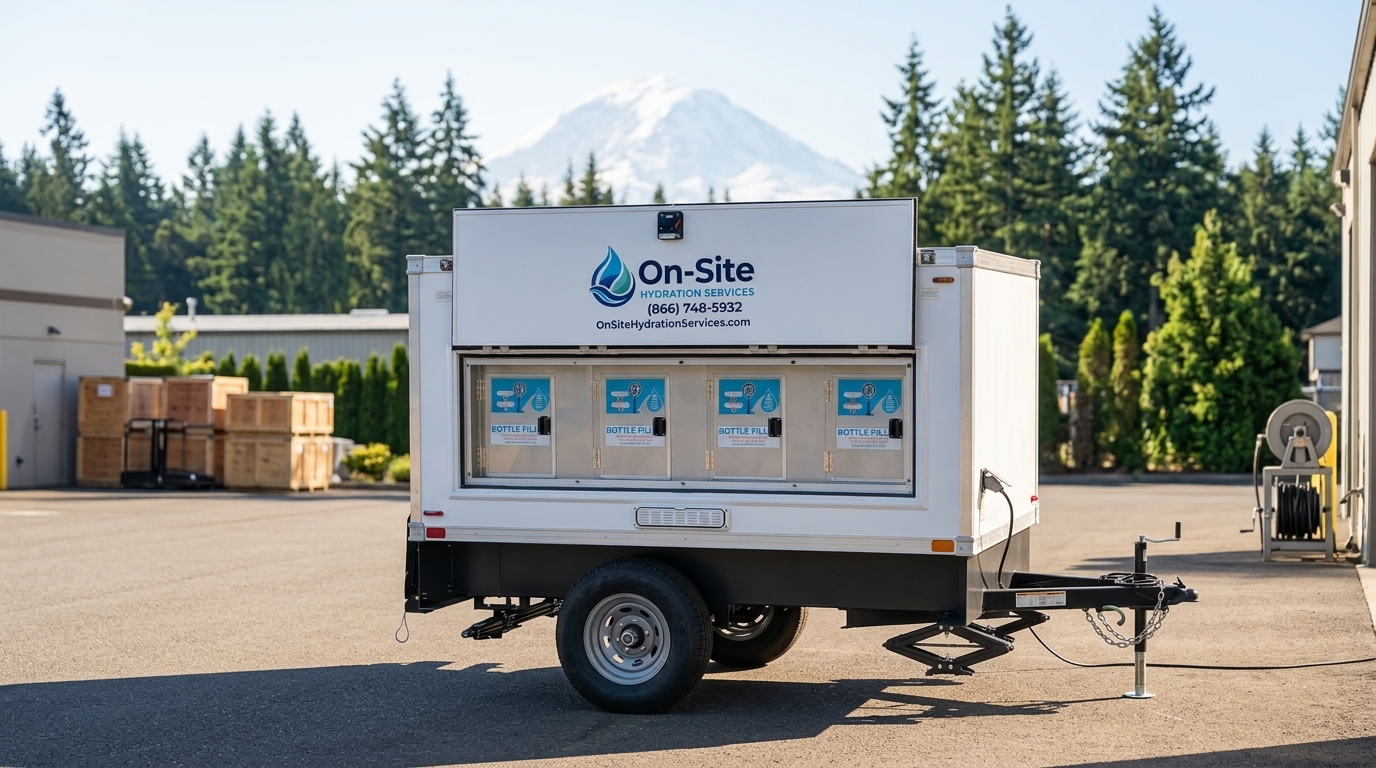
We deliver cold, filtered drinking water to job sites and events across Washington. That covers Puget Sound highway and terminal work, data center builds in the Columbia Basin, and orchard blocks in the Yakima Valley. It also covers festival grounds on both sides of the Cascades. We are a licensed and insured crew with an incident-free record on Washington sites. One Signature Series water station rolls in, we tow it in ourselves. It levels, ties into everyday site power, and pours cold water the same day, and our own water trucks keep the tank full for as long as the job runs. Bottled water goes warm by mid morning and then gets walked past, and that is the moment a crew quietly falls behind on fluids. Give us the headcount, the dates and the spot it will park, and we will put a station on the ground.
See the Signature Series water station specs
“We had a crew working the shoulder on an Interstate 5 stretch in August and our cooler plan was warm before the first break. They had a cold station staged the same afternoon and kept it filled for the rest of the closure window. Nobody has asked about bottles since.”
“Picking ran late and hot, and at one quart per worker per hour across that many hands there was no version of bottled water that was going to hold. The trailer moved with the block and the refills landed before we were anywhere near empty.”
“Our safety file needed a documented cool water source we could point at on the site plan, not a cooler somebody filled again when they remembered. One station answered it, and the smoke week in August was the first time it really proved itself.”
Service information current as of September 2026.
We keep crews and crowds supplied with cold drinking water everywhere in Washington. We plan around the fact that a July afternoon in Kennewick and a July afternoon in Bellingham are not the same problem. Our stations go out to highway and transit jobs along Interstate 5, terminal and yard work on the Tacoma Tideflats, and data center builds in Grant and Chelan counties. They also cover orchard and vineyard rows through the Yakima Valley, and event grounds that run from Esther Short Park in downtown Vancouver to the Gorge above the Columbia River. Washington also writes its own outdoor heat rule with real numbers in it, so the questions we field here are sharper than they are in most states. People ask how cold the water actually stays at the end of a shift, how you show an inspector exactly where it sat, and how fast a second station lands when a crew doubles for a pour. We have answers to all three before you ask. And if your site falls between two of our city routes, say so on the call. We will tell you straight whether that is a same day drop or a next morning one.
One Signature trailer can pour for a weekend concert and be working a slab pour a couple of days later. Hiring one company for your events and a separate one for your worksites makes no sense. Either way, the planning, the delivery, and the refills are ours.
The onboard cooling unit keeps the tank genuinely cold all the way through a Washington afternoon, and that single detail carries the whole thing. Warm water is water people abandon, and midsummer is exactly when a crew or a crowd is drinking the most. Cold water gets finished, and finishing it is what keeps heat illness off the site.
Typical metro deliveries across Washington land in about 45 minutes, longer out on the rural routes, and we keep emergency runs going around the clock whenever a heat advisory or a power shutoff hits Washington. The morning a foreman finds his 40-person crew stuck with one warm cooler, speed is the whole game.
One rule sits under every job we take: water that people walk past might as well not be there. We've stood on a bare Washington site and watched shrink-wrapped pallets cook next to the job-trailer while the crew baked thirty yards off. We've watched the opposite too, a chilled station ten steps off the work face run bone-dry twice inside one shift. Everything that matters lives in the distance between those two pictures. Which is why we don't drop a unit and disappear. We match it to your headcount or your gate count, set the refill rhythm to how hard you're really pulling on it, and treat a heat call the way you'd want your own treated, meaning right now, because out here one hot hour can swing the whole day.
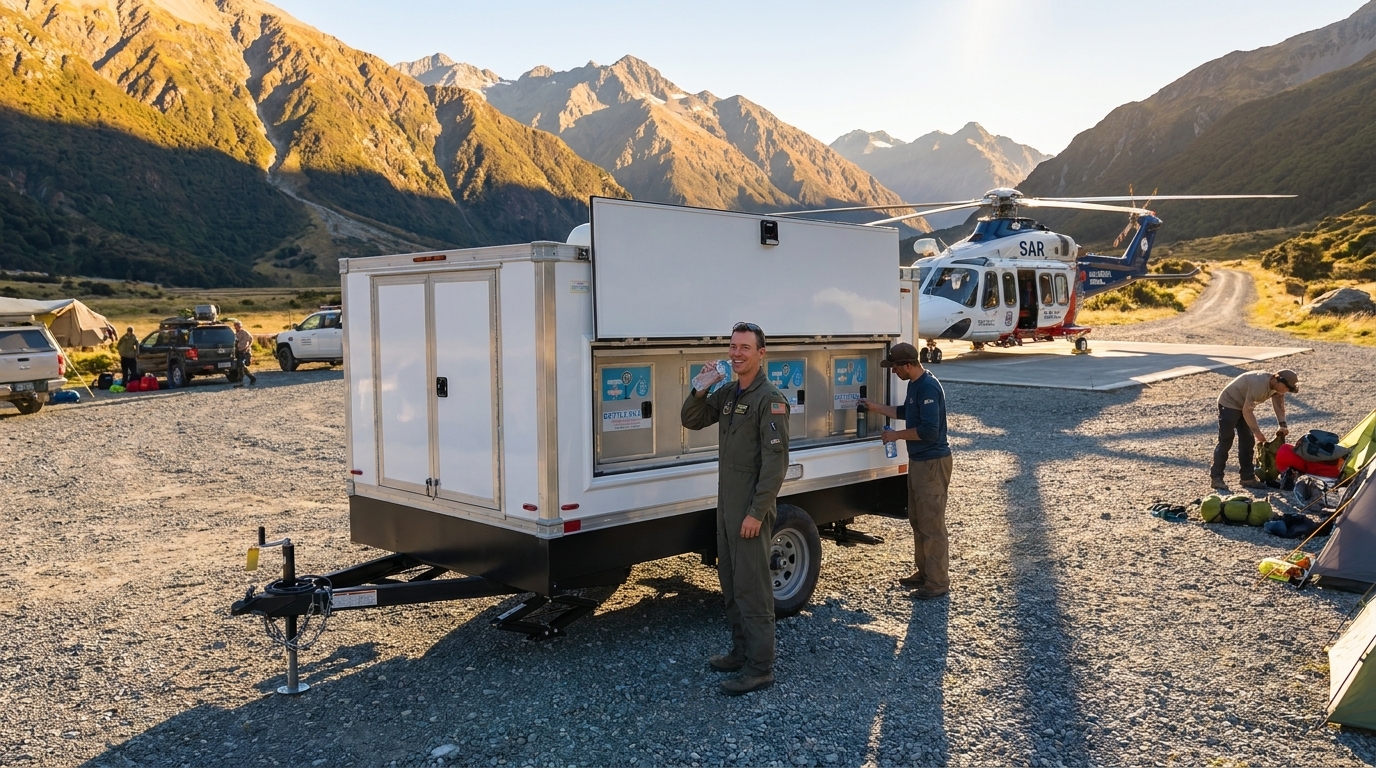
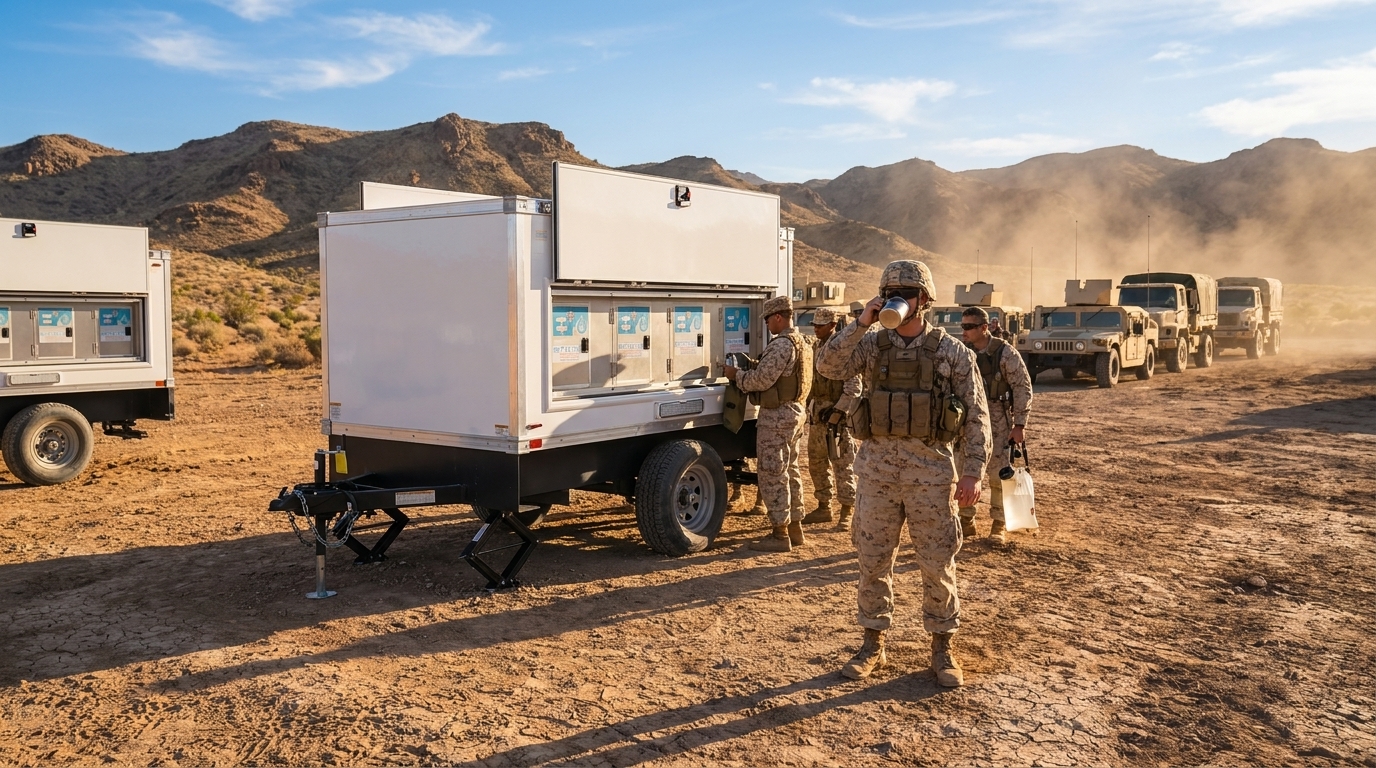
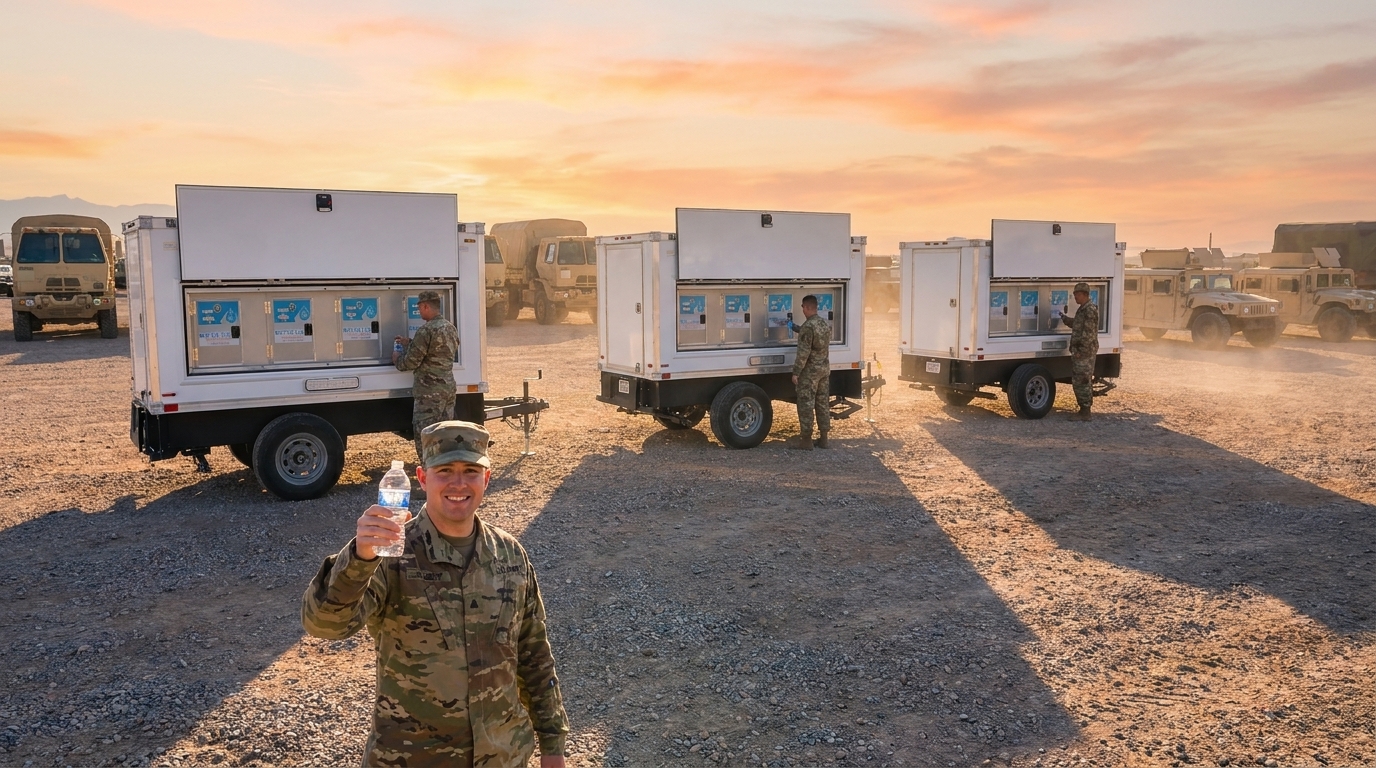
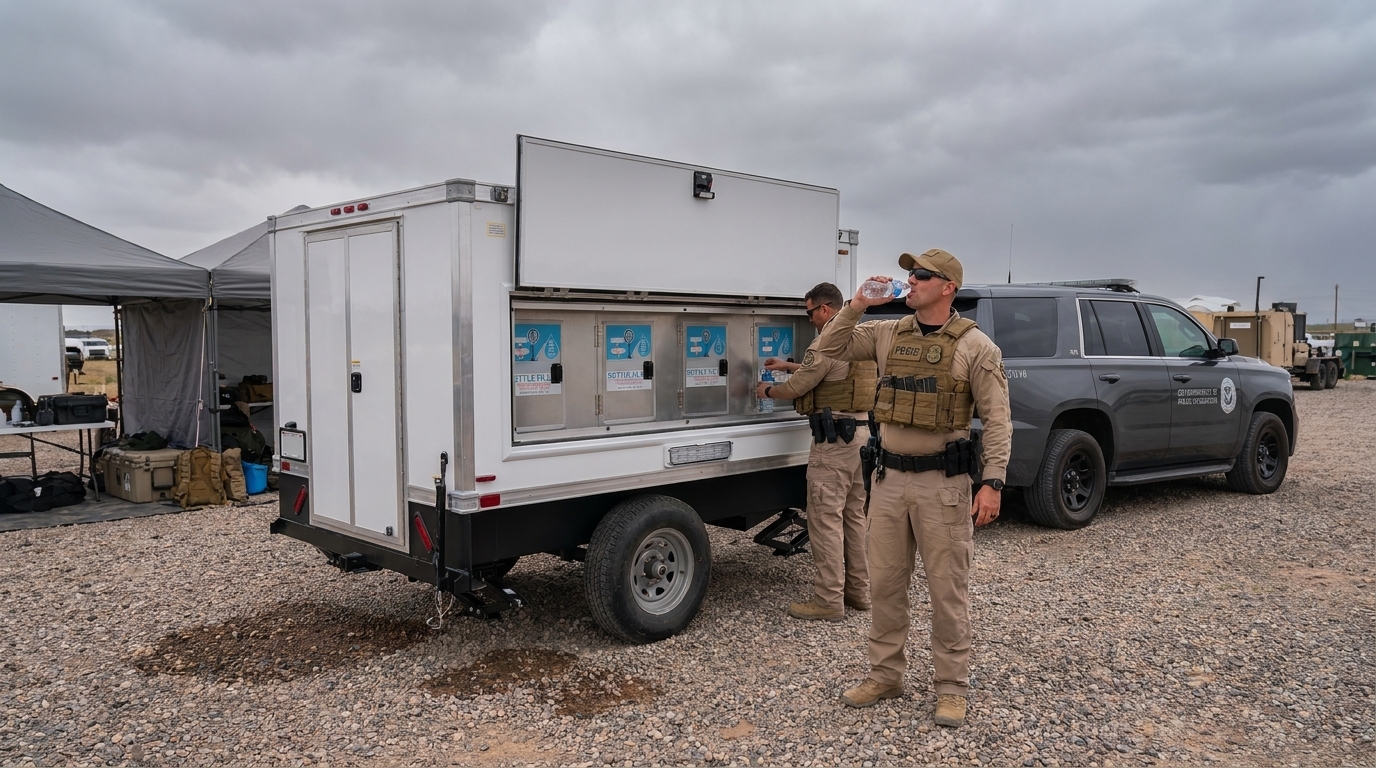
Our Washington lineup is one trailer, the Signature Series water station. It follows the work wherever the work goes, from a graded pad outside Quincy to a laydown yard on the Tideflats, an orchard block above the Columbia, or a festival lawn in downtown Vancouver. Nothing gets built and no plumbing gets run. The unit carries its own water, filters it in four stages, and cools it before it ever reaches the spout.
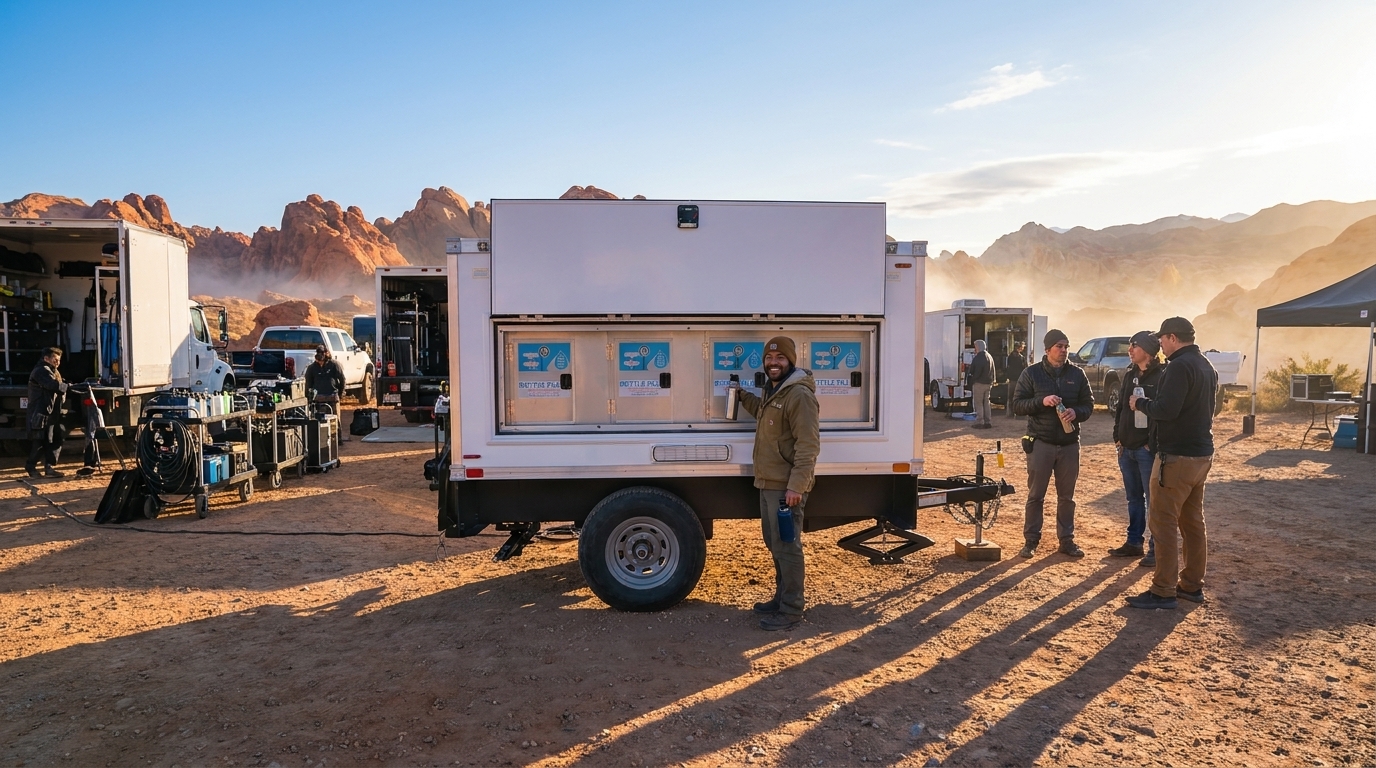
With a frame, a hitch, and tires under it, the unit hauls out to a remote build in Washington, an event field, a working orchard, or a disaster staging yard with equal ease. Washington contractors and event planners request this exact rig by name. The whole design is built around backing in, leveling off, and pouring cold by the same afternoon.
| No. of stations | (4) Bottle Filling Stations |
| Length | 12' 3" |
| Weight | 3,100 lbs. |
| Height | 8' |
| Fresh water tank | 300 Gallons |
| Power requirements | 1 to 4 dedicated 20A/120V circuits OR 1 dedicated 50A/240V circuit |
| No. of AC units | 1 |
Washington is really two heat climates working under one set of rules. West of the Cascades the marine summer used to be the easy one until the 2021 heat dome pushed Seattle to 108 degrees, and east of them the Columbia Basin and the Tri Cities run hotter, drier and longer every year, which is where the state's biggest construction and harvest workforces happen to be.
Seattle hit 108 degrees and Spokane hit 109 degrees during the June 2021 heat dome, the deadliest weather event in state history
The work that keeps our stations moving across Washington right now: data center construction and operations in the Columbia Basin; aerospace and advanced manufacturing; highway, transit and port projects. Crews also called us during the June 2021 Pacific Northwest heat dome and the 2026 statewide drought, wildfire and smoke emergency.
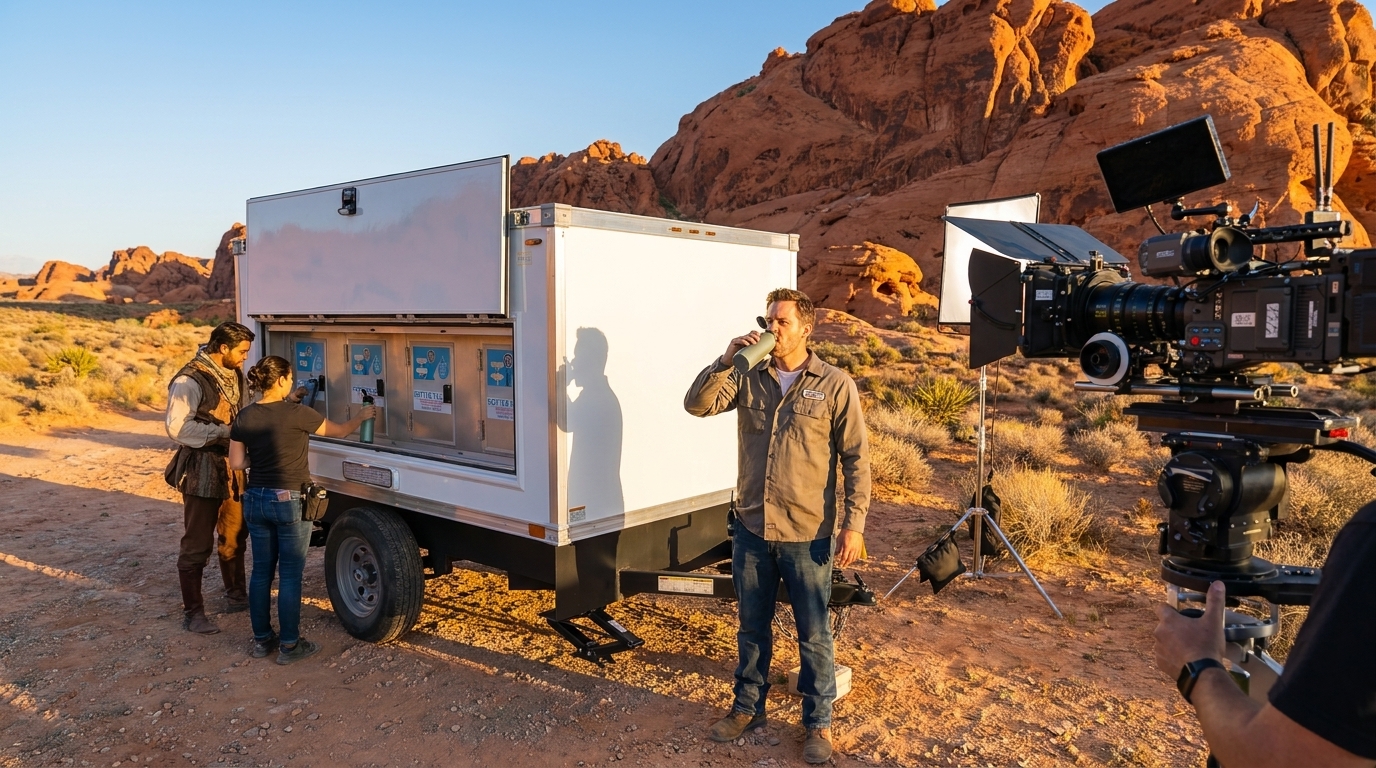
Washington has more heavy civil work in the ground at once than most states its size. Light rail is pushing south toward the Tacoma Dome. Interstate 5 is being rebuilt in pieces, from the Lewis County pavement and barrier work up through the Puget Sound corridor. The Mounts Road to Steilacoom DuPont stretch past Joint Base Lewis McChord is closing out a decade of widening this year. And the five mile Interstate Bridge replacement between Vancouver and Portland is lining up a design build contractor ahead of construction starting soon. Every one of those puts a crew on an active shoulder or a bare pad with no tap in sight for the length of a shift.
Port and terminal work runs on the same math. The Tacoma Tideflats alone supports roughly 57,000 jobs, and Pierce County counts about 24,000 construction jobs on its own. Yard crews, terminal contractors and the trades working around a live container operation are all on exposed ground. The closest drinking water is often a break trailer that somebody has to stop working to reach. That is exactly the walk that stops happening around hour seven.
We set the station where the crew actually stands, and keep it filled from our own potable water trucks. We move it as the work face moves down the route. On multi phase jobs we build the refill schedule around your real headcount instead of a fixed calendar. That way a double shift pour day does not run the tank dry at two in the afternoon. A rainy week does not pay for water nobody drank.
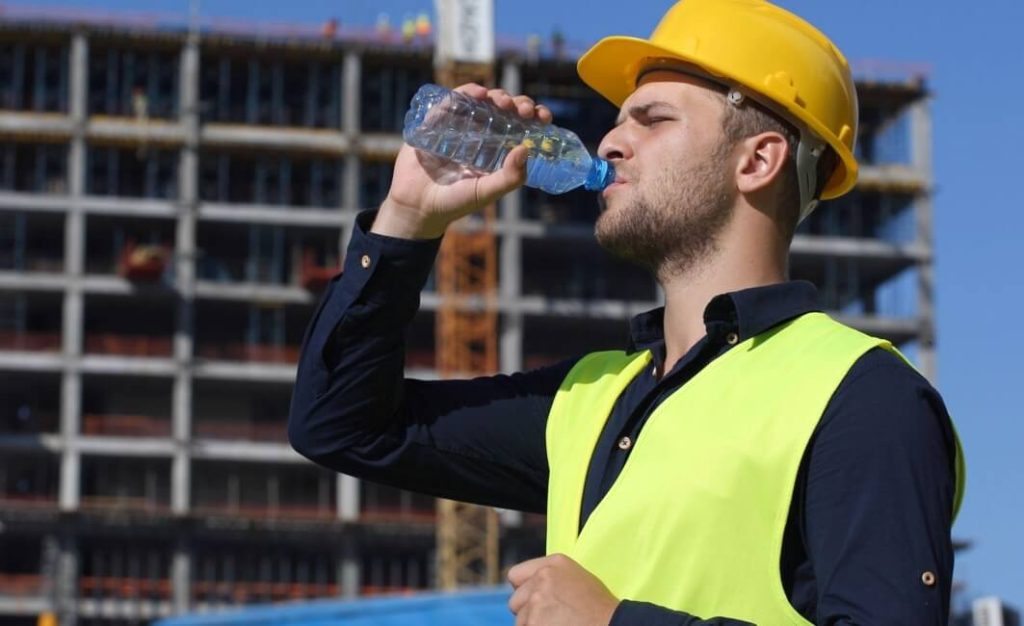
The Columbia Basin data center corridor is the fastest growing outdoor workforce in the state and almost nobody is serving it properly. Quincy, a town of roughly 8,500 people in Grant County, now hosts an estimated 56 data centers. It ranks as one of the ten or so largest data center markets in the country, out of roughly 126 such facilities statewide. Newer campuses are going up around Malaga and East Wenatchee in Chelan County too. The draw is cheap electricity from the Wanapum and Priest Rapids dams. The result is thousands of construction, grounds, cooling plant and generator crews. They work high desert ground that runs clearly hotter and drier than most of Puget Sound.
Manufacturing puts its own people outside. The aerospace plants in Everett and Renton run equipment changes, expansion and new line work. That work brings outside trades onto ramp and yard space on nights and weekends, with no access to a plant break room. Spokane carries roughly 120 aerospace manufacturers and suppliers, plus more than 1,400 manufacturing businesses across the Inland Northwest. Clark County holds two thirds of Washington's semiconductor jobs, anchored by a silicon wafer plant in east Vancouver. That plant has a 300,000 square foot campus expansion on the table.
A station works on these sites because it needs almost nothing from you. It runs on one to four dedicated 20A/120V circuits, or a single 50A/240V circuit. It does not need a water line or a drain. On a raw pad with no permanent power at all, we sort that out in the quote rather than after the trailer arrives.
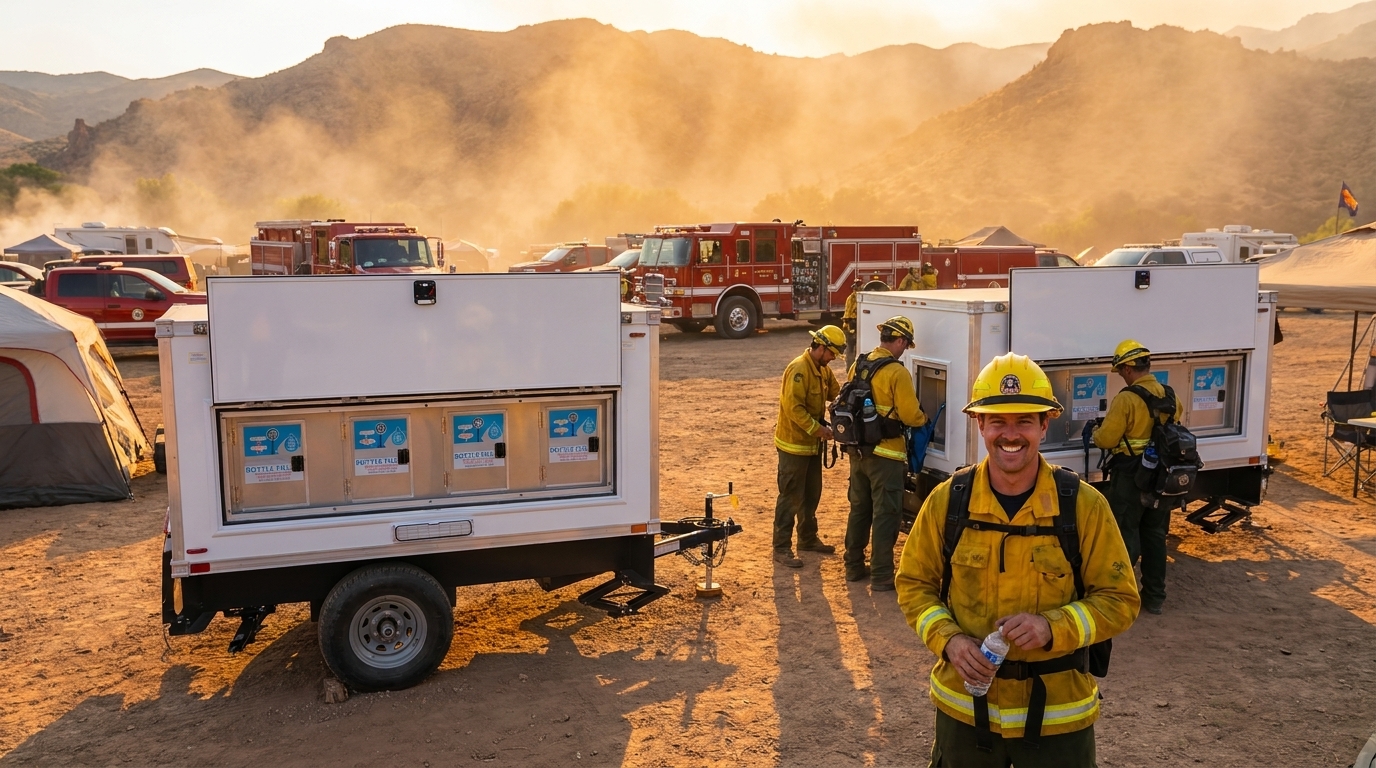
Washington is the country's leading producer of apples, sweet cherries, pears, raspberries and hops. The Yakima Valley by itself grows more than a third of the national apple crop. The harvest runs roughly late August into October or November, depending on elevation and variety. It hires an estimated 40,000 pickers, sorting crews and packers, working a short window against fruit that will not wait. Researchers at the University of Washington found that summer tree fruit harvest crews in the Yakima Valley work in conditions that hurt worker health. That is basically what every crew boss out there already knows.
Agriculture has its own matching heat rule, WAC 296-307-097. It carries the same trigger temperatures and the same one quart per worker per hour standard as the general industry rule. Meeting that number in an orchard row or on a hillside vineyard block is mostly about getting water there, not about the rule itself. There is no fixed water source anywhere near the work, and a pallet of bottles left at the field's edge is warm by mid morning.
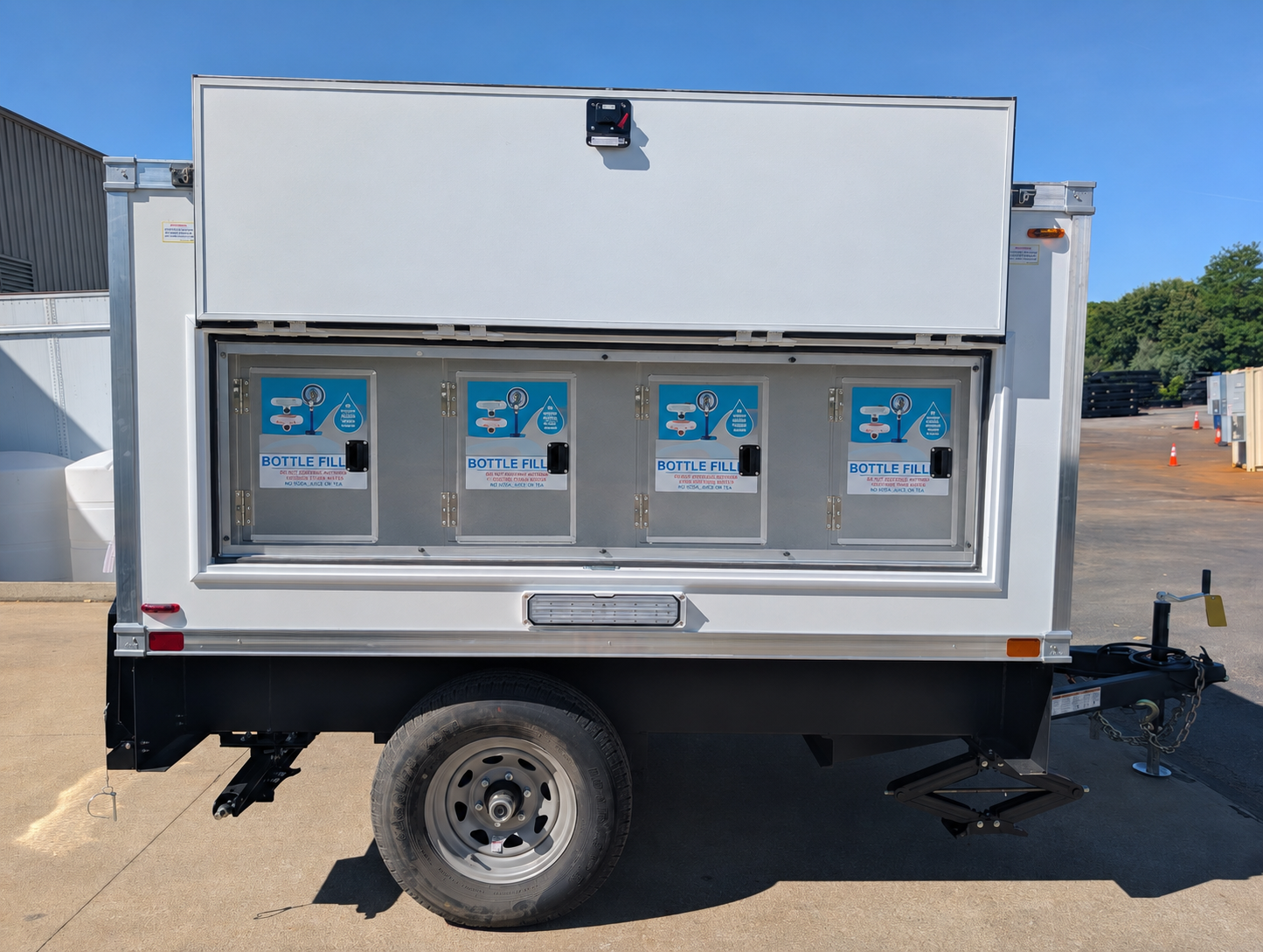
We tow a station to the end of the row, and it moves with the block. Four push back fill points line the outside wall beneath the unit's hinged lid. A full crew can take a short break there without one tap becoming a bottleneck. The rear jug spout fills five gallon coolers for the truck, and the hose bibs handle wash up. When the picking window shifts, the trailer shifts with it.
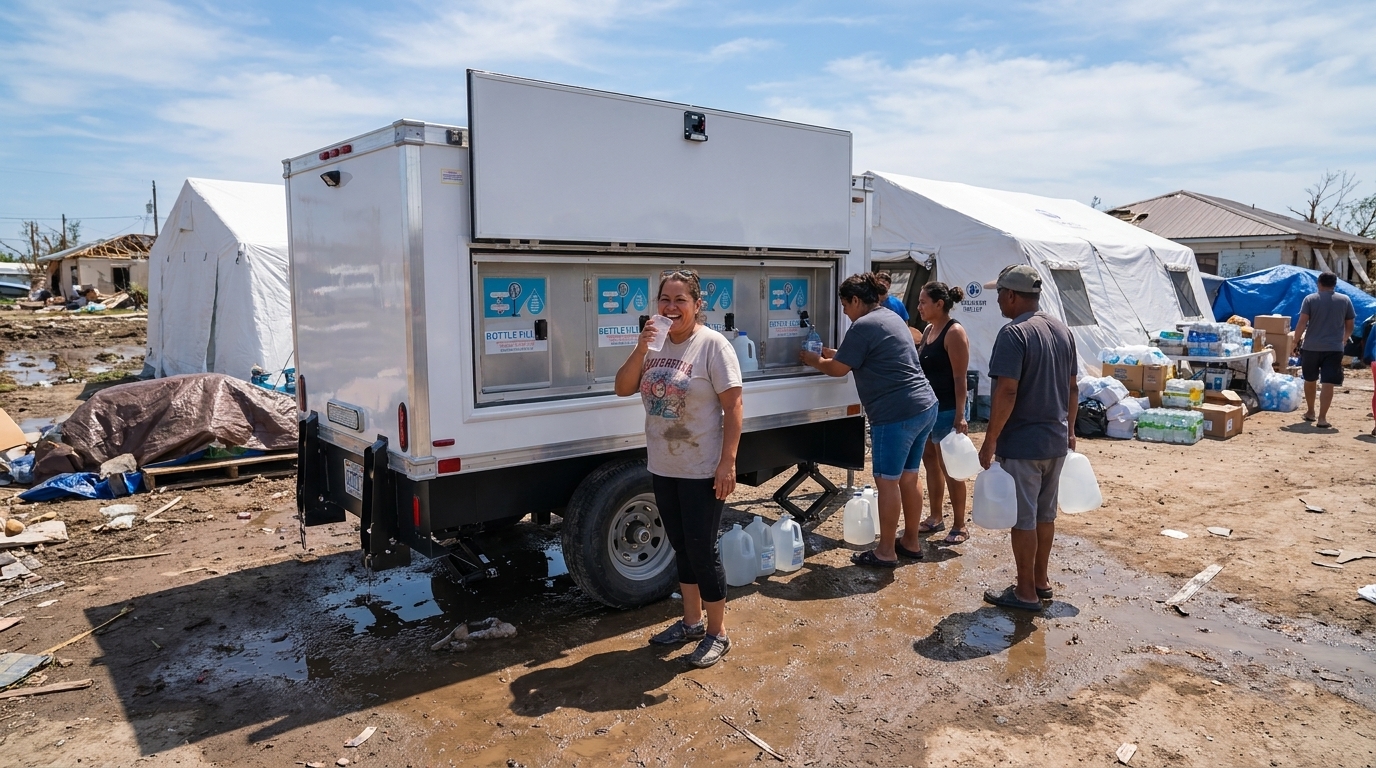
Washington's outdoor event calendar is not a Seattle summer story, it runs in every region and nearly every season. The Skagit Valley Tulip Festival covers the whole month of April across farm display gardens with no central venue and draws around 400,000 visitors. The Gorge Amphitheatre near George seats 27,500 on exposed lawn above the Columbia. It ran a full season from early May to late September this year. The Washington State Fair in Puyallup pulls roughly 900,000 people through a 20 day run each fall.
Spokane's Bloomsday and Hoopfest have their own documented heat histories, Hoopfest having once played through a 105 degree weekend on downtown asphalt. Add the Washington State International Kite Festival on the Long Beach Peninsula in mid August. The Vancouver Wine and Jazz Festival runs at Esther Short Park that same week. Bellingham SeaFeast runs on the working waterfront in late September. Seattle's World Cup match calendar and Seafair weekends add even more. Together, these are named, dated, high attendance outdoor crowds from the coast to the Idaho line.
For events we stage stations out across the grounds rather than clustering them near the main stage. One unit at a packed festival can pull a thirty deep line by mid afternoon, while a corner of the site has nothing. Drop and pickup get pinned to your run of show. Your guests get cold water and tidy refill points, your operations lead gets one fewer risk item, and nobody trucks pallets in and empties back out.
Six bottles per person on a 100-degree day in Washington, a 38-person crew, and you're already at roughly 228 plastic bottles to buy, cart in, ice down, and throw away. That's one day. The season is where it gets ugly.
Multiply across a 175-day build and the tally clears 39,000 bottles, with the larger commercial jobs running far past that. A single trailer makes the entire pile disappear, leaving cold water at the tap and nothing for the dumpster.
Sustainability is the easy part of the pitch. Roughly 60 million plastic bottles get thrown out daily in this country, only about a third are ever recycled, and one bottle can sit in a landfill for centuries. Worth reporting, sure. But the Washington project managers who actually switch usually do it to kill the daily hassle, not to pad a sustainability slide. A shared trailer means no recurring bottle order, no cooler going warm before first break, no wall of empty jugs baking by the job-trailer. The super runs the build, not the water program.
Because our own potable tankers cover the refills, the supply scales with the job rather than fighting it. Double the crew for a big pour and they still can't drink faster than the plan. And the tankers just swing back and bring the level up.
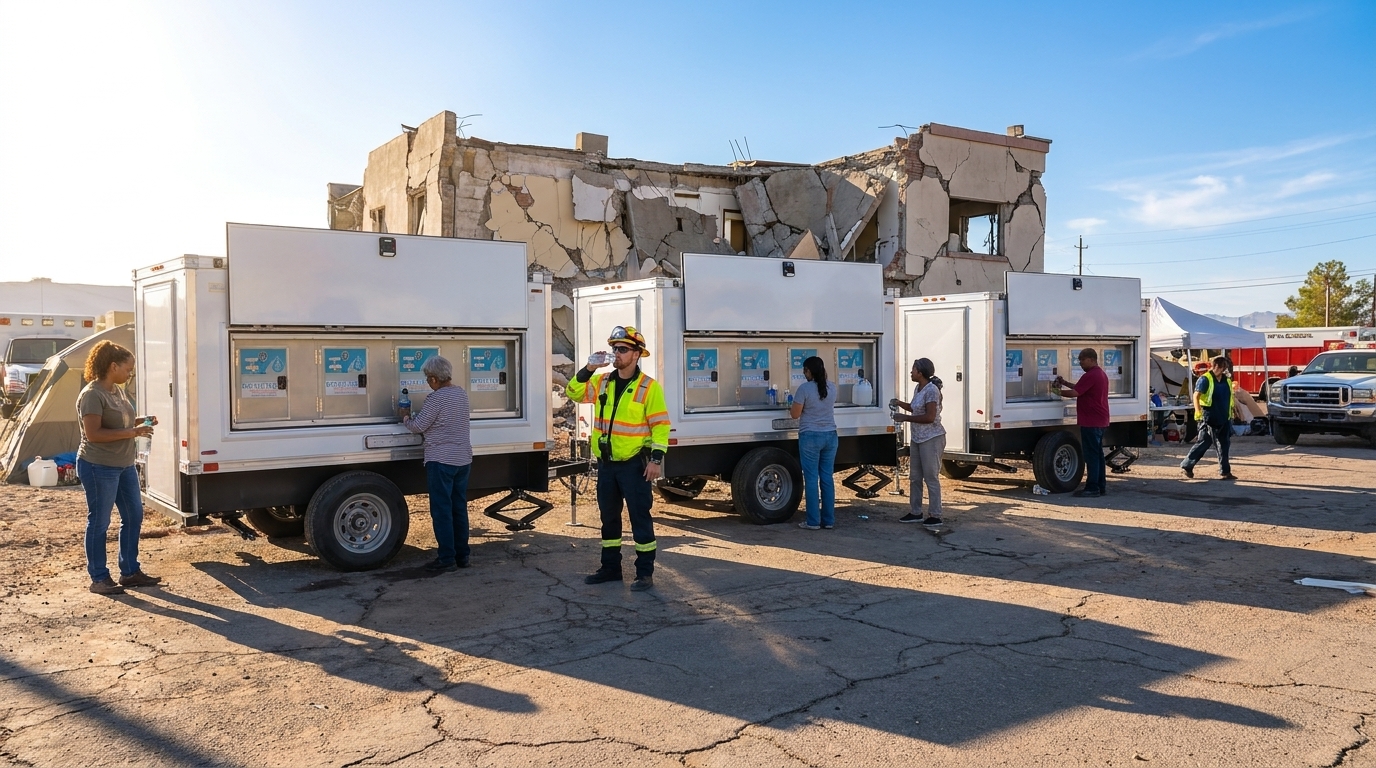
Washington water comes at us from every direction: melting snow on the west side, the Spokane Valley Rathdrum Prairie aquifer in the Inland Northwest, and hauled water on Columbia Basin sites with no hydrant for miles. Every station runs whatever it is given through three filter stages and a UV pass before the cooler sees it. The water tastes clean and pours cold at quitting time, which is the only version of it a crew will actually keep drinking.
The opening filter traps sand, scale, and the fine grit local mains occasionally push through. On a dusty Washington lot, that's what keeps a pour from tasting like the parcel it's parked on.
Activated carbon comes next, lifting the chlorine bite and the dull seasonal notes local tap can carry until the taste lands clean and neutral. When it's 100 out, that flavor decides whether a crew keeps drinking or walks past the tap dry.
A finer cartridge then catches the microscopic particles that slip past the first two, so what reaches the spout is clear rather than merely cold for the crews and crowds across Washington.
The last step is an ultraviolet chamber that wipes out bacteria and microbes without adding a single chemical. Even after a long tow to the far edge of Washington, the water off the nozzle is clean.
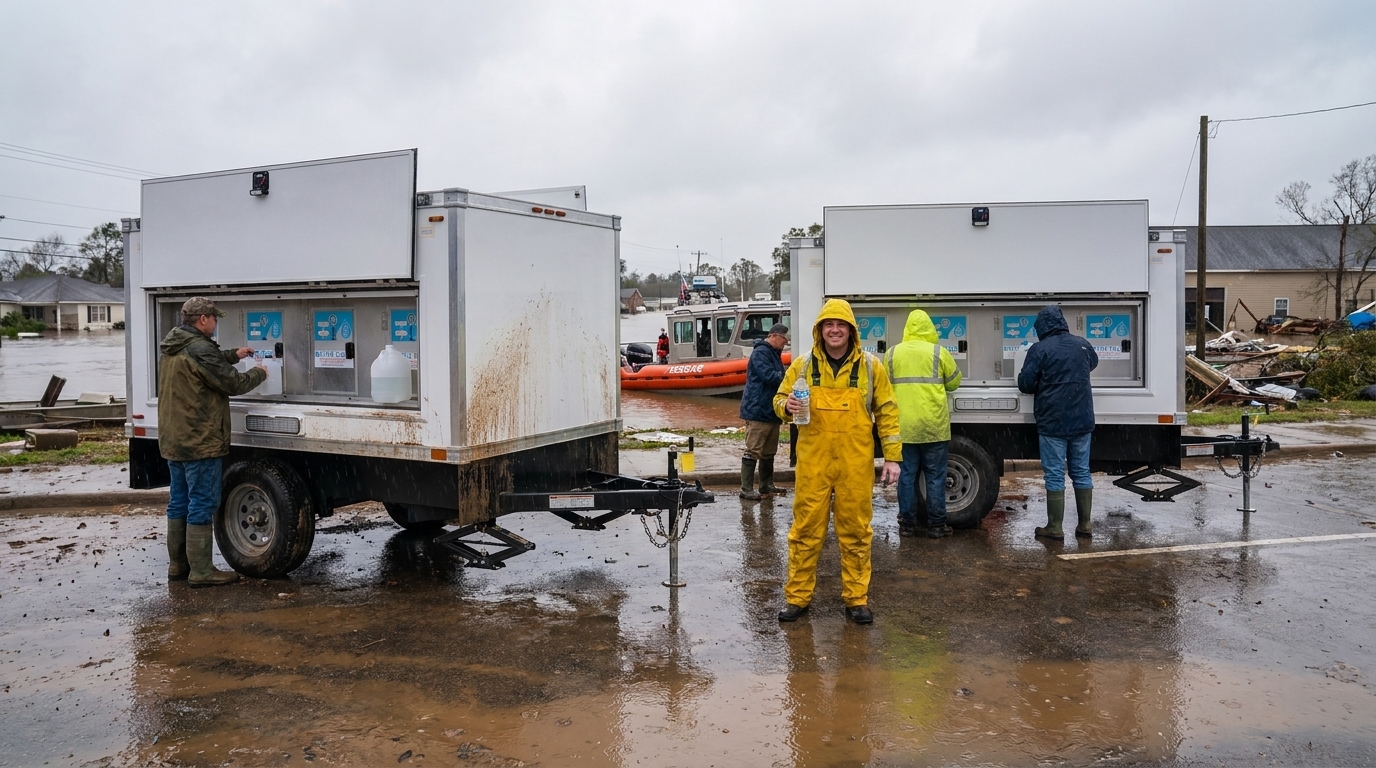
Along the wall sit four adjustable push-back taps, press a bottle to the bar and it pours. One of them is set at ADA-reachable height, so a single trailer includes everybody at a Washington crew or crowd with no add-on gear. Out back, a large-jug spout services five-gallon coolers and hydration packs, while a bank of hose connection taps handles work-site chores, event support, and refills down the orchard rows. Stainless, food-grade plumbing the whole way through keeps the filtered, chilled water at quality right to the spout.
Every Signature trailer carries a 300-gallon load, roughly 2,400 cups at sixteen ounces each, and we recharge it on demand, so the unit doesn't turn into the choke point on a busy Washington shift or a packed show night.
Washington heat rules run through WISHA, the state OSHA plan. The Department of Labor and Industries has run Washington's own OSHA approved state plan since 1973. That means the outdoor heat rule your crew works under was written, updated, and is enforced here in state rather than left to federal guidance. It carries numbers a safety file can be audited against.
Washington's outdoor heat exposure rule, WAC 296-62-095 for general industry, has a matching agriculture rule at WAC 296-307-097. It took its current permanent form on July 17, 2023. The biggest change was the removal of the old May through September window, so the rule now applies year round. It sets three action levels. The first is 52 degrees, for workers in non breathable, vapor barrier or chemical resistant clothing. The second is 80 degrees, for most outdoor work, where the employer must supply cool drinking water at one quart per worker per hour, along with shade or another real way to cool down. The third is 90 degrees, which adds a paid cool down rest period of at least 10 minutes every two hours. Employers also carry a written outdoor heat exposure safety program and annual training before the season starts. They must closely monitor anyone new to the assignment, anyone back from seven or more days off, or anyone working through a heat wave. A separate wildfire smoke rule, Chapter 296-820 WAC, has been permanent since January 15, 2024. It turns on PM2.5 readings rather than temperature. WAC 296-155-140 adds the construction sanitation baseline for potable water and tempered wash water on top of both.
Federal OSHA heat illness prevention guidance and the CDC/NIOSH heat stress program both point to the same baseline: cool water, close to the work, documented.
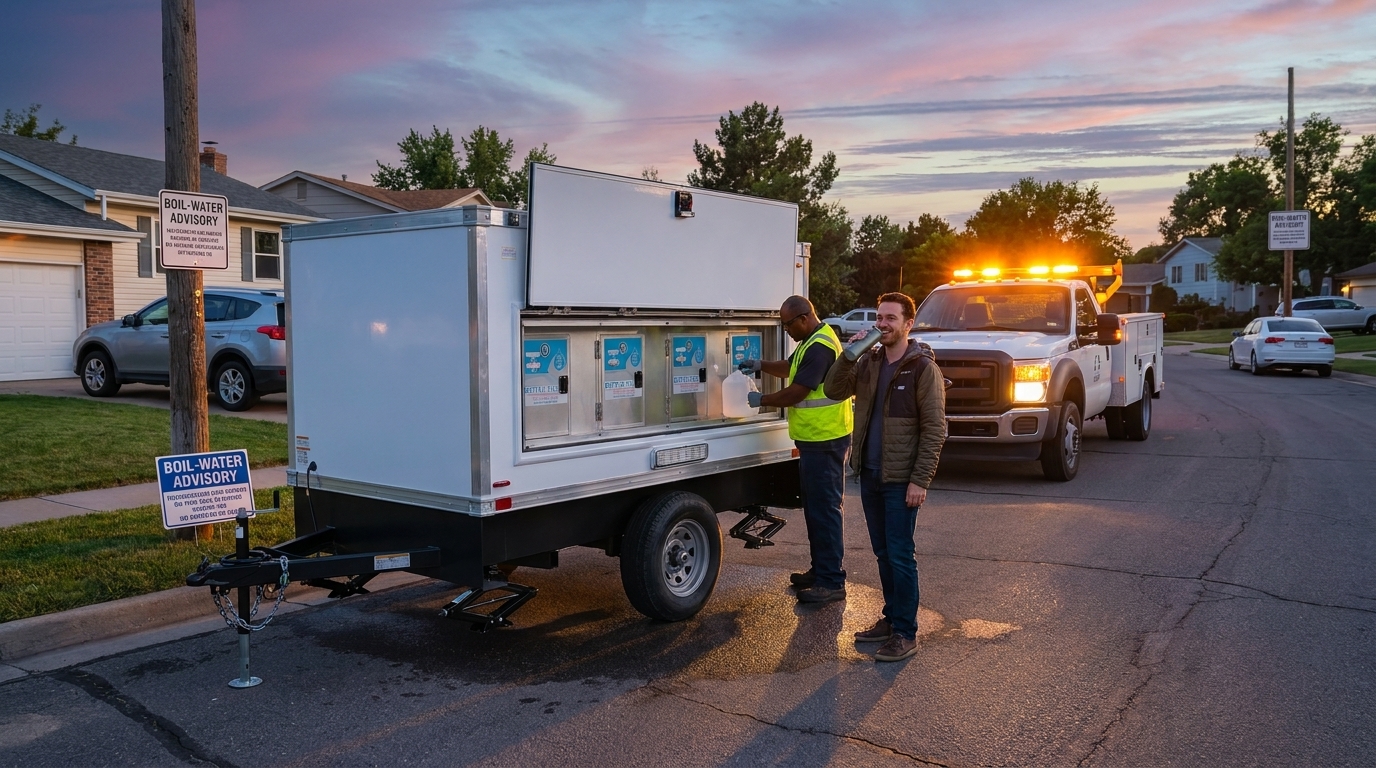
Need a station your written heat plan can point to? We can have one pouring cold within days.
The 2021 heat dome is the line everything in this state is measured against. Seattle hit 108 degrees on June 28 and Spokane hit 109 the next day, records on both sides of the mountains inside 24 hours. The Department of Health put the statewide heat related death count at 112 by mid July, and a later University of Washington study looking at the three weeks from June 25 found the event contributed to 159 excess injury deaths once drownings, crashes and other heat driven causes were counted. It remains the deadliest weather event in Washington history, and it happened in a region that had spent a century assuming it did not get that hot.
West of the Cascades the heat is newer, shorter and still underestimated. Tacoma's record sits at 105 against a July average in the sixties, so a building or a jobsite designed for a mild marine summer has nothing built into it for a week of real heat. Seattle Public Schools alone counts 49 of its 106 buildings without air conditioning, which tells you how much of the region's fixed infrastructure assumes the old normal.
East of the Cascades the heat is simply the climate. Spokane logged a 96 degree July high and a 97 degree August high this year, in what was just an ordinary summer there. The Columbia Basin, the Tri Cities and the Yakima Valley run hotter and drier still, across a far longer stretch of the year. That is the half of the state where the apple harvest and the data center corridor sit, along with the Gorge concert season, and it is why we never quote a Washington job off a single statewide weather assumption.
Growth keeps widening the exposed workforce. Washington's population reached 8,115,100 as of April 2025 and the state's own commerce department counts tourism as its fourth largest industry at more than 180,000 workers, with food and beverage production supporting another 164,000 jobs and aerospace supporting over 100,000 direct ones. Nearly every one of those growth sectors puts people outdoors: harvest crews, assembly yards and flight lines, terminal work, highway and transit construction, and a data center buildout that keeps breaking ground in small Columbia Basin towns.
Then there is the other extreme, which in Washington is fire and smoke. The 2026 season started May 7 and had burned 425,000 acres statewide by late August, against a drought emergency declared back in April, a Particularly Dangerous Situation red flag warning on August 1, and a public health emergency over wildfire smoke on August 7. That is three statewide declarations inside one summer, which is why the state's wildfire smoke rule is permanent and year round rather than something invoked when a fire gets close.
We built our Washington dispatch around those weeks specifically. When the Old Trails fire tore through the Spokane area it destroyed an estimated 640 structures, as many as 65,000 people evacuated across the fires that week, and a Red Cross shelter opened at the convention center housing 406 people the first night with food, water and cots as the baseline need. FEMA keeps wildland fire base camps in Eastern Washington sized to feed, shower and house up to 2,000 firefighters at a time. Those populations need potable water staged fast and in volume, so we hold the ability to roll stations out to shelters, base camps and staging areas on short notice, not just to scheduled jobs.
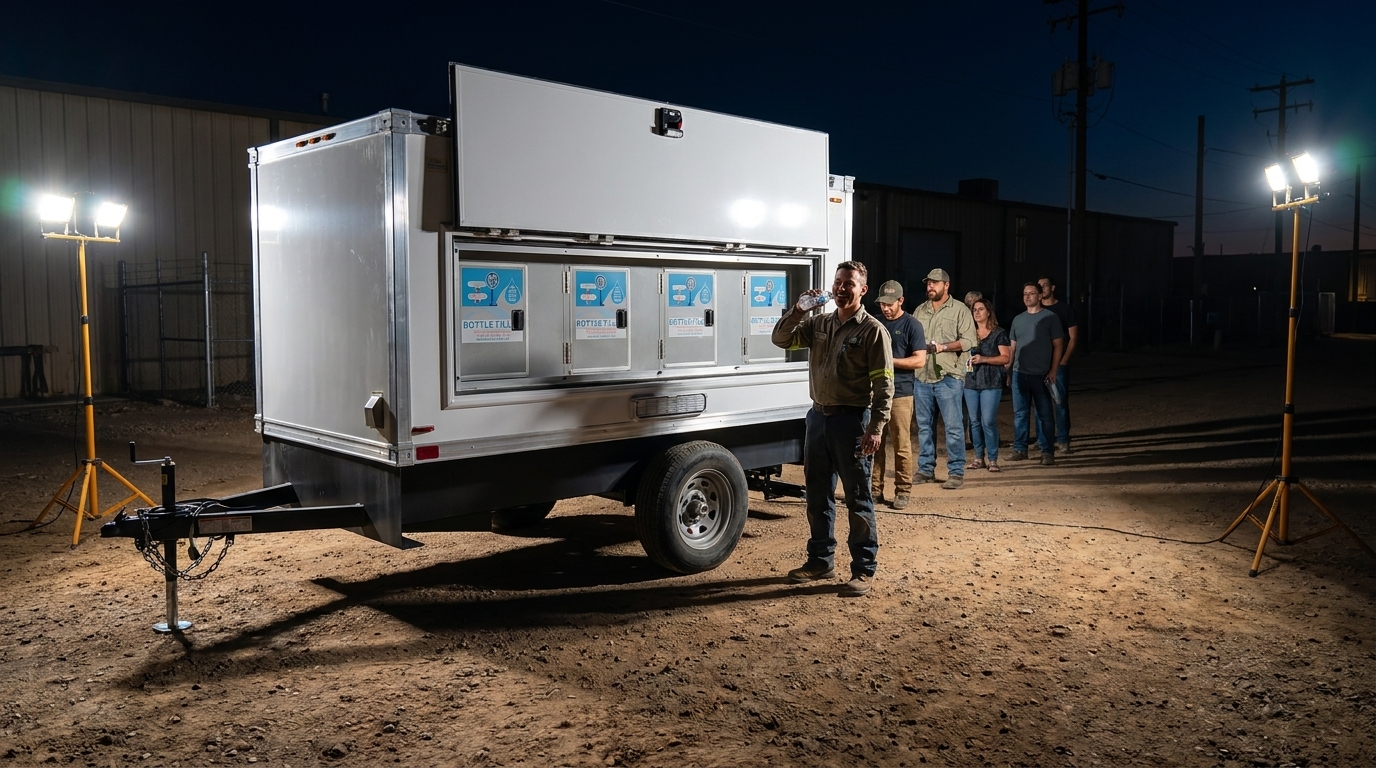
You don't have to run anything on your end. We handle placement, the fresh-water fill, and the power hookup, then walk your team through the unit before we leave the site.
People count, number of days, where exactly it parks on your Washington site, and what power is there. Those four answers let us spec it correctly the first time around.
Reckon roughly 45 minutes from our nearest yard across the Washington metros, longer on the outer routes, with round-the-clock emergency runs whenever a heat advisory or a power shutoff hits the area.
Once on site we set it level, charge the 300-gallon tank, and tie in power off one to four standard 120V circuits, or a single 50-amp 240V drop, depending on what the site gives us.
After that the tankers cycle back on a cadence matched to how fast your crew or crowd pulls it down, and we maintain the unit through the whole rental term.
Everyone sees the trailer. What they don't see is the support fleet behind it, the trucks that deliver fresh water, hold reserve on site, and carry wastewater off, so a single call wraps the entire loop rather than stringing together three vendors.
Our tankers run drinking-grade water in bulk, recharging the 300-gallon tank on whatever interval the headcount demands. Those same trucks also top up storage tanks, holding tanks, and bladder bags whenever a single drop can't keep pace, like a big slab pour or a downtown night that packs the square.
When demand spikes we set out fold-flat bladders to bank extra fresh reserve, and on a drain-less lot they'll temporarily hold greywater too. It isn't fancy equipment, but it's what keeps a far-flung job in Washington pouring between tanker runs.
Water that has to move across a job is a pump truck's job, whether that's charging holding tanks or hauling supply end to end. It earns its keep on the sprawling parcels where the trailer and the fill point can end up a fair hike apart.
At the tail end, a vacuum truck draws off greywater and wastewater and carries it to permitted disposal, closing the loop clean. Nobody on your Washington crew is left guessing where the used water ended up. That piece was built into the plan from day one.
Every job gets its own setup. A remote parcel might run a station plus a bladder bag for reserve and a recurring water-truck schedule. A heavy event night might call for a pump truck to move supply and a teardown waste run at the end. Describe the shape of your job and we'll put together the right combination, on one invoice, handled by one crew that already knows the ground.
A couple of minutes on the phone is enough for a real quote. Here's what we'll ask, so you can have it ready, and so you can see us tailor your Washington job instead of giving one stock answer.
We deliver cold water across Washington, with local crews who know the ground. Pick your metro below, or call and we'll route a trailer to wherever in Washington the job is.
We run dedicated coverage for mobile water stations serving Seattle, Spokane hydration station rentals and water station rentals in Tacoma across Washington, with local crews who know the ground on every one of those routes.
Puget Sound
→
Our deepest western Washington coverage: downtown and the Eastside, the Interstate 5 and light rail construction corridor, the aerospace plants north of the city, and an event calendar that barely pauses from Folklife through Seafair.
 Inland Northwest
→
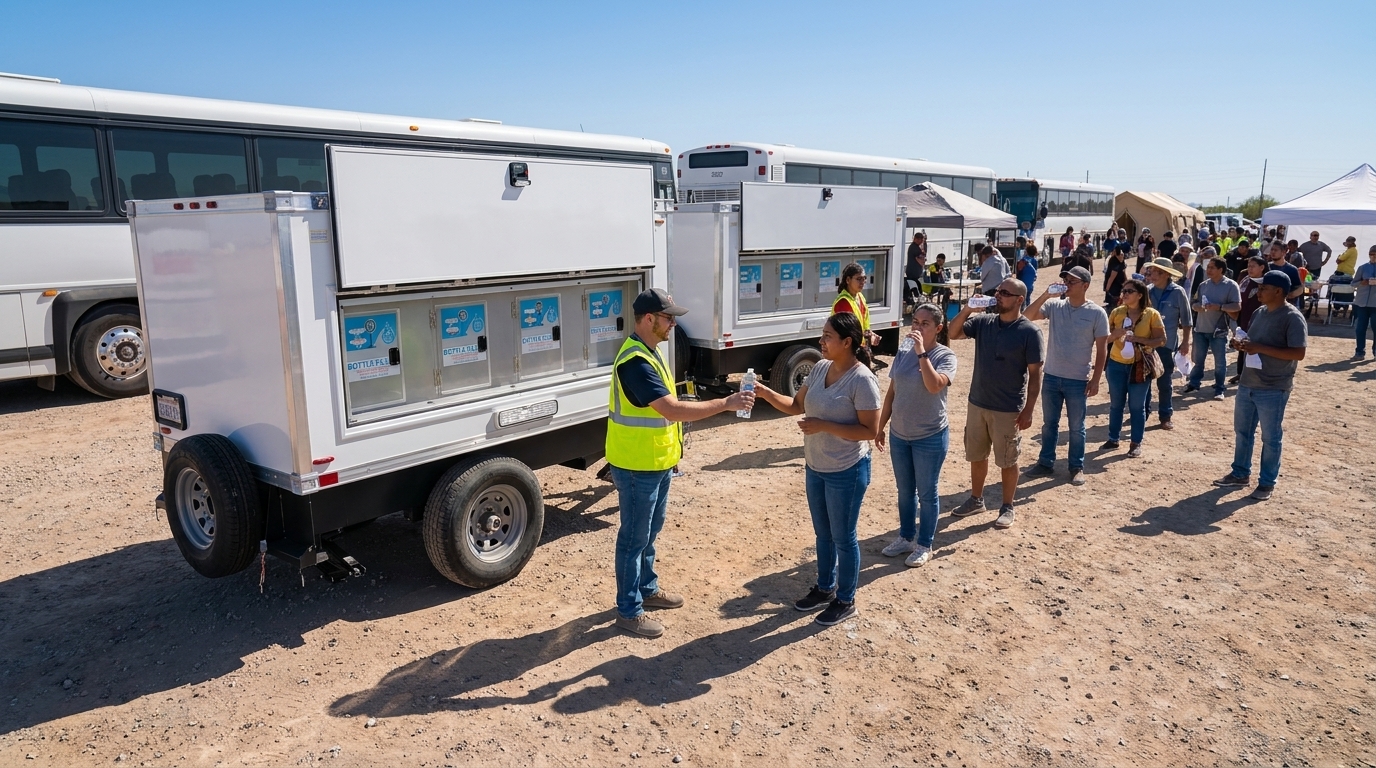
Inland Northwest dispatch for the West Plains warehousing corridor, roughly 120 aerospace manufacturers and 1,400 plus manufacturing businesses, the North Spokane Corridor build, and downtown event weekends like Bloomsday and Hoopfest.
 South Puget Sound
→
South Sound coverage built around the Tideflats port complex, the SR 167 and Tacoma Dome Link megaprojects, Joint Base Lewis McChord training cycles, and the Washington State Fair run in Puyallup each fall.
We also route stations to these Washington markets, even where we don't yet keep a dedicated city page:
Still weighing it? Call and ask. Most of these questions get settled in one short conversation. See also: water station rentals in Seattle, mobile water station rentals in Tacoma and cold filtered water station rentals in Spokane.
For the Puget Sound metros and the Spokane area, usually same day. When a heat advisory lands or a stadium and festival weekend fills the calendar, our dispatch runs through the night so nobody starts a shift without water. What actually moves the timing is how a truck reaches your spot and what power is waiting there, so walk us through both on the call. A downtown Seattle garage level, a Tideflats laydown yard and an orchard block off a gravel county road are three different approaches, and the last of those may be a next morning drop rather than an afternoon one. Tell us the real address and the gate you want us to use and we will commit to a window instead of guessing at one.
Statewide. Our deepest coverage runs out of Seattle, Tacoma and Spokane, and from those three routes we reach the whole Interstate 5 corridor from Bellingham to Vancouver, the Interstate 90 corridor east to the Idaho line, and the Interstate 82 spine down through the Yakima Valley into the Tri Cities. That covers the Columbia Basin data center corridor, the Hanford area, the Wenatchee and Chelan orchard country, and the Olympic Peninsula and coast, though the two lane highway runs out to Long Beach or around US 101 take longer and we will say so rather than promise a window we cannot hold. Corridor and multi site projects get the same routing as a single address. Tell us the city and we will confirm dispatch on the first call.
Both, and the cold is the part we work hardest at. An onboard cooler holds the supply down all day, so the fill at seven in the evening is as cold as the one at seven in the morning. That counts for a lot on a Columbia Basin site, where the trailer sits in open high desert sun from sunrise on. It counts on a humid Puget Sound afternoon too, because warm water simply does not get picked up. Water a crew will not drink protects nobody, so we treat chilling as safety equipment rather than a nice touch. It is also the clearest difference between a station and a pallet of bottles that started cold at six in the morning.
Three hundred gallons aboard, which works out to roughly 2,400 average pours. On a big crew or a peak event hour we shadow your consumption with our own potable water trucks and refill on a rhythm set to your real usage, not a fixed calendar, so you never run the tank down to the bottom. That holds on a remote site with no hydrant nearby, which in this state describes a lot of the Columbia Basin and most of the orchard country. If a crew doubles for a pour day or a gate count runs hot, call us that morning and we tighten the schedule or stage a second unit. Tracking the refill is our job, not your superintendent's.
In Washington the answer is more concrete than in most states, because Washington runs its own OSHA approved state plan through the Department of Labor and Industries rather than working off federal guidance alone. The outdoor heat rule, WAC 296-62-095 with its agriculture companion at WAC 296-307-097, has applied year round since July 17, 2023, and it names the numbers: 52 degrees for workers in non breathable or chemical resistant clothing, 80 degrees for most outdoor work, where you owe cool drinking water at one quart per worker per hour plus a real way to cool down, and 90 degrees, which adds a paid cool down rest period of at least 10 minutes every two hours. A station is the most straightforward way to make one quart per worker per hour true all day, and it gives your written outdoor heat exposure safety program a fixed, mappable point on the site plan that an inspector can be walked to. Writing the program is yours. The water behind it is ours.
Yes. Of the four push back fill positions on every unit, one sits at wheelchair height, so the same trailer serves a whole crew or a whole crowd without a bolt on workaround or a second setup. Press a bottle to the bar and it pours, nothing to twist or hold down. Around the back, a jug spout fills five gallon coolers and hydration packs, and a row of hose bibs covers wash up, field work and event support. Every surface the water touches on the way out is food grade and stainless, so it reaches the nozzle as clean as it left the filter.
Events are squarely in our lane, in every season this state throws at us. A tulip festival spread across farm display gardens in April, a 27,500 seat amphitheater season above the Columbia through the summer, a 20 day fair run in Puyallup each fall, a kite festival on an open beach, a downtown road race, a youth tournament weekend: some take one station and some take a half dozen scattered across the grounds. We pin the drop and the pickup to your run of show and place units where the crowd actually flows rather than where the load in truck found a gap. You get cold water on tap and tidy refill points, and you stop hauling pallets of single use plastic in one gate and out the other.
Just the shape of the job: headcount or expected gate, how long the run is, the exact spot the trailer will park and how a truck threads its way to it, and what power is on site. The unit runs on one to four dedicated 20A/120V circuits or a single 50A/240V circuit, whichever the site happens to carry. If the pad has no permanent power at all, which is routine out in the Basin and on orchard ground, say so and a solution rides along in the quote instead of becoming a surprise on delivery day. It also helps to know whether your crew is spread across the ground or stacked at one face, and whether any heat illness paperwork is going to lean on the station as its documented water source.
Yes, and in this state that is half the reason people keep our number. Heat advisories trigger round the clock drops and pre positioned trucks before the worst of it lands, which is a lesson the 2021 heat dome taught this state the hard way, with a statewide heat related death toll of 112 people. Fire season is the other half: the 2026 season burned 425,000 acres statewide by late August under a drought emergency and a red flag warning, with a public health emergency over smoke on top, and when the Old Trails fire hit the Spokane area a shelter opened with 406 people in it the first night. We keep the ability to stage potable water fast for shelters, base camps and staging areas, including the wildland fire camps that run in Eastern Washington every summer. Call the number, say it is an emergency, and we route accordingly.
Give us the headcount or crowd, the dates, and the spot it'll park. We'll match the job and roll a trailer out anywhere in Washington.
A water station is usually on the road to these Washington cities the same day you call. Pick your city for delivery windows, sizing and local details.