Portable Water Stations for Events
Self-contained water stations that set up fast and keep guests hydrated without the hassle of bottled water.
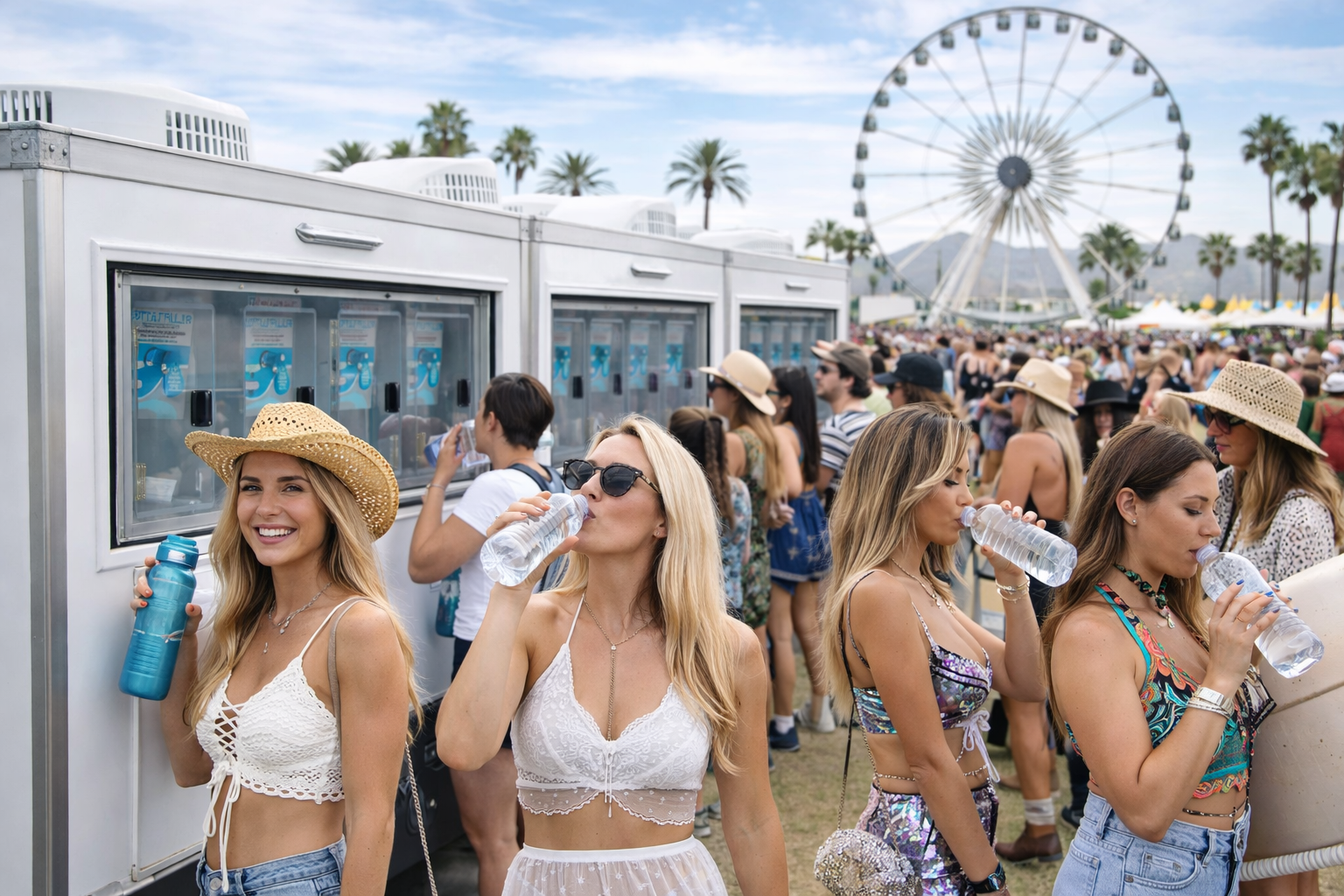
Most event venues were not built for the crowd you are bringing. A park, a fairground, a private ranch, a festival field, a racetrack — none of these have drinking water infrastructure designed to serve thousands of people at once. And finding that out on event day is a bad situation for everyone.
A portable water station for events solves this at the source. It shows up fully loaded with 300 gallons of cold, filtered potable water, runs four simultaneous filling stations, and does not need a single water line connection. Our team at Onsite Hydration Services has spent over 60 years combined placing these units at events across California, Nevada, and Utah. We are SAM.gov registered, SBA-recognized, and hold an A+ rating with the Better Business Bureau. We have done this at events ranging from 150-person vineyard weddings to multi-stage desert festivals with 20,000 people on the ground.
What follows is a detailed breakdown of who actually uses portable hydration stations at events, why each type of event has its own specific water challenges, and how the right setup solves them.
Every Type of Event That Needs a Portable Water Station
The range of events that benefit from a portable event water station is wider than most people expect. Each one has a different reason the standard venue water situation falls short.
Music Festivals
Festivals are the most demanding hydration environment we work in. You have high headcounts spread across a large footprint, extended hours in full sun, physical activity from dancing and walking, and an attendee base that is often not in a position to leave and come back with supplies. The venue water situation is almost never adequate. Park spigots, portable sinks at handwashing stations, and vendor soda sales are not a substitute for free cold drinking water placed strategically across the grounds.
The bigger issue at festivals is geography. A single water source in the wrong spot gets ignored by half the crowd because they are not going to fight through a crowd to find it. We work with festival organizers to spread multiple units across the event footprint so water is accessible from every main gathering point: near stages, near food vendors, near entry and exit flow paths. When water is right there, people drink it. Festivals in the Coachella Valley, the Inland Empire, and the Las Vegas valley run in conditions where ambient temperature regularly hits 105 degrees or higher. We have done enough of these events to know exactly what that environment requires. See more on our festival water station page.
Outdoor Concerts at Parks and Temporary Venues
One-night concerts in parks, amphitheaters, and temporary outdoor venues have a different problem than multi-day festivals. The event is compressed into a single window. There is no opportunity to adjust mid-run. City parks with outdoor concert permits often have two or three working water fountains for a venue hosting 5,000 people that evening. The fountains get overwhelmed immediately and people stop trying. A portable station placed at a logical point in the crowd flow handles capacity that a park fountain simply cannot, serves cold filtered water instead of warm tap water from a decades-old pipe, and stays running for the full event duration without any staff attention after setup.
Marathons, Half Marathons, and Road Races
Races have a specific water demand profile that is completely different from a festival. You do not have steady spread-out demand across a whole day. You have very concentrated windows of extreme demand, especially at the finish line, where hundreds or thousands of runners arrive in a compressed span, all of them having just exerted themselves for one to six hours in the heat.
The finish line area at a large marathon is a serious stress test for any water setup. Runners arrive overheated, dehydrated, and need cold water immediately. A single table with volunteers handing out paper cups works at a small local 5K. At a half marathon with 4,000 runners crossing the line over 90 minutes, you need volume and throughput that a table setup cannot deliver. Four simultaneous filling stations on the Signature Series keeps the line moving so nobody is stuck waiting in a crowd at the finish. The start line staging area matters too. Runners standing around for 30 to 60 minutes before the gun also need water access. We often place one unit at participant staging and one at the finish line for larger races. Full detail on our marathon and race hydration page.
5K and Fun Run Events
Smaller races get overlooked in hydration planning because the distances are shorter and the event feels casual. But the finish line crowd at a community 5K includes participants ranging from competitive runners to first-timers walking with strollers, and the post-race window stretches out as everyone finishes at different times. The spectator crowd matters too. Parents, spouses, and kids standing in the sun for an hour waiting for their runner need water access just as much as the participants. A portable station at the finish festival area handles both groups and covers the full post-race window without anyone managing it.
Triathlons and Obstacle Course Events
Triathlons and obstacle races push participants harder than most other event types. Multiple transition zones and finish areas spread across a venue mean that water needs to be accessible in several locations, not just at one central point. Obstacle course events specifically have a hydration challenge that is unique: they happen at ranches, off-road parks, and undeveloped land with zero permanent infrastructure. There is no building, no tap, no utility connection anywhere on the property. A self-contained portable station is often the only reliable water source on the entire site, and it is serving participants who just spent 90 minutes crawling through mud and climbing obstacles in the heat.
County Fairs and State Fairs
Fairs are a multi-day hydration operation and one of the scenarios where planning complexity is highest. A county fair running six or seven days will see daily attendance swing dramatically between a slow weekday and a packed weekend day. Fairgoers are walking all day in the sun, children are running around, and the demographic includes elderly attendees who are more vulnerable to heat and dehydration. Free drinking water is a health and safety requirement and in many California counties a permit condition. We schedule tank refills around the actual attendance pattern for fairs so the unit is always ready on high-volume days. We have done week-long fairs in Riverside and Stockton where we coordinated daily refills based on how the week was tracking. More at our fair and carnival water station page.
Carnivals and Traveling Exhibitions
Traveling carnivals set up on parking lots, open fields, and temporary fairgrounds with no permanent infrastructure designed for large crowds. The electrical and water situation at a carnival site is improvised from whatever exists on the property. A portable water station drops in with its own sealed tank and only needs a power circuit, so it fits into the carnival setup without requiring any site-specific water connection. The other factor is the audience. Families with young kids, hot weather, and extended time on site. Kids get hot and thirsty fast and parents are not always tracking hydration carefully during the excitement of a midway. Free cold water placed near the main attraction area is a safety asset and a real service to families spending a full afternoon there.
Outdoor Weddings and Private Estate Events
Outdoor weddings at vineyard properties, private ranches, and upscale estate venues are chosen for their beauty, not their utility connections. A vineyard in Napa or Paso Robles may have one outdoor faucet accessible anywhere near the ceremony area. A private ranch in the Santa Barbara hills is even more remote. The wedding planner is left figuring out how 180 guests are going to have cold drinking water all afternoon and evening at a location that was never designed for it.
The Signature Series handles this cleanly. It arrives looking professional, gets positioned near the bar or reception area, and runs cold filtered water for the entire guest list without anyone managing anything after setup. No cases of bottled water to chill, no running out mid-reception, no volunteers filling cups from a cooler. The bar team focuses on the bar. The caterer focuses on food. Private estate events beyond weddings fall into this same category: milestone birthday parties, anniversary celebrations, and family reunions on large private properties all share the same infrastructure gap and the same solution. More on our wedding water station page.
Corporate Events, Company Picnics, and Team-Building Days
Corporate event planners deal with a specific version of the water problem. The venue is often a park, a private ranch, an outdoor sports complex, or some other property not built for the company headcount being brought in. And unlike a festival where nobody is tracking brand perception minute by minute, a corporate event reflects how the company treats its people. Employees notice when there is no cold water on a hot day.
We have set up at company picnics in the San Fernando Valley in August where 400 employees were outside in 95-degree heat with nowhere near enough cold water available. We have done team-building retreat days at private properties in Malibu and Lake Tahoe where the venue had beautiful views and zero hydration infrastructure. Product launches and outdoor brand activations also belong here. Brands hosting outdoor experiential events at temporary venues care about the guest experience at every touchpoint. The flat panel surface on the Signature Series is purpose-built for event signage and sponsor branding, and it looks far better than a folding table with warm water bottles. Details on our corporate event hydration page.
Youth Sports Tournaments and Multi-Field Events
Youth sports tournaments run all day across multiple fields, and the hydration situation is typically a pile of individual team coolers that run out of ice by noon. Parents are restocking from their cars. Kids are drinking warm sports drinks from a cooler that has been sitting in the sun since 7 AM. A portable station positioned at the tournament hub or near the concession area gives every team, every player, and every spectator access to cold filtered water for the full event day without any team managing their own supply. In Southern California or Utah where spring and fall tournament weather regularly hits 85 to 95 degrees, this is a meaningful player safety upgrade, not a luxury add-on. Our sporting event hydration page covers this in more depth.
Adult Recreational Sports Events
Softball leagues, adult soccer tournaments, flag football championships, beach volleyball events, disc golf tournaments — the adult recreational sports world runs almost entirely at parks and outdoor fields built decades ago for normal daily park use, not for hosting 600 people at a tournament all day Saturday. The drinking fountains that do exist get overwhelmed immediately when a tournament fills the complex. A portable hydration station near the central spectator area covers the gap for the full event day without requiring any coordination with venue staff or site infrastructure.
Yoga Festivals and Wellness Events
The irony at wellness events is real. The audience is more focused on hydration than almost any other event demographic, and then the hydration infrastructure is often worse than at a county fair. Outdoor yoga festivals, wellness retreats, mindfulness events, and fitness expos pull health-conscious attendees who expect good water access and notice immediately when it is not there. They also expect cold, clean, filtered water they can put in their own reusable bottle, not a warm plastic bottle purchased from a vendor. A portable station with triple-stage filtration and continuous cold dispensing is exactly what that audience expects. Placing it prominently rather than tucking it in a corner sends the right message about how the organizer thinks about their attendees.
Food and Wine Festivals
Food and wine festivals have a water need that sometimes gets deprioritized because the event is centered on beverage vendors. But responsible alcohol service at an outdoor event requires free water access, and many California ABC temporary event licenses specifically include provisions requiring non-alcoholic beverage availability including water. Beyond compliance, the practical reality is that festival-goers tasting wine and beer all afternoon in the sun need cold water access to pace themselves and stay functional. We have worked with wine festival organizers in Napa Valley, Paso Robles, and Temecula who treat our stations as a visible part of the responsible service setup, not an afterthought.
Beer Festivals and Craft Beverage Events
Outdoor craft beer festivals in warm weather with thousands of attendees sampling strong beers need solid cold water access as a counterbalance to the alcohol consumption happening all afternoon. Organizers who treat the water station as a throwaway afterthought set themselves up for a rough afternoon. The ones who treat it as part of the responsible event infrastructure have smoother events, fewer medical issues, and attendees who stay longer because they are actually managing their consumption well. This is true at events from San Diego to Sacramento to Las Vegas.
Film and Television Production Locations
Film and TV productions that shoot on location at remote outdoor sites, private ranches, or undeveloped property deal with the same infrastructure gaps as any outdoor event. Cast and crew working a 12-hour day in the heat need consistent cold water access all day, not just at meal breaks. Productions under union agreements often have specific requirements about water access for crew. A crew that has cold water available throughout the day performs better and stays healthier. We have done production location support in the Mojave Desert and in remote areas of the Central Valley where the only water access on site was what we brought in. The Signature Series handles that cleanly and without any site-specific infrastructure requirement beyond power.
Outdoor Graduations and School Ceremonies
Outdoor graduation ceremonies pull large crowds in late spring and early summer heat. Parents, grandparents, siblings, and friends sit in the sun for one to three hours while a ceremony concludes. Campus water fountains are inside buildings that may not be accessible during an outdoor field event. The demographic at graduation events also skews toward people who are more heat-sensitive: elderly grandparents, young children, and adults who are dressed up and not prepared for extended sun exposure. Cold water access that does not require a walk across campus is a practical safety measure for that crowd.
Community Block Parties and Neighborhood Events
Block parties and neighborhood festivals on closed streets or in parks are typically organized by volunteers juggling a hundred things at once. The water situation is often an afterthought until the day of, when someone realizes the nearest spigot is now inside the event perimeter and inaccessible. A portable station for a community event does not need to be a large-scale operation. Even a single unit dropped off the morning of the event removes one significant logistical headache from the organizer's plate and handles the water situation completely for the duration of the event.
Fundraising Walks and Charity Runs
Charity walks and community fundraisers are often run on lean budgets by volunteer organizers who know their cause well but may not have deep event logistics experience. The water situation at these events tends to be improvised and tends to fail at the worst possible moment, usually mid-event when volunteers are managing the activity and nobody has time to deal with a water crisis. Participant and volunteer hydration matters as much at a charity walk as at a professional race. The fact that it is a nonprofit event does not change the heat, the physical exertion, or the health risk to participants who are not drinking enough water.
Political Rallies and Large Public Gatherings
Large outdoor public events at parks and fairgrounds draw crowds that stand in the sun for extended periods, often on short planning timelines. Permit requirements for large public gatherings in California frequently include potable water access as a condition, and the timeline pressure that comes with these events makes a self-contained portable station the practical choice since it requires no coordination with venue water infrastructure. It shows up loaded, deploys in under 15 minutes, and is running before the crowd arrives.
Religious Gatherings and Outdoor Services
Large congregational events, outdoor revival services, and religious festivals held on church grounds or open properties draw attendance that can easily exceed what any existing outdoor water access was designed for. These events tend to run for most of a day, sometimes spanning from morning services through afternoon fellowship activities. The demographic is often multigenerational, with elderly attendees and young children both present, and both more vulnerable to heat than a young adult crowd. Easy water access that does not require walking inside a building or across a large property matters a great deal in that environment.
Farmers Markets and Outdoor Retail Events
Farmers markets that run for four to eight hours on weekend mornings in California can get genuinely hot, especially in inland areas like Sacramento, Fresno, and the Inland Empire. Vendors are standing all day. Shoppers are walking the full market for an hour or more. The typical farmers market setup at a park or parking lot has no water infrastructure built for that foot traffic. Market organizers who add a portable hydration station find that attendees stay longer and vendors appreciate having cold water access throughout the day without managing their own supply.
Art Festivals, Street Fairs, and Cultural Events
Outdoor art festivals and street fairs on closed streets or open plazas have a consistent infrastructure problem. The street was built for cars, not for 8,000 people walking around in the July sun. Fire hydrants and utility access points are not drinking water infrastructure. The nearest building with a working fountain may be half a mile away past the event perimeter. These events also tend to attract a browsing demographic that moves slowly, spends more time in the heat, and is more vulnerable to dehydration than a young concert crowd. A well-placed portable station near the center of the event footprint serves that audience well and keeps them comfortable enough to stay and spend money with vendors.
Holiday Festivals and Seasonal Events
Summer holiday festivals and Fourth of July events at parks and fairgrounds are some of the highest-traffic outdoor events on the calendar. The combination of peak heat, large crowds, and long event durations makes this one of the highest-demand scenarios we service. A fireworks show that draws 10,000 people to a park on a 90-degree July evening needs real hydration infrastructure. Fall harvest festivals, Halloween events, and seasonal markets in warmer parts of California and Nevada also run in conditions that are warmer than people expect. October in Palm Springs or Las Vegas is still hot enough to require serious water access for large outdoor crowds.
Equestrian Events and Rodeos
Equestrian events and rodeos happen at arenas and fairgrounds in rural or semi-rural areas with limited on-site infrastructure. These events run long, attract large family crowds that are outside all day, and take place in environments that get extremely hot. Competitors and their crews have hydration needs that are separate from the spectator crowd. Athletes working in the arena, handlers managing animals in the heat, and support staff running logistics all need reliable cold water access throughout the day, not just at the concession stand. A portable station in the competitor staging area plus one near the spectator section covers both populations cleanly.
Drive-In Events and Car Shows
Outdoor car shows and drive-in events at parking lots and open venues draw crowds that spend most of the event standing on hot asphalt in the sun. The radiant heat from a full parking lot on a summer day adds significantly to the felt temperature and accelerates dehydration faster than people realize. These events typically have no shade and no built-in water infrastructure designed for the crowd size. Standing on blacktop in July in Riverside or Las Vegas is a genuine heat exposure scenario. Cold accessible water is not optional in that environment.
Cycling Events and Gran Fondos
Road cycling events, gran fondos, and charity bike rides have rest stops spread across routes that often cover rural roads far from any commercial or utility infrastructure. Riders arriving at a rest stop after 40 or 50 miles in summer heat need real cold water, not a warm case of bottles sitting in the sun since 6 AM. A portable station at a mid-route rest stop gives riders a quality refill point that matches what the physical demand of the event actually requires. Cold filtered water from a tap is meaningfully better for a rider managing heat and exertion on a long course than anything improvised.
Motocross, Off-Road Racing, and Outdoor Motorsports Events
Motocross tracks and off-road racing venues are almost always on private property far from urban utilities. The venue exists for the racing, not for crowd hospitality infrastructure. Spectators stand at the track all day in full sun with whatever water situation the track operator put together, which is usually minimal. Pit crews and competitors are also working in intense heat conditions for long periods. A portable station in the pit area is a practical safety measure for athletes and crew, and one in the spectator zone handles the audience. These venues almost never have anything close to adequate water infrastructure for a race day crowd.
Surf Contests and Beach Events
Coastal events have a water access problem that surprises people. You are at the beach, surrounded by water, and there is nothing to drink. Beach venues rarely have permanent drinking water infrastructure accessible to event crowds, and the combination of heat, sun, salt air, and physical activity means dehydration happens faster than people expect. A portable station at a surf contest or beach event handles the judges, the competitors waiting for their heat, the spectators on the sand, and the vendor staff all from one unit that sits right on the beach without needing any connection to anything except power.
Emergency Response and Disaster Relief Operations
This is a different category from the event world, but it belongs on this list. Wildfire response camps, utility disaster crews, FEMA deployments, and public health operations all need fast, reliable potable water access in locations with no infrastructure. The Signature Series deploys in under 15 minutes, runs off a generator if no shore power is available, and holds enough water to serve a large crew through an operational period. We have placed units at fire camp operations in Northern California and at utility restoration staging areas after major storms. The water quality and reliability requirements for emergency operations are no different from event use, and our equipment meets them fully. Our emergency water solutions page goes into more detail.
The Signature Series: What You Are Renting
The Signature Series is a trailer-mounted, self-contained hydration unit built for high-demand outdoor use. It holds 300 gallons of potable water in a sealed, tamper-resistant onboard tank. Every dispense runs through a triple-stage filtration system. Built-in electric chillers keep water cold continuously throughout the event, not just for the first hour before the cooling effect fades.
There are four bottle filling stations on the front panel, each with its own adjustable nozzle running independently. Four people can fill at the same time. At a busy event, that difference between four simultaneous stations and a single tap is the difference between a line that clears fast and one that builds into a crowd problem at the water station itself. The exterior is powder-coated steel with weatherproof composite panels, forklift pockets for positioning, and lockable access panels. It deploys in under 15 minutes on site and runs off a dedicated electrical circuit. A generator works fine if shore power is not available.
The flat exterior panels are designed for event signage and sponsor branding. A lot of organizers use the water station as a sponsorship placement, which offsets rental cost while giving a brand visible association with something attendees actually needed and appreciated. Full unit specs are on our portable water stations page.
Plastic-Free Events and Zero-Waste Compliance
California's single-use plastic reduction requirements under SB 54 and county-level ordinances are changing what large outdoor events are allowed to do. Several major Los Angeles and Bay Area venues have already moved to full bans on single-use plastic bottles sold or distributed on their property. Zero-waste event certification programs now list portable water station rentals as a qualifying sustainability practice.
A portable refill station replaces your entire bottled water supply with one unit. Attendees bring or buy reusable containers. The plastic bottles never enter the equation. One 300-gallon tank fill is the equivalent of more than 2,400 sixteen-ounce plastic bottles that do not get purchased, opened, and dropped. At a multi-day event with several refills, that number reaches into the tens of thousands. The sponsor angle matters here too. A brand name on the hydration station at a sustainability-focused festival carries a different value than a banner on a perimeter fence. The association is specific and positive. Read more at our blog: Bottled Water vs Water Stations.
Where We Deliver and Service Events
We service events throughout California, Nevada, and Utah. Remote locations are handled regularly. As long as a delivery vehicle can access your site and you have a power source available, we can set up. Some of our most memorable deployments have been at venues with no utilities at all beyond what we brought.
California: Los Angeles, San Diego, San Francisco, Sacramento, Fresno, Riverside, Palm Springs, Coachella Valley, Napa Valley, Santa Barbara, Anaheim, Irvine, and throughout the state.
Nevada: Las Vegas, Henderson, and Reno. Las Vegas is one of our busiest markets given the density of outdoor events running year-round in a desert climate that demands serious hydration infrastructure.
Utah: Salt Lake City, Provo, St. George, and Ogden. St. George has seen strong growth in outdoor races and events, and the desert conditions there make proper hydration infrastructure non-negotiable.
Frequently Asked Questions
What is a portable water station for events?
A portable water station is a self-contained, trailer-mounted unit that stores 300 gallons of potable water in a sealed onboard tank, filters every dispense through a triple-stage system, chills water continuously, and runs four simultaneous filling stations. No water line connection is required. We deliver, set up, and handle all refills across California, Nevada, and Utah.
Do I need a water line hookup for a portable event water station?
No. The Signature Series runs entirely off its own sealed 300-gallon onboard tank. We fill the tank before delivery and schedule refills during your event as needed. The only on-site requirement is a dedicated electrical circuit for the filtration and chilling systems.
Can a portable water station work at a private outdoor wedding?
Yes. We service weddings at vineyard properties, private estates, ranch venues, and remote outdoor locations with no utility infrastructure. The unit is clean, professional-looking, and deploys in under 15 minutes. It handles cold filtered water for your entire guest list without anyone managing ice, cases of bottles, or a water vendor table.
Are portable water stations appropriate for multi-day events?
Yes. We schedule tank refills around your daily attendance pattern so the unit stays full throughout the event run. We have serviced week-long county fairs, three-day music festivals, and extended outdoor markets without a single supply interruption. Our team manages all refill logistics.
Can a portable water station help my event meet zero-waste requirements?
Yes. A refill station eliminates single-use plastic bottles entirely when attendees bring reusable containers. For events subject to California's SB 54 single-use plastic reduction requirements, or pursuing zero-waste event certification, our stations are a direct compliance solution.
How far in advance should I book?
As early as possible for large summer events and peak festival season. For smaller events, a few weeks is usually fine. Popular summer and fall dates fill up. Contact us with your event date and we will confirm availability right away.
What types of events use portable water stations most?
Music festivals, marathons, county fairs, outdoor weddings, corporate events, sporting events, and emergency response operations are the most common. But any outdoor gathering where the venue does not have adequate tap water access for the headcount is a candidate. We have set up at everything from 200-person private estate weddings to 20,000-person desert festivals.
Get a Quote for Your Event
Tell us your event date, location, approximate headcount, and how many days the event runs. Our team will get back to you with a quote and a plan that fits what you are actually doing. You do not need to know exactly how many units you need before you call. That is what we figure out together.
We have 15 hydration professionals on staff with over 60 years combined experience in potable water, outdoor events, and on-site logistics. Call us directly or use the contact form. Real people answer here and they know this subject well.
Request Quote
Our team at On-Site Hydration Services is available 24/7 to provide rapid, on-site support tailored to your situation. Fill out our Quote Request form to request immediate assistance, schedule a consultation, or learn more about our nationwide environmental and disaster recovery services. A dedicated representative will review your request and respond promptly to ensure you get the expertise and resources you need, when you need them most.
For Fastest Service please call us at 866-748-5932